1. Home
  2. Thinking Ahead
  3. The Networked Society blog
  4. Smartphones help spectators share spontaneous moments

Smartphones help spectators share spontaneous moments

Rock Concert

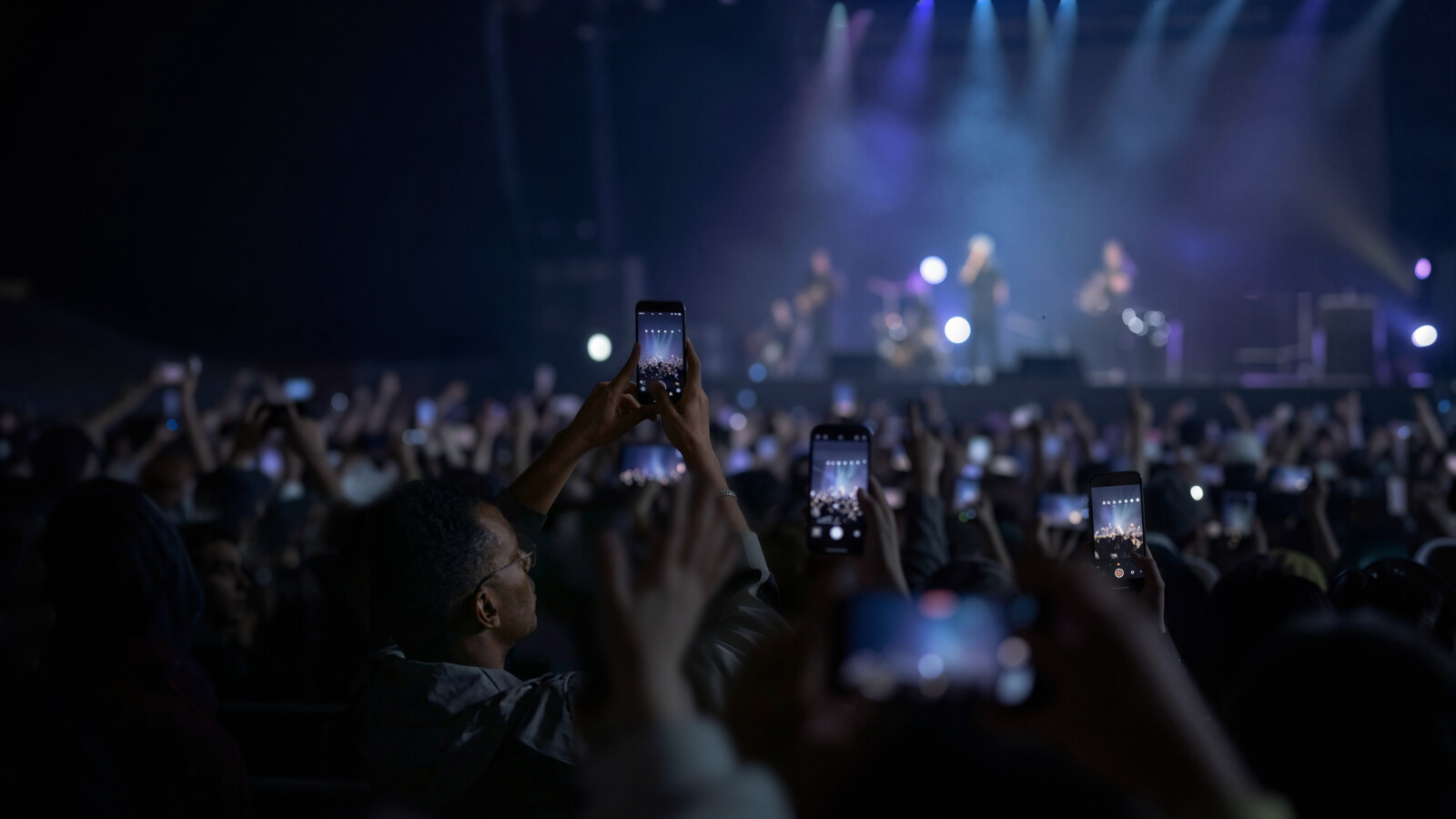
Our kids don’t understand why we brought lighters to concerts or how we shared the experiences from live events with our friends. What they do know is that the smartphone is an enabler for sharing all of their experiences, and events, whether they’re local or global.  This year, the Olympics will be a true networked experience, and to demonstrate today’s connectedness, more than 1,000 Wi-Fi access points have been deployed in London’s Olympic Park alone.

The spontaneous sharing of our lives has become the new norm. We record all our favorite moments whether we attend top-notch events like the Olympics or share our experiences when we watch our favorite national sports. We share our favorite songs when we’re at concerts, and pictures of our friends all dressed up in full fan costumes.

Sharing today is about distributing our favorite moments via video and multi-picture avenues, creating new traffic patterns, where uploading from the stadium dominates. We used to share our experiences with SMS, tweets or short status texts when the only coverage available was GPRS or EDGE. As 3G-, 4G- and Wi-Fi-enabled smartphones enter the stadiums in volumes, so does the demand for networks to support them.

Sharing the local experience while you are abroad is as important as the one you share at home. This is not restricted to sports and concerts, but also includes our desire to share our greatest travel experiences. I wonder when we will be able to go abroad, take pictures and post them in real-time without having to worry about the bill. I think it will be sooner than you think.

My predictions for the future of spectator sharing are that:

* Video and multi-picture posts will be our primary sharing media. Images speak louder than words.

* Major sports stadiums will have advanced networks for boosting data coverage and capacity within three years, and the upstream data-traffic needs will be a key network design criterion.

* New business model innovations will surface to allow us to cross country borders with the stadium-sharing behaviors we have adopted at home.

Written by Peter Linder

Peter Linder is Solution Principal in North America and a Networked Society evangelist for Ericsson. When talking about a connected future, Linder likes to blend global perspectives with personal reflections. He is passionate about articulating and visualizing the future Networked Society and possesses 28 digital devices, seven of which are normally connected to a network. His interest in innovation stems from his grandfather, who dabbled in home networking in 1929, spent 30 percent of his house construction budget on a gramophone in 1931, and produced 16mm color films of his children in the 1930s.

Commenting rules

Comments

You must accept cookies to be able to make a comment.