<?xml version="1.0" encoding="UTF-8"?>
<rss version="2.0"
	xmlns:content="http://purl.org/rss/1.0/modules/content/"
	xmlns:wfw="http://wellformedweb.org/CommentAPI/"
	xmlns:dc="http://purl.org/dc/elements/1.1/"
	xmlns:atom="http://www.w3.org/2005/Atom"
	xmlns:sy="http://purl.org/rss/1.0/modules/syndication/"
	xmlns:slash="http://purl.org/rss/1.0/modules/slash/"
	>

<channel>
	<title>The Networked Society Blog &#187; broadband</title>
	<atom:link href="http://www.ericsson.com/thinkingahead/the-networked-society-blog/tag/broadband/feed/" rel="self" type="application/rss+xml" />
	<link>http://www.ericsson.com/thinkingahead/the-networked-society-blog</link>
	<description>The Networked Society Blog</description>
	<lastBuildDate>Mon, 17 Jun 2013 09:15:37 +0000</lastBuildDate>
	<language>en-US</language>
	<sy:updatePeriod>hourly</sy:updatePeriod>
	<sy:updateFrequency>1</sy:updateFrequency>
	
		<item>
		<title>Here is how we’re making a difference</title>
		<link>http://www.ericsson.com/thinkingahead/the-networked-society-blog/2013/04/09/here-is-how-were-making-a-difference/?utm_source=rss&#038;utm_medium=rss&#038;utm_campaign=here-is-how-were-making-a-difference</link>
		<comments>http://www.ericsson.com/thinkingahead/the-networked-society-blog/2013/04/09/here-is-how-were-making-a-difference/#comments</comments>
		<pubDate>Tue, 09 Apr 2013 11:11:07 +0000</pubDate>
		<dc:creator>Elaine Weidman</dc:creator>
				<category><![CDATA[Business]]></category>
		<category><![CDATA[Society]]></category>
		<category><![CDATA[Technology]]></category>
		<category><![CDATA[broadband]]></category>
		<category><![CDATA[corporate social responsibility]]></category>
		<category><![CDATA[SC]]></category>
		<category><![CDATA[sustainability]]></category>
		<category><![CDATA[Technology for Good]]></category>

		<guid isPermaLink="false">http://www.ericsson.com/thinkingahead/the-networked-society-blog/?p=4701</guid>
		<description><![CDATA[<p>Today we reached another milestone with the launch of our, Ericsson&#8217;s, 20th Sustainability and Corporate Responsibility Report, documenting our efforts and performance for 2012, but also setting our vision for the coming years.       
Today, in conjunction with our Annual General Meeting of Shareholders, our CEO Hans Vestberg said throughout [...]</p><p>The post <a href="http://www.ericsson.com/thinkingahead/the-networked-society-blog/2013/04/09/here-is-how-were-making-a-difference/">Here is how we’re making a difference</a> appeared first on <a href="http://www.ericsson.com/thinkingahead/the-networked-society-blog">The Networked Society Blog</a>.</p>]]></description>
			<content:encoded><![CDATA[<p>Today we reached another milestone with the launch of our, Ericsson&#8217;s, 20th <a href="http://www.ericsson.com/res/thecompany/docs/corporate-responsibility/2012/2012_corporate_responsibility_and_sustainability_report.pdf">Sustainability and Corporate Responsibility Report</a>, documenting our efforts and performance for 2012, but also setting our vision for the coming years.       </p>
<p>Today, in conjunction with our Annual General Meeting of Shareholders, our CEO Hans Vestberg said throughout the value chain, and wherever we do business, we are striving to be sustainable and responsible in all that we do. ICT is a broad concept, and this top-level commitment impacts on many areas, from social and economic development, to energy and climate change, to conducting business responsibly. <span id="more-4701"></span></p>
<p>In all these areas, it is really about our dual approach. On the one hand, our approach is to have robust internal systems to handle the challenges and the potential risks, but also, as an industry leader, to be part of driving the global discussion about our future in the Networked Society.</p>
<p>Sustainability reports provide a performance snapshot in time. But it is really the maturity of the approach that a company takes on an ongoing and day-to-day basis that adds value to the triple bottom line.</p>
<p>Here are just a few of the highlights from the report:<br />
* we reached our five-year carbon-footprint intensity target in four years, one year ahead of schedule<br />
* in 2012, we complemented our portfolio with energy-efficient solutions to address mobile coverage and increased demand. Some of those solutions include: Psi-Coverage and Managed Rural Coverage<br />
* our Technology for Good projects, which range from connecting schools in Africa to supporting development of sustainable cities and banking the unbanked, continue to expand to serve more and more people with affordable and accessible mobile communications<br />
* we have strengthened our commitment to responsible business practices, with a focus on human rights and anti-corruption.</p>
<p>But as satisfying as it is to see how far we’ve come, we must also look forward. We have a responsibility – and the opportunity – to raise the bar in our sustainability and CR programs. The report also describes some of the challenges that we face in the Networked Society – for example, in the tricky areas like human rights and corruption – and it sets out our approach to working with CR issues throughout our operations.</p>
<p>Broadband is going to continue to play a decisive role in the transformation of society.<br />
We’ve made real progress, but our greatest accomplishment is that we are now in a position to do the real heavy lifting in the years to come. I have faith that both Ericsson and the wider ICT community can rise to this challenge, and as excited as I am about the 2012 report, I really can’t wait to read the 2020 version.</p>
<p>You can read the full 2012 Sustainability and Corporate Responsibility Report at www.ericsson.com/sustainability</p>
<p>The post <a href="http://www.ericsson.com/thinkingahead/the-networked-society-blog/2013/04/09/here-is-how-were-making-a-difference/">Here is how we’re making a difference</a> appeared first on <a href="http://www.ericsson.com/thinkingahead/the-networked-society-blog">The Networked Society Blog</a>.</p>]]></content:encoded>
			<wfw:commentRss>http://www.ericsson.com/thinkingahead/the-networked-society-blog/2013/04/09/here-is-how-were-making-a-difference/feed/</wfw:commentRss>
		<slash:comments>1</slash:comments>
		</item>
		<item>
		<title>COWs &#8211; cruising cells complement classic celltowers</title>
		<link>http://www.ericsson.com/thinkingahead/the-networked-society-blog/2013/02/07/cows-cruising-cells-complement-classic-celltowers/?utm_source=rss&#038;utm_medium=rss&#038;utm_campaign=cows-cruising-cells-complement-classic-celltowers</link>
		<comments>http://www.ericsson.com/thinkingahead/the-networked-society-blog/2013/02/07/cows-cruising-cells-complement-classic-celltowers/#comments</comments>
		<pubDate>Thu, 07 Feb 2013 16:00:46 +0000</pubDate>
		<dc:creator>Peter Linder</dc:creator>
				<category><![CDATA[Event]]></category>
		<category><![CDATA[Technology]]></category>
		<category><![CDATA[broadband]]></category>
		<category><![CDATA[Connectivity]]></category>
		<category><![CDATA[data]]></category>
		<category><![CDATA[innovation]]></category>
		<category><![CDATA[mobile broadband]]></category>
		<category><![CDATA[mobility]]></category>

		<guid isPermaLink="false">http://www.ericsson.com/thinkingahead/the-networked-society-blog/?p=4296</guid>
		<description><![CDATA[<p>Mobile networks are built around a fine-tuned grid of towers that host base stations. These serve the basic mobile voice and data service needs of society. However, now and then the demands on the network peak temporarily and the current network capacity is inadequate.  Since the need is temporary, a permanent densification solution would [...]</p><p>The post <a href="http://www.ericsson.com/thinkingahead/the-networked-society-blog/2013/02/07/cows-cruising-cells-complement-classic-celltowers/">COWs &#8211; cruising cells complement classic celltowers</a> appeared first on <a href="http://www.ericsson.com/thinkingahead/the-networked-society-blog">The Networked Society Blog</a>.</p>]]></description>
			<content:encoded><![CDATA[<p>Mobile networks are built around a fine-tuned grid of towers that host base stations. These serve the basic mobile voice and data service needs of society. However, now and then the demands on the network peak temporarily and the current network capacity is inadequate.  Since the need is temporary, a permanent densification solution would be an overkill.  </p>
<p>The solution is to make the mobile network itself mobile! <span id="more-4296"></span></p>
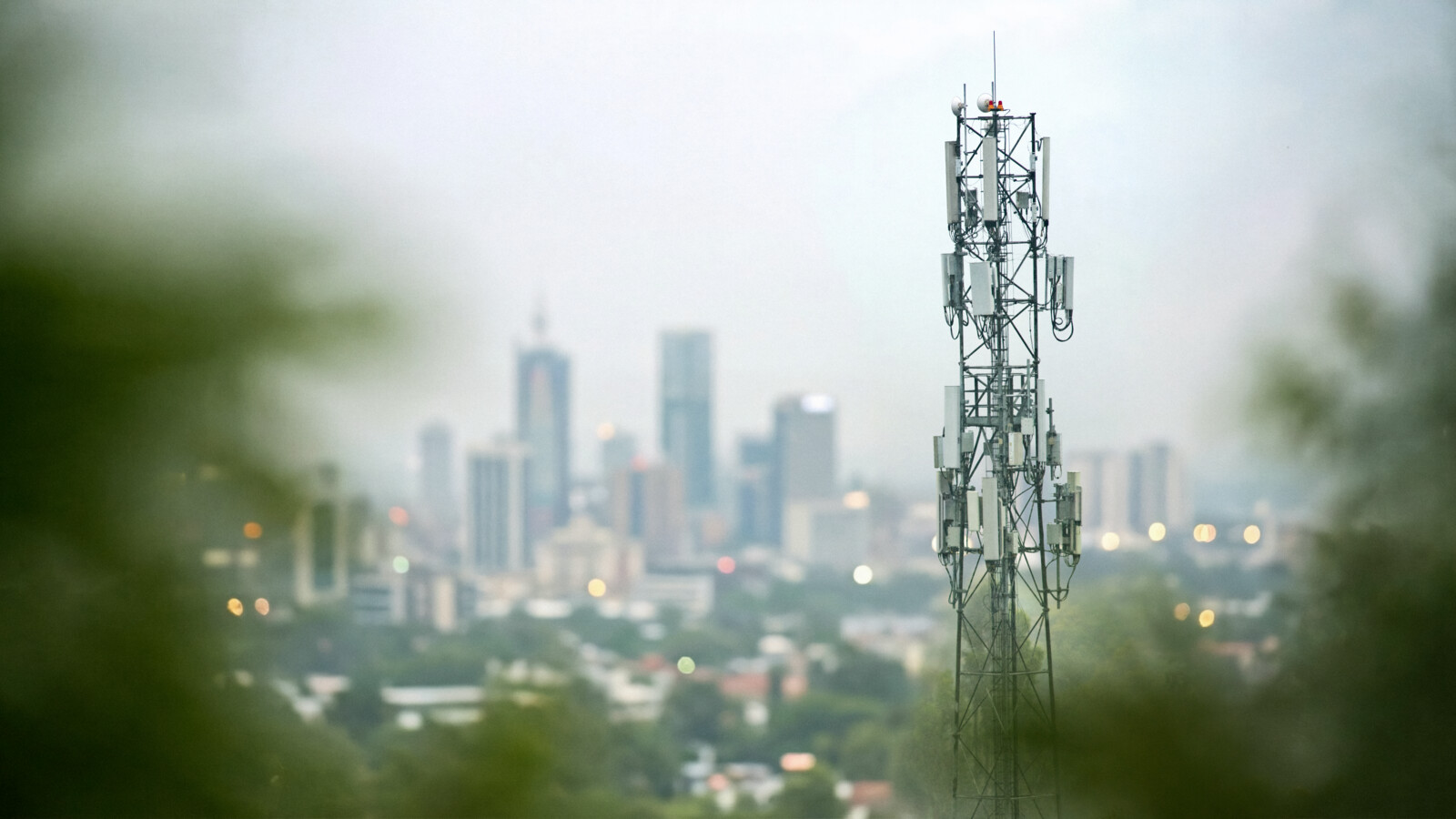
<p>A Cell on Wheels, a &#8220;COW&#8221; is a complete mobile base station including radio antennas and backhaul placed on a truck. They are used to support major events requiring a temporary mobile solution. Multiple COWs can be deployed to boost network capacity extensively. COW’s are today primarily deployed in the events of natural disasters and at premium sports events, both of which require quick and temporary high network capacity.  </p>
<p>NASCAR is one example of a sporting event requiring COW’s. In order to support the 39 annual NASCAR events, 10 COWs are on tour with the race teams. Without these COWs and crews, the mobile screens of fans would be dark for both tailgating and possibly the race event itself. Check out this <a href="http://youtu.be/aN0iDtS7j_w">NASCAR video</a> to get a hint of the benefits.</p>
<p>Another alternative solution to COW’s are the installation of a permanent antenna solution at the venue, known as a Distributed Antenna System (DAS). DOW’s or “DAS on Wheels” systems are marvels as they eliminate the engineering needs for antenna design and deployment &#8211; the solution complexity is now reduced to radio and transmission equipment.</p>
<p>There is an emerging third tier for even smaller configurations. These are COLT’s or “Cell on Light Trucks” which enable even faster capacity augmentation at sporting venues and disaster recovery support.  Because they can be deployed in larger volumes and much closer to potential disaster zones, they are extremely economical as well.</p>
<p>My predictions of the future are:<br />
* Mobile units are becoming an integrated part of the densification strategy for a mobile network.<br />
* The evolution and diversification of the original COW into DOWs and COLTs make it possible to support a variety of deployment scenarios.<br />
* As Sandy recently proved, <a href="http://www.ericsson.com/thinkingahead/the-networked-society-blog/2012/10/30/smartphones-support-citizens-inundated-by-superstorm-sandy/">Mobile units play a key role in disaster recovery situations</a> given the primary need to bring up mobile communications first.<br />
* Future concert and sports venues without voice and data coverage will struggle to attract fans as the future of live events is about the integration and access of live and multimedia coverage. </p>
<p>The post <a href="http://www.ericsson.com/thinkingahead/the-networked-society-blog/2013/02/07/cows-cruising-cells-complement-classic-celltowers/">COWs &#8211; cruising cells complement classic celltowers</a> appeared first on <a href="http://www.ericsson.com/thinkingahead/the-networked-society-blog">The Networked Society Blog</a>.</p>]]></content:encoded>
			<wfw:commentRss>http://www.ericsson.com/thinkingahead/the-networked-society-blog/2013/02/07/cows-cruising-cells-complement-classic-celltowers/feed/</wfw:commentRss>
		<slash:comments>0</slash:comments>
		</item>
		<item>
		<title>The smart city is all about people</title>
		<link>http://www.ericsson.com/thinkingahead/the-networked-society-blog/2012/12/13/the-smart-city-is-all-about-people/?utm_source=rss&#038;utm_medium=rss&#038;utm_campaign=the-smart-city-is-all-about-people</link>
		<comments>http://www.ericsson.com/thinkingahead/the-networked-society-blog/2012/12/13/the-smart-city-is-all-about-people/#comments</comments>
		<pubDate>Thu, 13 Dec 2012 08:43:44 +0000</pubDate>
		<dc:creator>Patrik Cerwall</dc:creator>
				<category><![CDATA[Society]]></category>
		<category><![CDATA[broadband]]></category>
		<category><![CDATA[Smart cities]]></category>
		<category><![CDATA[urban life]]></category>

		<guid isPermaLink="false">http://www.ericsson.com/thinkingahead/the-networked-society-blog/?p=3985</guid>
		<description><![CDATA[<p>Since 2005, the London School of Economics has been orchestrating the Urban Age conference series. This year it was held in London. Opened by city mayor Boris Johnson and British Prime Minister David Cameron, the event began with the two men launching a GBP 50 million (USD 80 million) investment in an area in London [...]</p><p>The post <a href="http://www.ericsson.com/thinkingahead/the-networked-society-blog/2012/12/13/the-smart-city-is-all-about-people/">The smart city is all about people</a> appeared first on <a href="http://www.ericsson.com/thinkingahead/the-networked-society-blog">The Networked Society Blog</a>.</p>]]></description>
			<content:encoded><![CDATA[<p>Since 2005, the London School of Economics has been orchestrating the <a href="http://ec2012.lsecities.net/" target="blank">Urban Age conference series</a>. This year it was held in London. Opened by city mayor Boris Johnson and British Prime Minister David Cameron, the event began with the two men launching a GBP 50 million (USD 80 million) investment in an area in London known as the “Silicon Roundabout.”<span id="more-3985"></span></p>
<p>The investment will create a destination to support startups, provide classrooms to train entrepreneurs, help young people get the skills they need, and provide a focal point for <a href="http://lsecities.net/archives/david-cameron-and-boris-johnson-launch-silicon-roundabout-initiative-at-urban-age-conference/" target="_blank">Tech City</a>, a tech-based hub in London. </p>
<p>The conference included a range of renowned urban thought leaders such as Saskia Sassen, Ed Glaeser, Ricky Burdett and Carlo Ratti. Many small startups, architects and urban planners attended the conference, as well as some big tech companies such as Siemens and Cisco. On behalf of Ericsson, I was happy to be able to present our thoughts on smartphone development and the impact it may have on cities. These findings were extracted from the recent Ericsson Mobility Report. </p>
<p>From the discussions that took place at the event, it was evident that broadband connectivity is expected to be a fundamental ingredient when it comes to urban evolution. However, what was interesting was the move away from the “smart city” concept to a larger focus on people. By providing technology, people will innovate and be creative. Many interesting questions were raised, such as, if we just focus on getting the city to be “smarter,” what does that mean? The smart city concept tends to set goals for the city, but can a city really have an overall goal? What is the end goal for London, Mumbai or Tokyo? </p>
<p>We will not necessarily know what the urban age will lead to, but what is clear is that mobility, broadband and the cloud will be key ingredients in the evolution of cities.</p>
<p>The post <a href="http://www.ericsson.com/thinkingahead/the-networked-society-blog/2012/12/13/the-smart-city-is-all-about-people/">The smart city is all about people</a> appeared first on <a href="http://www.ericsson.com/thinkingahead/the-networked-society-blog">The Networked Society Blog</a>.</p>]]></content:encoded>
			<wfw:commentRss>http://www.ericsson.com/thinkingahead/the-networked-society-blog/2012/12/13/the-smart-city-is-all-about-people/feed/</wfw:commentRss>
		<slash:comments>0</slash:comments>
		</item>
		<item>
		<title>Searching for Europe’s hottest digital cities</title>
		<link>http://www.ericsson.com/thinkingahead/the-networked-society-blog/2012/11/06/searching-for-europes-hottest-digital-cities/?utm_source=rss&#038;utm_medium=rss&#038;utm_campaign=searching-for-europes-hottest-digital-cities</link>
		<comments>http://www.ericsson.com/thinkingahead/the-networked-society-blog/2012/11/06/searching-for-europes-hottest-digital-cities/#comments</comments>
		<pubDate>Tue, 06 Nov 2012 11:53:52 +0000</pubDate>
		<dc:creator>Monika Bylehn</dc:creator>
				<category><![CDATA[Business]]></category>
		<category><![CDATA[Society]]></category>
		<category><![CDATA[broadband]]></category>
		<category><![CDATA[innovation]]></category>
		<category><![CDATA[Networked Society]]></category>
		<category><![CDATA[Technology for Good]]></category>
		<category><![CDATA[urban life]]></category>

		<guid isPermaLink="false">http://www.ericsson.com/thinkingahead/the-networked-society-blog/?p=3810</guid>
		<description><![CDATA[<p>Which city will become Europe’s Silicon Valley? Is it Berlin, London, Paris? Perhaps Stockholm, Barcelona or Istanbul? Where do we find the most vital and vibrant local ecosystems, with clusters of startups, beginning to make themselves known to the world?

The theory of clusters – that companies located in a vibrant cluster of other companies get [...]</p><p>The post <a href="http://www.ericsson.com/thinkingahead/the-networked-society-blog/2012/11/06/searching-for-europes-hottest-digital-cities/">Searching for Europe’s hottest digital cities</a> appeared first on <a href="http://www.ericsson.com/thinkingahead/the-networked-society-blog">The Networked Society Blog</a>.</p>]]></description>
			<content:encoded><![CDATA[<p>Which city will become Europe’s Silicon Valley? Is it Berlin, London, Paris? Perhaps Stockholm, Barcelona or Istanbul? Where do we find the most vital and vibrant local ecosystems, with clusters of startups, beginning to make themselves known to the world?<br />
<span id="more-3810"></span><br />
The theory of clusters – that companies located in a vibrant cluster of other companies get a competitive advantage – is well established. Creative people are dependent on the concentrated diversity that the urban environment offers. Local ecosystems or clusters further enhance this.<br />
Evidence of this cluster effect can be seen in some interesting research that Wired magazine has done, resulting in a guide to Europe’s <a href="http://www.wired.co.uk/topics/wired-european-startups-2012">100 most exciting startups </a>this year.</p>
<p>The research also looks at what is being done in different cities to develop these ecosystems. Tel Aviv for instance has a very liberal view on using military innovations for civilian purposes. It also has a highly educated population and reinvests a lot of its output back into R&amp;D. </p>
<p>In Stockholm, the startups themselves arrange and fund hack events like the Health Hack Day, rather than these events being organized by the government or large corporations. According to Thomson Reuters, the city’s tech companies get more US venture-capital investments than Paris or Berlin. Based on its study, Wired concludes that Europe’s most significant clusters are to be found in Amsterdam, Barcelona, Berlin, Helsinki, Istanbul, London, Moscow, Paris, Stockholm and finally Tel Aviv (defining Europe in a Eurovision sort of way).</p>
<p>Taking a closer look at what has happened on the Helsinki startup scene following megahits such as Rovio (Angry Birds), Wired lists a number of new kids on the block. </p>
<p>Helsinki – at least in my eyes known mostly for its world-class design, Linux and for Nokia of course – is now attempting to replicate the Israeli startup boom. The Finnish Government is one of the funders of <a href="http://startupsauna.com/en/">Startup Sauna</a>, a foundation that aims to make the region a world-class concentration of growth-oriented companies. It does so by getting the best startups to work and live together, providing professional coaching and by pushing the startups to go faster than the competition.</p>
<p>I’d like to mention a couple of these Helsinki startups. <a href="http://www.audiodraft.com/">Audiodraft </a>is a company providing a platform for music crowdsourcing. For a fee, companies that need music for a TV spot, for example, can put out a brief and let composers submit their entries. Audiodraft is looking to tap into the USD 5 billion custom-audio industry.</p>
<p>Another recently established company, <a href="http://grandcrugames.com/">Grand Cru</a>, intends to release a game inspired by Minecraft on the web and on smartphones. Grand Cru has already received USD 2 million in funding even though the game is to come out as a beta only later this year. My kids absolutely love Minecraft – perhaps this will be big too?</p>
<p>It is striking that neither of these promising new companies would go anywhere without high-performance broadband – it is essential for their success. As a matter of fact, any city with ambitions to become a startup hothouse should put high-performance broadband high on its agenda. </p>
<p>I intend to come back to this subject again in a few weeks, and also take a look at entrepreneurship in cities outside Europe. </p>
<p>The post <a href="http://www.ericsson.com/thinkingahead/the-networked-society-blog/2012/11/06/searching-for-europes-hottest-digital-cities/">Searching for Europe’s hottest digital cities</a> appeared first on <a href="http://www.ericsson.com/thinkingahead/the-networked-society-blog">The Networked Society Blog</a>.</p>]]></content:encoded>
			<wfw:commentRss>http://www.ericsson.com/thinkingahead/the-networked-society-blog/2012/11/06/searching-for-europes-hottest-digital-cities/feed/</wfw:commentRss>
		<slash:comments>1</slash:comments>
		</item>
		<item>
		<title>Good things come in threes – like the smartphone, the tablet and the phablet</title>
		<link>http://www.ericsson.com/thinkingahead/the-networked-society-blog/2012/09/12/good-things-come-in-threes-like-the-smartphone-the-tablet-and-the-phablet/?utm_source=rss&#038;utm_medium=rss&#038;utm_campaign=good-things-come-in-threes-like-the-smartphone-the-tablet-and-the-phablet</link>
		<comments>http://www.ericsson.com/thinkingahead/the-networked-society-blog/2012/09/12/good-things-come-in-threes-like-the-smartphone-the-tablet-and-the-phablet/#comments</comments>
		<pubDate>Wed, 12 Sep 2012 11:42:29 +0000</pubDate>
		<dc:creator>Peter Linder</dc:creator>
				<category><![CDATA[Applications]]></category>
		<category><![CDATA[Business]]></category>
		<category><![CDATA[Uncategorized]]></category>
		<category><![CDATA[3G]]></category>
		<category><![CDATA[4G]]></category>
		<category><![CDATA[Android]]></category>
		<category><![CDATA[broadband]]></category>
		<category><![CDATA[OS]]></category>
		<category><![CDATA[Phablet]]></category>
		<category><![CDATA[Screen]]></category>
		<category><![CDATA[Smartphone]]></category>
		<category><![CDATA[Tablet]]></category>

		<guid isPermaLink="false">http://www.ericsson.com/thinkingahead/the-networked-society-blog/?p=3297</guid>
		<description><![CDATA[<p>
&#160;
The phone, the tablet and the hybrid of the two, referred to as the phablet (it’s bigger than a smartphone, but smaller than a tablet) are three key devices that are becoming more and more essential to the 21st-century corporate worker.
Three operating systems (OSs), namely Google Android 5, Apple iOS 6 and Windows 8, and [...]</p><p>The post <a href="http://www.ericsson.com/thinkingahead/the-networked-society-blog/2012/09/12/good-things-come-in-threes-like-the-smartphone-the-tablet-and-the-phablet/">Good things come in threes – like the smartphone, the tablet and the phablet</a> appeared first on <a href="http://www.ericsson.com/thinkingahead/the-networked-society-blog">The Networked Society Blog</a>.</p>]]></description>
			<content:encoded><![CDATA[<p><a href="http://www.ericsson.com/thinkingahead/the-networked-society-blog/wp-content/uploads/2012/09/101209-06161.jpg"><img class="aligncenter size-full wp-image-3303" title="101209-0616" src="http://www.ericsson.com/thinkingahead/the-networked-society-blog/wp-content/uploads/2012/09/101209-06161.jpg" alt="" width="600" height="400" /></a></p>
<p>&nbsp;</p>
<p>The phone, the tablet and the hybrid of the two, referred to as <span style="text-decoration: underline;"><a title="Phablet" href="http://en.wikipedia.org/wiki/Phablet" target="_blank">the phablet</a> </span>(it’s bigger than a smartphone, but smaller than a tablet) are three key devices that are becoming more and more essential to the 21st-century corporate worker.<span id="more-3297"></span></p>
<p>Three operating systems (OSs), namely Google Android 5, Apple iOS 6 and Windows 8, and the three network interfaces that make them useful everywhere – Wi-Fi, 3G and 4G – are triggering a new wave in the device market with its new characteristics and high potential to re-shape the workplace.<strong> </strong></p>
<p>Initially, OS releasesprimarily targeted the market for devices with 3-4in (about 7.6-10.1cm) screens (smartphones). Later, they were optimized for the market for devices with 10in (about<br />
25.4cm) screens (tablets), where the bulk of the devices sold came with a Wi-Fi interface only. Today, smartphone screens are generally becoming bigger, meaning they are 3-4.5in (about 7.6-11.4cm) wide, but tablet screens are shrinking to 7-10in (about 17.8-25.4cm).</p>
<p>For the first wave of tablets, purchased primarily for private use, Wi-Fi was judged by most users as only OK.  But today the tablet has the potential to become one of the two key devices that knowledge workers depend on for their working lives, the other being the smartphone. Therefore, we can expect a Wi-Fi/3G/4G interface to become the standard for tablets, as professional users will expect tablets to work wherever smartphones do.</p>
<p>What’s also important to note is that applications used to be optimized for each device type. Today, however, the borders between devices and applications have almost been eliminated, and new OSs provide an integrated experience across a variety of screen sizes and device categories.</p>
<p>I wonder what we’ll call a device with a 6in (15.2cm) screen, once it exists.</p>
<p>&nbsp;</p>
<p>&nbsp;</p>
<p>&nbsp;</p>
<p>The post <a href="http://www.ericsson.com/thinkingahead/the-networked-society-blog/2012/09/12/good-things-come-in-threes-like-the-smartphone-the-tablet-and-the-phablet/">Good things come in threes – like the smartphone, the tablet and the phablet</a> appeared first on <a href="http://www.ericsson.com/thinkingahead/the-networked-society-blog">The Networked Society Blog</a>.</p>]]></content:encoded>
			<wfw:commentRss>http://www.ericsson.com/thinkingahead/the-networked-society-blog/2012/09/12/good-things-come-in-threes-like-the-smartphone-the-tablet-and-the-phablet/feed/</wfw:commentRss>
		<slash:comments>0</slash:comments>
		</item>
		<item>
		<title>Healthy apps: Olympics for everyone</title>
		<link>http://www.ericsson.com/thinkingahead/the-networked-society-blog/2012/07/24/healthy-apps-olympics-for-everyone/?utm_source=rss&#038;utm_medium=rss&#038;utm_campaign=healthy-apps-olympics-for-everyone</link>
		<comments>http://www.ericsson.com/thinkingahead/the-networked-society-blog/2012/07/24/healthy-apps-olympics-for-everyone/#comments</comments>
		<pubDate>Tue, 24 Jul 2012 09:15:59 +0000</pubDate>
		<dc:creator>Ulrika Bergström</dc:creator>
				<category><![CDATA[Applications]]></category>
		<category><![CDATA[People]]></category>
		<category><![CDATA[Society]]></category>
		<category><![CDATA[applications]]></category>
		<category><![CDATA[broadband]]></category>
		<category><![CDATA[connected devices]]></category>
		<category><![CDATA[digital culture]]></category>
		<category><![CDATA[ICT]]></category>
		<category><![CDATA[innovation]]></category>
		<category><![CDATA[mobile broadband]]></category>
		<category><![CDATA[Networked Society]]></category>
		<category><![CDATA[urban life]]></category>

		<guid isPermaLink="false">http://www.ericsson.com/thinkingahead/the-networked-society-blog/?p=3169</guid>
		<description><![CDATA[<p>People will be glued to their TV screens this week as they watch the opening of the Olympic Games in London, cheering their countries as they compete for gold.As Olympic fever kicks in, people, energized by the greatest sportspeople, will head out to their local tennis courts, running tracks or swimming pools and try to [...]</p><p>The post <a href="http://www.ericsson.com/thinkingahead/the-networked-society-blog/2012/07/24/healthy-apps-olympics-for-everyone/">Healthy apps: Olympics for everyone</a> appeared first on <a href="http://www.ericsson.com/thinkingahead/the-networked-society-blog">The Networked Society Blog</a>.</p>]]></description>
			<content:encoded><![CDATA[<p>People will be glued to their TV screens this week as they watch the opening of the Olympic Games in London, cheering their countries as they compete for gold.<span id="more-3679"></span>As Olympic fever kicks in, people, energized by the greatest sportspeople, will head out to their local tennis courts, running tracks or swimming pools and try to emulate their heroes. Their new-found vigor will be maintained, in part, by their smartphones, their trusty companion and often personal trainer as they tackle their fitness regimes, which in the Networked Society take pride of place alongside the good old water bottle.</p>
<p>Smartphones can often assist them in planning their diet, sleep schedule and training routines. By 2016, downloads of ‘healthy apps’ are expected to reach 1 billion, according to professional question-and-answer website <a href="https://www.hightable.com/infographic/43628">Hightable</a>.</p>
<p>The popularity of healthy apps is not an entirely new phenomenon, although it is one noticeably on the rise, with predictions that the market will quadruple to USD 400 million by 2016, according to market intelligence company <a href="http://www.abiresearch.com/">ABI research</a>.</p>
<p>What is new is the way apps are becoming increasingly social.</p>
<p>People’s exercise regimes are no longer being kept in isolation. Instead, they are becoming increasingly connected thanks to smartphones. People are sharing training regimes, tips and recipes like never before, and now they are even using their mobile phones to compete against fellow app users.</p>
<p>A good example of this is <a href="http://www.healthyshare.com/">HealthyShare</a>, a partnership between GE and Facebook, which has four US Olympians, including 2012 hopefuls Kevin Durant (men’s basketball) and Alex Morgan (women’s football), plus gold medalists Michael Johnson (men’s track and field) and Summer Sanders (women&#8217;s swimming), challenging people of all fitness levels with Summer Games-styled sweat sessions.</p>
<p>Through a mobile app and increased connectivity, you can now compete with people anywhere and everywhere. Who knows, in four years we may even see a HealthyShare Olympics take place.</p>
<p>The post <a href="http://www.ericsson.com/thinkingahead/the-networked-society-blog/2012/07/24/healthy-apps-olympics-for-everyone/">Healthy apps: Olympics for everyone</a> appeared first on <a href="http://www.ericsson.com/thinkingahead/the-networked-society-blog">The Networked Society Blog</a>.</p>]]></content:encoded>
			<wfw:commentRss>http://www.ericsson.com/thinkingahead/the-networked-society-blog/2012/07/24/healthy-apps-olympics-for-everyone/feed/</wfw:commentRss>
		<slash:comments>2</slash:comments>
		</item>
		<item>
		<title>Shoot and share: photography in real time</title>
		<link>http://www.ericsson.com/thinkingahead/the-networked-society-blog/2012/07/09/shoot-and-share-photography-in-real-time/?utm_source=rss&#038;utm_medium=rss&#038;utm_campaign=shoot-and-share-photography-in-real-time</link>
		<comments>http://www.ericsson.com/thinkingahead/the-networked-society-blog/2012/07/09/shoot-and-share-photography-in-real-time/#comments</comments>
		<pubDate>Mon, 09 Jul 2012 08:34:16 +0000</pubDate>
		<dc:creator>Peter Linder</dc:creator>
				<category><![CDATA[Applications]]></category>
		<category><![CDATA[People]]></category>
		<category><![CDATA[Society]]></category>
		<category><![CDATA[Technology]]></category>
		<category><![CDATA[applications]]></category>
		<category><![CDATA[broadband]]></category>
		<category><![CDATA[connected devices]]></category>
		<category><![CDATA[ICT]]></category>
		<category><![CDATA[innovation]]></category>
		<category><![CDATA[mobile broadband]]></category>
		<category><![CDATA[Networked Society]]></category>
		<category><![CDATA[Smartphones]]></category>

		<guid isPermaLink="false">http://www.ericsson.com/thinkingahead/the-networked-society-blog/?p=3127</guid>
		<description><![CDATA[<p>The first 10 years of mass-market digital photography have gone well thanks to innovations in mobile phones, single-lens reflex (SLR) and point-and-shoot cameras. The classic Kodachrome film has been discontinued. What can we expect from networked photography going forward?Camera innovations have been phenomenal. Smartphones have made integrated photography and networking capabilities a great way of [...]</p><p>The post <a href="http://www.ericsson.com/thinkingahead/the-networked-society-blog/2012/07/09/shoot-and-share-photography-in-real-time/">Shoot and share: photography in real time</a> appeared first on <a href="http://www.ericsson.com/thinkingahead/the-networked-society-blog">The Networked Society Blog</a>.</p>]]></description>
			<content:encoded><![CDATA[<p>The first 10 years of mass-market digital photography have gone well thanks to innovations in mobile phones, single-lens reflex (SLR) and point-and-shoot cameras. The classic Kodachrome film has been discontinued. What can we expect from networked photography going forward?<span id="more-3127"></span>Camera innovations have been phenomenal. Smartphones have made integrated photography and networking capabilities a great way of taking and sharing pictures –think Instagram. SLRs have managed the transition from film to memory with maintained or increased picture quality. Integrated HDTV (High-Definition TV) recording capabilities have turned SLRs into multi-purpose photography and filming devices. Point-and-shoot cameras have very high picture resolutions in combination with advanced optics at affordable prices.</p>
<p>The almost real-time publishing of our magic moments is a reality. It is an integrated part of the tools we use for sharing our lives. The darkroom and dark rooms are no longer required for viewing high-quality photos. Neither is the long wait for a roll of film to be processed. Our ability to share pictures, and share them instantly, is here to stay.</p>
<p>Post-production capabilities and their superior results are light-years ahead of the darkroom days. This is also the case for memory-storage innovations; the past decade has resulted in a 1,000-fold price-performance improvement and support for very high writing speeds. The revolution from 24 or 36 frame film rolls and the first 8-16MB memory cards feel very remote.</p>
<p> In the future, I expect to see the following trends:</p>
<ul>
<li>high-resolution photographs and moving pictures will become key to the next wave of social-media innovations</li>
<li>networking and camera capabilities will become more unified, and integrated WiFi and mobile access will become standard in SLRs and high-end point-and-shoot cameras</li>
<li>the camcorder will have a hard time surviving as a mass-market device, as cameras and smartphones come with integrated HDTV recording capabilities</li>
</ul>
<p>The post <a href="http://www.ericsson.com/thinkingahead/the-networked-society-blog/2012/07/09/shoot-and-share-photography-in-real-time/">Shoot and share: photography in real time</a> appeared first on <a href="http://www.ericsson.com/thinkingahead/the-networked-society-blog">The Networked Society Blog</a>.</p>]]></content:encoded>
			<wfw:commentRss>http://www.ericsson.com/thinkingahead/the-networked-society-blog/2012/07/09/shoot-and-share-photography-in-real-time/feed/</wfw:commentRss>
		<slash:comments>0</slash:comments>
		</item>
		<item>
		<title>Hetnet deployments need the new 4Ps</title>
		<link>http://www.ericsson.com/thinkingahead/the-networked-society-blog/2012/05/08/hetnet-deployment-needs-the-new-4ps/?utm_source=rss&#038;utm_medium=rss&#038;utm_campaign=hetnet-deployment-needs-the-new-4ps</link>
		<comments>http://www.ericsson.com/thinkingahead/the-networked-society-blog/2012/05/08/hetnet-deployment-needs-the-new-4ps/#comments</comments>
		<pubDate>Tue, 08 May 2012 07:30:46 +0000</pubDate>
		<dc:creator>Peter Linder</dc:creator>
				<category><![CDATA[Business]]></category>
		<category><![CDATA[People]]></category>
		<category><![CDATA[Society]]></category>
		<category><![CDATA[Technology]]></category>
		<category><![CDATA[broadband]]></category>
		<category><![CDATA[Cloud Computing]]></category>
		<category><![CDATA[data]]></category>
		<category><![CDATA[HetNets]]></category>
		<category><![CDATA[mobile broadband]]></category>
		<category><![CDATA[mobility]]></category>
		<category><![CDATA[Networked Society]]></category>

		<guid isPermaLink="false">http://www.ericsson.com/thinkingahead/the-networked-society-blog/?p=2890</guid>
		<description><![CDATA[<p>The 4Ps – Product, Place, Price and Promotion – are widely used as a marketing baseline. When it comes to planning heterogeneous networks (hetnets), it would be great to see Petabytes, Placement, Power and Plant gain similar industry mindshare.
Hetnets use a mix of large and small radio cells to provide optimal coverage and performance. They [...]</p><p>The post <a href="http://www.ericsson.com/thinkingahead/the-networked-society-blog/2012/05/08/hetnet-deployment-needs-the-new-4ps/">Hetnet deployments need the new 4Ps</a> appeared first on <a href="http://www.ericsson.com/thinkingahead/the-networked-society-blog">The Networked Society Blog</a>.</p>]]></description>
			<content:encoded><![CDATA[<p><a href="http://www.ericsson.com/thinkingahead/the-networked-society-blog/wp-content/uploads/2012/05/The-4Ps.jpg"></a>The 4Ps – Product, Place, Price and Promotion – are widely used as a marketing baseline. When it comes to planning heterogeneous networks (hetnets), it would be great to see Petabytes, Placement, Power and Plant gain similar industry mindshare.</p>
<p>Hetnets use a mix of large and small radio cells to provide optimal coverage and performance. They bring a lot of benefits, but also a few challenges. That’s where the new 4 Ps come in.<span id="more-2890"></span></p>
<p>With <strong>PETABYTES</strong>, it’s all about understanding the traffic patterns. The expected evolution over time, and the price/performance considerations between available access technologies, are all factors to consider. This becomes increasingly delicate as device and service types grow exponentially. In addition, there is a lack of correlation between traffic volumes and revenues in the future.</p>
<p>The physical <strong>PLACEMENT</strong> of a cell is critical. A small cell has one optimal location from a performance perspective, and the shorter radio reach limits the ability to deviate from that optimal location. Indoor and outdoor placements impose different constraints on the deployment of small cells.</p>
<p>The <strong>POWER</strong> challenge is twofold, involving both primary and secondary (back-up) power. There are different options for a primary power source, AC or DC. If there is no existing power supply, one has to be designed and deployed. Back-up power could be more complex, with restrictions, for example, on how and where batteries can be placed.</p>
<p>The existing <strong>PLANT</strong> – such as fiber, copper and coax wires – determines the backhaul options. The simplest scenario is to reuse the existing wiring. A radio scenario is attractive when no wiring exists and can’t be installed easily. Extending fiber, and power, to optimal cell locations can make business sense for specific applications.</p>
<p><strong>I predict that we will see four trends emerge as hetnets become more popular:</strong><br />
* Deployment strategies will be built on a clear view of the Petabytes, Placement, Power and Plant scenario for each specific site and situation<br />
* Many operators will want to get their cells into the same optimal locations, and may have to share cells in order to avoid inferior placements<br />
* Property owners are interested in preparing their buildings with power and backhaul wiring suitable for optimal small-cell deployment locations, to make them attractive for potential tenants<br />
* There will be many urban deployment use cases developed, with very different traffic scenarios during the time of the year (temporary needs) and day (permanent needs).</p>
<p>The post <a href="http://www.ericsson.com/thinkingahead/the-networked-society-blog/2012/05/08/hetnet-deployment-needs-the-new-4ps/">Hetnet deployments need the new 4Ps</a> appeared first on <a href="http://www.ericsson.com/thinkingahead/the-networked-society-blog">The Networked Society Blog</a>.</p>]]></content:encoded>
			<wfw:commentRss>http://www.ericsson.com/thinkingahead/the-networked-society-blog/2012/05/08/hetnet-deployment-needs-the-new-4ps/feed/</wfw:commentRss>
		<slash:comments>0</slash:comments>
		</item>
		<item>
		<title>What will schools be like in the Networked Society?</title>
		<link>http://www.ericsson.com/thinkingahead/the-networked-society-blog/2012/03/16/connected-learning-the-future-of-schools/?utm_source=rss&#038;utm_medium=rss&#038;utm_campaign=connected-learning-the-future-of-schools</link>
		<comments>http://www.ericsson.com/thinkingahead/the-networked-society-blog/2012/03/16/connected-learning-the-future-of-schools/#comments</comments>
		<pubDate>Fri, 16 Mar 2012 08:49:53 +0000</pubDate>
		<dc:creator>Mikael Eriksson Björling</dc:creator>
				<category><![CDATA[People]]></category>
		<category><![CDATA[Society]]></category>
		<category><![CDATA[Technology]]></category>
		<category><![CDATA[broadband]]></category>
		<category><![CDATA[connected devices]]></category>
		<category><![CDATA[education]]></category>
		<category><![CDATA[ICT]]></category>
		<category><![CDATA[innovation]]></category>
		<category><![CDATA[mobile broadband]]></category>
		<category><![CDATA[Networked Society]]></category>

		<guid isPermaLink="false">http://www.ericsson.com/thinkingahead/the-networked-society-blog/?p=2691</guid>
		<description><![CDATA[<p>When I was at school it was all about a backpack filled with books, a chalkboard, strict rows of desks and chairs, and a teacher at the front instructing us on a wide range of subjects. We didn’t have the internet to find alternative points of view, or smartphones to send texts to friends. Back [...]</p><p>The post <a href="http://www.ericsson.com/thinkingahead/the-networked-society-blog/2012/03/16/connected-learning-the-future-of-schools/">What will schools be like in the Networked Society?</a> appeared first on <a href="http://www.ericsson.com/thinkingahead/the-networked-society-blog">The Networked Society Blog</a>.</p>]]></description>
			<content:encoded><![CDATA[<p>When I was at school it was all about a backpack filled with books, a chalkboard, strict rows of desks and chairs, and a teacher at the front instructing us on a wide range of subjects. We didn’t have the internet to find alternative points of view, or smartphones to send texts to friends. Back then, we passed notes.</p>
<p><span id="more-2691"></span></p>
<p>Today, however, ICT is changing conventional education and learning processes around the world. And because of this, the “future school” is receiving global attention. The debate about the future of education and how ICT is evolving and shaping it reflects the impact ICT is having on other industries. We are moving towards a new era, one where everyone and everything that can be connected, will be. This is the Networked Society, a society that is organized and orchestrated in new ways based on three core infrastructures: broadband, mobility and the cloud. And while this transformation is creating disruptions and uncertainties, it is also enabling so many exciting possibilities.</p>
<p>&nbsp;</p>
<p>So what will schools be like in the Networked Society? In the latest issue of <a href="http://www.ericsson.com/res/thecompany/docs/publications/business-review/2012/issue1/ebr_2012_01.pdf">Ericsson Business Review</a> you can read about how the school as an institution is changing in response to modernization and the individualization of society. The Future School project, which provides important insights into tomorrow’s education, has identified six areas that change when ICT becomes an integrated part of education. The work tools change with the 1:1 model – in other words, all students get their own laptop. Technical infrastructure requirements increase with students needing to be connected at all times. The teachers’ role changes as does the workplace, as any space becomes a potential space for learning. And as the tools for learning change and students gain access to ubiquitous information, traditional ways of working will change as new knowledge and skill sets are required.</p>
<p><a href="http://www.ericsson.com/thinkingahead/the-networked-society-blog/wp-content/uploads/2012/03/Education-and-ways-of-working.png"><img class="alignleft size-full wp-image-2693" title="Education and ways of working" src="http://www.ericsson.com/thinkingahead/the-networked-society-blog/wp-content/uploads/2012/03/Education-and-ways-of-working.png" alt="" width="256" height="218" /></a></p>
<p>&nbsp;</p>
<p>These changes are just the beginning. The impact of the ICT revolution in schools and its effects on education will continue to evolve, and while some people are apprehensive, I look forward to seeing how future generations will be schooled.</p>
<p><strong> </strong></p>
<p>&nbsp;</p>
<p><strong> </strong></p>
<p>&nbsp;</p>
<p>The post <a href="http://www.ericsson.com/thinkingahead/the-networked-society-blog/2012/03/16/connected-learning-the-future-of-schools/">What will schools be like in the Networked Society?</a> appeared first on <a href="http://www.ericsson.com/thinkingahead/the-networked-society-blog">The Networked Society Blog</a>.</p>]]></content:encoded>
			<wfw:commentRss>http://www.ericsson.com/thinkingahead/the-networked-society-blog/2012/03/16/connected-learning-the-future-of-schools/feed/</wfw:commentRss>
		<slash:comments>4</slash:comments>
		</item>
		<item>
		<title>How will being connected to everything and everyone change your life?</title>
		<link>http://www.ericsson.com/thinkingahead/the-networked-society-blog/2012/03/12/how-will-being-connected-to-everything-and-everyone-change-your-life/?utm_source=rss&#038;utm_medium=rss&#038;utm_campaign=how-will-being-connected-to-everything-and-everyone-change-your-life</link>
		<comments>http://www.ericsson.com/thinkingahead/the-networked-society-blog/2012/03/12/how-will-being-connected-to-everything-and-everyone-change-your-life/#comments</comments>
		<pubDate>Mon, 12 Mar 2012 13:05:48 +0000</pubDate>
		<dc:creator>Ericsson</dc:creator>
				<category><![CDATA[People]]></category>
		<category><![CDATA[Society]]></category>
		<category><![CDATA[Technology]]></category>
		<category><![CDATA[50 billion connections]]></category>
		<category><![CDATA[applications]]></category>
		<category><![CDATA[broadband]]></category>
		<category><![CDATA[Connectivity]]></category>
		<category><![CDATA[ICT]]></category>
		<category><![CDATA[innovation]]></category>
		<category><![CDATA[MWC]]></category>
		<category><![CDATA[Networked Society]]></category>

		<guid isPermaLink="false">http://www.ericsson.com/thinkingahead/the-networked-society-blog/?p=2680</guid>
		<description><![CDATA[<p>In this video, visitors to Mobile World Congress 2012 share their thoughts on what always being connected means to them and how it is changing their world.

httpv://www.youtube.com/watch?v=v9jwXvZSxag&#38;feature=plcp&#38;context=C49bde48VDvjVQa1PpcFPSxc-zGYAQtkKySWgBqWPSlIoCYsmnDtc%3D&#38;noredirect=1
</p><p>The post <a href="http://www.ericsson.com/thinkingahead/the-networked-society-blog/2012/03/12/how-will-being-connected-to-everything-and-everyone-change-your-life/">How will being connected to everything and everyone change your life?</a> appeared first on <a href="http://www.ericsson.com/thinkingahead/the-networked-society-blog">The Networked Society Blog</a>.</p>]]></description>
			<content:encoded><![CDATA[<p>In this video, visitors to Mobile World Congress 2012 share their thoughts on what always being connected means to them and how it is changing their world.</p>
<p><span id="more-2680"></span></p>
<p><a href="http://www.youtube.com/watch?v=v9jwXvZSxag&amp;feature=plcp&amp;context=C49bde48VDvjVQa1PpcFPSxc-zGYAQtkKySWgBqWPSlIoCYsmnDtc%3D&amp;noredirect=1">httpv://www.youtube.com/watch?v=v9jwXvZSxag&amp;feature=plcp&amp;context=C49bde48VDvjVQa1PpcFPSxc-zGYAQtkKySWgBqWPSlIoCYsmnDtc%3D&amp;noredirect=1</a></p>
<p>The post <a href="http://www.ericsson.com/thinkingahead/the-networked-society-blog/2012/03/12/how-will-being-connected-to-everything-and-everyone-change-your-life/">How will being connected to everything and everyone change your life?</a> appeared first on <a href="http://www.ericsson.com/thinkingahead/the-networked-society-blog">The Networked Society Blog</a>.</p>]]></content:encoded>
			<wfw:commentRss>http://www.ericsson.com/thinkingahead/the-networked-society-blog/2012/03/12/how-will-being-connected-to-everything-and-everyone-change-your-life/feed/</wfw:commentRss>
		<slash:comments>2</slash:comments>
		</item>
	</channel>
</rss>