Delivering a consistent, high performance indoor 5G experience

Head of Indoor Radio

Product Manager for Indoor
Head of Indoor Radio
Product Manager for Indoor
Head of Indoor Radio
Product Manager for Indoor
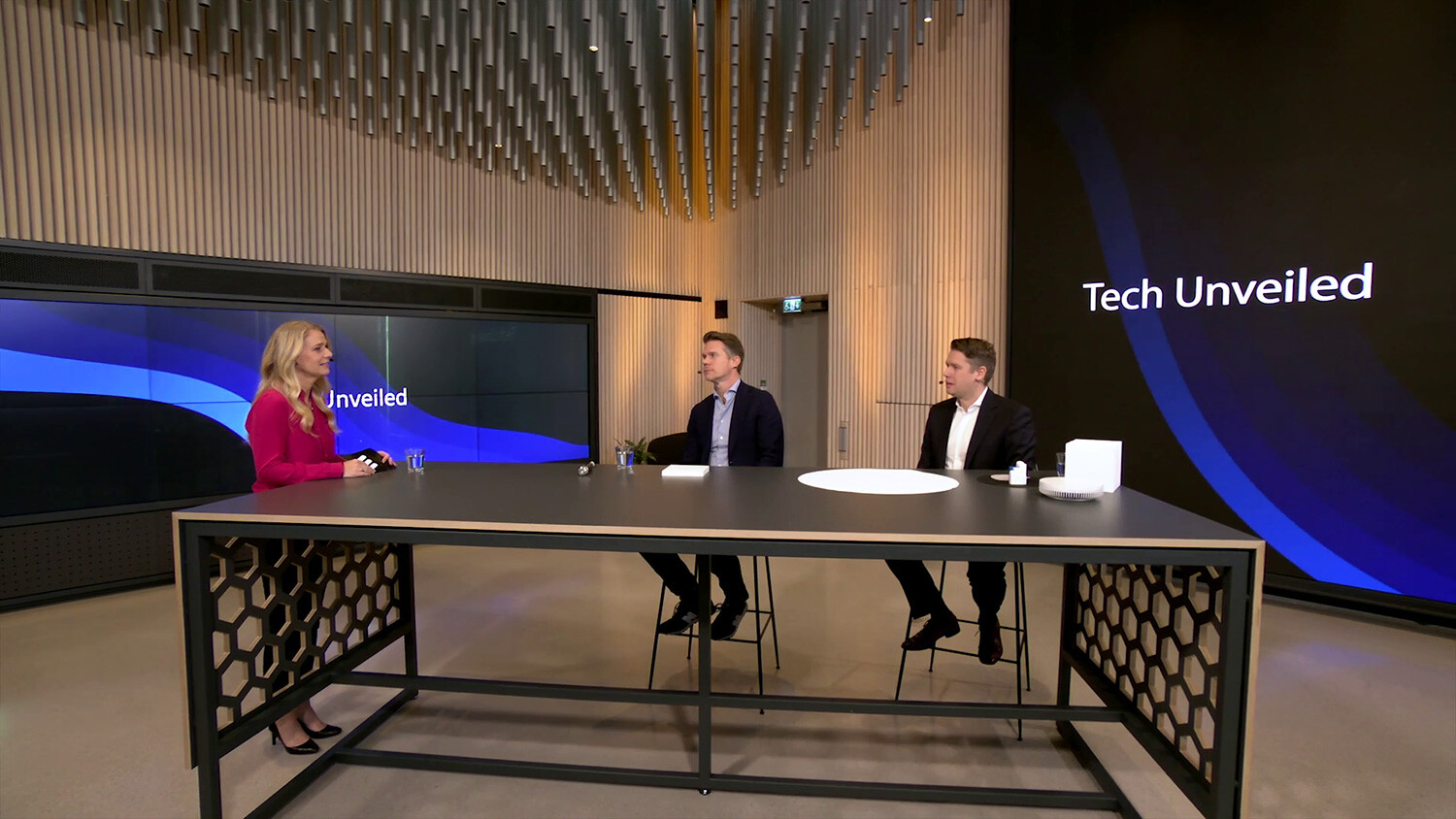
Up to 80% of the mobile data traffic is generated indoors
Networks have traditionally been built as macro-outdoor networks. This meant that people that were using their phones indoors (in an office building, a shopping mall or a hospital) were accessing the network via the outdoor coverage, what we call outside-in coverage. In urban deployments, most mobile traffic is usually indoors, which is difficult to serve from outdoor base stations due to radio signal attenuation (loss of energy) through walls and windows. In fact, it has been assumed that 70–80 percent of mobile data traffic is generated indoors (including traffic served by in-building systems). Given how extremely limited outside-in coverage is, the need for dedicated indoor solutions, such as in-building cell deployment, has increased tremendously to meet indoor traffic demand.
Indoor coverage becomes more important but also more challenging with 5G
Most existing 4G coverage services perform well for both outdoor and indoor scenarios in lower frequency spectrum bands (below 3 GHz), which can more easily penetrate buildings when compared to higher frequencies.
However, 4G networks can’t always cater to the capacity needed in high-density areas – that is, in areas with lots of people that are for example, streaming and gaming at the same time. These have been the starting points for indoor 5G solutions – 5G networks are about delivering the right connectivity where users need it, by maximizing the available spectrum. Mid-band (3.5 GHz) spectrum is a great option for that, as it provides a good balance between coverage and capacity for initial 5G use cases and deployment scenarios.
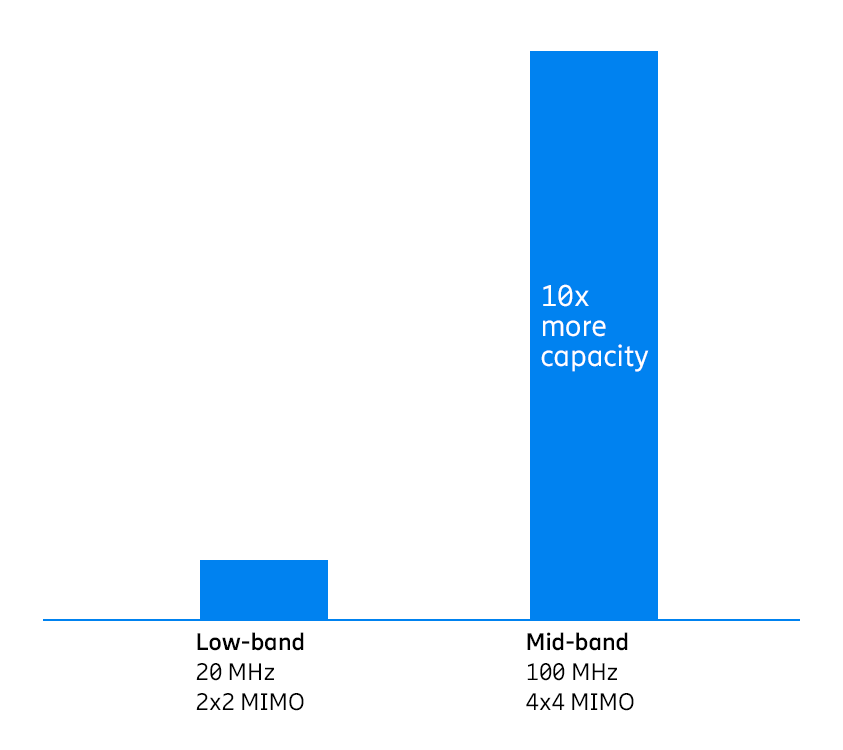
Figure 1: Difference in capacity between low and mid-band spectrum
While indoor 5G connectivity has started driving exciting new business use cases like remote healthcare, Industry 4.0, and cloud gaming, it has also brought some challenges to light. Early 5G adopters rated indoor coverage – at home or in public places – twice as important as 5G speeds or device battery life, according to Ericsson 2021 ConsumerLab report. They also expect the quality of indoor and outdoor coverage to be consistent, that is, seamless coverage when moving between indoor and outdoor spaces. However, their expectations are, as of now, not being entirely met - in South Korea, one of the most advanced 5G markets, as many as half of 5G users are dissatisfied with their indoor coverage.
The challenge related to improving 5G indoor coverage is that outside-in coverage is more complex to maintain on higher frequency spectrum bands – mid-band and millimeter wave (mmW). While the higher frequency used to deliver mid-band-based 5G provides more capacity and better performance, it also has higher attenuation (loss of energy) when propagating through walls and windows. This lowers the signal strength, making it more difficult to penetrate indoor environments.
The trend of creating sustainable buildings with, for example IRR coated windows, makes the outside-in coverage even more challenging due to the high penetration loss trough these types of windows.
In a nutshell, the realm of indoor 5G experiences offers considerable opportunities for service providers to offer consistent, high quality indoor and outdoor 5G coverage. In order to deliver on these requirements, they must consider the best in-building solutions to address high penetration losses while cost-efficiently covering high traffic demand.
Traditional indoor solutions are costly and complex to manage in higher frequencies
Traditional indoor solutions, such as distributed antenna systems (DAS), become increasingly complex and expensive to use in higher frequencies, and even more so in high band or mmW – new 5G spectrum for high performance services in dedicated zones. There are two types of DAS – passive and active. Let us look at the differences between them:
- Traditional Passive DAS: Based on placing high power radios in a basement and then using coaxial cables throughout the building to reach each antenna point. They typically either don’t support frequencies higher than 2.7 GHz or have very high attenuation on 3.5 GHz (typically ~16dB loss per 100 m). Additionally, other components such as couplers and combiners typically only support up to 2.7 GHz. As a result, a totally new set of combiners and couplers need to be deployed for indoor 5G coverage, as well as new sets of coaxial cables to increase the MIMO layers used by 5G. This makes Passive DAS very expensive and not a realistic solution for 5G.
- Active DAS: In this case, coaxial cables can be replaced with fiber throughout the buildings. However, active components such as Master Units (MUs), Remote Units (RUs) and separate management systems drive up OPEX. Additionally, external antenna-based RUs used on mid-band typically require 30% more antenna points when compared to frequency division duplex (FDD) low-band deployment. The result is that Active DAS requires more antenna points and components, also making it an expensive and complex solution.
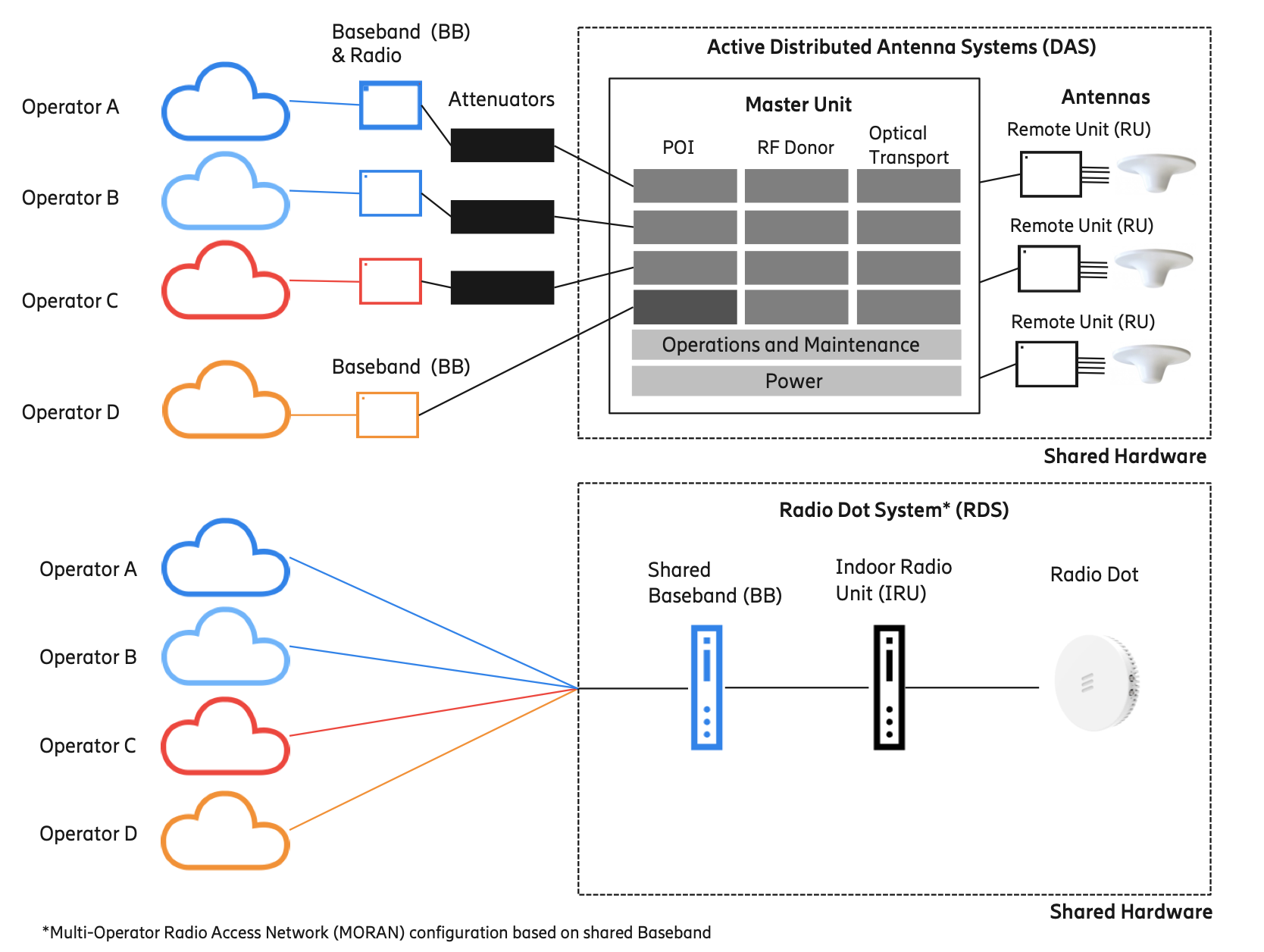
Figure 2: Visual representation of an Active DAS and an RDS.
As a result, a different approach is needed to cost-efficiently improve 5G indoor coverage and capacity.
A new approach to high performing 5G indoor coverage
With the Radio Dot System (RDS), Ericsson is redefining the concept of indoor small cells with the industry's most cost-effective and modular high-performance indoor radio system, covering a wide range of indoor environments with a common solution. It combines a much simpler architecture with a small form factor and low power consumption, as much of the processing is moved to the indoor radio unit (IRU).
When compared to distributed antenna systems, RDS has fewer antenna points, faster and easier installation, and much less components in the solution. It also uses a standard LAN cable, as opposed to coaxial cables between high power radios or RUs up to the antenna points. The RDS high capacity and antenna bandwidth spectrum capabilities make the RDS solution ideal for a MORAN indoor deployment driven by a lead Communication Service Provider (CSP) or a neutral host company. This works even in a MORAN deployment scenario where all connected CSPs transmits their own individual spectrum in CSP dedicated cells on one and same RDS system. As a result, the Radio Dot System has a clear operational benefit for the operator as well as for IT managers, CIO's and building owners.
To exemplify that, Ericsson conducted a CAPEX analysis comparing multi-operator and multi-vendor environments deployed using Active DAS versus RDS-based solutions. The conclusion was that the RDS-based solution is between 30 to 50% lower in CAPEX. This excludes the OPEX component, which would improve the RDS business case even further due to less equipment used, thus lower power consumption, less space used and, very importantly, the same operations and maintenance (O&M) as the Macro network. Feedback from operators using Active DAS also revealed that the systems’ complexity drives a lot of OPEX, since there are a lot more components that have lower Mean Time Between Failure (MTBF) compared to Ericsson RAN solutions. This increases downtime of Indoor systems, thus increasing the need for dedicated personnel for managing and troubleshooting.
The innovative Ericsson Radio Dot System features an elegant design, both in the product and the network architecture, enabling a simple deployment that is 100% integrated with the outdoor network. More than 120 operators in over 70 countries around the world have deployed Ericsson Radio Dot System in venues including airports, hotels, hospitals, shopping malls, offices, stadiums, and multi-dwelling-units. High performing indoor networks also bring many opportunities to enterprises, enabling things like ultra-reliable low latency communication (URLLC).
Be prepared for the next step
The Ericsson Radio Dot System is a future-proof solution for CSPs and neutral host operators alike. When considering the evolution of indoor ecosystems and next steps, both cloud technologies and purpose-built solutions will be needed to satiate the demand for new use cases. New technologies that enable enhanced flexibility and scalability to address a wider range of deployments and venues are on the horizon. The Radio Dot System will support a wide variety of architectures and deployment paradigms, while still delivering leading performance and customer experience.
In conclusion, Ericsson provides a reliable, future-proof multi-operator indoor platform, with the lowest total cost of ownership and leading 5G performance. With this solution, service providers will be more than prepared to provide the necessary capacity, coverage and reliability of current and future indoor ecosystems.
References: