Skip navigation
Previous searches
    Suggested searches
      Logistics work at harbour

      Turning the world's container fleet into a live data intelligence platform

      Connecting the world’s container fleets

      Ericsson is helping Net Feasa bring operator-grade mobile connectivity to commercial vessels, enabling live data from containers, reefers and onboard sensors while ships are at sea.

      Case

      Global shipping is one of the world’s most sophisticated logistics systems, with tens of thousands of commercial vessels weaving amongst millions of smaller ships. But during a voyage, many vessels will operate with limited live visibility into dry containers, ‘reefers’ (refrigerated containers) and the sensor-equipped assets they carry. These networks have not evolved at the same pace as the industry at large, and so lack the ability to support some of the more sophisticated features that real-time data and AI can enable.

      For Net Feasa, a specialist in remote and maritime communications, that gap represents a major opportunity: to give shipping companies trusted, continuous access to the data they need to protect cargo, improve safety and make better operational decisions.

      Working with Ericsson, Net Feasa is turning every vessel into a connected, intelligent asset. By combining Ericsson radio and On-Demand core network capabilities with Net Feasa’s maritime software and data intelligence layer, the companies are creating a scalable foundation for the next generation of maritime IoT. Each vessel is becoming its own digital transformation project, turning a moving remote industrial environment into a live data platform.

      Highlights

      A woman with tablet

      By combining Ericsson radio technology and Ericsson On-Demand SaaS Core services with Net Feasa’s Agentic Control Tower™ platform, Ericsson and Net Feasa are making operational data for ships available from one of the world’s most challenging environments: commercial vessels at sea.

      The result is a scalable foundation for safer, smarter and more data-driven shipping — from improved cargo monitoring and reduced manual checks to future integration with ports, Terminal Operating Systems and AI-enabled fleet operations — all while creating a path toward future 5G maritime services.

      Opportunity

      Cargo ship sailing across the ocean

      There are between five and six million cargo containers actively crossing the ocean at any one time. Once these containers leave port, visibility of them becomes inconsistent and fragmented. Containers can often traverse long ocean routes with limited insight into the condition, location and risk profile of the goods within.

      That creates a particular challenge for high-value, refrigerated and dangerous cargo. Temperature changes, equipment issues or heat anomalies can have a direct impact on cargo quality, crew safety and operational decision-making. Manual checks to prevent this can themselves introduce safety risks.

      The opportunity for Net Feasa was to close this visibility gap with a trusted connectivity model built to endure the fickle reality of maritime travel.

      That meant enabling live data from containers and onboard sensors while supporting the IoT devices already deployed across global shipping operations. It also meant creating a foundation that could work today with 4G-connected assets, while preparing shipping companies for future 5G-enabled maritime IoT services.

      In doing so, Net Feasa and Ericsson would help shipping companies move from basic, inconsistent connectivity toward a continuous operational intelligence across cargo, vessels and, eventually, ports.

      Solution: On-Demand mobile broadband core for Net Feasa

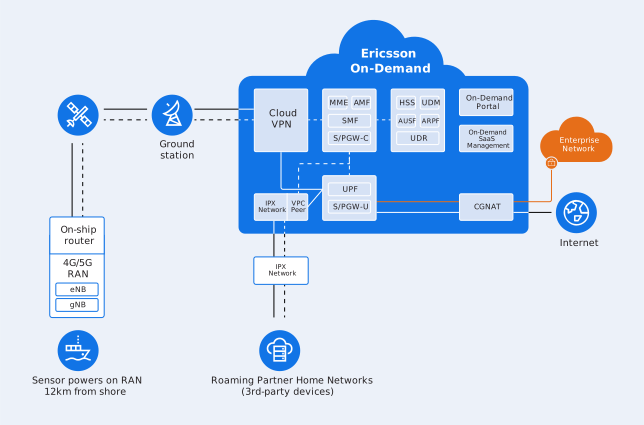
      Net feasa infographic

      Net Feasa and Ericsson are creating an operator-grade maritime IoT platform that brings mobile connectivity directly onto the vessel. It combines Ericsson radio and core network technology with Net Feasa’s maritime software, analytics and data intelligence layer, turning ships into connected platforms capable of collecting and sharing live data from containers, reefers and onboard sensors.

      On each vessel, Ericsson radio technology provides the mobile network layer needed to connect sensor-equipped assets at sea. Net Feasa then adds the maritime intelligence layer through its Agentic Control Tower™ platform, combining and enriching container telemetry, vessel data and cargo information.

      Key features include:

      • Support for inbound roaming, allowing vessels to connect automatically when they come within range
      • Support for existing 4G services, as well as a clear roadmap to 5G IoT functionality
      • A flexible core architecture, with Ericsson On-Demand on Google Cloud, enabling an OPEX-led, pay-as-you-grow approach

      The result is more than a connectivity service: it is a scalable data platform for connected shipping, helping operators monitor cargo condition, identify risks earlier and prepare for more intelligent integration between vessels, fleets and ports.

      Results

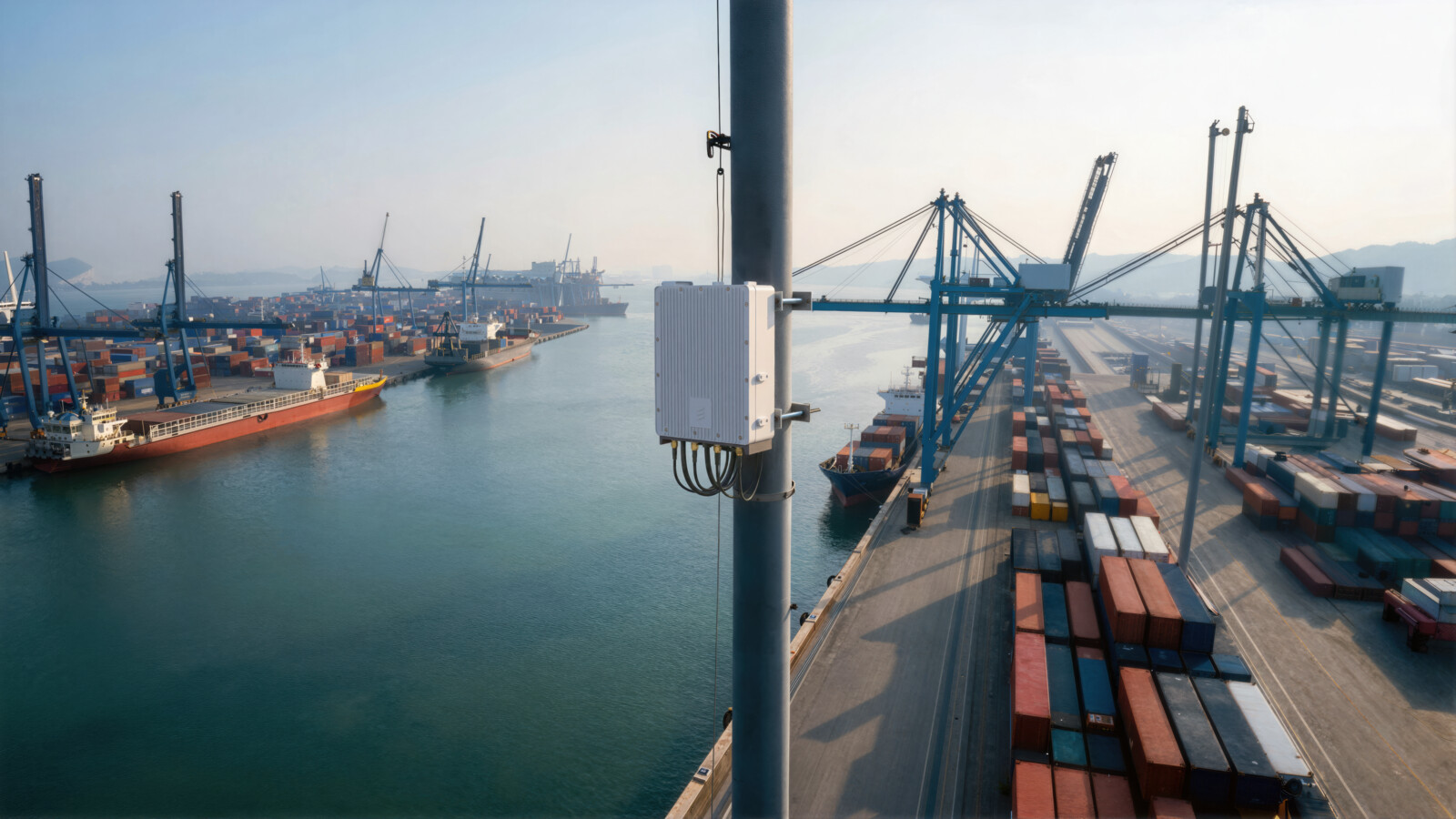
      Shipping port with cranes.

      The immediate value lies in giving shipping companies live visibility into assets that have historically been difficult to monitor continuously at sea. By connecting containers, reefers and onboard sensors through an operator-grade mobile network, Net Feasa and Ericsson are helping turn vessel data into practical operational intelligence.

      Key benefits include:

      • Live monitoring of refrigerated containers, supporting better visibility of temperature, condition and cargo quality during the voyage
      • Reduced reliance on manual checks, helping crews save time and avoid unnecessary safety risks
      • Earlier detection of potential cargo fire risks, heat anomalies or issues with goods requiring special handling
      • Support for existing 4G IoT devices through inbound roaming, reducing the need for costly SIM replacement
      • A scalable network foundation that can grow vessel by vessel, fleet by fleet, while preparing for future 5G maritime IoT services

      As the platform evolves, the same data foundation could support closer integration between vessels and ports. An IoT-enabled ship approaching port could share enriched container, cargo and vessel data with Terminal Operating Systems, helping port authorities and supply chain operators deliver more predictive, coordinated and intelligent maritime logistics.