









Europe cannot scale AI, modernize its industry or protect critical services on networks it does not trust. As advanced connectivity becomes part of the infrastructure behind healthcare, transport, energy, public safety, defense and government services, trusted networks are becoming a condition for Europe’s competitiveness, resilience and security.
Trust is becoming a competitiveness issue
For a long time, connectivity was treated mainly as a consumer service: faster internet, better coverage, cheaper subscriptions. That view no longer fits today’s reality. Networks now support far more than everyday mobile use. They help keep energy systems running, connect hospitals and transport networks, support public safety and enable industrial automation. Mobile networks also serve as the foundation for cloud services and carry data that increasingly powers artificial intelligence, creating a seamless interconnection between AI, cloud computing, and mobile infrastructure.
As more of Europe’s economy and public services depend on digital infrastructure, trust becomes part of the basic test of whether networks are fit for purpose. No business will invest and build advanced services on infrastructure it does not trust. No government can rely on networks that expose critical systems to unnecessary risk. And as more public and private services run over advanced networks, citizens need confidence that their personal data is handled through secure, trusted infrastructure. Citizens will only benefit fully from digital public services if the systems behind them are secure, resilient and dependable.
This makes trusted networks central to Europe’s cybersecurity strategy and to its economic strategy.
What trusted networks really mean
A 'trusted network' relies on end-to-end confidence across its entire ecosystem from the initial supplier to the final operator. Trust is established through absolute transparency, rigorous vendor accountability, and adherence to global standards. It ensures that every asset is sourced from autonomous partners, every operation is governed openly, and all access – including through APIs – is strictly audited and bound by clear ownership.
Achieving this depends on trusted suppliers: partners whose technology, processes and long-term support can meet Europe’s requirements for security, rule of law and resilience. This matters because modern 5G networks are deeply interconnected across the core network, radio access network, edge, transport and Internet of Things environments. The idea that some areas of the network can be treated as “safe” or “non-sensitive” is increasingly outdated.
Partial security creates blind spots. In a world where networks support hospitals, rail systems, energy grids, emergency services or drone detection systems, those blind spots become risks Europe cannot afford to ignore.
In mission-critical or public service environments, a security weakness or major outage is more than an inconvenience. It can disrupt services that people and businesses depend on every day. This is why trust has moved from being a specialist technical concern to a core requirement for the Single Market.
The slow and fragmented implementation of the EU 5G Toolbox across Member States has shown the limits of a voluntary framework without consistent execution. If Member States take very different approaches to high-risk vendors and critical network infrastructure, Europe is left with avoidable security gaps. It also becomes harder for operators to plan long-term investments with confidence. Security, resilience and the protection of fundamental rights cannot remain fragmented if Europe wants a truly integrated digital market.
AI raises the stakes
Trust also has an enabling role, especially as AI moves from experimentation into the real economy. The next phase of AI will extend well beyond large data centers and increasingly shape the physical world: factories, hospitals, vehicles, energy systems and other industrial environments.
That changes what networks need to do. AI workloads will become more distributed. Traffic will become more uplink-heavy and latency-sensitive. Applications such as collaborative robots, autonomous vehicles, remote operations and connected medical systems will have much lower tolerance for uncertainty.
In that environment, best-effort connectivity will not be enough for every use case. Europe will need advanced networks that can deliver predictable performance, strong security and reliable service levels. 5G Standalone, and eventually 6G, will be central to this shift. Trusted networks will soon become strategic assets that give businesses and governments the confidence to build advanced digital services on top of Europe’s infrastructure.
Trusted networks are already becoming real
The value of trusted connectivity is already visible in sectors where failure is not an option. In public safety, next-generation mission-critical networks are changing how emergency services communicate. Built on 4G and 5G standards, these networks can provide secure broadband, priority access, assured quality of service, pre-emption, slicing and precise positioning. That means police, fire and ambulance services can rely on real-time voice, data and video when it matters most.
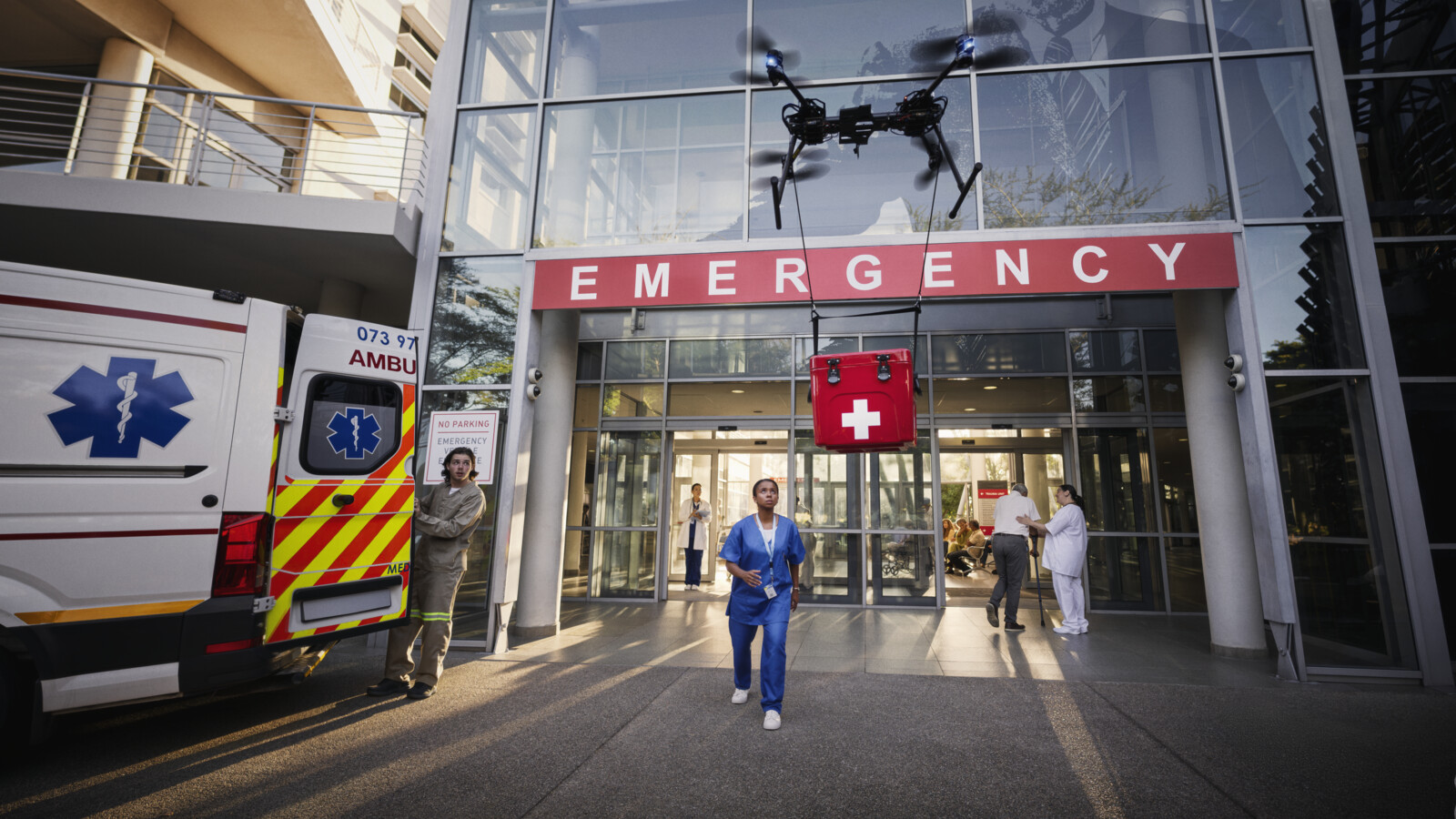
Healthcare shows a similar shift. Advanced 5G networks can support connected ambulances, smart glasses in emergency care, real-time asset tracking, medical transport and hospital operations. In these settings, connectivity is about far more than convenience. It can support faster decisions, safer operations and better use of clinical resources.
The same pattern emerges in utilities, rail and defense. These sectors increasingly need secure connectivity that can support national resilience. The bar for trust is much higher than in traditional consumer services, because the economic and societal stakes are much higher too.
Trusted networks can become Europe’s advantage
Europe’s competitiveness, security and societal resilience in the digital era will depend on the quality and trustworthiness of its networks. As connectivity becomes critical infrastructure for AI, cloud, defense, industry and public services, trust will be one of the foundations of leadership.
Trusted networks will help Europe compete in AI and advanced digital services. They can support industrial transformation across manufacturing, transport, healthcare and energy. They can strengthen national and European resilience by ensuring that mission-critical systems are built on secure and dependable infrastructure.
Europe’s choice is whether weak trust in its networks becomes a brake on competitiveness and resilience, or whether trusted connectivity becomes a strategic advantage: secure, resilient and trusted platforms for the next wave of growth, innovation and resilience.