










Service orchestration for enterprise explained

Senior Product Marketing Manager

Senior Product Marketing Manager
Senior Product Marketing Manager
Ericsson and Telstra recently announced plans to develop an enterprise edge cloud solution. This solution will be a platform for innovation, delivery and customer self-care for new services and applications for agriculture, manufacturing, smart cities and enterprise branch connectivity services. As the roll out of 5G continues, we will continue to see many new interesting use cases for improving productivity and quality of services and products deployed on edge cloud solutions.
Another interesting example of telecom industry developments in this area involves a cooperation between Telefónica Germany, Amazon Web Services and Ericsson that enables industrial automation and digitalization of the economy. The ambition is to pave the way for new industrial solutions faster, improve automation capabilities in manufacturing and logistics processes and use edge computing as a vehicle for real-time implementations of applications. An important part of this proof-of-concept is to deploy 5G Core in the cloud to gain flexibility and lower costs.
Delivering services in a new environment
Edge computing is obviously needed when building an edge cloud, but service providers must also have a mechanism in place that keeps an end-to-end offering together in a secure and automated way across various cloud and network environments. Service orchestration is the answer to this: and is growing in importance as complexity increases.
To be relevant in the new enterprise ecosystem, service providers should look beyond connectivity, which they are already doing today. However, it’s easier said than done since traditionally service provider networks have been rather static and managed in silos, which makes service creation and delivery slow and costly. Enterprise service orchestration makes it possible for service providers to become more flexible by removing past silos since networks will be increasingly automated and based on multi-vendor, multi-cloud and multi-hyperscale cloud provider (HCP) environments.
Many new offerings will be created and delivered with several players partnering in the ecosystem. Looking ahead, we will, for example, see a greater dependence on hyperscale cloud providers and specialized application providers to launch new and exciting use cases. Service providers can play an important role here and be easier for enterprises to do business with. They also have a number of valuable assets that the ecosystem can take advantage of beyond connectivity. Using their end-to-end service orchestration and exposure assets, service providers can act as the spider in the web and tie everything together that is needed to deliver high-quality enterprise solutions.
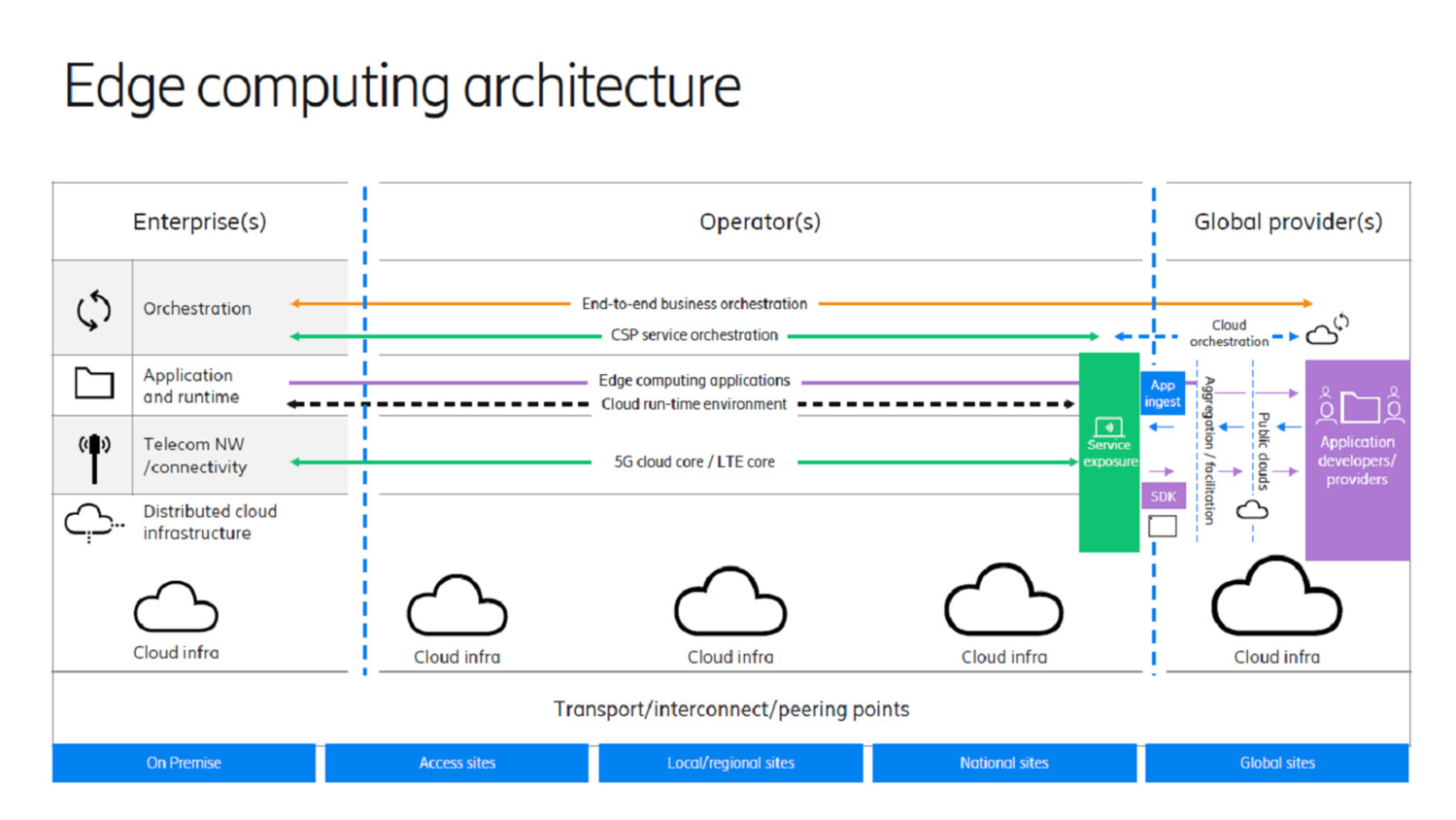
Figure:E2E orchestration in the edge computing architecture
Download the infographic.
End-to-end service orchestration advantages
The overall benefit for the service provider is the ability to manage and control services and applications across the network, including private networks, the operator network and hyperscale cloud providers’ datacenters. Service providers can, for example, deploy applications where they must be geographically to fulfill technical requirements and provide access to valuable network data and functions for others such as application developers to use in the ecosystem.
Enterprise service orchestration is an end-to-end play for designing, creating, delivering, and monitoring service offerings in an automated way. Service providers have control of the service and make sure it is delivered with the right quality. Another requirement from enterprises is the need not to be locked into one single application ecosystem. They must be able to work with several, and enterprise service orchestration enables that – allowing the service provider can orchestrate workloads across multi-cloud and multi-vendor environments.
Ericsson Dynamic Orchestration is a suite of solutions enabling high levels of automation for provisioning and assuring of hybrid networks. It is fully integrated into our comprehensive next-generation network technology roadmap and ready to maximize delivery of new services based on tomorrow’s network architectures.
Download our new solution brief to find out more.