










What makes great innovation for climate action?

Climate Action Program Manager

Climate Action Program Manager
Climate Action Program Manager
In high school I loved reading the Science Illustrated journal, and getting a peak at the latest innovations and scientific progress in the world. The journal managed to simply illustrate the most amazing discoveries and scientific progress in a way that was easily understood. It made me hope that we could use this technology evolution to combat issues like environmental degradation and climate change.
Sometimes the ideas and innovations I read about turned out well, and could be scaled. Other times, they didn’t. For example, I´m still waiting for us to have the ability to harvest large-scale solar power from PV cells in space, which they wrote about many years ago. Luckily, we haven’t waited for that solution to be available to solve our need for renewable energy solutions. Maybe I´ve become a bit more of a realist, too.
Changing societies
Even though innovations might not always be successful, scaled or used as intended, it’s still crucial for us to continue to create change through exceptional thinking. It often solves some of our everyday problems, and sometimes it can solve sectorial and societal problems.
For me, innovation and development is one of the most interesting and sometimes frightening things we do as humans. We have constantly evolved throughout our human history. For instance, our innovative thinking created agricultural practices that transformed the way we lived [1]. By producing food instead of collecting it, we allowed human populations to boom, and shifted from small numbers in confined local ecosystems, to changing the biophysical properties of the entire planet as we multiplied.
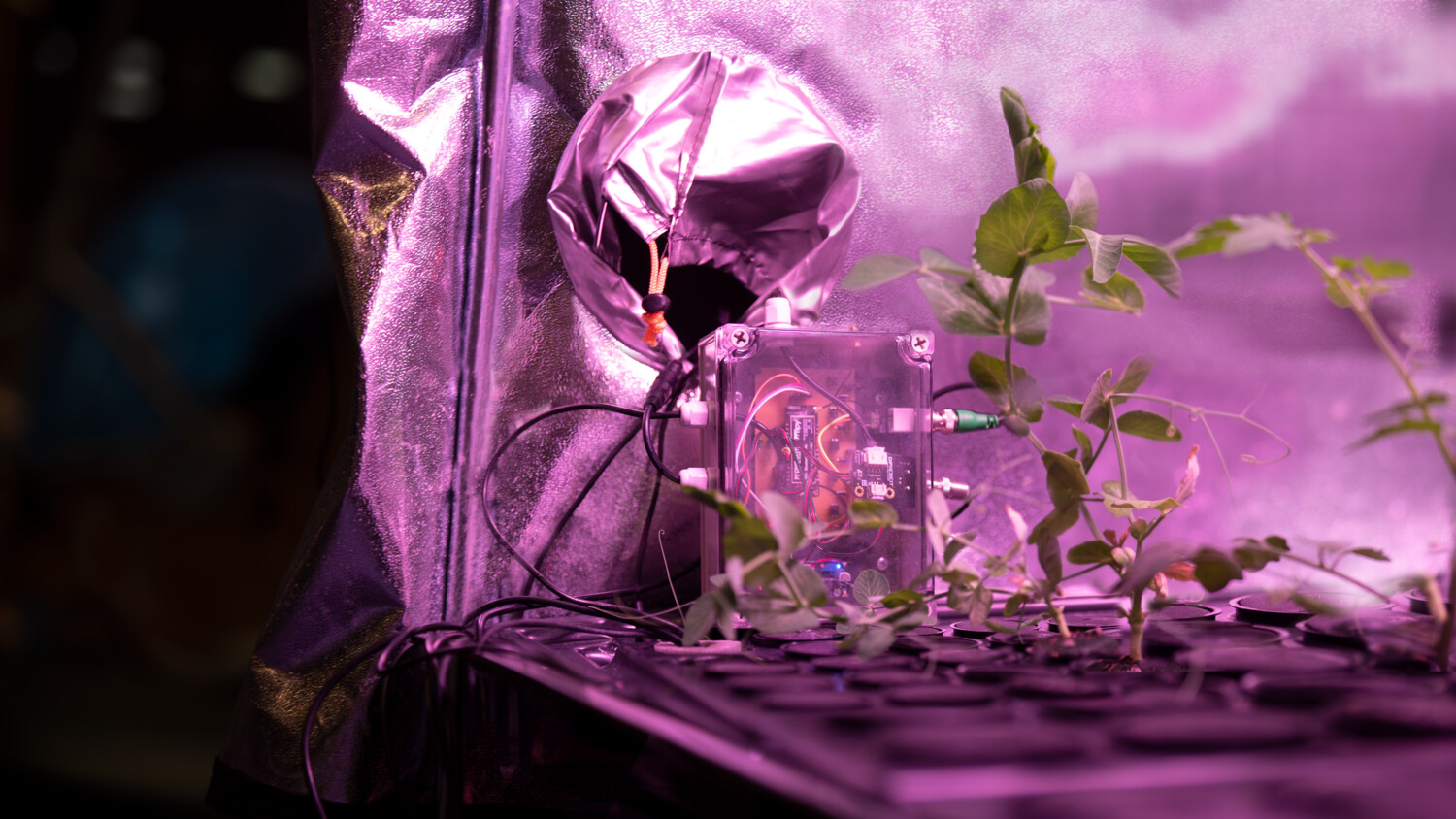
How far can innovation lead us towards tackling climate change?
This prosperity has created problems, especially for the biophysical boundaries of our Earth’s ecosystems. Of course, the intention was not to be inherently bad, but were created because we had a drive to change, and become something more than what we were before, albeit often at the expense of something, or someone else.
However, when faced with problems within our society, we have created solutions that support our progress and support us in solving the problem. The pace of change has increased tremendously. Just look at the technology evolution, that in only two decades, has boomed at a pace I never would have expected 20 years ago.
As a result, perhaps it’s time to increase our focus on using our innovation skills to solve one of the greatest problems of this time period: climate change. This process has started, but we need to accelerate the transition.
The Ericsson Innovation Awards
The Ericsson Innovation Awards (EIA) is trying to solve this exact problem. Every year, the EIA challenges global university students to come up with innovative ideas on how Information Communications Technology (ICT) can change the future.
This year, the theme for the awards is ‘Reclaim the Future’, and we’re asking young innovators how best to create innovative solutions for climate change mitigation in society – for both citizens and industry. I hope they’ll be able to think about cool, new innovations. I was certainly impressed by last year’s contestants, who created solutions that went beyond imagination.
In 2019, the EIA challenged students to harness the power of water and underwater material environments to develop innovative solutions to global challenges. The winners created an autonomous underwater Bio-AUV with a unique propulsion system inspired by cuttlefish technology that could enable underwater exploration for critical data gathering for research. Truly inspiring, and I bet we will see some great innovations this year as well.
To combat climate change, we need exponential change. The popular misconception is that innovation is done to create new technology solutions. Sometimes, that’s exactly what’s needed. But in order for us to create exponential change, we need to halve emissions by 2030 and reach net-zero greenhouse gas emissions before 2050. This means we need to scale climate action solutions now.
Solutions don’t need to be a brand new and unique technology or capability, but rather a concept or a holistic solution. A solution could be to redefine the use of technologies though new use cases or business approaches. Let’s take harnessing solar energy as an example. The innovations that created the first prototype for solar PV cells were amazing, but it wasn’t until we could make it optimal and scalable – by lowering prices and reducing the need for critical raw materials – that we saw a change in the market and watched the innovation become a solution. That idea, and innovation, has spurred other ideas in turn – everything from solar rooftop tiles, to flexible and transparent solar photovoltaic films.
Innovating for good
Innovations need a vision. They need a dream about what can come to be, and they must dare to speak differently from their predecessors. It’s also important to consider that not one single innovation or idea can support the whole transition to the finish line. Many ideas are needed, and everyone in the team must work together. We need innovations that can become a part of the solution, and foremost, we need bold, courageous ideas for transformational change.
When it comes to solving big societal problems, I think we’ve reached the stage where we can leverage technology’s evolution while not damaging the biophysical properties of the Earth’s systems even further. If I were to dream big, I hope that we’ll see innovations that can change everything that needs changing, at a pace never seen before. And in the long run, who knows? We probably can’t imagine how our society will evolve further. After all, the first innovators of farming practices 10,000 years ago, couldn’t have imagined how their ideas transformed human society.
Maybe your idea could be that spark. Maybe you can be part of the solution…
[1] J. Gowdy and L. Krall, 2014, Agriculture as a major evolutionary transition to human ultrasociality
Learn more
Read Emelie’s previous blog post on how climate change can benefit from mobilization and digitalization
Visit our sustainability and corporate responsibility pages.
Find out about the Exponential Climate Roadmap.
Read our blog post from President and CEO Börje Ekholm: 4 ways for companies to take effective climate action
Find out how we’re enabling network connectivity through intelligent and green energy site solutions