










Why orchestrating now prepares you for the future

Senior Solutions Marketing Manager OSS

Senior Solutions Marketing Manager OSS
Senior Solutions Marketing Manager OSS
Why orchestrating now, prepares you for the future?
Why does it matter that Ericsson has exceeded 100 orchestration customers globally? The milestone, while significant, is important because it reflects an investment by CSPs in the future. Orchestration will play an increasingly important role in new enterprise services, end-to-end network slicing, private networks, cloud edge and ORAN. The rapid growth of new orchestration contracts is closely tied to the growth in 5G networks globally and reflects how CSPs are positioning for the future.
Ericsson currently has 105 orchestration customers, 139 contracts and 61 live deployments. While the majority of the current deployments are focused on NFV orchestration and core network we see this as the pre-cursor to more complex enterprise services.
What is Orchestration and why does it matter?
As network move from homogeneous monolithic, siloed domains to heterogeneous, cross-domain service centric networks the need for orchestration becomes essential for cost-effective and efficient management of networks and services.
This requirement is reinforced by the evolution to 5G stand-alone new radio (5G-SA) and Cloud native networks. These networks are designed to be automated. At the service level, customer expectations are for more tailored, customizable services, delivered on-demand in minutes, with the ability to regularly change the nature of the service in response to changing requirements.
Orchestration is the key to reducing operational costs, exceeding customer expectations and enabling new service revenues. Orchestration is essential for future success.
For some time, operators have been using Ericsson Orchestrator to manage their cloud infrastructure and virtual network functions (VNFs). Now, the industry is increasingly adopting more advanced enterprise services to generate new revenue streams.
Enterprise Services
Globally we see an interest in CSP’s enterprise ambitions moving beyond traditional connectivity services, and into the non-communication services. Some of our customers have already made significant inroads into this domain. The top three enterprise services we see today are:
- SD-WAN orchestration
- WAN optimization (often in conjunction with SD-WAN)
- Enterprise security services
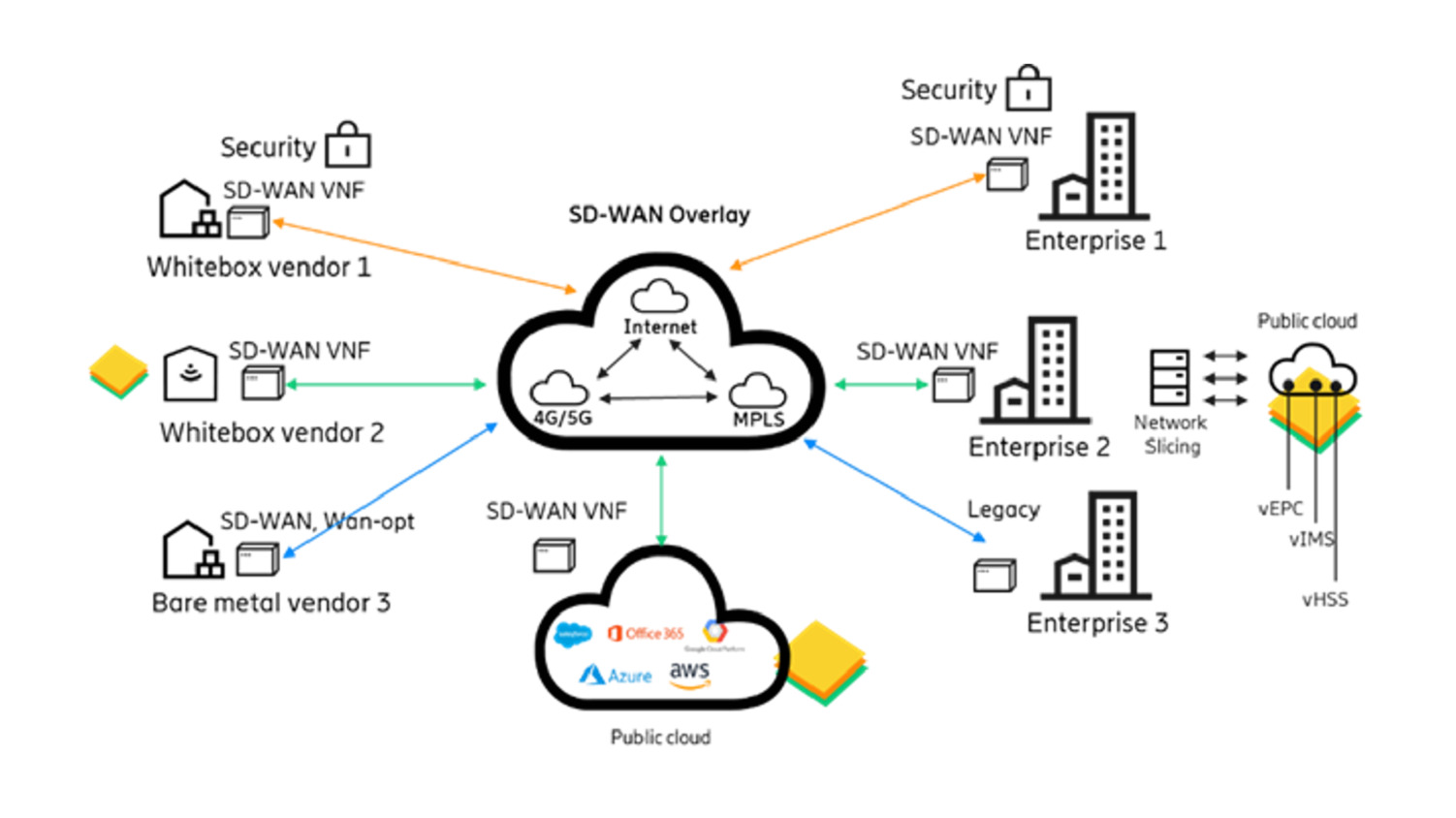
Figur 1: Common enterprise services (today)
Deployment options
Another insight from our customers is their multi-vendor approach to virtual network functions (VNFs) and cloud network functions (CNFs). Often, we see multiple SD-WAN, Firewall and optimization vendors being on-boarded to allow CSPs to create customer choice based on either enterprise segments and/or deployment locations. Increasingly we are seeing enterprise deployments moving from the more traditional operator data center and on-premises to locations in the “Operator Cloud Edge” or on Public Cloud.
The current deployment options represent an increase in complexity and a need for orchestration:
- Operator data center/private cloud
- Operator cloud edge (vCPE)
- Enterprise date center
- Enterprise on premises (uCPE)
- Public Cloud/Multi-Cloud
Multi-vendor execution environments and networks
Although the earliest orchestration deployment often used a single-vendor stack, we are seeing a proliferation of execution environments and an expectation that enterprise service orchestration will comfortably interwork with both different vendors and multiple vendors. Ericsson currently has 57% of orchestration deployments on its Ericsson Cloud Execution Environment (CEE) which is a version of Openstack™ CSPs are unhappy with the prospect of “vendor-lock in” and expect orchestration systems to support open standards. Support for public cloud and multiple public clouds is highly desirable and we are seeing increasing interest in the move to cloud native network functions, using Kubernetes containers.
Service providers also expect that orchestration systems support multiple vendor networks as they again look for the ability to standardize orchestration solutions across both multi-vendor and multi-op-co networks.
Orchestrating the future
When looking at the orchestration of enterprise services it’s important to remember that the concept of NFV management and orchestration (ETSI MANO) is only a few years old. In that time, it moved from theory, to concept, to become for underpinning for future networks and services. We’re seeing the early adopters capitalizing on the technology, but in reality, we’re seeing the industry transitioning from the “early-majority” to “late-majority” and even the most advanced use cases aren’t pushing the boundaries of capability for the technology. It isn’t surprising to see CSPs focusing on simple, but high value services like NFVi and SD-WAN orchestration today.
However, the early adopters are investing in the future, learning how to deploy the technology, and transforming digitally to enable far more complex and far reaching services in the near future.
The ability to create intent-driven end-to-end network slices is arguably the most discussed orchestration capability. It enables CSPs to leverage their knowledge of networks to highly customize services from end-to-end based on the requirements of the service. For the most latency, resilience and bandwidth sensitive services the ability to deploy in the operator cloud edge will be critical to meet or exceed customer service level agreements (SLAs) as customer experience increasingly become a differentiator and revenue generator.
Why does it matter that Ericsson now has over 100 orchestration customers globally? It matters because it shows that service management and orchestration is rapidly maturing; service providers see the potential of orchestration to drive new enterprise services and new enterprise revenue streams; and they are investing in orchestrating the future.
Find out more about Service Orchestration.
Find out more about NFV.