











Our top podcast episodes of 2020


New technologies for old industries: Victoria Van Camp, SKF
“Customer’s don’t want to think about our products” is not something you often hear from a CTO. But that’s exactly what Victoria Van Camp, Chief Technology Officer at Swedish ball bearing company SKF claims in this episode of Talking IoT.
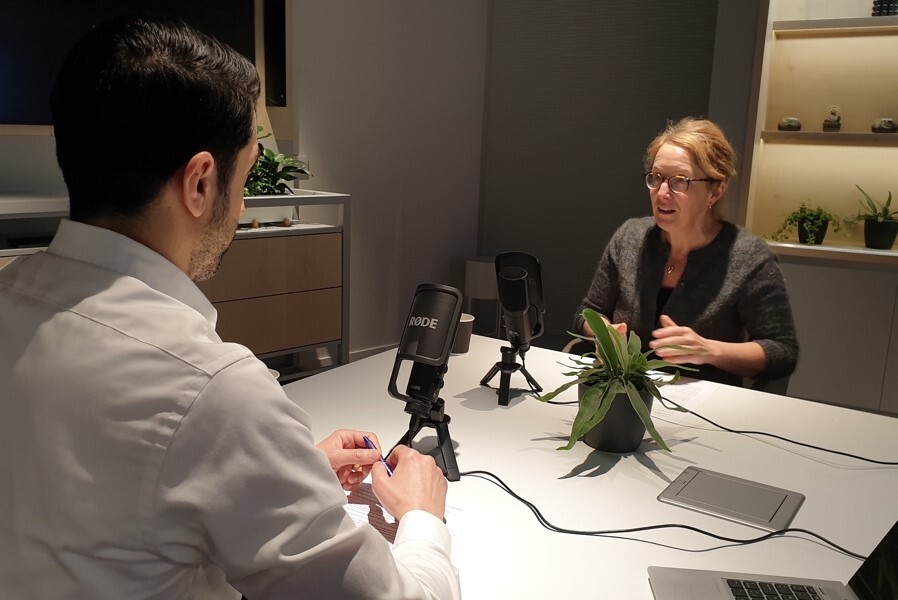
Talking IoT podcast host, Behdad Banian, talks to SKF CTO Victoria Van Camp
This interview has been the surprise hit of the podcast series, because, well, who knew that ball bearings could be so interesting? The transformation factor truly comes to life in this episode when you discover how far SKF has come. Founded in 1907 as ‘the startup of its day’, the 113 year old company has grown to achieve sales of SEK86 billion in 2018 (around USD10 million), and now employs 44,000 people in 130 countries.
It turns out, ball bearings are everywhere. You’ll find SKF products in mines, paper mills, vehicles, and solar power products. The company works within aerospace, automotive – all the big car manufacturers – anything that moves or oscillates, including the machines produced by Boston Dynamics (but most of that is top secret). But the exciting shift is how the humble ball bearing is evolving into something completely new.
As Van Camp puts it, the secret to digital transformation is data, and the way you gather data is often via sensors. What SKF is doing is turning its ball bearings into IoT sensors – “it’s the perfect data collection point”. This is an inspiring look at how an old industry can completely transform its business with digital technology. A must listen.
Tech trends 2020 with Ericsson CTO Erik Ekudden
Digital twins, limitless connectivity, and an internet of senses. Get ready to dive into future tech in this episode from the Ericsson News Podcast where host David Francisco talks to Ericsson CTO, Erik Ekudden. It’s based on Ericsson’s annual Technology Trends report, which reveals what we should expect from technology and connectivity in the years ahead.
Ekudden reflects on 2020, and how the adoption of digital has become the new normal. He also discusses what’s driving the technology shifts that impact us all, including whole industries like manufacturing, where today, digital twin technology (a digital representation of a physical infrastructure) can enable better decision making and create significant energy savings.

Erik Ekudden, CTO at Ericsson (left)
Ekudden also mentions the internet of senses, where we’ll soon be able to feel, touch and taste things located on the other side of the globe. It’s already happening with haptic technology for instance, where remote sensory experiences through high bandwidth, low latency connections are enabling innovations like remote surgery.
This is a compact, but easy to listen to episode, full of outlooks and use cases. It also answers the big questions such as, are big tech trends an influence on, or the result of, a rapidly changing society?
Listen here.
Is 5G energy efficient?
Hosts Janina Hedberg and Paul Cowling celebrate their 50th episode of The Voice of 5G Podcast, and kick off with debunking the myths of 5G that emerged at the beginning of the Covid-19 pandemic.
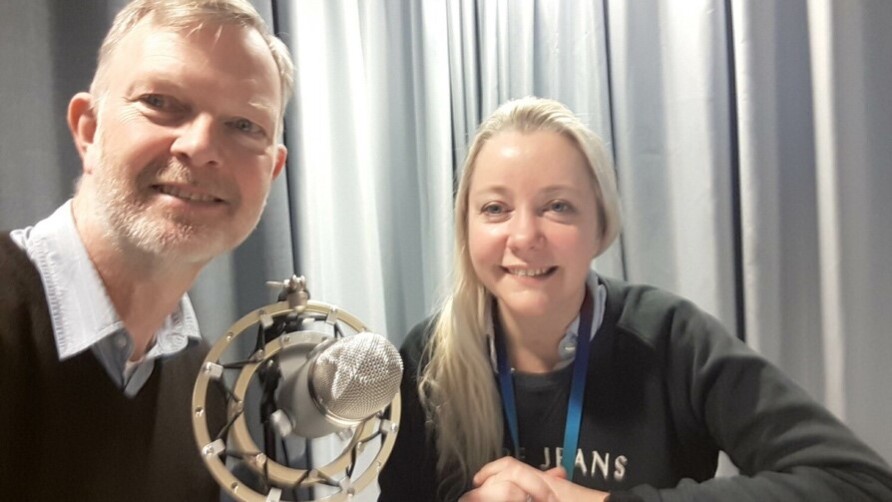
Voice of 5G podcast hosts, Paul Cowling and Janina Hedberg
Guest starring on the show is Mats Pellbäck-Scharp, Head of Sustainability at Ericsson, who introduces the main theme of the episode: how 5G can help break the energy curve and help reduce the globe’s carbon footprint.
If 5G can increase data traffic, it must mean that it needs to generate more power, right? Wrong.
Energy efficiency has been part of the whole process of building 5G, from standardization, to offloading power consumption in devices. Mats explains how everything Ericsson 5G-related goes towards the wider company sustainability goal of being carbon neutral by 2030. Ultimately, 5G is fundamental to society if we’re to reduce our climate impact and leverage the right capabilities to make it happen.
For example, 5G is the only way to electrify local transport systems and reduce local climate emissions. It also means significantly smarter control of energy grids, and it means many industries can implement energy-intelligent operations, using artificial intelligence and machine learning to better monitor and control operations. Shockingly, non-energy efficient, or ‘passive infrastructure’ can burn as much as 50 percent of your on-site energy.
Listen here if you want an answer to what things need to change for 5G to break energy curve.
Tools not toys: Pippa Malmgren, presidential advisor and co-founder of H Robotics
Pippa Malmgren was an economic advisor in the White House under George W. Bush. Today, she’s an author and co-founder of H Robotics, which makes AI-led, commercial-use drones for industries to conduct autonomous data gathering.
H Robotics works with some of the world’s biggest corporations in oil, gas and construction. As Malmgren puts it, the company helps its clients enter the ‘third dimension’ – providing drones for land, sea and air. Think mines, oil rigs, and even de-mining areas in war zones – hard to reach areas where access to certain data and information is crucial.
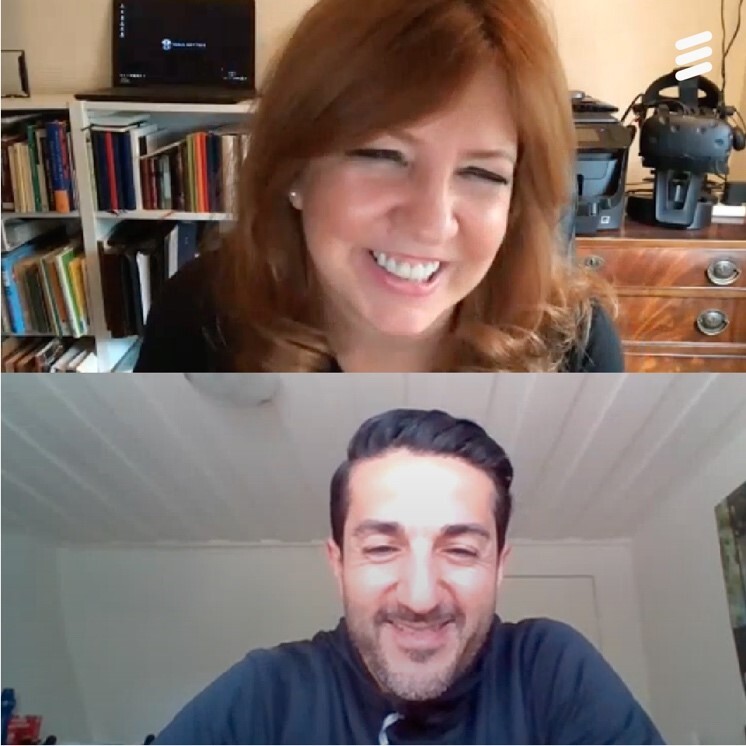
A socially distanced podcast episode with Pippa Malmgren of H Robotics and Talking IoT podcast host, Behdad Banian.
This podcast episode touches on all sorts of subjects: the ethics of data, the digital divide, leadership, and the geopolitics of computational power.
Particularly interesting is her take on the inherent fear of automation and robotics, and how our mindset as humans is always one step behind technological development. It takes time to adapt, which is why the things we don’t fully understand lead to an initial resistance to it. But Malmgren provides her thoughts on why automation will empower, rather than disenfranchise us.
Despite the array of topics covered, Malmgren is an interviewee who is easy to listen to – her tone is something you’d expect to see at a TED talk, for instance. This is an episode that looks to a future on a broader perspective – the opportunities, the challenges, and where we’ll be in the next five years.
How to serve the 5G powered business
How do you keep up with the pace of change currently happening in the telecom industry? And how can service providers best serve their customers in an age where the complexity of managing networks goes beyond what humans are capable of doing on their own?
These are the topics that podcast host Dez Blanchfield covers with Jan Karlsson, Senior Vice President and Head of Business Area Digital Services at Ericsson, who leads an area that has gone through a huge transition over the past couple of years.
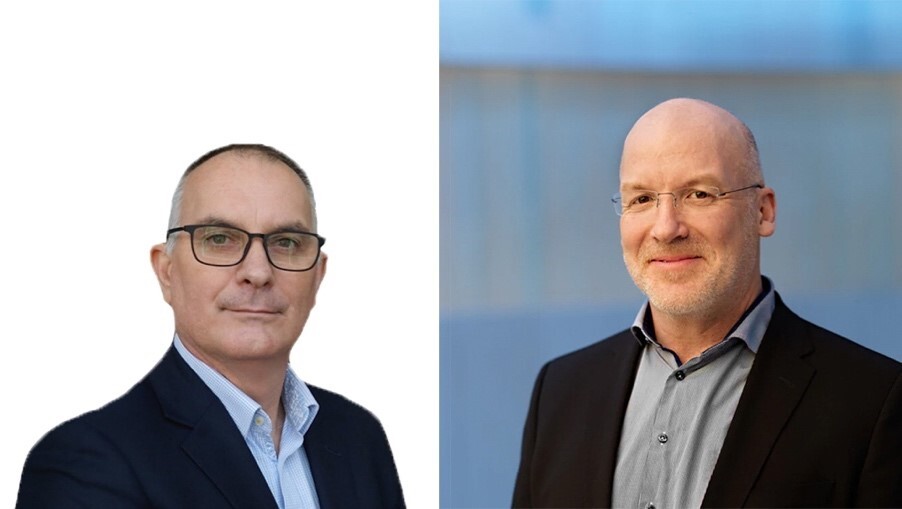
Transmissions from Tomorrow podcast host Dez Blanchfield (left) and Jan Karlsson, Senior Vice President and Head of Business Area Digital Services (right)
Karlsson discusses how capitalizing on new ways of working, open source, Cloud native and automation have all been integrated into the business, resulting in what he says is a solution that’s now, “delivering smarter networks, so customers can deliver smarter business”.
This episode puts into perspective the challenges out there for service providers, as well as some clear steps they can take to leverage 5G opportunities with enterprise customers as it rolls out commercially across the globe.
Karlsson makes clear that for service providers, it shouldn’t just be about working on the latest technological capabilities. It’s about finding a balance between technology, business and operational capabilities that empower enterprises with new options and potential revenue streams. The solutions don’t need to be complicated either. But it’s crucial to take a position now.
Listen here.
Fighting systematic discrimination in the workplace
This year’s Black Lives Matter protests in the US and around the world brought structural racism to the forefront of many important conversations. It forced all facets of society to reflect, and question the structures and processes that enable discrimination.
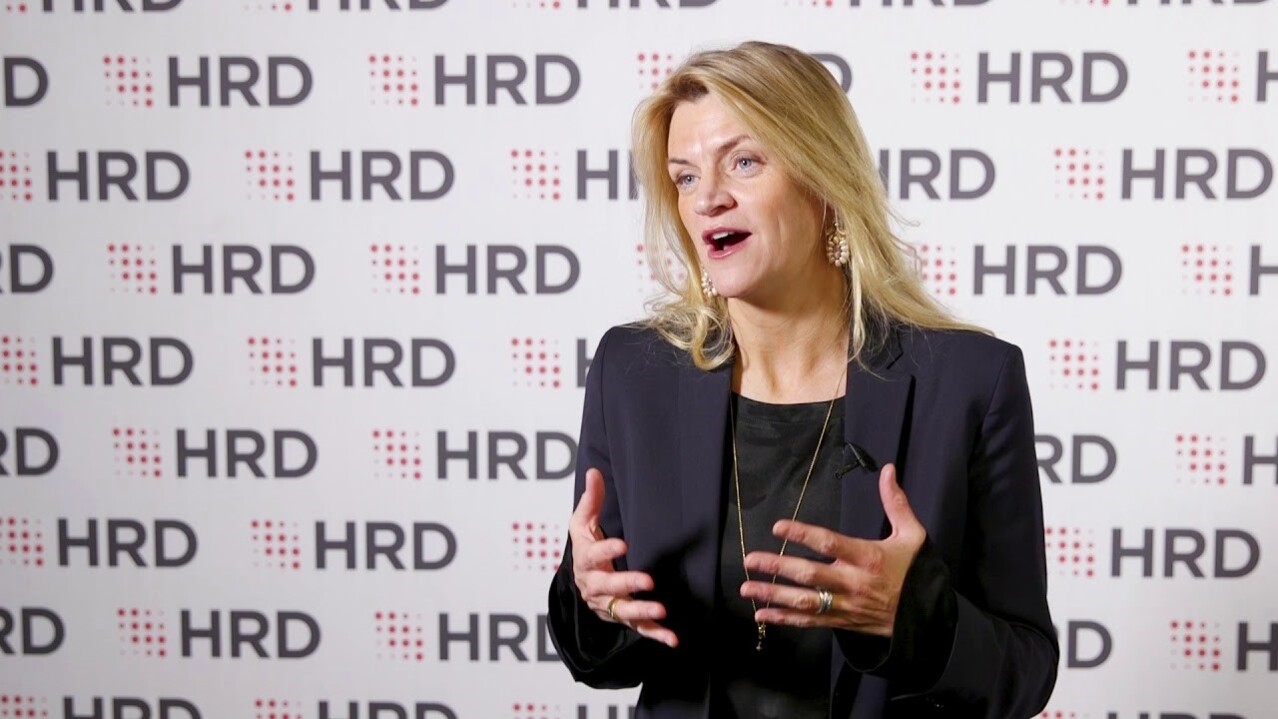
Selina Millstam, Vice President and Head of Global Talent Management at Ericsson.
This episode covers what corporations are doing to support these kinds of movements and how to create positive change in the long term. Guest on the podcast is Selina Millstam, Vice President and Head of Global Talent Management at Ericsson, who discusses what the company is doing to foster diversity, inclusion, dignity and respect, and the practical steps it’s taking to tackle systematic biases – both conscious and unconscious.
Millstam is very clear about the goals, why they’re so important, and the fact that “we haven’t done enough”. She discusses how corporations need to evaluate every step of an employee’s career – from recruitment (is the right language being used?), to how employees are promoted, rewarded and recognized.
“Listening needs to move to action”, she says, and that includes using behavioral science methods in interview processes, fostering a solid speak-up culture, and creating an open talent market to make sure the right person gets the position.
Listen here for an open conversation about the responsibilities that corporations have in confronting discrimination, and what it means to be an ally.
Hear more from our Ericsson podcasts