










Mobile radio access networks: What policy makers need to know

Director of Government and Policy Advocacy

Director of Government and Policy Advocacy
Director of Government and Policy Advocacy
If history is any indication, the industry will only thrive and fulfill the promise of tomorrow if commercial players are free to make their own unrestrictive investment choices without undue regulations and requirements being imposed on them. This freedom will allow different technological approaches to compete on technical merits, price, security, flexibility and functionality. Industry leaders, including governing bodies like 3GPP, telecom operators, and OEMs around the world recognize the need for open, coherent and flexible standards to ensure future progress and growth in technology.
It is crucial to ensure market-based competition where merits of technical performance and the competitiveness of different solutions and network architectures decide market outcomes. This freedom should not be taken away from commercial players, and they should maintain the ability to make their own unrestricted investment choices. This freedom will allow different technological approaches to compete on technical merits, price, security, flexibility and functionality with the aim to ensure the vast benefits 3GPP based mobile communication systems have provided to consumers, business, and societies at large.
Terminology
Several important technological developments, as well as new standards initiatives, have energized important and welcomed public debate. For the purpose of clarity, key terminology is briefly explained below.
3GPP or third Generation Partnership Project is a consortium of seven national and regional telecommunication standards organizations as primary members and several other organizations as associate members responsible for developing protocols for mobile telecommunications, including LTE (4G) and 5G. 3GPP works across different streams including Radio Access Network (RAN), Services and Systems Aspects, Core Networks and Terminals (mobile phones, and so on).
Open RAN is an industry term for open radio access network architecture. This includes RAN with open interoperable interfaces, RAN virtualization, Big Data and AI-enabled RAN. Open RAN should not be confused with O-RAN, which refers to the O-RAN Alliance. Also, it should not be confused with Open RAN, which refers to initiatives driven by TIP’s OpenRAN Project Group.
vRAN (‘v’ stands for virtual) denotes the development of 5G RAN as it becomes software-defined and programmable. This generates additional RAN architecture flexibility, platform harmonization and simplification. Operators deploying Open RAN can choose between 3GPP-based vRAN or O-RAN architectures.
O-RAN (also known as O-RAN Alliance) creates standards covering three different areas: RAN disaggregation, RAN automation and RAN virtualization. The O-RAN specifications complement the 3GPP specifications by defining interface profiles, additional new open interfaces and new nodes.
Cloud RAN is a virtualized RAN that is designed to be cloud native, built on a future-proof architecture and incorporating key elements such as microservices, CI/CD and containerization.
Mobile communication and 3GPP
Today, mobile communication systems serve more than 8 billion global subscriptions. Mobile generations such as 3G, 4G (LTE) and 5G are all built on the open and global 3GPP standard.
3GPP mobile technologies have achieved unparalleled success in terms of global diffusion. There are more mobile users than toothbrush users in the world. And while it took eight years for WhatsApp and Instagram to pass one billion users, it took only four years for 4G networks. The uptake of 5G services is expected to be even faster, as shown in figure 1.
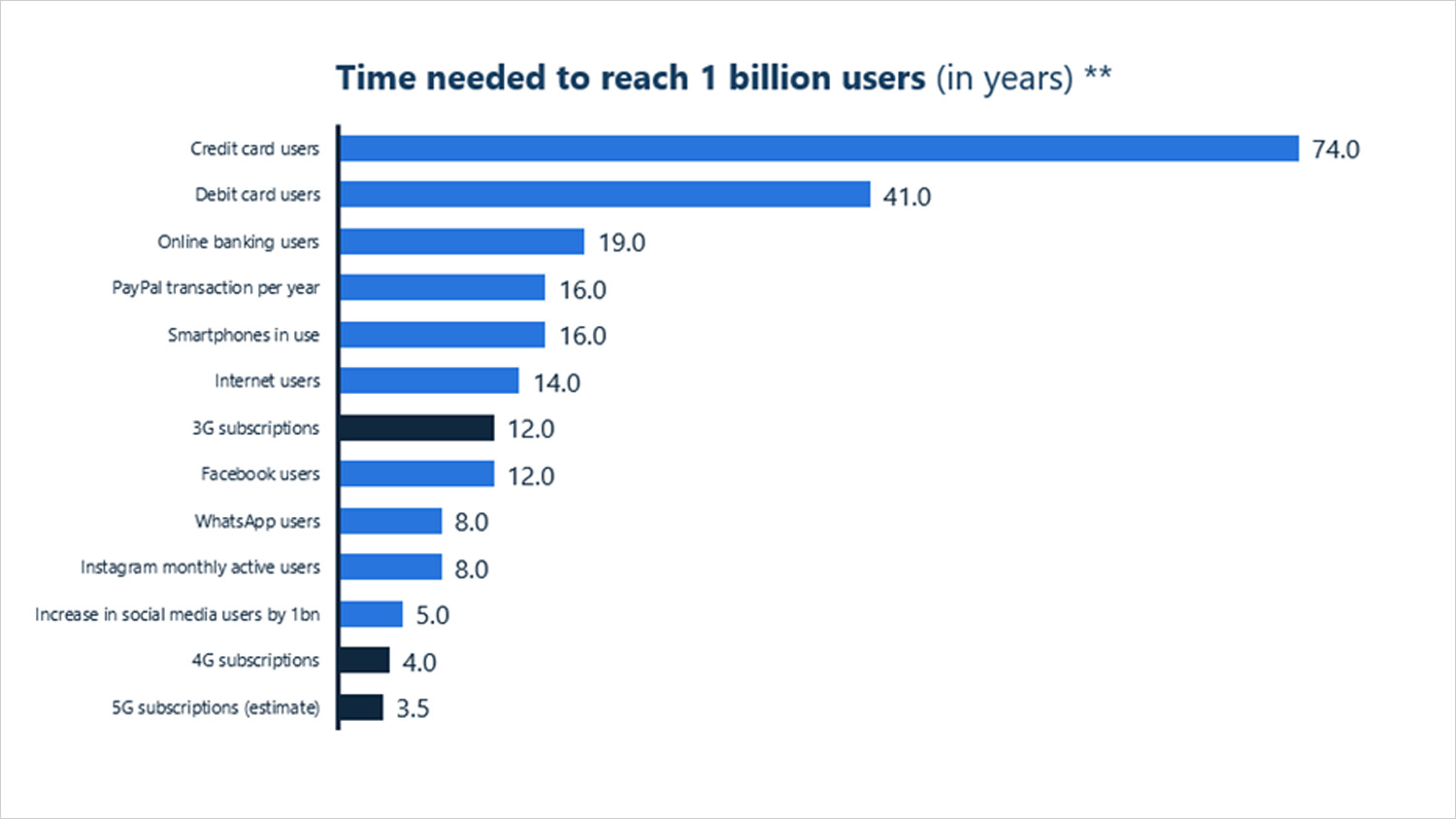
Figure 1: Time to market of 3GPP standards compared to other technologies Source
3GPP consists of a collection of standards that are developed in a collaborative fashion. These standards ensure interoperability and, where needed, ensure backward compatibility between equipment, such as handsets, as well as network functions from different vendors.
3GPP, among others, also specifies the Radio Access Network (RAN) interfaces that with release 15 (the first version of 5G) introduces distributed RAN. This separates the gNB (5G base station) into several discrete functions. More information about 5G base station fundamentals is available here.
3GPP Rel-15 introduced the concept of a split radio base station between a distributed unit (DU) and central unit (CU). Furthermore, 3GPP does not specify how network functions are implemented. This ensures operators the flexibility to deploy traditional or virtualized RAN.
Traditionally, a vendor’s implementation of RAN network functions is dependent on hardware that consists of a combination of COTS (commercial off-the-shelf) and proprietary electronics. The software needed to realize the network functions consists of several million lines of code, which is more than the amount of software that powered the Mars Curiosity Rover. It’s a combination of proprietary software, third party commercial software, and open source. The mix of these different aspects is based on a vendor’s commercial strategic decisions dictated by the logic of expected competitiveness (price/performance) of the final product.
Open RAN and O-RAN Alliance
Open RAN architecture aims to further disaggregate hardware and software as specified by 3GPP. O-RAN Alliance is responsible for publishing new RAN specifications, releasing open-source software for RAN and supporting its members in the integration and testing of their implementation. O-RAN standard and specifications are meant to complement and enrich the 3GPP standards by defining new requirements and use cases, but should never contradict or overlap the work in 3GPP in order to avoid market fragmentation.
O-RAN Alliance is currently engaged in the definition of various open interfaces such as A1 (between RAN and management system), O1 (between RAN and management system), F1 (between DU-CU), E1 (between CU-CP and CU-UP), W1 (between 4G CU and DU), X2 (between eNB and gNB), Xn (between gNB and gNB), E2 (between CU-CP high and low), lower-layer split, or LLS (between DU and RU).
These interfaces intend to provide openness at different anchor points within a mobile network and, like everything else, provide varying levels of benefits and complications in implementations. Interfaces like A1 and O1 can use artificial intelligence (AI) and machine learning (ML) to improve radio network performance and efficiency. The realization of lower-layer split is not without its challenges, which span integration, operation and management, lifecycle management and performance. It will require significant coordination, time and effort that may hamper innovation, network performance and spectrum efficiency
Comparisons between 3GPP and O-RAN
The 3GPP standard provides all the necessary functions needed (for example, smartphones, RAN, and Core, among others) to realize a functional mobile communication network (3G, 4G and 5G). The 3GPP standards are one of the best examples of specifying open interfaces. For example, there are billions of smartphones, which can all connect to any 3G, 4G or 5G base stations. Already now, 3GPP also specifies a number of open RAN internal interfaces, such as the F1 interfaces between DU-CU in RAN.
Industry players recognize the need for open and flexible RAN in mobile networks. Both 3GPP and O-RAN have defined a number of architecture options that provide varying level of disaggregation of the network.
As an example, let’s look at the multiple ways to divide functions between the DU and the RU; in standards discussions these are referred to as lower-layer split options. In principle, an O-RAN lower-layer split aims to further disaggregate the native 5G 3GPP RAN solution. O-RAN allows the combining of an RU (Radio Unit), CU (Central Unit) and DU (Distributed Unit) in a way that enables a multivendor implementation of RU, CU and DU within the same base station.
When the O-RAN specification is finalized, and approved, the O-RAN standard will complement the 3GPP standard. It has never been the intention of O-RAN to create a full set of standards needed to implement a fully functional mobile communication network.
Current 3GPP standards allow for multivendor deployments across different sites. They also allow for multivendor deployments in RAN for DU and CU being supplied by different vendors on the same site and providing interoperability between different components of operators’ networks.
Hence, 3GPP already enables single site, as well as geographic multi-vendor deployments that are interoperable and backward compatible for Core Network and RAN functions.
From the above, one can conclude that 3GPP and O-RAN both share several key common technological features, allowing for the freedom of choice for vendor-specific implementations. But O-RAN also takes a step further in disaggregating the RAN.
Commonalities
- virtualization
- distributed RAN
- open interfaces in RAN
- interoperability and backward compatibility of equipment
- software driven functionality in RAN equipment
Dissimilarities
O-RAN does go further by opening up the 5G base station in more functional elements (like the RU) and standardizes new interfaces like for the fronthaul, management and control functions and interfaces for O-RAN functions and virtualization for the covered functions. Hence, O-RAN is an extension of the 3GPP standard, both in terms of network functions aspects, as well as network implementation aspects (virtualization).
Security
The disaggregation of RAN also comes with the challenge of securely integrating the disaggregated O-RAN solution. Cost and capability aside, the O-RAN Alliance recently formed a Security Task Group (STG), within O-RAN WG1 (Architecture) to address the new associated security risks with O-RAN. Ericsson is an active participant in the STG and has been collaborating with the O-RAN community to address these security risks.
This O-RAN STG is a consensus-based group that will ensure that O-RAN implementations meet the level of security expected by the industry for commercial use. As with any nascent technology, it is important that a risk-based approach is taken to adequately address security risks, rather than deal with security as an afterthought.
Secure O-RAN solutions will require additional security measures that are not fully addressed by 3GPP SA3 security standards, since O-RAN introduces additional open interfaces and functions (such as lower-layer split and near Real Time RIC) that are not part of the 3GPP standard.
Additionally, security risks must be addressed related to a chain of trust for software and hardware, as well as ensuring common understanding and the implementation of security requirements for vendors developing and integrating O-RAN based products.
5G market momentum
As of July 2020 there were 92 commercial 5G networks launched, based on 3GPP standards (see figure 2, the GSA 5G Market snapshot August 2020 at https://gsacom.com/). Leading 5G nations and pioneering 5G service providers enjoy their leading position precisely because they opted in for 3GPP-based 5G equipment.
In the world of technology, history has taught us well that the past, nor the present, is a guarantee for the future. Innovation and free market competition are key for shaping the future and this is how it should be. The point here is not to make a prediction, but rather, once again, to let the market decide. The fact that native 3GPP 5G RAN is enabling the current and short to mid-term 5G momentum is about being relevant today.
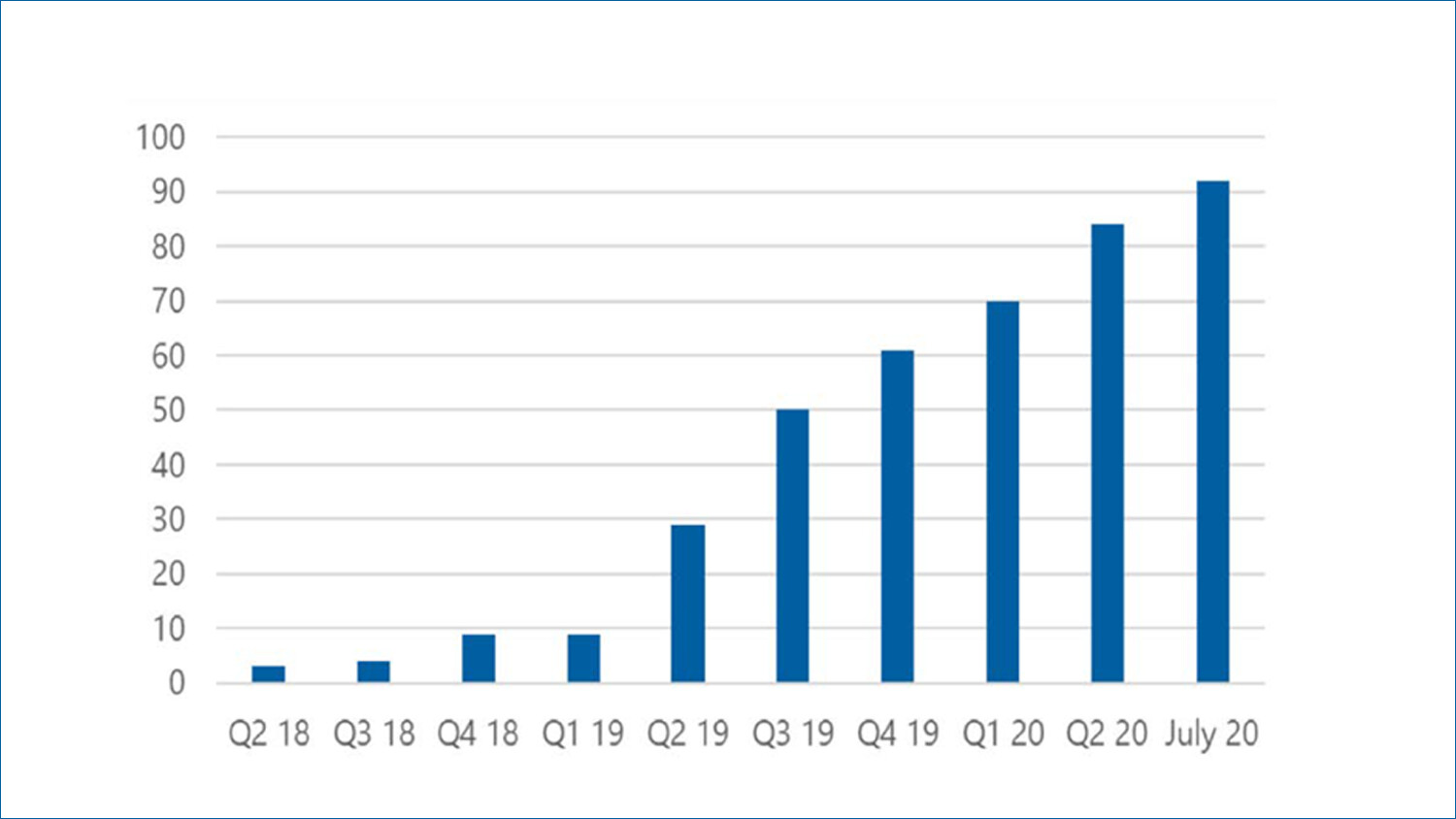
Figure 2: 92 commercial 5G networks in 38 countries
Public policy objectives
The global success of mobile communication services is a reflection of the openness, innovation and vast end-user benefits enabled and ensured by the 3GPP standard. Current 5G market momentum is built on the 3GPP native 5G RAN architecture. In the future, 3GPP and O-RAN are going to co-exist and share a number of key technological features, at the same time that they complement and compete with each other. Operators have and should continue to have the freedom to choose, and suppliers should need no permission from policy makers to make their choices and place their bets.
Therefore, market-based competition – where merits of technical performance and the competitiveness of different solutions and architectures decide market outcomes – should be ensured. The freedom of the market should prevail and not be taken away from commercial players’ ability to make their investment choices.
This means that different approaches can compete on technical merits, price, security, flexibility and functionality. Presence of market forces, innovation and open interfaces are meant to ensure that competition prevails and delivers end-user and societal benefits.
Therefore, policy makers should not pick winners, but continue to ensure the following outcomes:
- Open markets for competition while letting the market decide
- Technology-neutral regulation, not mandating any architecture
- Technology-neutral fixed broadband and wireless roll-out subsidies, which only target geographies where commercial, market-driven investments are not a viable option to ensure digital inclusion.
Learn more
Read our paper on the security considerations of Open RAN.
Discover how we’re involved with public policy and government affairs.
Read Erik Ekudden’s blog post on driving business value in an open world.