









Preparing for edge deployments: key service provider capabilities

Senior Product Marketing Manager

Senior Product Marketing Manager
Senior Product Marketing Manager
The industry has talked about edge computing and what it promises for years. The million-dollar question is whether there’s any real progress being made, or whether we are still in the discussion phase? Luckily, we can conclude that there's a lot going on in this area, with leading communication service providers (CSPs) enacting new offerings in many parts of the world.
In Australia, Telstra has announced that their managed services business, Telstra Purple, plans to offer a new 5G edge compute offering for branch offload that targets enterprises. This new offering is planned for scaled deployment late next year. Branch offload means that complex network and IT equipment can be moved from, for example, the physical office or store to the cloud to simplify operations, making it easier and quicker to introduce new functionality and achieve greater application performance. Telstra is cooperating with Microsoft to make this exciting service a reality.
Another example of ongoing edge activities is the Italian communication service provider (CSP) TIM and its group cloud company Noovle, which in collaboration with Google is building Italy’s first 5G Cloud network. Italian enterprise customers can benefit from this initiative through new 5G based edge offerings when digitalizing business processes, for example automating logistics and manufacturing. Especially interesting here is that the network edge is used for data analytics in IoT (Internet of Things) use cases.
In Germany, Telefónica is doing a private network deployment together with AWS (Amazon Web Services). The focus here is also on industrial automation: one of the major use case drivers for 5G and edge computing for enterprises. In this case, augmented reality will be used to improve various aspects of the manufacturing processes.
These examples of 5G and edge deployment –all featuring Ericsson technology and capabilities such as 5G Core, service orchestration and cloud infrastructure – are still in the early stages, but the foundation for many similar use cases and deployments is being laid right now. A common characteristic of these projects is that they take a use case and ecosystem collaboration, rather than a technological approach. By bringing together the CSP, the application provider and the hyperscale cloud provider (HCP) they can address the ‘real’ enterprise pain points. Then one can grow and expand from there to other use cases and industry verticals. We believe that several commercial edge computing-based offerings will come into operation in the next 12 to 18 months. How should CSPs take advantage of these new offerings and what specific capabilities do they need to have in place?
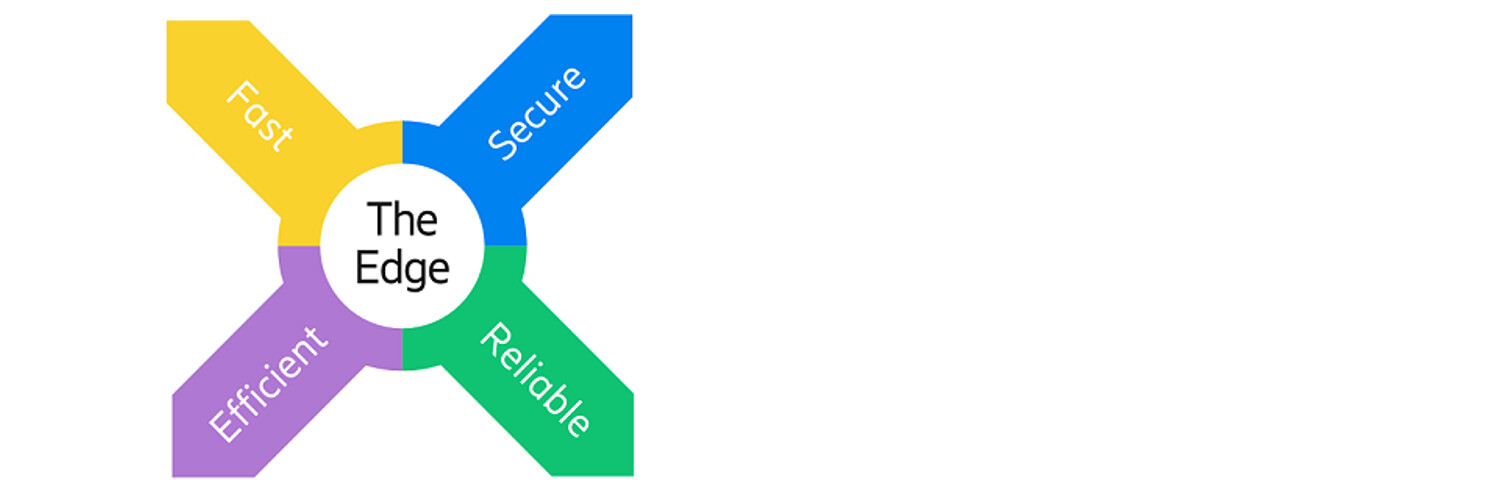
Why the Edge matters
In this video, Ronald van Loon explains in a creative way which opportunities CSPs have with 5G and edge when enterprises digitalize. Take a couple of minutes and watch it before you continue reading.
CSPs’ key edge computing capabilities
There are obviously several capabilities CSPs must target so they are ready for the multitude of enterprise opportunities offered by 5G, edge computing and network slicing. Here are the core ones they should tackle:
- Connecting and controlling the networks with applications, and orchestrate them and infrastructure resources across private, telco and HCP infrastructure. This is a foundational competence CSPs bring to the table. From an enterprise perspective, it is important that the CSP can do this in a multi-vendor, multi-cloud environment to avoid lock-in. ‘Openness’ has long been a requirement in the telco business. Now when CSPs increasingly address the enterprise segment, we can expect this requirement to further increase in importance since the enterprise segment historically has had even tougher requirements on vendors to deliver open solutions.
- Data driven automation in a hybrid cloud environment where both private networks and HCP infrastructure is used. Enterprises need multi-domain service automation that optimizes the available resources. For example, the automation of SD-WAN, network slices and edge services bring significant cost-structure benefits.
- Making networks available for application developers through network exposure will be essential. Developers don’t have time to invest in understanding the details of the telco network. This means the abstraction must be of a sufficiently high level so that they easily can use network capabilities to make improvements such as quality of service, application performance and security and integrity.
- The CSPs must be active in building and participating in alliances centered around use cases or industry verticals. Application developers constitute a global community. What they develop is expected to be deployed anywhere. Standards can do some part of the job to support this global developer community, but alliances for various industries will also be needed where different companies jointly define how use cases should be implemented. To achieve local differentiation in these environments, CSPs can expose unique capabilities and services that will make them relevant, but they shall not strive for offering those through proprietary application programming interfaces (APIs). Some CSPs might for example use specific capabilities like GPUs or and low latency to provide a differentiated use case, while others have unique capabilities in private networks.
- And finally – self-service! It must be easy for enterprises to order, change and scale infrastructure resources and services through self-service functions. It should be just as easy as it is today toorder cloud resources from the HCPs.
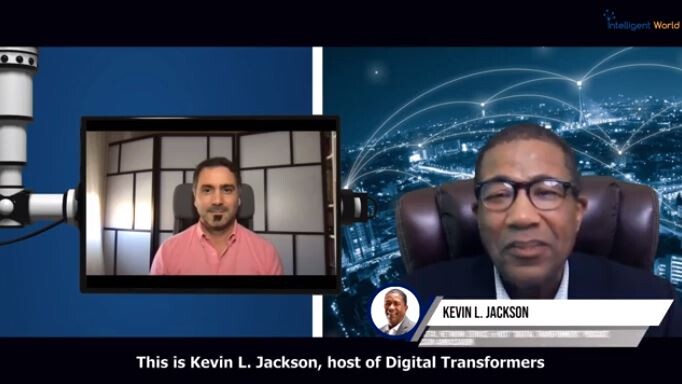
For Ericsson, it is important to be behind the CSPs when they pursue new enterprise opportunities. We work hard both from a technological and ecosystem partnering perspective to help the ecosystem to establish and grow. In this video interview with Kevin Jackson, Carlos Bravo, Director Cloud Strategy Execution at Ericsson, explains the pillars of our strategy and what is going on in the enterprise world. View the video here.
Learn more
- Watch this mixed reality video: 5G Opportunities for CSPs in Enterprise Digital Transformation
- Read more about Ericsson edge computing - a must for 5G success