The wireless power substation: transformation towards power grid sustainability

Principal Solution Manager, MANA BD CTO Team
Principal Solution Manager, MANA BD CTO Team
Principal Solution Manager, MANA BD CTO Team
In our previous blogs, we pointed out the deficits of legacy technology to connect power plant and substation. Using wireless, however, in collaboration with the fiber backbone and its extensions brings flexibility in use cases. Wireless is therefore a viable, multipurpose solution to extension of the power grid. The inherent security built into LTE/5G infrastructure and devices creates enhanced reliability and cybersecurity.
In this blog, we will explore how wireless enables modernization of the power substation itself. The substation is an integral part of the power grid; it’s the entry point for energy from the power plant and the exit point carrying energy to the consumer. The substation plays multiple roles in ensuring the reliability in the grid, both local and remote.
The role of the substation in a power grid
A utility power grid comprises a series of components: the site where the power is generated (the power plant), transmission stations that ensure that generated power is distributed efficiently, and distribution stations that get the electricity into our industries, offices and homes. Each component of the grid must communicate with the others - a task that has grown more complex, yet more critical as utilities progress in modernizing their power grids.
The substation includes two main areas of control that define the focus for digital and wireless transformation:
- The switchyard—where the incoming and outgoing power lines arrive and the electrical power operating equipment and primary control elements are located. These elements include power transformers, circuit breakers, reclosers and instrument transformers (which provide a scaled down version of voltage and current).
- The control room—Where secondary equipment like relays and protection control of the primary elements is implemented
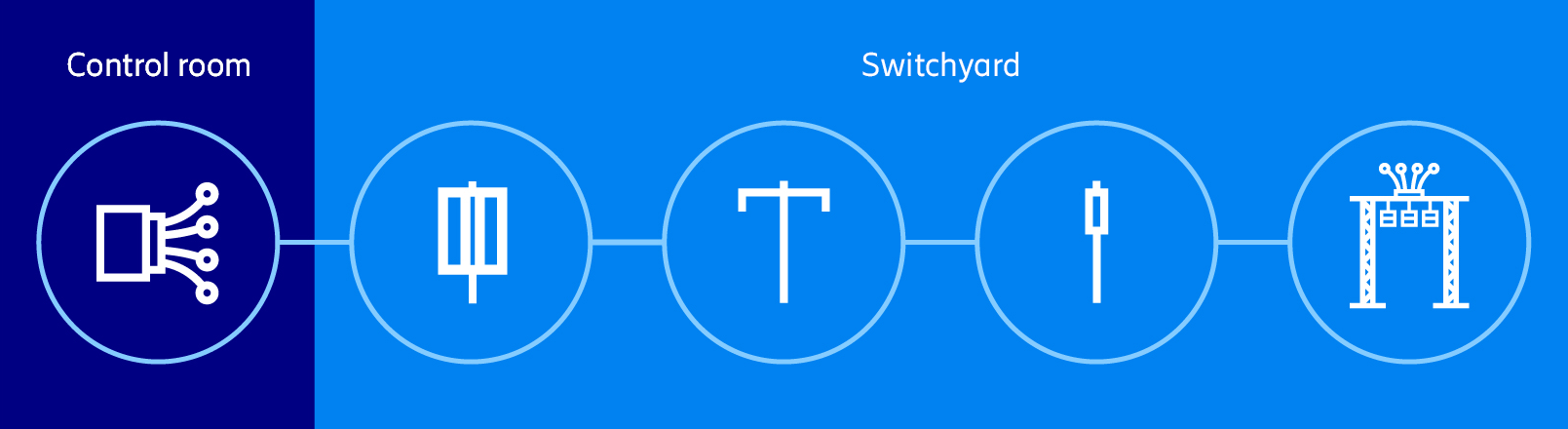
Figure 1: The switchyard and control room are the main areas of focus for the wireless substation.
Wireless transformation of the substation switch yard
Substations today have copper-driven dedicated lines to each primary control element, running a single use case at a time. To expand the substation’s capabilities, the utility would have to add wiring bundles and upgrade cable trenches that connect the switchyard to the control room. In addition to being unwieldy, these systems are analog. They use serial protocols such as Supervisory Control and Data Acquisition (SCADA) or DLP3 that are driven by flags at a bit or byte level. Importantly, serial protocols usually do not support heartbeats (a periodic status check signaling between control center and each sensor) to monitor the health of the devices. The control center has no way to know in real time if a circuit breaker is working properly—a serious risk in case of emergency.
Evolving standards like IEC61850 are addressing the evolution from serial/analog to digital packet-based protocols, aligning more towards wide area control and communication. This establishes the protocol architecture for introduction of the standardized communication architecture offered by 3GPP wireless.
Steps to transform the substation:
Transformation of the substation starts with upgrading the communication infrastructure from analog to digital, followed by an upgrade of the transport between switchyard and control room to the right combination of fiber and wireless
- To optimize connectivity, copper cable bundles from the switch yard primary devices to relay control room are replaced with a digital bus or wireless connection that allows for multiple use cases and simplification in wiring. This also simplifies/eliminates the wiring and trenching between the switchyard and the control room.
- To evolve the protocols, bit/byte-based flags on existing serial SCADA protocols are transitioned to object-oriented protocols such as 61850 that use a hierarchical data structure to monitor families of devices. This could be done using hardware called merge units (MU) that help digitize the analog outputs from primary elements.
- These MUs provide more granular information on the health of the devices. Digital information from the MUs can now be carried over a digital bus.
Fiber as a digital bus could be an interim step to reduce the dependence on multiple copper bundles. But it’s expensive and difficult to lay down. Wireless, on the other hand, simplifies things immensely. Where copper/61850 once linked a group of primary control elements in the switchyard, wireless RTU/routers connect over LTE to the control room, with latencies similar to the expensive copper or fiber they replace.

Figure 2: Transformation of the substation from copper to wireless
Wireless transformation of the substation control room
One of the many questions that arise in any transformation discussion is whether Teleprotection can be addressed. Teleprotection is a power grid protection concept to monitor the condition of the grid, isolating faults and preventing damage to critical parts of the power grid. It involves direct control of the reclosers, circuit breakers, capacitor banks and other primary control elements that carry high voltages. Teleprotection requires one-way latency of the order of 25-50ms to allow for instantaneous fault isolation of lines carrying multiple kilovolts of electrical energy.
A self-contained LTE RAN and Core network installed at the substation ensures that one-way latencies are required for teleprotection at the substation. This is critical for backward compatibility for the relays and protection control in the control room, which have now been evolved from single-use dedicated copper to multipurpose wireless connections. In addition, an LTE/5G system allows for new use cases and data collection—a vital first step towards grid automation.
With wireless digital transformation in place, we can now collect data continually, so machine learning systems can learn the intricacies of grid management at that particular substation. The resulting knowledge system allows for proactive management of disruptions, which can be extended towards other substations as a part of digital transformation strategy in grid modernization.
There are multiple choices to wireless technologies within the substation. In your home alarm system, for instance, the subscriber identity module (SIM) in your alarm module maintains a critical wireless connection to the alarm center. Connection from the SIM router to the alarm sensors within your home can use any of multiple technologies such as Zwave or Zigbee or Wi-Fi. A similar collaboration between LTE and non-3GPP technologies may be expected within the substation to provide redundancy to the primary LTE link. The LTE would remain primary because the interference mitigation techniques used on licensed LTE spectrum ensures the reliability needed for monitoring and teleprotection. Such reliability is important for the data bearers that control and monitor the primary control elements such as the circuit breakers and reclosers.
Within the substation, it is critical to have dedicated licensed spectrum for the wireless network to avoid the risks in existing unlicensed wireless mesh networks. Such unlicensed mesh networks rely on best effort techniques to provide uninterrupted access, with the associated risky latency variances as the mesh addresses interference. Low-band spectrum in 600 or 900MHz provides low throughput reliable access, while mid-band spectrum like Citizens Broadband Radio Service Priority Access License (CBRS PAL) provides higher throughput for substation video monitoring, high chatter and high throughput traffic. The reduced cell coverage of mid-band is not expected to be a concern within the limited outdoor footprint of most substations, though penetration of the control center walls could be a concern.
In addition to the above functional aspects to real time grid control, LTE can also address the challenge that many control rooms are Faraday cages to protect indoor equipment from switchyard electromagnetic interference. The deployment of indoor wireless LTE coverage within the substation allows for controlled integration of employee communication within the control room with the LTE wireless network enabling the power grid.
Bringing convergence between the substation and the controlled grid
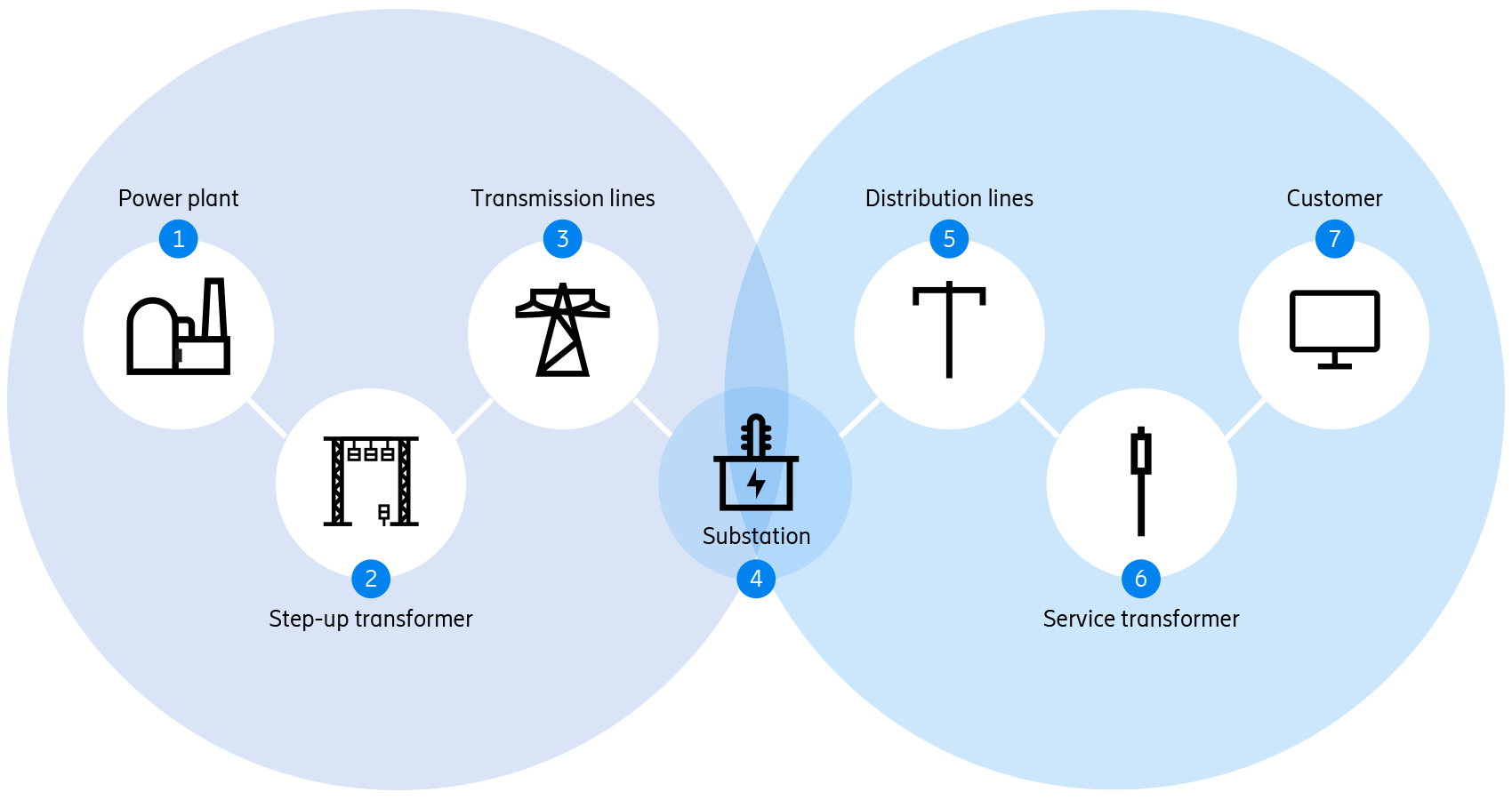
Figure 3: LTE converges connectivity for power grid and substation
In addition to replacing wire bundles and simplification in substation expansion and upgrades, there are many other advantages to LTE modernization of the substation:
- LTE provides a multipurpose IP infrastructure, allowing the utility to define separated virtual networks for different primary control elements in the switchyard. All these virtual networks can be defined on the single set of wireless bearers between the switchyard and the control room.
- The private network established to monitor and control the switchyard control equipment can multitask with employee smartphones, providing converged mission-critical and enterprise access.
- Deploying a common LTE network between the substation and the wide area network (WAN) serving the surrounding power grid allows for enhanced control and transparency between mission-critical operations (within the substation’s control) and monitoring, operations of the surrounding grid, which would have sensors on the same network (outside the substation’s control).
- Upgrading the LTE network to 5G is relatively easy. As economies of scale and the ecosystem progresses in 5G, integration of 5G into the LTE deployed at substations and surrounding WAN is usually considered part of a wireless network evolution strategy.
- When power grid and substations are on a common LTE/5G network, the security environment for the power grid would extend into and encompass both the power grid and the substations that control the power grid.
The substation of the smart grid will be wireless
Wireless grid modernization of the substation is an important tool in the journey towards sustainability as increased adoption of distributed energy resources will lead to required substation upgrades, expansions and smart grid modernization. The introduction of wireless for new equipment facilitates efficient transition and expansion from a copper-driven infrastructure to a more flexible multipurpose wireless architecture at the substation. The possibilities for convergence between existing fiber and new wireless networks, with the associated added use cases, drives the need to embark on this journey sooner than later!
Read the entire blog series where we unpack the state of the digital power grid and show how private networks are enabling utilities to achieve their goals.
Blog 1: Wireless: The smart network for the smart grid and grid modernization
Related assets
On Demand Event - Utilities Virtual Innovation Day
Connected Energy Utility | Report
Download report