









Are your teams divided by AI? Unpacking AI team structure

Principal Researcher, Consumer and Industry Lab

Principal Researcher, Consumer and Industry Lab
Principal Researcher, Consumer and Industry Lab
Part of my work involves reading a lot, from academic papers to business reports. And many articles I digest are published in business magazines like Harvard Business Review and MIT Sloan Management review. Over the years there have been a few pieces published that describe a kind of divide running through organizations that are currently developing and implementing AI. This divide is said to appear between the operational and the technology departments, which apparently have a hard time communicating.
For instance, one article from HBR stated: “These two groups [organizational decision makers and AI teams] cannot, do not, and will not speak to one another in productive ways. They aim differently, see differently, think differently, and feel differently” (Harvard Business Review, March 2019).
Reviewing these articles, it seems that the difference stems from different languages, perspectives and priorities.
Well, since I’m quite curious about AI adoption and implementation in work practice, of course I got interested! And together with my colleague Michael Björn, we decided to investigate this alleged divide further (OK, this wasn’t the only question that we wanted to explore, but it was definitely one of the hypotheses we wanted to test).

Read the report
Hear from companies implementing AI and advanced analytics in business operations in our ‘Implementing AI in organizations’ report.
Click here
We started off by conducting qualitative interviews with decision makers in different industries, from banking and finance, to telecom and technology development. However, though these interviews gave many insights into AI adoption we could not pinpoint a clear divide running through their organizations. We then took the insights from the interviews, together with the knowledge we gathered from the vast number of articles in business media and drafted a questionnaire for a larger set of respondents.
The quantitative study included 2,525 decision makers from AI adopting organizations in the US, UK, Germany, India, and China. So, for each market we had 500 respondents. And, as we couldn’t let go of the idea of the divide, we split the sample to include an equal number of technical managers and operational managers, resulting in about 250 of each, per market. Surely, we would see a difference in terms languages, perspectives, and priorities?
Well, when we got the results, to our great surprise, there were hardly any differences between the answers coming from the technical and operational managers! In all, they seemed to be very much in agreement. One of the few differences we could find were the perceived challenges, where the technical managers identified the top critical challenges that came from the different categories, namely ‘technology’, ‘organization’, and ‘people & culture’. Whereas the operational managers perceived the most critical challenges as only related to ‘people & culture’.
We mentioned this in our report, among our many other interesting findings, which is available here). And as there was so much else to highlight, we left the idea of a divide behind.
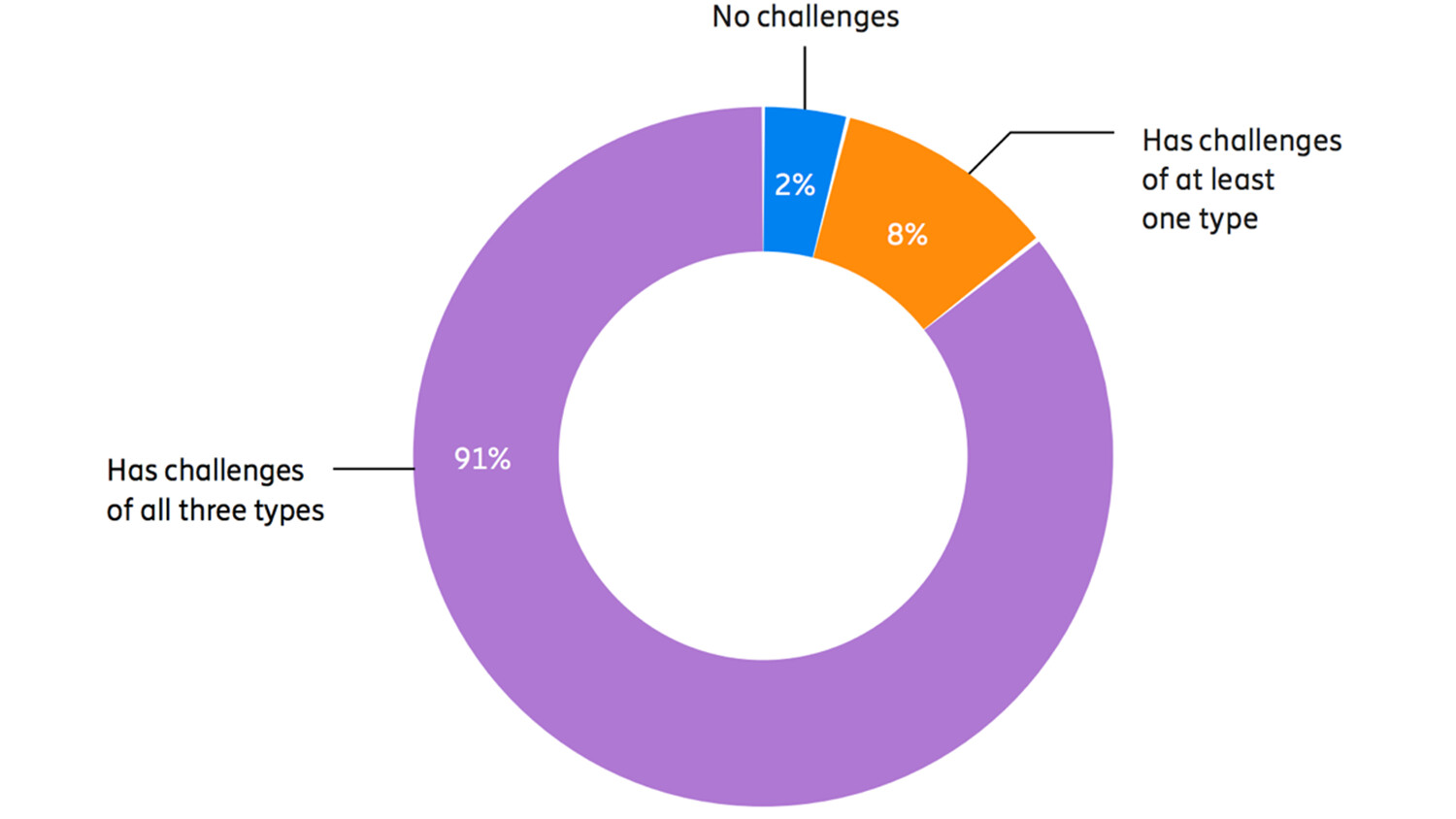
Figure 1: Findings from the ‘Adopting AI in organizations’ report: ninety-one percent of respondents claimed to have had concurrent implementation challenges of technology, organization and people/culture origin. Base: 2,525 white-collar AI/analytics decision makers in the US, Germany, the UK, India and China.
Later, when the report was finished and published, we received a high demand to present our findings, both internally at Ericsson, and externally. Presenting the material, we soon noticed that one of the key takeaways almost caused the audience to topple from their chairs. It was the finding we called a ‘continuous transformation’. Essentially, the future AI-driven organization will have a continuous flow of AI applications, which will continuously change processes, and result in frequent reorganizations. When presenting this finding you could almost sense the minds of the audience starting to work out what this would mean for their operations. How highly satisfying as a researcher to see their reactions!
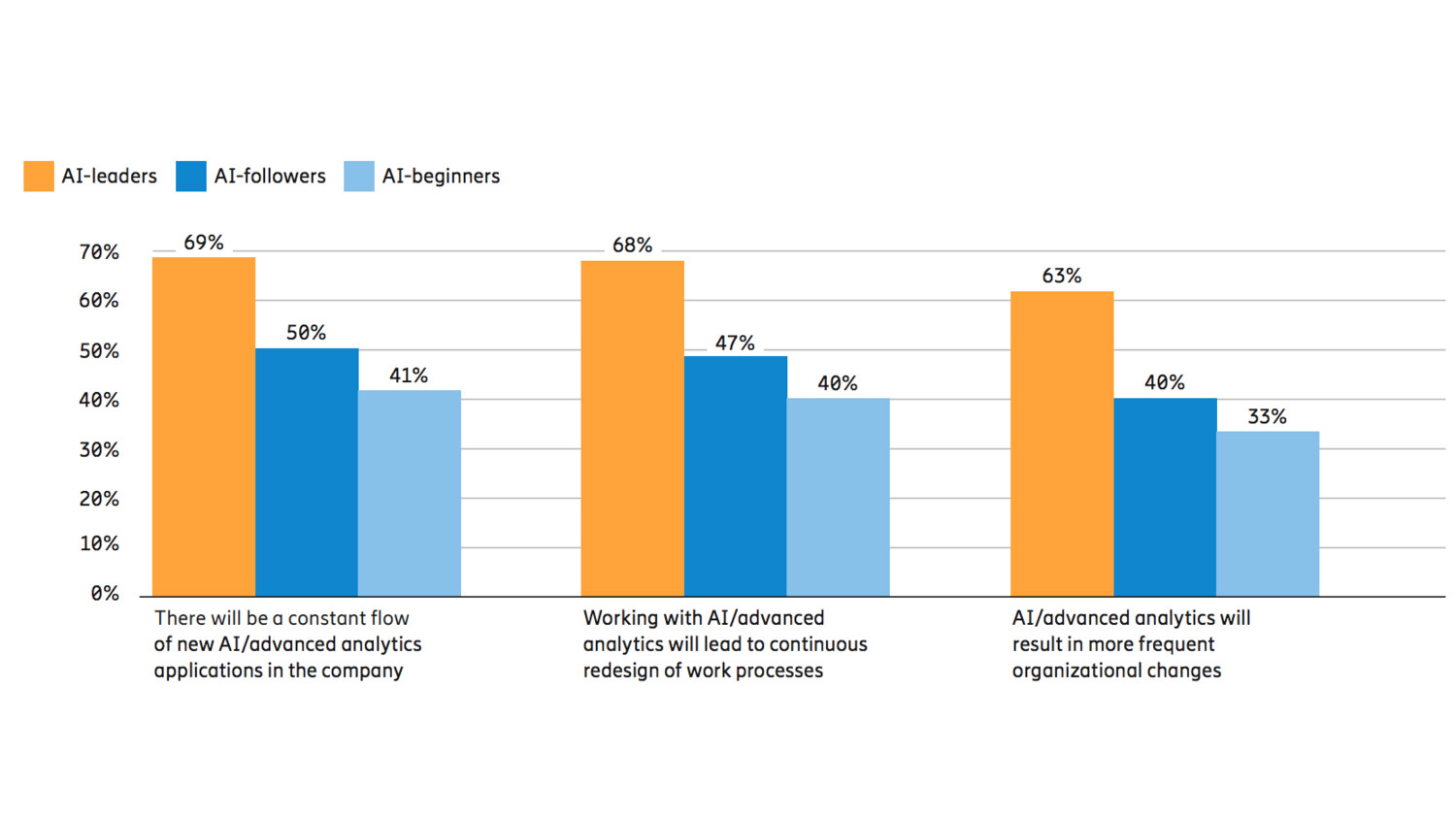
Figure 2: The stable situation of change: constant change is here to stay. Base: 2,525 white-collar AI/analytics decision makers in the US, Germany, the UK, India and China.
Then, we did a presentation for a manager of a data analytics team. She is highly knowledgeable in AI technologies and her team is a driving force in the adoption of AI. To our great satisfaction she really enjoyed the presentation, and we could her saying “yes” and “finally” when we presented different insights such as, “the more you learn, the harder it gets”. But then we came to the ‘continuous transformation’ section. We didn’t necessarily expect a similar reaction to the operations-centric audience we presented to earlier, but we at least expected a “yes!” from her.
But she fell silent. And after a pause she said “so… what’s new?” She was completely underwhelmed. The reason was that to her, the continuous transformation has already begun. It’s nothing new!
And by that, she exemplified the real divide that’s visible in our data. It’s not a divide between the technical and operational domain, of teams that think and feel differently. It’s a divide in the understanding of what the technology is and how it will transformation the organization.
So, if you want to find a divide in your organization and you start to look at your operational and AI team structure, you might find some disagreements. But my guess is that you will see an even greater one if you look at where cross teams are talking about the future of the organization.
Learn more
Read the full ‘Implementing AI in organizations’ report.
Read Rebecka’s previous blog post about AI and the future of work.
Read all about implementing AI: The unexpected destination of the AI journey.
Read more about 5G and AI.