Managing choices and challenges on the BSS-to-cloud journey

Senior Solutions Marketing Manager

Senior Solutions Marketing Manager
Senior Solutions Marketing Manager
Over the past few months, we’ve been working closely with Futurum Research to gather data around BSS cloud evolution. This research has given us fresh insights into service providers’ intentions when it comes to supporting the many different cloud journeys that are currently underway and their progress to date. In the past year, the pandemic has affected decision making, and spurred digital transformation and digital engagement forward. Cloud is an integral part of these transformations.
Without BSS evolution risks emerge for both the top and bottom line
New opportunities and new revenues in the B2C, B2B and B2B2X markets require new levels of automation, orchestration and simplification. It’s difficult to see how growth can be sustained with existing revenue and costs models, especially in competitive markets.
Cloud journeys have stepped up a gear, and we see a big shift towards the cloud – including public, private and hybrid clouds. There’s no question of whether or not to move to cloud. Rather, the focus is how to get the most out of the business and technical benefits. Cloud promises agility and time to market reductions and these regularly top the BSS agenda.
There’s no one size fits all when it comes to BSS and cloud
Starting points vary, destinations vary, every customer has their own operational transformation path to take advantage of cloud-native software and platforms. We see tremendous variation in approaches across our 300 BSS customers around the world, spanning B2B, B2C with convergent charging (online and offline), mediation, billing, order care, product catalog and digital engagement. Some customers face limitations (regulatory etc.) on public cloud, some are geographically constrained (GDPR), and most are laden with fragmented legacy and complex integrations. Many choices are possible (public, private, hybrid), and activities and intentions span all the different cloud platforms. All these variations come across clearly in the survey data.
Ambitions and intentions are changing over time, with increasing numbers of service providers favoring multi-vendor strategies. When asked about which public cloud providers respondents considered using for BSS within 1-2 years, 71 percent selected AWS, and over 60 percent also opted for Google Cloud Platform and Microsoft Azure respectively. The decisions that have led to cloud status and cloud platforms in play today are subject to review as cloud confidence levels increase. Fundamentally, to support choices in their cloud journeys, we are working with customers as partners, sharing expertise on platforms, and exchanging experiences on the available choices.
From a product perspective, the variation of approaches translates for us as vendors into a need to support many different things, from containerization for those that want to lift and shift right through to building, supporting and maintaining microservices architectures and implementing CI/CD pipelines to constantly update live systems with telecom-grade certifications. And that means that both on the customer side and on our side, we need to be in step together, looking forward. For example, CI/CD needs to be enabled on both sides. The customer environment needs to be ready to receive, test and absorb continuous updates into production, new skills, and new ways of working. We work side by side with our customers to overcome challenges when making deeper cloud transformations with a step wise approach. As well as our professional services teams, our product development unit (PDU) benefits enormously from being involved in this process with customers, as it fosters co-creation to the benefit of many.
The business and technical value of cloud is clear
Cloud native applications support growth, agility, flexibility, and help reduce bottlenecks that form over many years of managing legacy systems with hardware coupling, distributed databases, different databases across the domains of OSS, BSS, and packet core. Complex services running across different applications that are often heavily customized make it harder to implement new changes, harder to integrate and harder to maintain the systems over time. Also, it can be challenging to put efficient automation in place due to legacy architecture constraints. Successful transitions to cloud enable:
- Simplified life-cycle management and integrations (decomposed software)
- Improved availability and operation and maintenance (application resilience)
- High availability (state optimized design)
- Faster time-to-market with increased quality (orchestration and automation – CI/CD)
In this newly gathered data, we see the top business drivers that survey respondents are looking to address on the cloud journey are improving customer satisfaction, increasing agility and faster time to market, and supporting AI/ML (predictive) analytics, handling scale. Cost reduction is ancillary – lagging behind other business drivers according to Futurum’s Research.
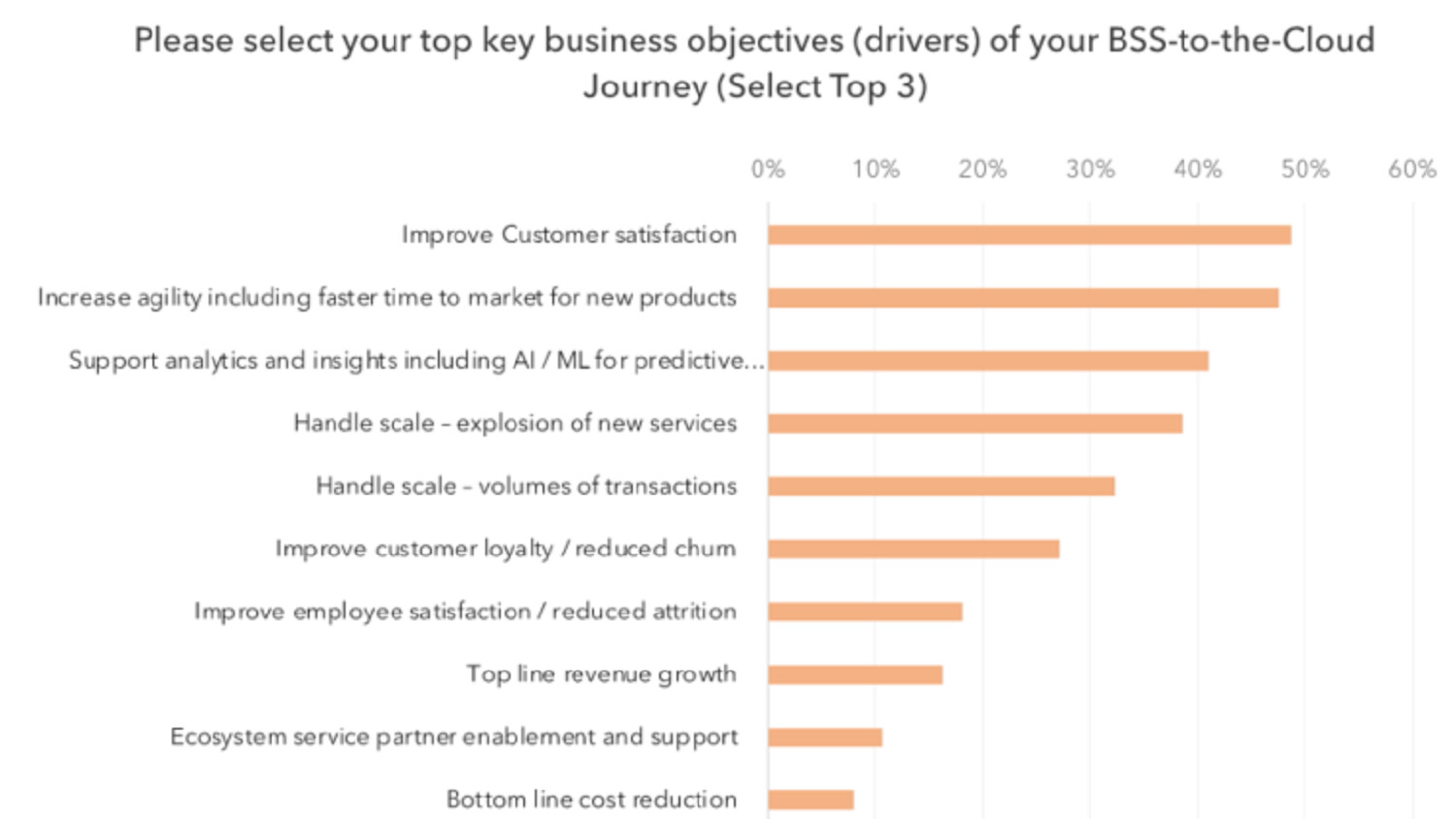
Figure 1: Cost reduction is ancillary to top line revenue generating ambitions (source: Futurum Research)
These first two items topping the list - improving customer satisfaction, increasing agility and faster time to market - come as no surprise, we see our customers looking to address these with better digital engagement.
The greater the ambition the greater the organizational changes required to shift to new operating models
Again, looking to the survey data, the top challenges are less about the technology and more about the organization and culture. When asked about the challenges impeding progress on cloud journeys, the top three identified were: network and IT coordination cooperation, Organizational structure, and culture.
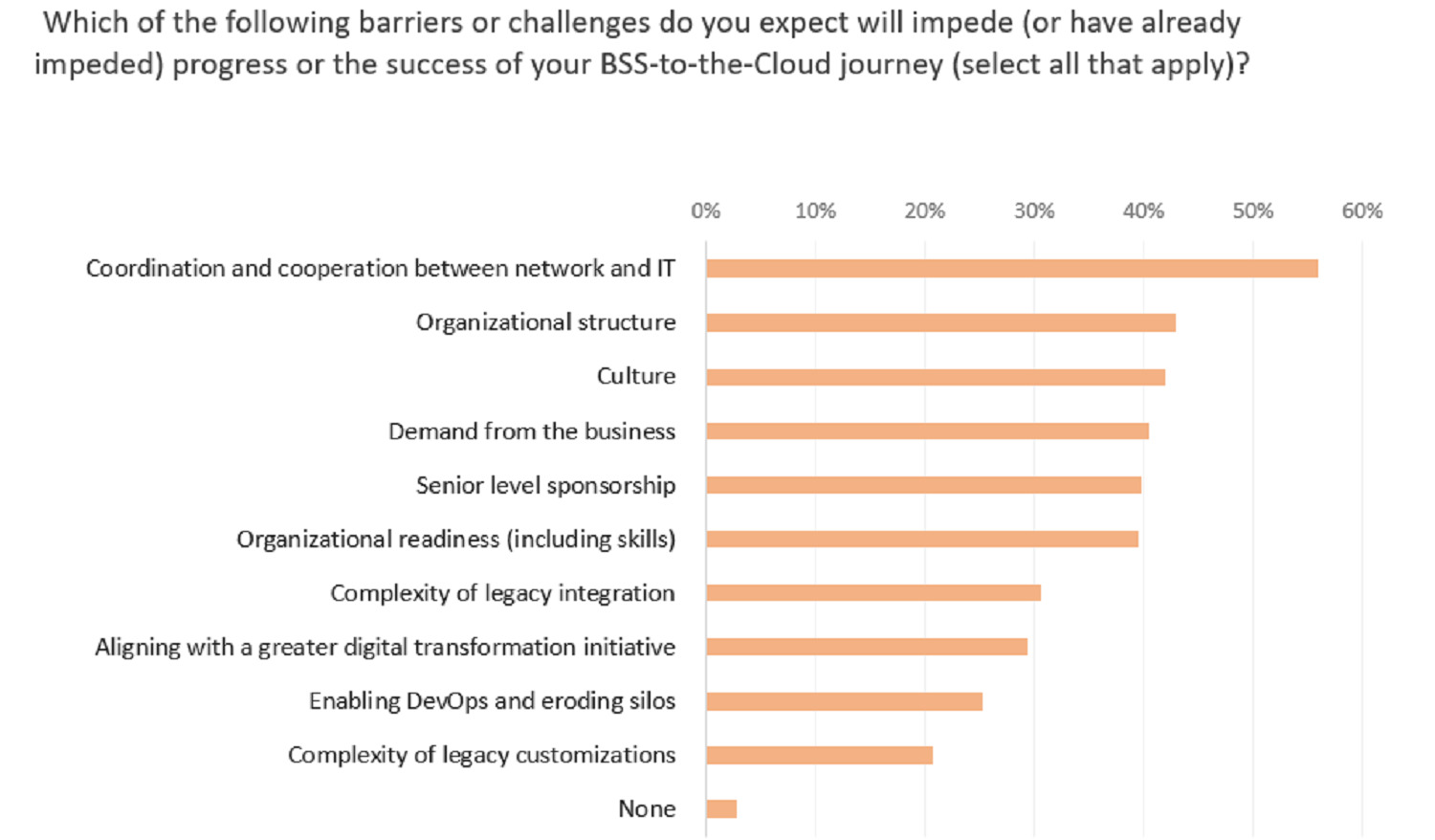
Figure 2: More than half the respondents cite Network and IT coordination and cooperation as the most challenging area (source: Futurum Research)
The biggest challenge is coordination and cooperation between network and IT. This alone has a bit of everything, including technology, culture, organizational structure. After walking with our customers through these challenges as the network becomes more virtualized and services become more dynamic, it’s clear that the network and IT need to be closer than ever. “Two sides of the house”, which were traditionally separate silos, are now coming closer together in every way, meaning network and IT need to be in constant communication with automated flows of data. Standardization and openness, such as TMF’s Open APIs, help enormously here.
Increase the likelihood of successful outcomes with a stepwise approach
From Ericsson’s perspective, we see far reaching results where a stepwise approach to transformation is taken, coupled with resilience and perseverance. When cloud transformations are part of larger digital transformation initiatives, this is evidenced in real and tangible ways in the day-to-day experiences of people engaging with and managing business support systems. In the past, the telecoms industry has had a tendency to think that greenfield implementation is the only answer, but in reality, most service providers face a complex and diverse landscape. Driving return on investment and evolving at the risk levels that are comfortable and manageable is the challenge at hand. Finding the right balance is key – not trying to keep too much the same and not trying to change too much at once, and breaking it down into a series of stepwise changes, or manageable bitesize chunks. And, to borrow from one of our customer’s descriptions of successful cloud transformation, it can be used as an opportunity to clean up some of the sins of the past. If we must anticipate more and faster change in the future, service providers not only need support for the cloud choices of today, they need flexibility to make changes in the future in response to business and market environments.
We are sharing the results of this comprehensive survey of 324 telecom executives and technology professionals, 65 percent of whom are primary decision makers, with analysis by Ron Westfall, Research Director and Senior Analyst with Futurum Research, in a report entitled The BSS-to-Cloud Journey: Powering Innovation Across the Digital Value Chain.