









Next-generation simulation technology to accelerate the 5G journey

Chief Architect Edge Compute

Research Scientist

Expert Radio Network Performance
Chief Architect Edge Compute
Research Scientist
Expert Radio Network Performance
Chief Architect Edge Compute
Research Scientist
Expert Radio Network Performance
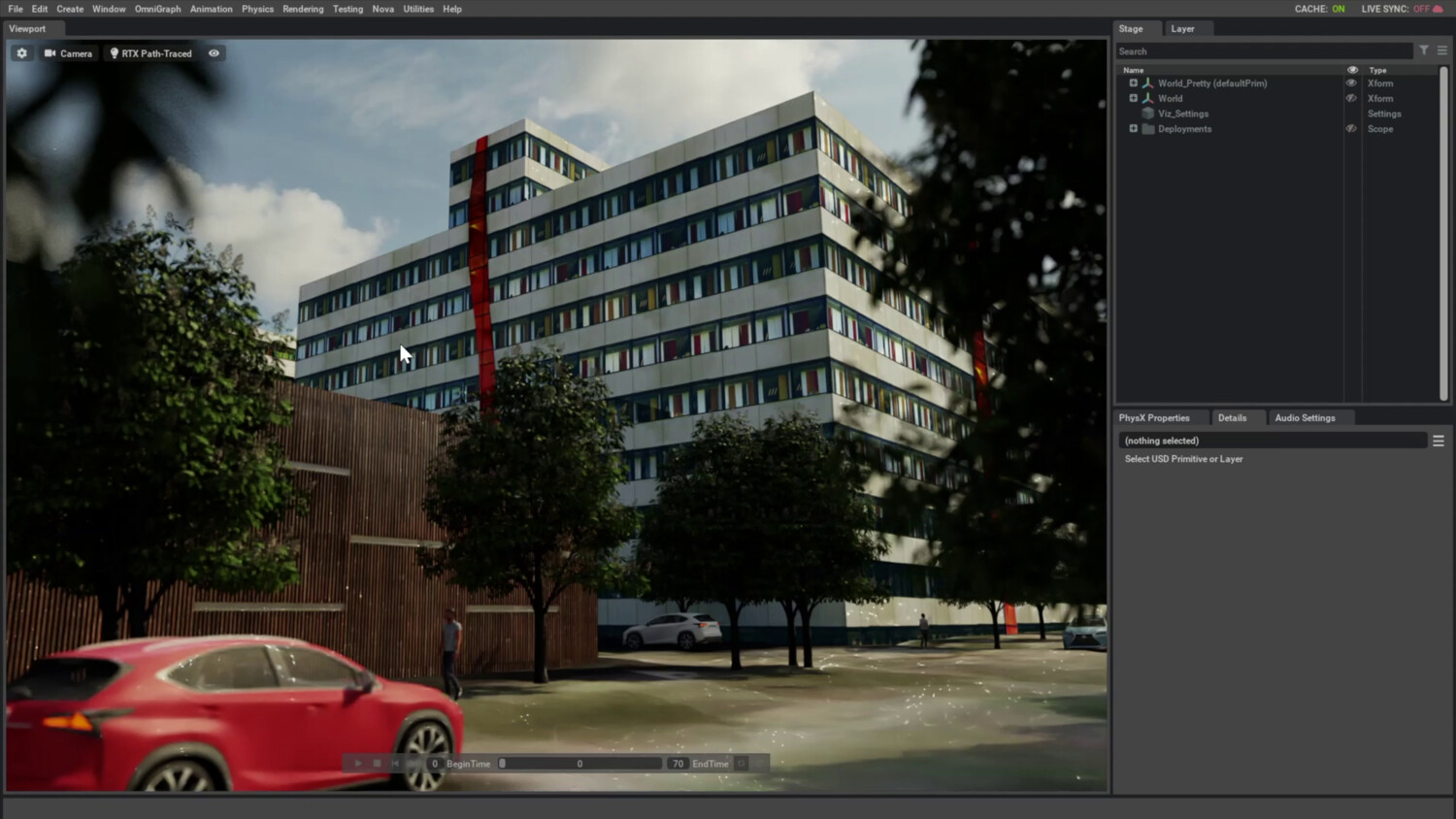
"Omniverse at Ericsson: Combining decades of Ericsson’s radio network simulation expertise with NVIDIA’s technologies in rendering and collaborative design."
5G has seen incredible momentum across the globe. Ericsson has so far delivered 83 live networks across five continents with many more in the pipeline. The rapid pace of deployment and adoption of 5G use cases demands support from the strongest technologies and processes available. They must enable all phases of the 5G journey from product concepts, R&D, and customer engagements to rollouts in complex environments such as factories, smart cities, and autonomous transportation.
The NVIDIA Omniverse platform enables huge leaps in complex product modeling, simulation, and visualization. Enhanced capabilities in this space drive radio access network (RAN) product performance, shorten time-to-market, ease the introduction of new functionalities and solution opportunities across emerging connectivity verticals.
Cross-pollinating technologies
Ericsson and NVIDIA entered a strategic partnership in 2019 with the basic goal of cross-pollinating technologies and challenges between two technology leaders in their respective domains. We discovered early on that there was huge value to be unlocked in the connectivity and telco worlds from the decades of investment made into 3D gaming and movie CGI technologies.
There is a rich history of simulation models both at Ericsson and in the wider telco industry – from 3GPP models and common RAN deployment planning tools to in-house radio frequency (RF) propagation models. These capture deep physical properties of RF transmission and deliver predictive accuracy. Furthermore, Ericsson has tested and calibrated our in-house models against real-world measurements to a degree that is certainly unique.
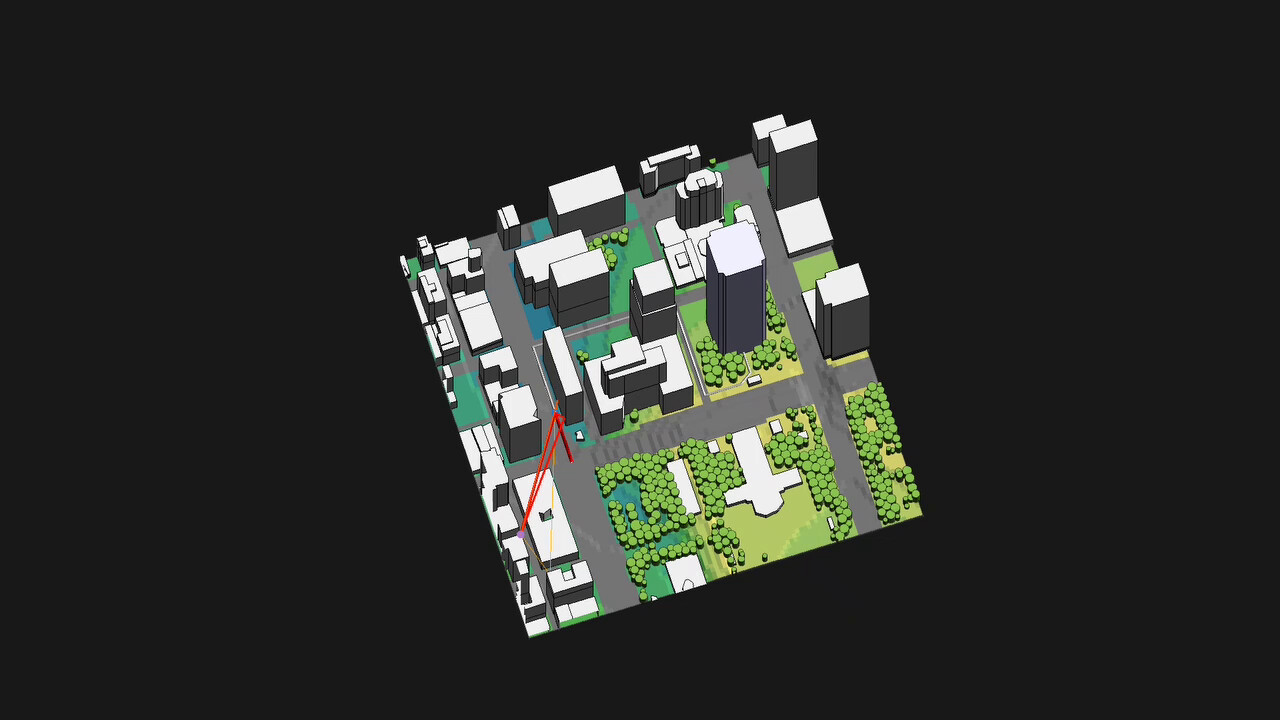
Figure 1: Existing models are extensively researched and validated in the field. These are now ported onto the strongest compute and visualization platforms.
Modelling and computational opportunities
We are exploring several significant modelling and computational opportunities using the technology-leading 3D gaming and movie CGI capabilities available. On a high level, some challenging phenomena and aspects are as follows:
- High-resolution and complex city or indoor geometry: bridges, tunnels, foliage, indoor-to-outdoor and more
- Detailed surface materials that influence RF propagation, such as metallic coatings and metal features in places such as factories
- Mobility of users and dynamic scene features such as automotive traffic
- Exploring complex models visually
- Internal and external collaboration and data sharing
- Extremely high computational complexity of physically accurate models
Taking 3D gaming technology as a baseline and developing relevant models for 5G on top, one finds an attractive degree of complementarity between the Omniverse platform and GPU hardware and the needs of the problem at hand. Games deal with incredibly detailed and complex scene geometry, apply fine-grained textures, and have highly evolved ‘actor’ AIs that provide scene dynamics. All of this is hardware-accelerated.
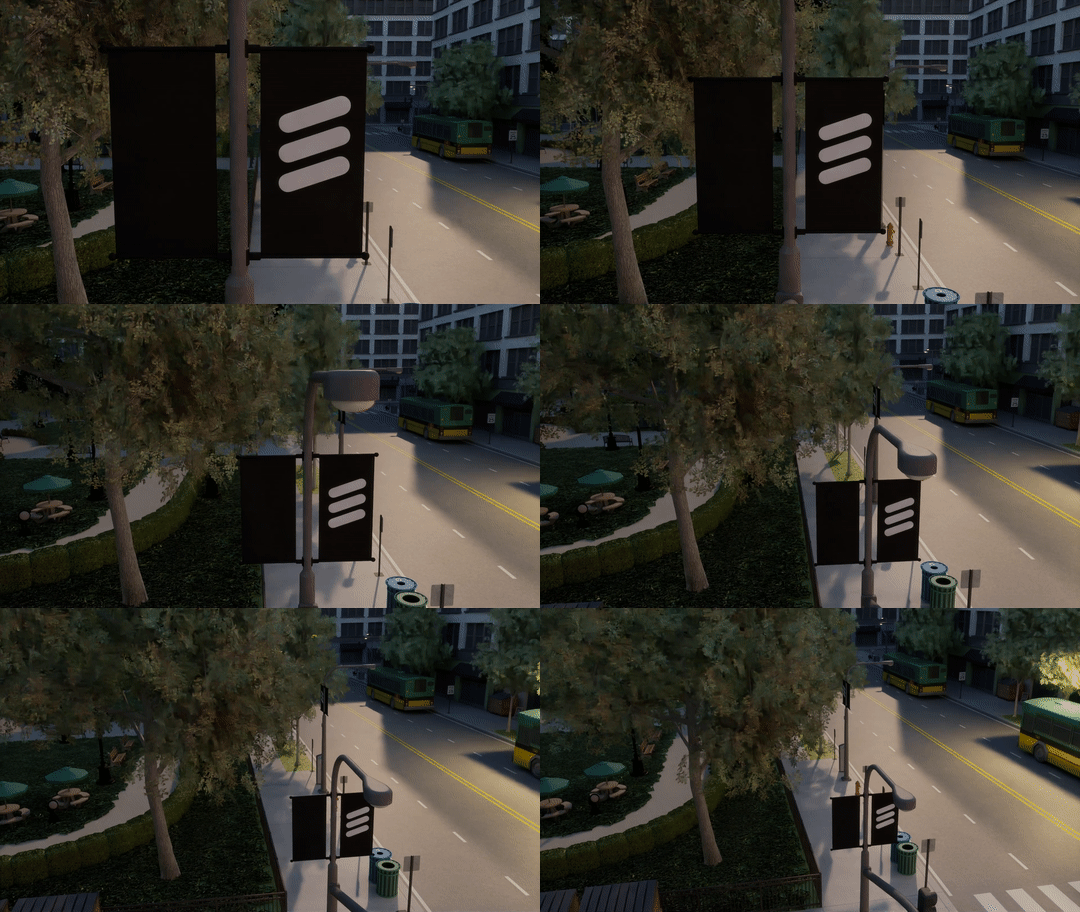
Figure 2: Radio transmitting to a drone from a lamp post. Combining Ericsson’s real time simulation with Omniverse high-performance RTX renderer.
NVIDIA’s latest-generation GPUs provide essential computational capacity to run simulations at vastly larger scales than on CPUs alone.
A quantum leap in capability
However, it is the NVIDIA Omniverse platform that brings about a quantum leap in capability. For us at Ericsson, there are four main aspects: visualization, integration, standardization of formats, and collaboration.
Complex models and scenes require extensive visualization support to become meaningful. NVIDIA Omniverse Create integrates a state-of-the-art ray tracer with the interactive tools to manipulate and explore complex scenes. This means we can experiment with placement of Ericsson products and explore their impact in real time.
NVIDIA Omniverse is an extensible platform centered on its Nucleus scene database. Integrations with other simulation assets are possible at various levels and our 5G-specific simulators and virtual RAN assets fit nicely.
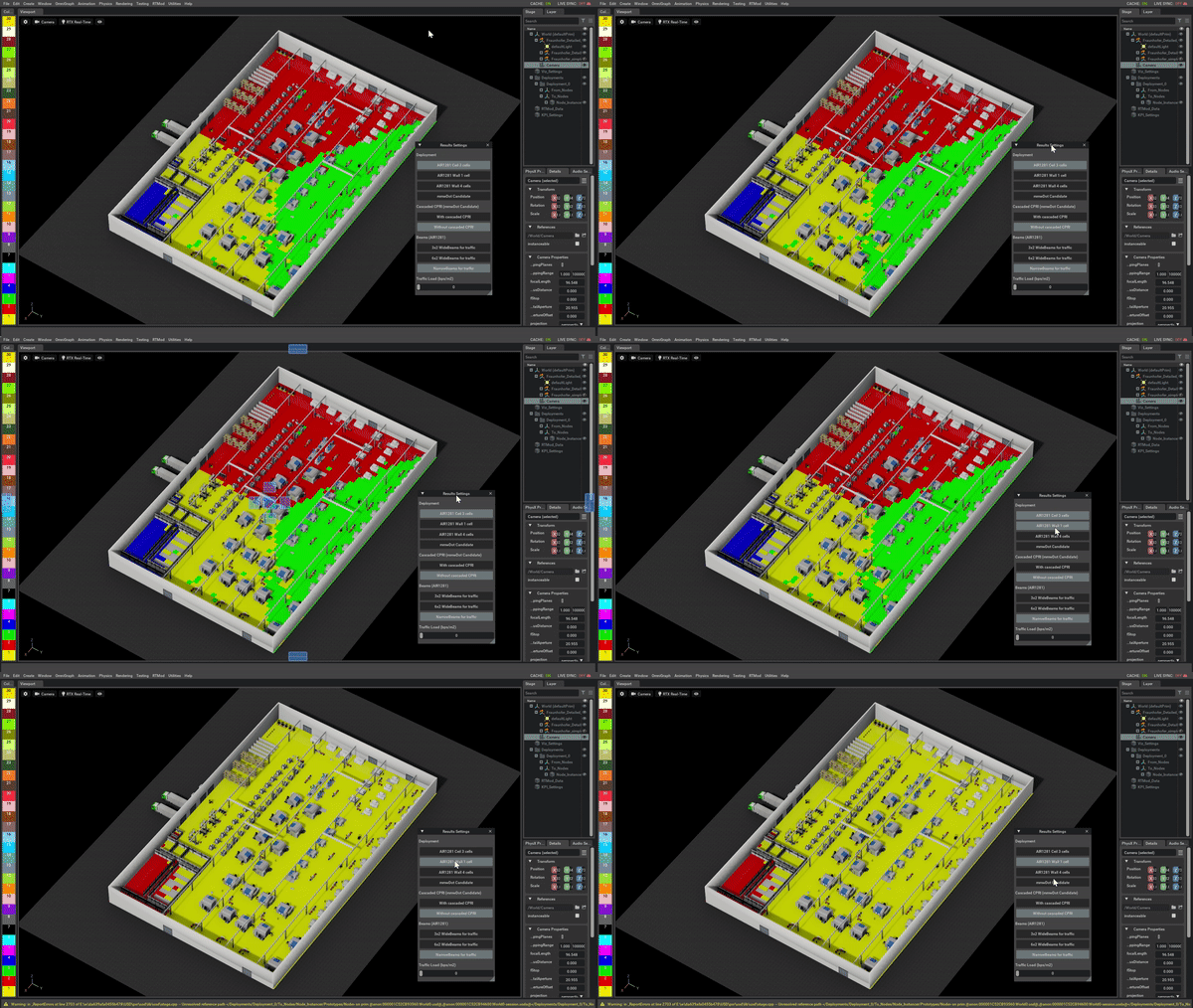
Figure 3: Leveraging the Omniverse Kit UI for scenario design, simulation and exploring results.
The 3D community has historically been fragmented along several proprietary and competing formats and tool chains. This creates unacceptable degrees of lock in and limited abilities to extend to new simulation use cases. NVIDIA Omniverse uses Pixar’s open Universal Scene Description format, which is emerging as the exchange format of choice. A crucial aspect of this format is the ability to make detailed city meshes portable and facilitate them for different stakeholders to contribute geodata.
Collaboration is an essential ingredient as we consider how advanced simulators are used. With more details and model fidelity, more work may go into making and analyzing a particular scenario study, but there will also be more people exploring simulated scenarios to drive customer success. And, as more advanced exploration can be done in the digital world, the more our physical products will be fit for purpose once they are deployed, improving performance and reducing cost for field operations.
We have a vision where 5G can be explored in our virtual worlds together with our design teams, business leaders, industry partners, and customers. After all, we are in the age of digital twins!
This journey is just beginning.
Read more about
Read more about NVIDIA Ominiverse Platform
Ericsson as Omniverse Early Adopter (NVIDIA PR OCT 2020)
Explore 5G
Related Content