










Defining the business value of Industrial 5G

Consultant

Business Development

Consultant
Business Development
Consultant
Business Development
The adoption of Industrial 5G has many perceived barriers with:
1. A lack of understanding of the real benefits of 5G
2. A lack of use cases with proven business value
3. The challenges of end-to-end implementation
driving some of the key topics of discussion within the CTO offices of manufacturing powerhouses.
Together with ABI Research, we have found that five industrial use cases have the potential to generate a 10-20 fold return on investment (ROI) in a five-year period. However, there is still apprehension about taking these studies at face value, and industries are keen to gain a better understanding of how 5G will impact their daily operations. Seeing this gap in the UK market, we chose to help address some of these concerns and, in partnership with Digital Catapult, the UK’s leading advanced digital technology innovation centre, we created an Industrial 5G Accelerator programme.
Our aim was to immerse ourselves into the operational realities of some of the leaders in the manufacturing and logistics sectors and investigate how 5G can bring value to their business. We cast a wide net to search for problems that fit well with the Accelerator’s objective.
An encouraging response of over 30 applicants provided a unique insight into the real-world issues that can be solved by a secure, reliable and future-proof connectivity solution. The program shortlisted two partners with four unique use cases that had cross-sector appeal: Seagate and Tharsus.
Partners and use cases
Manufacturing partners: Tharsus and Seagate
We first brought together decision makers from various parts of the partners’ business, and 5G experts from Ericsson and Digital Catapult. Following these sessions and with better insights into each partner’s drivers we then investigated numerous operational processes and triaged them based on 5G applicability, ecosystem maturity and benefit potential. With better insight into the cost drivers and areas of inefficiency, we were able to select four use cases that fit our criteria:
Condition Based Monitoring (CBM)
Predictive Maintenance
Wireless Robotics
Asset and Tool Tracking
Business case
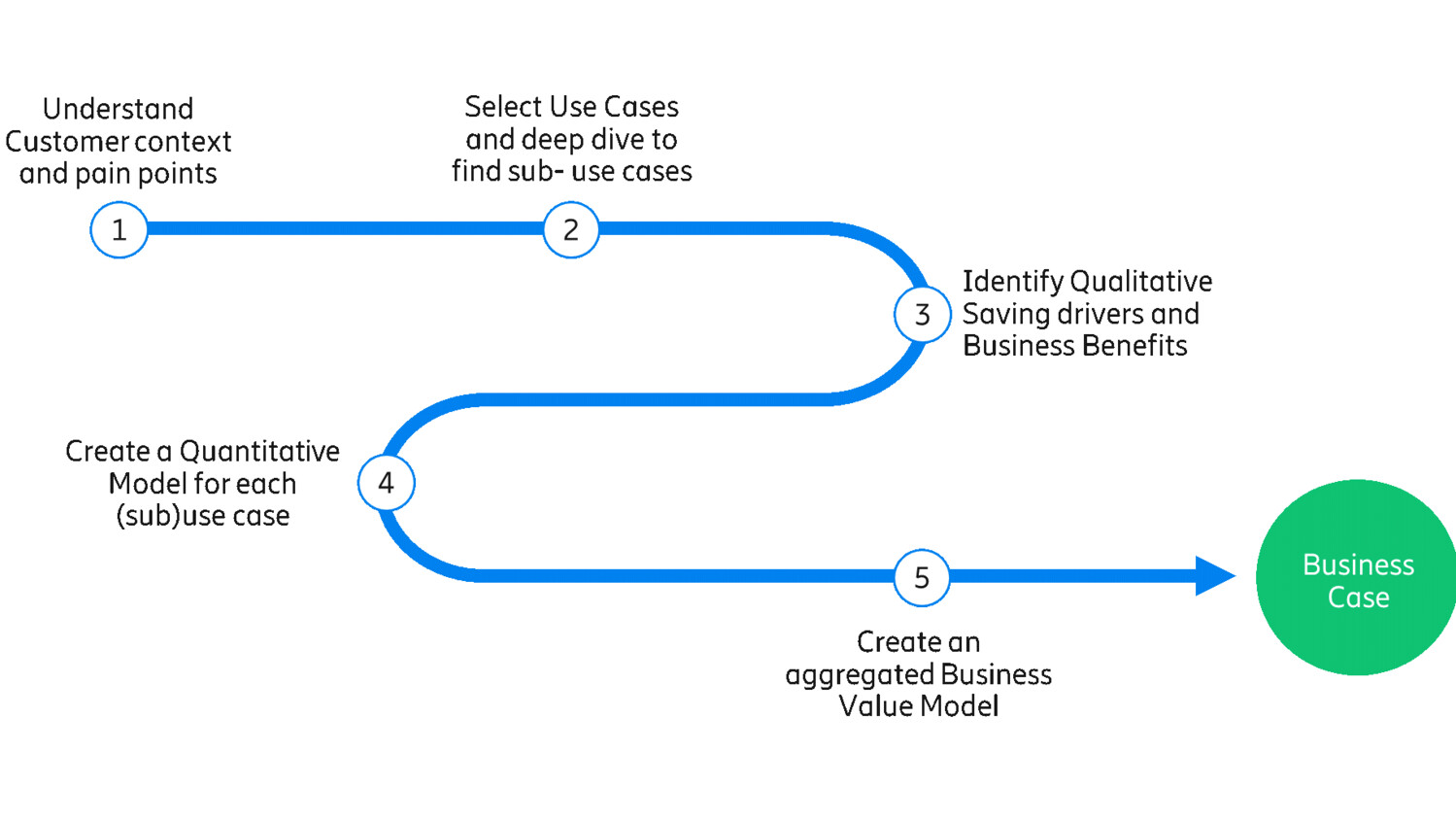
Working hand in hand with our partners, and implementing Ericsson Consulting’s standardized methodology, together with Digital Catapult’s cross technology and manufacturing expertise, we worked on creating a value framework and associated business case for each use case. Our partners gave us unparalleled access to their ways of working and permitted us to understand their cost drivers, which in turn, allowed us to build a holistic view of the qualitative and quantitative benefits of 5G.
The way to build a budget-friendly migration to 5G is to harness one or two critical use cases that bring the most impact, then layer additional use cases to amplify the benefit of the network asset. Keeping in mind the pace of development of the wider device ecosystem – which is critical to the successful adoption of industrial 5G – we built an implementation plan guided by these principles.
For Seagate, a 5G private network was proposed to enable a massive deployment of wireless sensors to monitor environmental facilities and predict failures for manufacturing machines. Our analysis showed an estimated payback time for the private network of 12-18 months, with an 8-10 fold ROI in five years.
Tharsus faced the challenge of connecting their mobile robots using wireless technology, with an extended coverage footprint that would enable the reliable transfer of high bandwidth data to a centralized server. With an AI algorithm trained to identify objects in real time, the solution would help automate warehouse operations and reduce human dependency. The program with Tharsus worked by building a scaled down model of this robot, to verify the performance of 5G and its applicability in a production environment.
The use case required a stable connectivity medium to ensure an accurate reading and analysis of the objects. Initial testing of this demo showcased promising results on the reliability and stability 5G has to offer. 5G, in this context, outperformed WiFi connectivity, as it guaranteed the frame-received parameter independently of the interference environment. While further testing of the prototype is ongoing under differing conditions (load, mobility, and so on) we are excited about the real-world applications that could be unlocked.
Next steps
Our aim is to continue working with our partners – alongside Digital Catapult’s continued support – and explore opportunities to further develop wireless factories and industrial facilities, enabled by private 5G networks. This experience has made us realize the need for accessible knowledge and information that can guide companies in the UK who are interested in embarking on a 5G journey.
References
The industry impact of 5G – Insights from 10 sectors into the role of 5G, Ericsson, January 2018
An introduction to the 5G industrial Accelerator (link to YouTube)
Discover the partners and our use cases (link to YouTube)
Learn more
Read more about connected manufacturing – how to improve manufacturing efficiency with private cellular technology.