










Clean up your legacy stack to accelerate your digital transformation

Solution Marketing Manager

Solution Marketing Manager
Solution Marketing Manager
For me, a digital transformation is the integration and expansion of digital technology throughout different areas of a business and its operations.
Digital transformation has been a buzzword for quite some time and is part of a continuous strategical evolution for many CSPs. Ultimately, it is born out of necessity to meet the increasingly demanding requirements of customers, provide better customer experience and simplify business operations – reducing friction at every opportunity to speed up the set-up, delivery, and monetization of services. And indeed, this is something that CSPs are already striving for, to simplify business and user experience in order to deliver value to their customers.
What’s great about digital transformation is that it provides value on both ends, for the customer and for the CSPs. But fulfilling the ambition of a digital transformation is not an easy journey - CSPs need to remove and rebuild on the current legacy solution, which is followed by significant changes in their (BSS stacks to make it happen. In addition, there is an additional imperative to impact experience by extending the product offering capabilities and making relevant digital front-end and back-end transformations. When successful, CSPs obtain a customer centric experience across omni-channel customer touchpoints and front-end systems.
Pinpoint the pain points
Some of the common challenges CSPs must strive to overcome, as it impacts on the overall experience of their customers are:
- Time to market, product launch and service delivery that is not fast enough, which jeopardizes top line revenues
- A variety of offers and promotions leads to customization that cannot be met or will require extensive manual interventions to fulfill.
- Systems that are working in silos, which is common as part of legacy stacks. Hence the related data delivered between systems and to front-end systems are insufficient and necessitates manual interventions, while customers experience challenges and delays across multiple touchpoints.
Regardless of which of these struggles you are seeking to overcome, in order to offer a better customer experience, CSPs need a baseline to know where to start the journey from. In order to do that they need to pinpoint what those pain points are and potential solutions for addressing them.
Ericsson works through these challenges side by side with our CSP customers, deploying its broad portfolio to help them start and progress digital transformation journeys. To successfully monetize new services and drive new revenue streams whilst keeping ongoing costs in check, new BSS capabilities are needed in the service, commerce, and digital enablement layers, where legacy solutions are often lacking. And frequently there is a need to simultaneously support both old and new BSS with simple integration into the current BSS stack - this becomes hugely important when creating new architectures in legacy environments that fit with CSPs’ digital principles.
Ericsson’s Digital BSS portfolio is evolving to meet these needs. The Digital Experience Platform (DXP), Catalog Manager (CM) and Order Care (OC) work hand in hand to enable great customer experiences for customers from multiple different angles, and each of these BSS components has a specific job to do in this context.
Consistent, secure, and personalized access to information and applications must cross many digital touchpoints.
The Digital Experience Platform (DXP) is the hub that manages customer touchpoints, as such it plays an integral role in the digital transformation journey. By allowing customers to have smooth, contextualized, and intelligent interaction with the CSP across all channels, both engagement and experience benefit from advanced customer management and product configuration.
The DXP’s design principles are also central, it is based on TM Forum’s Open Design Architecture (ODA) and Open API standards, thereby the openness facilitates smoother integration and faster transfers of data.
BSS is shifting to Cloud native architectures and design, running on cloud-based microservices architectures, and making use of cloud infrastructure. This reduces the implementation and integration effort required into the neighboring systems in the stack.
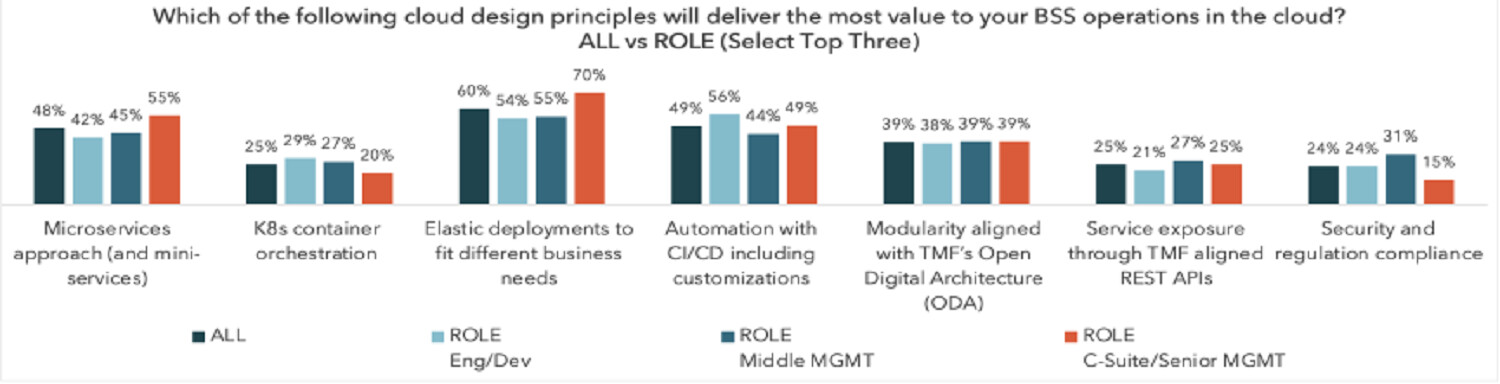
Figure 1 shows what value CSPs expect cloud native design principles to bring.
The reality most CSPs face is a transformation of the BSS stack, building new hybrid stacks in a stepwise transformation, combining with modern multivendor environments to meet solution architecture goals.
Building blocks help communication across the layers of the BSS stack
Next stop is Catalog Manager, where time to market is tackled head on. Rapidly launching and enabling new innovative offerings with simple user experience and product, service and resource catalog capabilities without delays or bottlenecks is key to realizing new revenue streams. A centralized catalog with templatized offers that can be customized and delivered fast offers a shortcut or two reduces manual rework. Finally, Order care enables an automated workflow across the service and systems related to a specific offering that is ordered.
Both of these value aspects are fundamental as we transition into new innovative services for both the retail and enterprise segments with the promises of 5G and IoT. New service requirements will need commercial flexibility and configurability for offerings. And ordering processes must be fast and consistent while providing the visibility needed on service requirements for advanced new offerings. In addition, this flexibility is critical to the current business as CSPs need to renew or change common market offerings in for example traditional prepaid or post-paid offerings.
With this interworking between the extended set of capabilities, DXP becomes a central piece as it joins into the existing capabilities in place and is a functional block between the service and business management layers, and the front-end layer. Having a block between these two layers, that is fully connected to them, is essential for CSPs to realize a digital transformation from a solution stack perspective.
CSPs have many options to impact the customer experience at various levels with the capability of BSS products Effectively delivering business and operational needs while reducing TTM (Time to Market) for new offers and product promotions. Optimizing configurability to reduce the dependency on customizations is critical, aligning processes and simplifying business is an added bonus.
There also needs to be a solution that provides simple integration to the conventional and digital channels for the consumers and enterprise for CSPs. With our solution setup, across omnichannel engagement and experience mechanisms it’s possible to enable e.g., marketplace for customers to order a service, self-service channels to review status, activate offerings etc. And while doing that, consistent, secure, and personalized access to information and applications across many digital touchpoints allows customers to get contextualized information to providing relevant and personalized customer centric experiences.
Realizing a digital transformation and the steps to achieve it is a journey. But the building block and capabilities needed to achieve them can be quite similar. With that perspective in mind, Ericsson is looking forward to walking with its customers each step of the way, through digital transformation journey.
Recently we finished a Pre-Paid Mobile Transformation with Telstra, a project that was a key element of their broader T22 digital transformation plan.
With a strong collaboration between Ericsson and Telstra this transformation has simplified business, technology, and enabled sizeable experience benefits for Telstra’s pre-paid customers and the employees of Telstra. The Pre-Paid Mobile Transformation with Telstra is now nominated for the TM forum Excellence award.
Learn more
Click on the video for more details on the project:
Click on the link below for more details on TM forum Excellence award:
Top Technology Companies Amongst the 49 International Nominees for TM Forum’s 2021 Excellence Awards
To find out more, visit our Telecom BSS page.