










Understanding utilities cybersecurity – is it strong enough?

Director, Private Networks Security Solutions, Networks

Utilities Sales Director, Ericsson North America

Director, Private Networks Security Solutions, Networks
Utilities Sales Director, Ericsson North America
Director, Private Networks Security Solutions, Networks
Utilities Sales Director, Ericsson North America
Digitalization opens opportunities and vulnerabilities
To understand the security issues facing utilities, it’s important to understand the radical changes that utilities infrastructure is experiencing. First, there’s the shift to digitalization and the integration of telecommunications-based systems, sparking changes to network architecture, network security, and cellular network integration. As utilities advance their connectivity by integrating cellular networks, branch out on their use of the Internet of Things (IoT), and expand their supply chain, maintaining network security is the biggest challenge of all.
Meanwhile, utilities are increasing their adoption of Wi-Fi and cellular network systems. The shift to remote work has accelerated. And the newfound bidirectional flow of information between utilities and consumers has expanded. The threat landscape of utilities cybersecurity attacks is growing at a daunting pace. Utilities must be aware of their network security vulnerabilities and be prepared for any potential threats.
We decided to investigate the industry’s readiness
To better serve our utilities customers, we wanted to understand where utilities stand in terms of their adoption of cellular network technologies, their awareness of their systems vulnerabilities, and their interests in fortifying their network security. Ericsson asked Zpryme to survey more than 80 utilities on the status of network security in their organizations. The results indicate a significant increase in cellular network integration in utilities. However, that increase is not matched with investments in security technologies and training.
Key findings
- Investing in wireless connectivity is hot. A big part of the digital transformation sweeping the utilities industry is a significant increase in cellular networks technology. It’s not a surprise, then, that the overwhelming majority of utilities (93 percent) have already invested in Wi-Fi or both Wi-Fi and LTE.
- Investing in emerging technology is not. Surprisingly, only 20 percent of respondents said their utility organizations are currently investing in Wi-Fi 6 and/or LTE/5G. Equally surprising, less than a quarter of those surveyed are planning to invest in both Wi-Fi 6 and LTE/5G.
- The biggest consumers of utilities' Wi-Fi networks? Employee laptops. With the rising necessity of remote or hybrid work models, employee laptops comprise 86 percent of Wi-Fi network users in utilities. Smart meters are 39 percent of Wi-Fi networks. However, remote operations and IoT devices are significantly less connected to Wi-Fi networks.
- Private LTE/5G will grow. The use of private cellular networks is projected to increase in the upcoming years as 36 percent of utilities are planning to implement LTE/5G networks within the next five years.
- Better connectivity drives adoption. Sixty-five percent of respondents find that improved connectivity is the top value that LTE/5G can offer their businesses. In addition to connectivity, other values include staying up to the market-leading tech levels, lowering TCO of operations, and increasing revenue. Interestingly though, 23 percent said there is no value to private networks in their organizations.
- Security is important. Utilities cybersecurity, resilience, and endpoint security were ranked the most important security solutions by the majority of respondents.
- But apparently, it’s not important enough. Sixty-two percent either don’t know or don’t believe that their organizations have the skills and tools to protect against cyberthreats.
Other insights you’ll glean from the study include:
- how far along are organizations’ implementation of Zero Trust Architecture
- infrastructure challenges regarding the integration of cellular networks into utilities’ existing IT/OT security systems
- supply chain compromises and security breaches
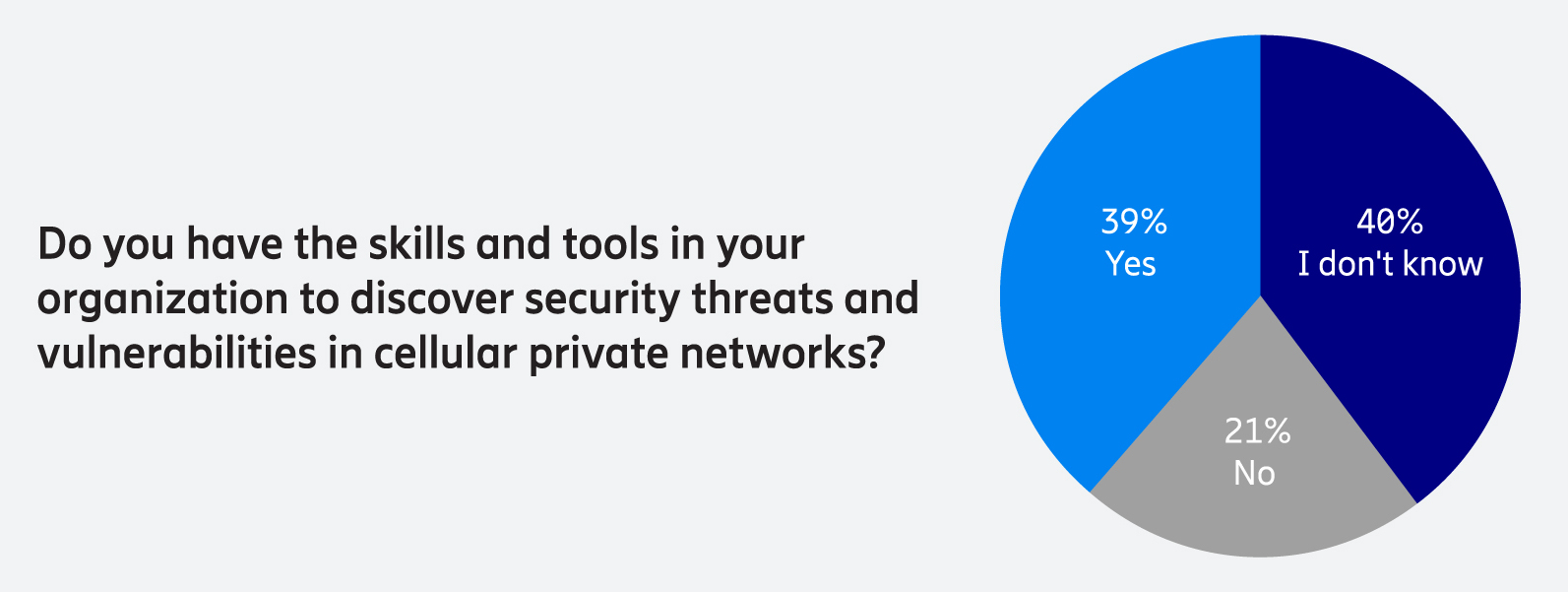
Experiencing a cyberattack has become a question of when, not if
As utilities adopt IoT technologies, shift to remote or hybrid work, and switch to cellular networks, they become more vulnerable to cyberattacks. They must also navigate new technology integration, security issues, and regulatory compliance while maintaining connectivity and reliability. It’s important that utilities understand the gravity of the issue and plan accordingly.
The Ericsson-Zpryme study provides a snapshot of the current state of engagement in the utilities industry with wireless connectivity and network security issues. Read the report to see where you stand in relation to your peers in the industry and learn what measures you should be taking to protect utilities cybersecurity and deter cyberattacks before they happen.
Download Network Security in Utilities study now