










How Kubernetes over bare metal infrastructure improves TCO

Senior Product Marketing Manager

Head of Cloud Transformation Consulting

Head of Cloud Infrastructure

Senior Product Marketing Manager
Head of Cloud Transformation Consulting
Head of Cloud Infrastructure
Senior Product Marketing Manager
Head of Cloud Transformation Consulting
Head of Cloud Infrastructure
Communication service providers (CSPs) can look forward to several benefits by running their cloud native applications on a Kubernetes over bare metal infrastructure. This architecture has fewer software components than a virtualized infrastructure - the hypervisor, SDN controller and guest OS for virtual machines are not needed for example, which means that the infrastructure complexity and related costs are greatly reduced. The illustration below says it all: a Kubernetes over bare metal infrastructure is much simpler than running a virtualized infrastructure. The blog post Why Kubernetes over bare metal infrastructure is optimal for cloud native applications provides an in-depth explanation to the benefits. Let’s explore what this infrastructure simplification means for a CSP's total cost of ownership (TCO)?
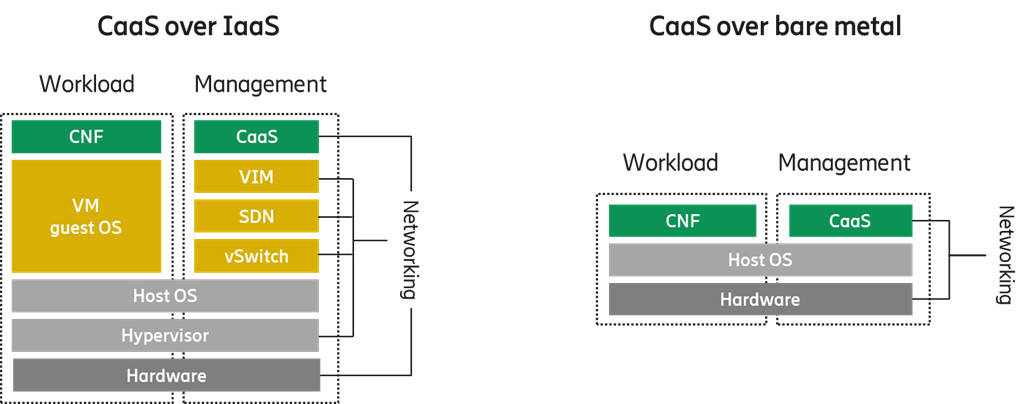
Figure 1. Simplification of cloud infrastructure technology complexity
TCO model for cloud gaming
To understand the TCO benefits of using a Kubernetes over bare metal infrastructure, we created a model to compare the deployment of the user plane function (UPF) using Kubernetes over virtualized infrastructure (NFVI), to deployment over bare metal infrastructure. The UPF is a key application in 5G core networks. Not only is the user plane expected to grow over the coming years in 5G networks, but also at the same time we can expect geographical distribution of UPF due to the introduction of various edge use cases. Therefore, it is important to have a cost efficient and easy to operate cloud infrastructure in the network to deploy distributed workloads for smart manufacturing, remotely controlled drones, online gaming and many other services.
So far, traffic usage in many networks have been dominated by video consumption in line with many traffic growth forecasts. A major explanation for the heavy usage of video is the popularity of social media, where video content is often promoted. Looking ahead though, we can expect more quality-of-service (QoS) sensitive traffic such as gaming and various applications including AR/VR. Already that kind of traffic has taken a rather significant portion of the total traffic, and this is a strong driver for distribution of workloads. Distributed workloads are a key part of this TCO model, and it is based on a QoS sensitive cloud gaming scenario with 6000 users initially, blended with other traffic usage such as social media and video applications.
Kubernetes over bare metal infrastructure is both CAPEX and OPEX efficient
A foundational explanation to the higher efficiency of a Kubernetes over bare metal infrastructure solution is that less processing capacity is needed compared to virtualized infrastructure. Under the assumptions of this business case model, to grow capacity from 200 Gbps to 400 Gbps over three years, the bare metal infrastructure is at least 14 percent more efficient in terms of its compute needs. Since less processing capacity and complexity in the networking layer is needed, the bare metal infrastructure solution is more power consumption efficient – see figure 2 below.
The major contributor to the TCO advantage for Kubernetes over bare metal infrastructure is related to recurring software costs. There is no virtualization layer in the bare metal infrastructure solution, and this can result in a 25 percent cost reduction, due to less software fees.
In figure 3 below, you will see that the difference in TCO between the Kubernetes over bare metal and virtualized infrastructure solutions grows over the three years and when capacity is distributed over more sites. The simplified networking offers an easier to operate environment for CSPs by reducing the fault management points. Assurance and alarm correlation at infrastructure level also becomes an important operations and maintenance advantage.
Conclusions and recommendations
Our TCO model clearly shows that deploying containers over bare metal infrastructure offers the best result in a multiyear analysis where CAPEX savings are driven by a lower need for compute capacity. OPEX savings are led by lower recurrent cost for software fees and lower costs for infrastructure operations and maintenance due to the simplified architecture. The operational benefits become more evident as we aggregate the efforts throughout the years and as the architecture is distributed to enable more revenues based on edge computing use cases.
As 5G continues to generate traffic growth, a low-cost user plane strategy becomes paramount for supporting service providers’ business growth efforts. Early adoption of infrastructure technology that supports Kubernetes over bare metal infrastructure is the best option to move forward and to keep TCO as low as possible. Our TCO model shows a 18 percent reduction potential.
If you would like to know more about cloud infrastructure and this TCO model, please contact your Ericsson sales representative.
Learn more
Check Why Kubernetes over bare metal infrastructure is optimal for cloud native applications
Read about the benefits of Kubernetes on bare metal cloud infrastructure
Read our guide to building a cloud-native infrastructure, including the role of bare metal
Find out more about bare metal cloud infrastructure and its importance in this Q&A with Ericsson's experts
Read case study from, SK Telecom - the world first live bare-metal cloud-native 5G Core solution