










How utilities ecosystem collaboration is helping the industry accelerate problem solving and capture long-term value

VP – CTO, MANA Business Development Customer Unit

Principal Solution Manager, MANA BD CTO Team
VP – CTO, MANA Business Development Customer Unit
Principal Solution Manager, MANA BD CTO Team
VP – CTO, MANA Business Development Customer Unit
Principal Solution Manager, MANA BD CTO Team
Koustuv Ghoshal, Vice President and Head Utilities, Energy & Industry Verticals, Ericsson North America
A paper by McKinsey on the connected world pointed out something that caught our attention: “The potential associated with connectivity is big and promising,” said the paper. “Realizing this value does not require additional technological breakthroughs—most of it can be achieved using technology that has already existed for quite some time. Yet end users in most commercial domains are not adopting new technologies and use cases at the scale and speed one might expect.”
What does this mean for utilities? It means a major shift from traditional, insulated ways of thinking to a culture of collaborative problem solving and innovation. The utilities sector is experiencing major change. It’s moving from copper to wireless. Legacy fuels to renewable resources. Physical to digital controls. Consumers to Prosumers who produce as well as consume energy.
The smart grid will rely on numerous innovations across the board—sensors, IoT, drones, XR, edge computing, AI, cellular connectivity, etc. How will partnerships and cross-sector teamwork across these change agents be the driver for new and even unforeseen innovations within utilities?
Collaborating where you never collaborated before
Value chain coordination will be essential for utilities success. Today, no single contributor is able to drive use case-focused digital transformation. Players that rarely collaborated together in the past are finding that they should cooperate in order to implement use case solutions. And this collaboration is what will help define the necessary protocols, technical standards and economic models that will increase the momentum of utilities digital transformation.
Only by opening themselves to cross-sector partnerships, realigning incentives and sharing risk will current utilities business models succeed in transitioning to the smart grid. This collaborative connected utilities infrastructure will include a host of new types of services and players: connectivity infrastructure, spectrum providers, IoT device makers, operating systems, cloud platforms, app services, device makers, regulators (FCC), chipset makers and others yet to be realized.
Collaboration sparks thinking—differently
Even the best and brightest of an industry can get stuck in conventional thinking—especially facing complex problems. The real value of collaboration will emerge from an ecosystem of cross-industry innovators who exponentially build on each other’s capabilities. This type of collaboration will push boundaries outside of traditional thinking. By bringing in new organizations and industry segments – potentially in adjacent business areas – utilities gain fresh perspectives and competencies, increasing the rate of innovation and efficiency. In addition, this type of collaboration helps make better use of limited resources and can help build resilience against future disruptions.
A catalyst for utilities ecosystem collaboration
Utilities around the world are responding to the need for smarter ways to control the flow of energy. To thrive, utilities must harness the power and possibility of connectivity to build more reliable, secure, and flexible digital infrastructures. Ericsson recognized that, as specialists in connectivity, we could play a role in bringing together utilities and diverse partners in the ecosystem to solve real-world challenges.
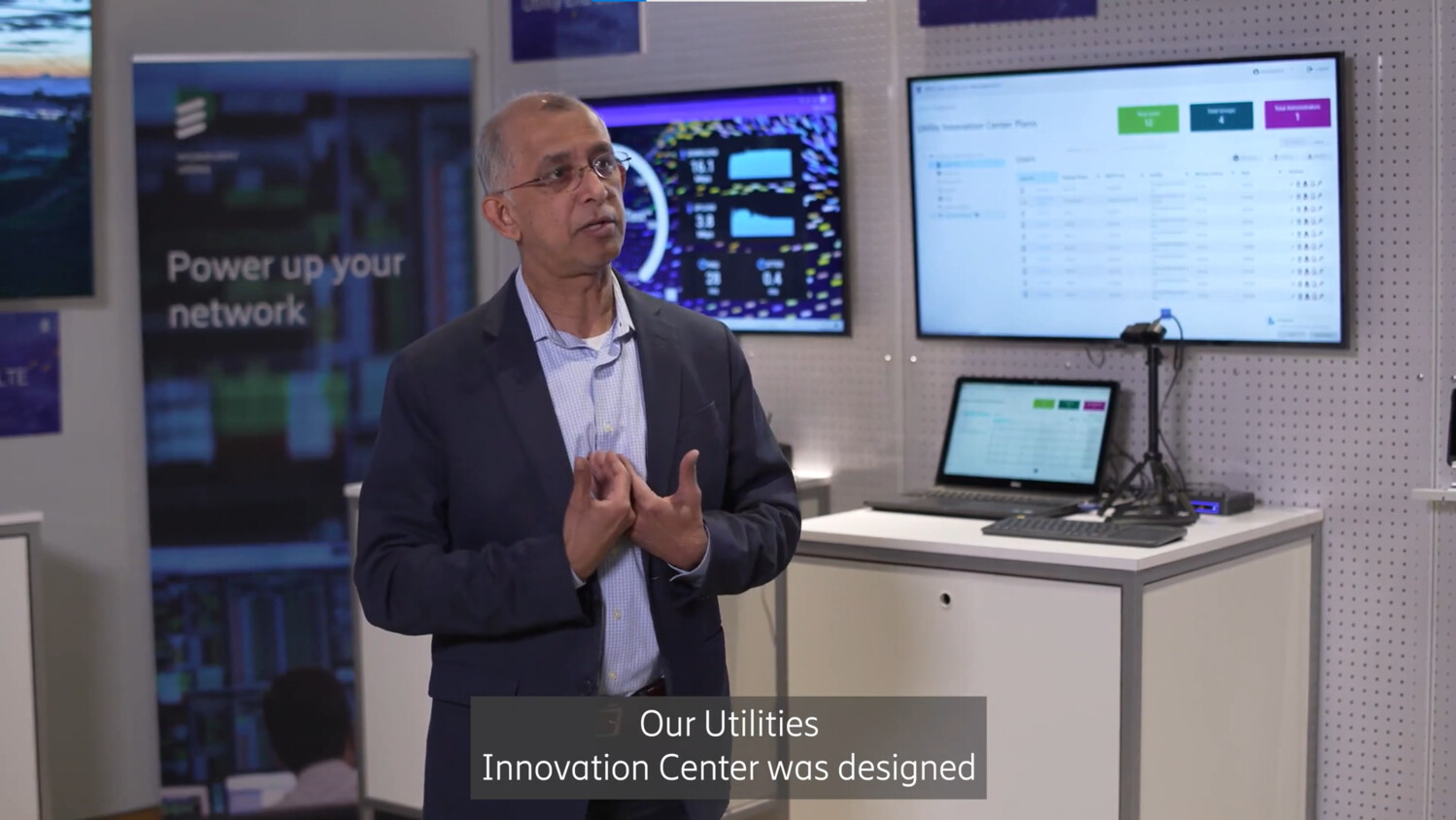
We created the Global Ericsson Utilities Innovation Center to give our customers and partners a place to do just that. It’s a playground and a sandbox designed where utilities, device manufacturers, wireless network experts and other partners can develop and try new use cases using a real-world operating environment and quantify improvements in security, resilience and efficiency.

Discover the Global Utillites Innovation Center
Read moreThis global center is an end-to-end lab dedicated to ecosystem collaboration across power, gas and water utilities, with locations in Plano, Texas and Richardson, Texas. In Richardson, we perform device testing and validation for 4G and 5G devices and applications. There, we ensure devices are certified for operation on the network and pass performance, cybersecurity and compliance with regulatory requirements and industry standards. Once devices are certified in Richardson, they are installed in the Plano lab to demonstrate specific use cases.
In Plano, co-creators enter a sandbox for enabling innovation. Using a real-world utility network, the lab showcases how cellular networks can support an ecosystem of industry-specific use cases and devices. Device and sensor vendors get a better understanding of product performance on LTE/5G when they bring their devices to this global center. The Plano lab has a private LTE/5G network deployed, with radios on Band 8 and Band 48 (CBRS).
Utilities and device manufacturers benefit from an end-to-end view of all components of the smart grid network environment—spectrum, device, radio network, core network, application and network management. They also have our communications experts at hand to collaborate and co-create with. Users can experiment with different use cases and verify the viability of LTE/5G working with every part of the power grid.
Connected Energy Utility | Report
Download report
Use cases explored, solutions co-created
Ecosystem collaboration within the center has enabled players to refine and rollout significant use case solutions for the industry. Examples include:
Tilting pole alerts—A major cause of wildfires in California has been fallen power lines. We worked with a partner on sensors connected to a private network. Affixed to distribution poles, the sensors automatically detect tilting poles before they fall as well as pinpointing fallen lines. By verifying the interoperability of the device and the Private LTE network, we were able to give utilities new functionality that reduces risk and maintenance costs.
Video surveillance with AI—A cellular-connected video camera with embedded AI software can identify switchgear fault and detect arcs. The solution captures and processes video in real-time, flagging abnormal activity and automating alarm responses. To our surprise, we discovered that the manufacturer had built-in AI Edge computing into their devices, so the devices didn’t need the bandwidth we expected. That freed up network capacity that could be used for other purposes—a perfect example of the synergies that happen with cross-industry collaboration.
Assuring interoperability—Many device manufacturers design for the non-US market. Getting European-style devices to work with the US network turned out to be a challenge. We discovered that some device manufacturers were not familiar with utilities specific network features and standards for redundancy and reliability. Through our lab testing, we revealed that further development was needed on the device side. We were able to work with these OEMs to ensure interoperability and requirements adherence—opening new markets and solutions.
Shortening the journey from concept to trusted solution
This type of collaboration environment offers utilities and ecosystem players a real-world workspace that helps them identify and fix incompatibilities, security and reliability issues long before they go to market. Working with a real cellular network in a functioning ecosystem, industry partners can see the actual performance of their devices on our network, understand how everything orchestrates together, and pioneer new use cases with confidence. With a pre-validated, pre-integrated solution created in the lab, utilities and ecosystem partners can accelerate the path from proof-of-concept (POC) to reliable, steady state rollout.
In a fast-changing environment, utilities are facing many challenges in terms of efficiency, cybersecurity, corporate social responsibility, legacy equipment, data analytics and the aging work force. It’s clear that becoming more connected is vitally important in allowing them to improve how they monitor, control, and optimize every aspect of their organization. By exploring and utilizing the potential of cellular technology, Ericsson is helping utilities accelerate solutions to these challenges and co-create the power plants and smart grids of tomorrow.
Co-creation across the ecosystem makes 2+2=5
As the grid grows more complex, utilities must adopt digital solutions that enable them to:
- Increase security, reliability and resiliency.
- Consolidate islands of disparate communication networks.
- Digitize and automate processes.
Through collaboration hubs, like the Global Utilities Innovation Center, Ericsson is leading the way in the specialized world of connectivity for utilities. Our collaboration ecosystem includes a wide range of industrial partners, enabling us to bring diverse minds and resources together to address the industry’s unique issues.
When players collaborate across the ecosystem, when device manufacturers better understand the network’s roadmap, when utilities see the potential of connected devices and when the network enables advanced functionality and security, innovation can and does happen.
Learn more about the Global Ericsson Utilities Innovation Center and how Ericsson can help you collaborate and innovate better.