









Near-immortal devices and a sustainable deploy-and-forget future
- English
- 简体中文
- Zero-energy IoT (ZE-IoT) is expected to bring a new dimension of scale to IoT markets by expanding the number of use cases accessible to cellular IoT.
- Such ‘near-immortal’ devices will open new revenue opportunities for service providers, if cellular and non-public network ecosystems can commercialize and adopt such technologies.
- Cellular IoT connections are forecast to reach 5.5 billion by 2028.

Principal Researcher, GFTL
Principal Researcher, GFTL
Principal Researcher, GFTL
Listen how zero-energy IoT future promises huge potential to the cellular IoT industry.
A zero-energy IoT (ZE-IoT) future promises huge potential to the cellular IoT industry, expanding the scale of IoT use cases and transforming device management. But what exactly does this future look like, what are the challenges, and what more can be done? Let’s take a look.
The IoT landscape
But first, how does the IoT landscape look today? One of the key objectives of 5G, apart from enhanced mobile broadband (eMBB), is the use of cellular technologies to support massive IoT use cases that are delay-tolerant and able to support a high number of various sensor devices and controllers.
These use cases also cover a class of technologies for wide area use known as low power wide area (LPWA) devices, for example, smart meters and sensors for deployment within agriculture, utilities and logistics sectors. So far, the massive IoT market has chosen to use cat-M LTE and narrow-band-IoT (NB-IoT) as the air interface for low energy devices that can be used in both LPWA applications, as well as indoor scenarios and wearable devices.
Even with the rich and diverse IoT options covered by the 3GPP cellular standards, the Ericsson Mobility report offers a relatively stark comparison of cellular IoT and non-cellular IoT markets. The report suggests that growth of cellular IoT connections is healthy when viewed through the lens of a steady increase in the number of devices from 1 billion in 2018 to a forecasted 5.5 billion in 2028.
The table below from the same report shows how cellular IoT connections compare to the total IoT landscape. The difference between the cellular IoT and wide-area IoT figures constitute the contribution of alternative standards (such as LoRA) and proprietary LPWA technologies (such as Sigfox). The short-range IoT technologies represent connections served by license-exempted devices for wearables and indoor devices. The IEEE 802.15.4 project also feeds classes of short-range communication networks employed by industry and automation standards like Zigbee, or medium-range networks like WiSun that are sometimes used by utility applications. These short-range and medium-range application areas are ripe for addressing by 3GPP technologies.
| IoT | 2022 | 2028 forecast | CAGR |
|---|---|---|---|
| Wide-area IoT | 2.9 | 6 | 13% |
| Cellular IoT | 2.7 | 5.5 | 12% |
| Short-range IoT | 10.3 | 28.7 | 19% |
| Total | 13.2 | 34.7 | 18% |
Above: IoT Connections (billions)
The growth figures above suggest significant opportunities for service providers to grow revenues through the introduction of massive scale in the IoT market in coming years.
Of course, there will be challenges to this such as cost-effectiveness, but also huge potential. A significant part of realizing this will be the development of energy independence for IoT devices, thereby making IoT devices more pervasive and manageable. The cellular industry’s answer by increasing the cellular industry’s addressable market for short-range communication. ZE-IoT is expected to bring a new dimension of scale within the market by expanding the number of use cases accessible to cellular IoT in all deployment scenarios. The development of ZE-IoT is being proposed for the 6G System, also to be qualified as an IMT-2030 standard, and expected to be introduced at the end of this decade.
What is zero-energy IoT (ZE-IoT)?
ZE-IoT means that such devices will not need battery replacement or manual recharging of the battery. Ericsson Research are particularly interested in relatively capable devices that can be used in the wider area for direct connection with base stations in the 6G network.
A world powered by harvested energy
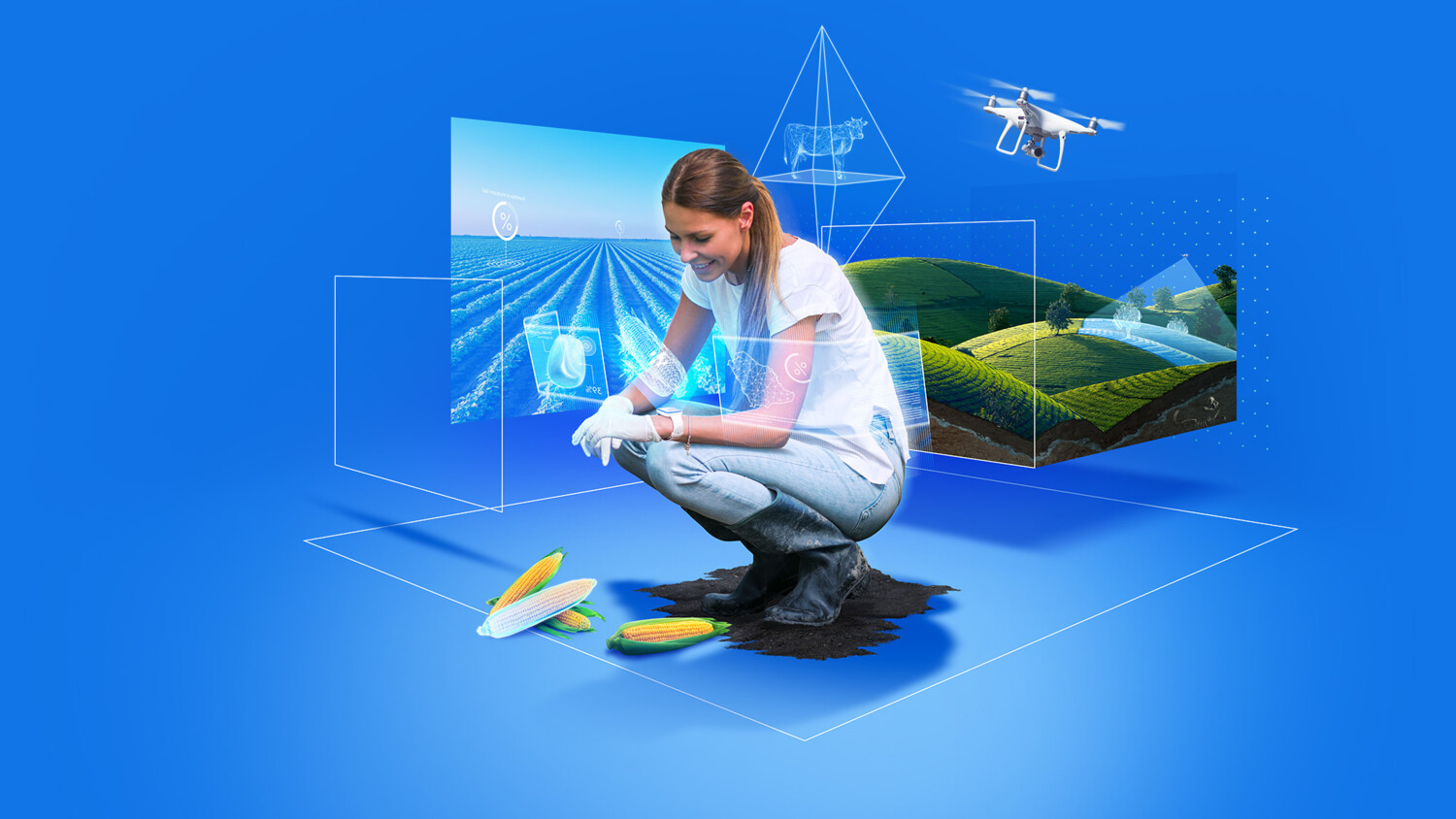
Imagine monitoring your glucose levels, automating your business and monitoring your home with harvested energy from zero-energy devices.
Read the article
How will ZE-IoT be developed and deployed?
ZE-IoT development is expected to follow two tracks: the first involves a passive solution that employs backscattering communication with short ranges of around 10 m, while the other active solution may have a range of ~200-300 m.
Direct connection to the network would support a broad range of segments that benefit both industry and society. We are also interested in the indirect connection case where the development of sidelinks between user equipment (UE) or via relays can be used to reach the base station.
Both topologies present challenges, such as:
- It’s important that device development does not only ensure low energy footprint and power levels that are relatively low, but also a good balance between coverage, device complexity, and form factor – and provide differentiation with NB-IoT.
- The air interface will likely be based on very simple waveforms and energy-detection as a basis for detection (at least on the downlink). Integrating these waveforms into available frequency bands for cellular systems, however, is not easy but work is actively proceeding. The introduction of these devices will come at a cost in spectral efficiency that must be rendered irrelevant by scheduling communications during periods of low traffic load. Data packet payloads will be small, allowing greater flexibility in improving network utility at all times.
- Sources of energy can be vibration-, thermal-, or solar-based. In some low-energy situations, such as wearables, piezo-electric operation may be considered. Mobile devices will idle, accumulate charge over short periods of time until a point is reached where the accumulated energy is suitable for powering the device, synchronizing to the network, and communicating information.
- Energy storage will still be important for active communication and this track is of particular interest to Ericsson. Depending on the device and use case, methods based on battery technologies or supercapacitors may be considered. The relaxation cycle between sleep and active operation will depend on the capacity of the storage, the means of accumulating energy, and the needs of the use case, e.g., the message volume.
- While most use cases will originate data towards the network, downlink data transfer is also possible for software updates and delay-tolerant control applications. Downlink information transfer to ZE devices will likely be performed using store-and-forward operation after initiation of contact by the device. Data transfer can be energy aware and incremental so that the device is in control.
- Synchronization of sidelinks will require activity cycles for multiple devices to be coordinated. Of course, the sidelink participant or relay might optionally connect ZE devices to unconstrained UEs or relays.
- Security solutions will have to be less complex on the device and network functionality. For instance, solutions such as signature analysis with artificial intelligence and machine learning (AI/ML), network-assisted location, and other data-directed techniques may be useful here.
Why should Ericsson drive ZE-IoT?
The objective is to expand the number of use cases that the network can be employed for. The business case for IoT with NB-IoT and cat-M LTE has been slow to mature, and the revenue from wireless IoT is generally a fraction of the total cellular market, even when considering the number of connections. We also see that the LPWA access market is greatly limited by the complexity of deploying and managing IoT devices. What’s more, long-life batteries further add to the cost of IoT devices.
Low-capacity batteries or capacitors will go a long way towards making IoT more pervasive. The ability to deploy lighter devices that need human attention only during deployment and for recycling will transform the device management landscape. The deploy-and-forget approach to operations does not absolve device owners of the responsibility to maintain connectivity to business support systems and the device monitoring features of the network.
ZE-IoT also opens up opportunities for public-private partnerships on smart city use cases where local governments have the ability to utilize excess capacity for IoT while being spared a large part of the logistical burden. These use cases are of particular interest to Ericsson as part of both public or dedicated network offerings. Additionally, the use of energy harvesting can serve use cases across intelligent transportation, utilities, and building management. Over time, there is no reason to restrict the power levels from such devices, although the use cases are currently being limited by short-range communications based on simplified waveforms.
Which business and technical challenges lie ahead?
The past record of the industry in expanding IoT use with wide area technologies has been lacking. Chipsets and devices must be sold at large volumes to enable cost-effective custom solutions and the market needs priming through broad-based support of these technologies.
From Ericsson’s perspective, the challenge is threefold:
- Firstly, we must depend on effective mechanisms to design products suitable for dominant use cases
- Secondly, we must automate provisioning of services
- Finally, we must allow networks to manage devices, sometimes many billions, on a nationwide basis
Our ongoing work with Vonage to define the first-ever global network platform (GNP) will heighten the engagement from entrepreneur- and third-party developer ecosystems, introducing new opportunities across a range of technology areas. Combined, these can become significant prime movers to expand not just the ZE device market, but the IoT industry as a whole.
Conventional methods of ensuring communication secrecy and data integrity protection are complex and the temptation to reduce complexity and the energy footprint for these functions is high. It should, however, be weighed against greater network involvement in ensuring security by means of alternative augmented techniques. The role of the eSIM in authentication and device identification must also be reexamined, as must the ease with which devices are addressed and prevented from being identified and compromised by potential threat actors.
Support of alternative air interfaces suitable for low-energy operation, e.g., on-off-keying with constant envelope signals, will require waveform designs that are compatible with eMBB modes.
ZE communication will be designed to avoid interference with mainstream and business-critical use cases. The complexity to maintain timing and synchronization while also handling access control and signaling is indeed not trivial. Ericsson research are especially engaged in the task of innovating in these areas, as are many researchers in the industry.
Lastly, we believe that the IP protocol stack is implicit in the very nature of IoT. Still, one may speculate whether classes of devices exist that are addressable via the Internet and can eschew support of the IP at the edge in return for improvements in energy efficiency. All options are indeed on the table, even if we will inevitably dismiss some of them during the course of research.
ZE support will entail intelligence in the network that can recognize and communicate with large numbers of devices that operate very intermittently. ZE-IoT must seek low overhead to signal and initiate connectivity. Security challenges will have to overcome the need for low complexity with AI-enabled capabilities on the network. Embracing and supporting license-exempt bands can also boost the value proposition by providing solutions that can span a broad base of applications that go well beyond wide-area use cases. Some of the challenges also pertain to accessing new markets for non-public use cases towards verticals.
What else can we do?
For more widespread adoption of sensor technologies for massive IoT deployment, we seek to develop devices that can be deployed freely and without the need for battery replenishment or operational expense for charging. Service providers might be able to significantly improve business outcomes by merely provisioning and serving these devices across a multitude of use cases.
ZE-devices will still need to be secured and managed by the network (depending on the sensitivity of the use case). The business case is strong for operations- and business support systems (OSS/BSS) and will place a relatively low burden on supporting traffic from such devices. Large numbers of devices could enable new verticals that will drive information processing workloads into local and edge clouds, thereby offering alternative revenue streams to service providers.
Business models for data connectivity could also account for the longevity of device operation. This could include data plans that guarantee connectivity for the lifetime of the device, while also accounting for the circular economy considerations that will encourage the retrieval and recycling of devices that have reached the end of their relevance to the use case. Furthermore, devices could be made with materials that are not harmful to the environment, fully recyclable, and perhaps even biodegradable. This would mitigate the effects of inadvertent carelessness and motivate good behavior from users. The network can also closely track device location, greatly simplifying the process of retrieval from the last known location.
ZE-IoT devices will interact with the Internet on a cadence that is significantly diminished from the majority of 6G traffic. However, the ability to harvest energy from the operational environment will improve our ability to engineer a cyber-physical reality. Societal processes can thus be connected to the planet and the environment, leading humanity towards a goal of a shared awareness of both our existence and well-being.
The final takeaway
ZE-IoT offers a boost to the cellular IoT industry by expanding the scale of the market for delay-tolerant sensing and control applications. Ericsson Research are studying the development of devices that can effectively operate indefinitely across a range of diverse use cases that will enable ‘deploy-and-forget’ approaches to IoT provisioning, but in a manner that can be sustainable and ensures longevity for devices in the field. The commercial opportunity for such ‘near-immortal’ devices is subject to the cellular and non-public network ecosystems commercializing and adopting such technologies.
Acknowledgments
Helpful suggestions and insights from Mehrnaz Afshang, Andreas Höglund, Jan Höller, Bhushan Joshi, and Eric Wang made this article a pleasure to write and much better than if I had authored it all by myself.
Learn more
Read the blog post: Zero-energy devices – a new opportunity in 6G
Follow the research journey to 6G