Driving efficiency, compliance, and sustainability across the telecom lifecycle
The telecom industry is entering a new era where networks must be deployed faster, smarter, and more sustainably. At Ericsson, we are proud to lead this transformation with the Ericsson Site Digital Twin — a solution that redefines how operators plan, design, build, and optimize their networks.
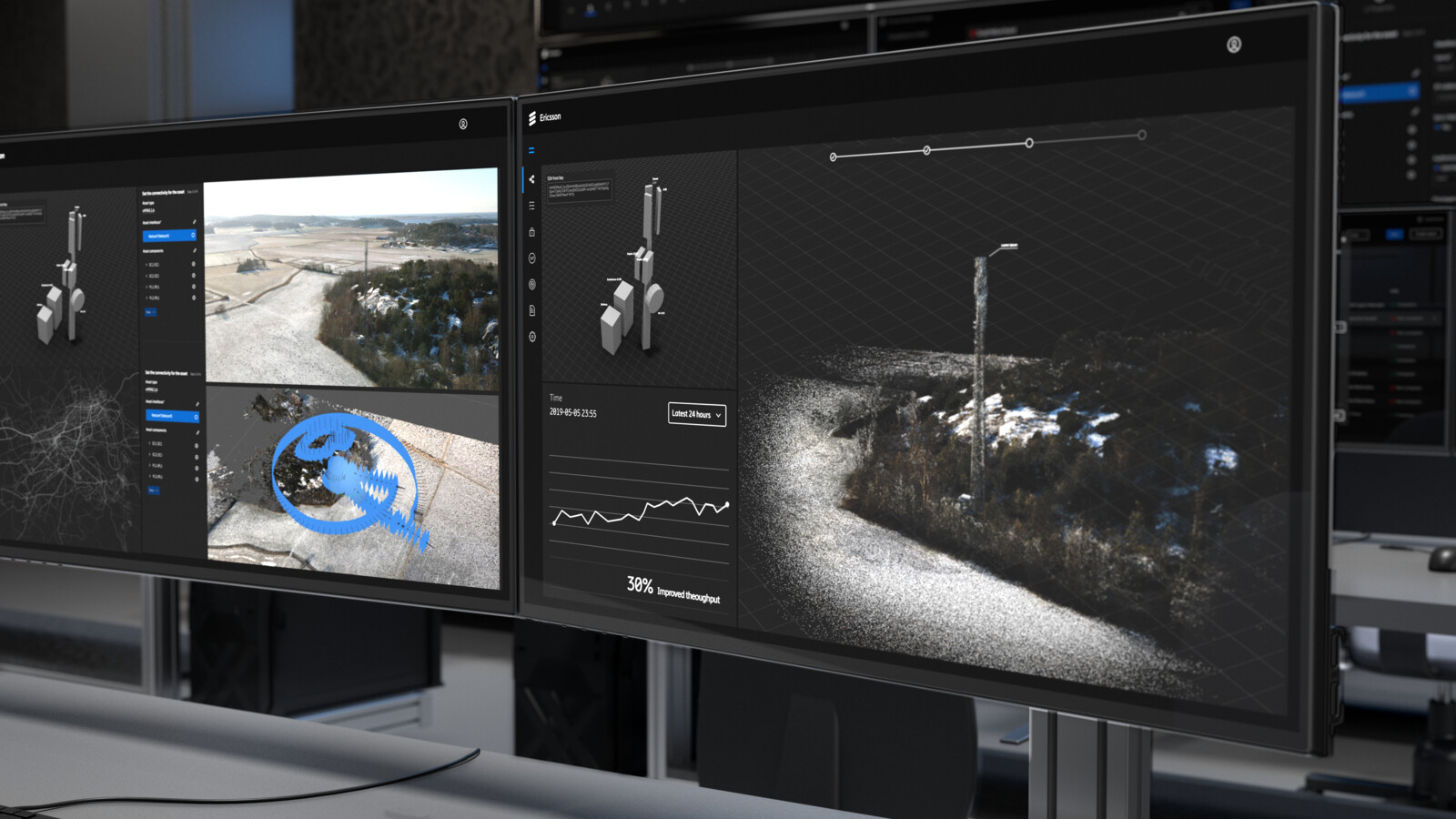
By combining advanced Building Information Modeling (BIM) with LiDAR, drone-based data capture, and AI-driven automation, the Ericsson Site Digital Twin creates a geospatially accurate, dynamic 3D model of every site. This model becomes the single source of truth throughout the network lifecycle — consolidating structural, electrical, and RF data into one authoritative reference.
Unlike legacy workflows dependent on static documents, fragmented systems, and multiple site visits, the Ericsson Site Digital Twin provides a digital-first, collaborative foundation that reduces rework, lowers costs, and minimizes environmental impact — all while accelerating 5G rollout timelines.
Scoping and planning: Clarity today, speed tomorrow
The scoping and planning phase is one of the most technically demanding and resource-intensive stages of telecom deployment. Teams must assess site feasibility, RF coverage and interference patterns, free space availability, selection of the optimal RAD (Radio Access Device) center, structural integrity of towers and supporting infrastructure, power capacity, backhaul availability, grounding and lightning protection, and compliance with zoning, permitting, and safety regulations.
Traditionally, this process is slowed by disaggregated data, limited site visibility, and siloed collaboration. Engineers, vendors, and project managers often rely on static PDFs, spreadsheets, and CAD files that rapidly fall out of sync, while multiple field visits are required to verify measurements, confirm tower and equipment conditions, and validate environmental and structural constraints. Civil, RF, and regulatory teams frequently operate independently, causing delays, rework, and inconsistent documentation, and text-heavy municipal submissions often fail to clearly convey complex technical requirements, slowing approvals.
Ericsson Site Digital Twin overcomes these challenges by providing a geospatially precise, parametric 3D representation of each site. These models embed critical metadata including structural load limits, antenna orientation and height, free space availability, RAD center location, equipment weight, power requirements, and component compatibility — consolidating structural, electrical, and RF considerations into a single, continuously updated reference. Stakeholders can remotely assess site conditions, simulate RF coverage and interference, evaluate free space for additional equipment, test deployment scenarios, and produce detailed, visual documentation for regulatory submissions. The result is fewer site visits, reduced rework, optimized material usage, and faster compliance, enabling operators to gain clarity today and speed tomorrow while minimizing engineering and regulatory risk.
Network deployment: Precision in action
The deployment phase is where design plans are executed in the field, and precision is critical. Traditional workflows often face challenges such as inconsistent designs, unclear instructions, material shortages, and inefficient crew utilization, which can lead to delays, rework, and increased costs.
With Ericsson Site Digital Twin, each site is represented by a standardized, parametric 3D model that serves as a single source of truth for all stakeholders. These models ensure that every deployment follows consistent templates while embedding key metadata — including RAD center locations, free space, structural load limits, equipment weight, and power requirements.
This integrated approach enables:
- Standardized designs: Templates and design parameters can be applied consistently across multiple sites, regardless of geography or vendor.
- Clarity for crews: Construction teams receive precise, unambiguous instructions, reducing errors and misinterpretations.
- Skilled labor efficiency: With workforce shortages a growing challenge, Ericsson Site Digital Twin workflows maximize productivity by minimizing wasted time.
- Automated BoM creation: Site models automatically generate accurate Bills of Materials (BoM) aligned with design specifications, ensuring the right parts are ordered in the right quantities the first time.
- Material readiness: Integration with inventory and forecasting systems ensures the correct equipment is available on site, reducing delays and idle crew time.
- Operational oversight: Real-time monitoring of work orders, site verifications, acceptance checks, and OHS compliance keeps the project on track and maintains quality standards.
By combining the engineering accuracy of BIM with the dynamic capabilities of the Ericsson Site Digital Twin, operators achieve faster builds, fewer outages, optimized resource utilization, and deployment schedules that remain on track — all while maintaining safety, quality, and regulatory compliance.
Post-build optimization: Living networks, continuous improvement
Even after construction, networks require validation, documentation, and fine-tuning to ensure long-term performance. Traditional approaches are manual and fragmented, often leading to:
- Delayed detection of construction or integration issues.
- Inconsistent records of redlines and as-built conditions.
- Longer tuning cycles with limited pre-analysis capabilities.
- Higher compliance risks from incomplete documentation.
Ericsson Site Digital Twin streamlines this phase by serving as a continuously updated “as-built” record. With fresh LiDAR scans, drone imagery, and engineering inputs, operators can:
- Automatically compare as-built conditions against original designs.
- Seamlessly capture and integrate redline updates.
- Run remote simulations to prepare tuning strategies before on-site adjustments.
- Maintain centralized documentation, making audits faster and less disruptive.
This reduces unnecessary site visits, accelerates quality assurance, and ensures ongoing compliance—keeping networks optimized, reliable, and sustainable.
Environmental and economic impact
Ericsson Site Digital Twin not only enhances operational efficiency but also aligns with global sustainability goals. By reducing the need for multiple site visits, optimizing material usage, and minimizing rework, the solution significantly lowers the carbon footprint of network deployments.
Economically, the solution delivers additional savings through automated BOM creation, which eliminates over-ordering, avoids shortages, and improves capital expenditure accuracy. Operators also reduce labor costs by minimizing field visits and maximizing crew efficiency. Standardized designs and real-time inventory integration prevent errors, while faster deployment timelines and streamlined regulatory approvals reduce project costs — enabling operators to bring 5G services to market more quickly and competitively.
Scalability and adaptability for future networks
As telecom networks evolve toward 6G and beyond, the complexity of deployments will only increase. Ericsson Site Digital Twin is inherently scalable, capable of integrating new data sources such as IoT sensors, AI-driven analytics, and real-time network performance metrics. This adaptability ensures that the solution remains relevant for future technologies, supporting operators in managing increasingly dense and heterogeneous networks.
Moreover, Ericsson Site Digital Twin facilitates collaboration across global teams and vendors. Cloud-based platforms allow stakeholders to access and update models in real time, ensuring alignment across geographies and reducing the risk of miscommunication. This collaborative framework is particularly valuable for multinational operators managing large-scale deployments across diverse regulatory environments.
Looking ahead: The future of network deployment
Ericsson Site Digital Twin is ushering in a new era where telecom deployments are driven by data, collaboration, and environmental awareness. By continuously updating the model with the latest site data, operators maintain an accurate reference that supports maintenance and future upgrades.
Those who embrace this digital-first approach gain a real advantage. They can roll out networks faster, lower costs, meet compliance standards more easily and reduce environmental impact. It’s a smarter, more responsible way to build the resilient networks that tomorrow’s world demands.
Read more
Ready to transform your network deployments?
At Ericsson, we are dedicated to helping operators unlock the full potential of their 5G networks through innovative Site Digital Twin solutions. Discover how our technology can accelerate rollout, reduce costs, ensure compliance, and build sustainable, future-ready networks.