










How to build the connected oilfield with multisite private networks
-
As oil and gas operations expand across multiple sites, reliable connectivity becomes business critical.
-
Private 5G provides the secure, scalable network foundation needed to connect and modernize operations.

Head of Business Development, Energy, Ericsson Enterprise Wireless Solutions

Sr Consulting Sales Engineering, Ericsson Enterprise Wireless Solutions

Head of Business Development, Energy, Ericsson Enterprise Wireless Solutions
Sr Consulting Sales Engineering, Ericsson Enterprise Wireless Solutions
Head of Business Development, Energy, Ericsson Enterprise Wireless Solutions
Sr Consulting Sales Engineering, Ericsson Enterprise Wireless Solutions
Connectivity as a strategic asset in oil and gas
As oil and gas operations expand across multiple onshore and offshore sites, reliable, secure connectivity becomes a key, business‑critical asset. Distributed wells, terminals, and refineries all depend on real‑time data, automation, and analytics to keep people safe, optimize production, and meet tightening environmental regulations.
Ericsson Private 5G provides the robust, scalable network foundation needed to connect and modernize these operations. It delivers industrial‑grade wireless coverage, performance, and security across dispersed sites—enabling autonomous operations, IT/OT convergence, and continuous compliance.
The connectivity challenge in modern oil and gas operations
Oil and gas operations are more connected—and more complex—than ever. Offshore rigs, refineries, storage terminals, and remote sites rely on real-time data, automation, and analytics to drive efficiency, maintain safety, and stay competitive.
Yet conventional networks like Wi-Fi or legacy wired systems often struggle in these environments. Steel structures, dense machinery, and remote locations create interference and dead zones, leaving critical sensors, systems, and personnel disconnected.
Downtime isn’t just inconvenient—it can cost millions of dollars per day in lost production, safety incidents, and unplanned maintenance. In addition, any network disruption that forces shutdowns or delays inspections can impact regulatory compliance. Hence, flexible, reliable wireless connectivity is no longer optional—it’s mission-critical.
Why private 5G is redefining oilfield connectivity
Private 5G provides a secure, scalable solution engineered for the unique challenges of oil and gas operations. It supports wide-area coverage, ultra-low latency, and mission-critical reliability, while enabling IT and OT convergence across multiple, sometimes, remote sites.
With private 5G, operators can connect offshore platforms, onshore production facilities, refineries, and remote monitoring systems under a single, unified network approach. This reduces complexity, improves performance, and unlocks new digital use cases across the entire asset lifecycle.
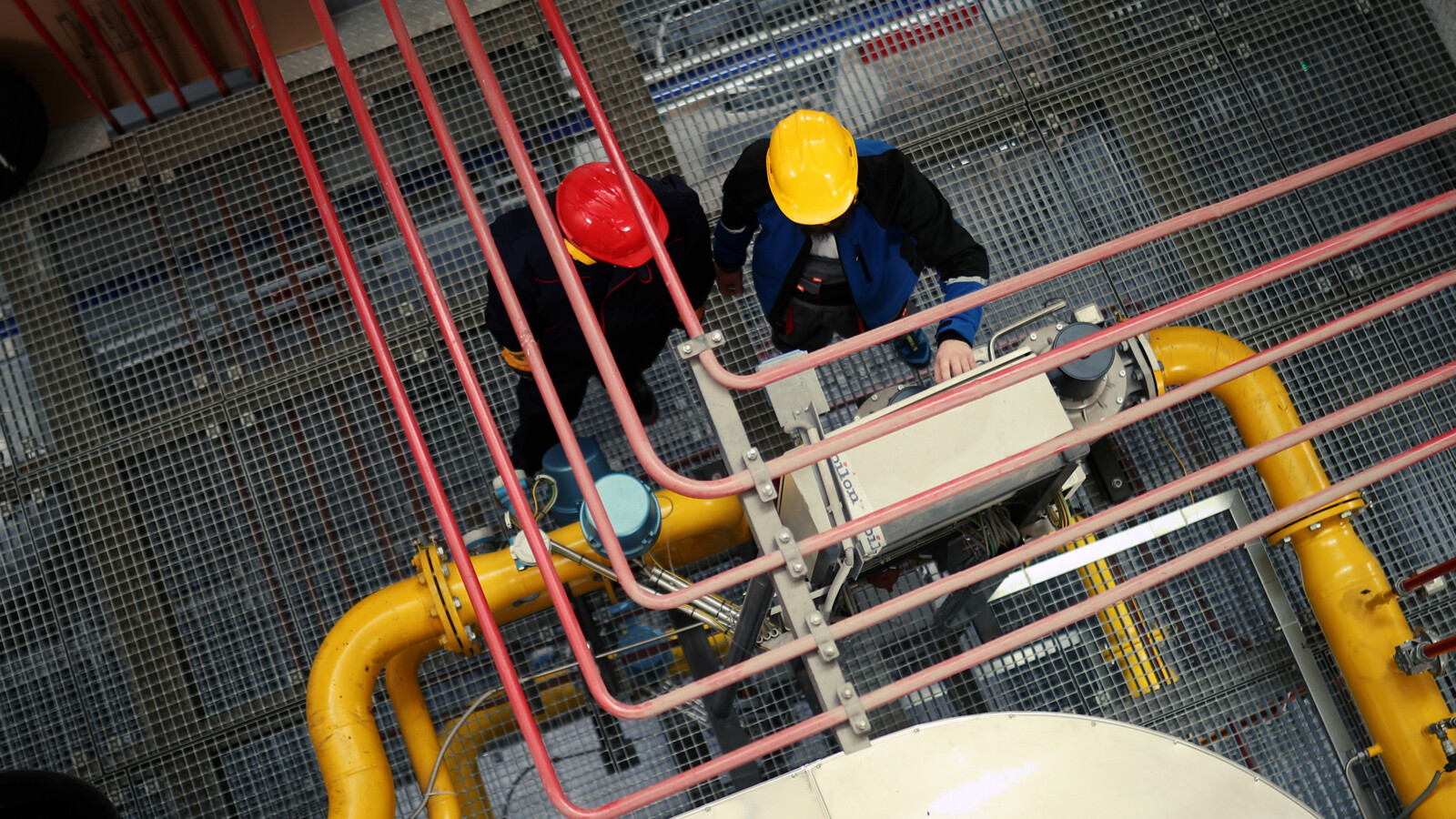
Reliable connectivity: A foundation for multisite oil and gas operations
Read the paper
Managing multisite operations: The oilfield obstacle
As oil and gas operations expand, a single site often evolves into a network of platforms, pipelines, terminals, refineries, and processing facilities—each with unique connectivity requirements, risk profiles and operational constraints.
Traditional networks often fall short when operators try to scale across multiple sites:
- High latency and inconsistent data: Disrupting remote operations and predictive maintenance.
- Siloed IT and OT systems: Increasing complexity, costs, and cybersecurity risks.
- Scaling across sites: Aging infrastructure struggles to support expansion or advanced technologies.
Reliable, mission-critical connectivity is the backbone of operations that span these diverse environments. A consistent approach is needed to manage connectivity, security, and performance across every site – from a single unmanned well pad to a complex refinery.
IT and OT convergence: A must-have for multisite oilfields
Integrating IT (information technology) and OT (operational technology) is no longer optional—it’s foundational. IT manages security, access control, and enterprise workloads, while OT oversees SCADA, drilling automation, and pipeline monitoring. Today, these domains are deeply intertwined: autonomous inspection robots, connected sensors, and AR-enabled tools must operate seamlessly across multiple sites.
Private 5G unifies IT and OT under a single, secure platform, providing centralized visibility, consistent performance, and reduced operational complexity. Networks can be tailored for each site—centralized, hybrid, or fully localized—without compromising security or reliability.
Choosing the right private 5G deployment model
Private 5G supports three multisite deployment models, each tailored to operational priorities:
- Centralized architecture: Cost-efficient connectivity with centralized management and local survivability—ideal for remote monitoring and basic communications.
- Hybrid architecture: Edge computing with centralized control reduces latency for safety systems and analytics, with local redundancy to ensure continuity.
- Fully localized architecture: Maximum autonomy for offshore platforms, remote sites, or safety-critical facilities, maintaining operations even if central connectivity is lost.
Operators can mix and match these models based on site priorities, safety requirements, and economic considerations, creating a flexible network that adapts to all operational environments.
Real-world benefits of private 5G for oil and gas
Private 5G is already delivering measurable improvements across three critical areas:
- Enhanced safety: Wireless cameras, intelligent thermography, and autonomous robots reduce human exposure and increase monitoring frequency.
- Operational efficiency: AR-assisted workflows, mobile HMIs, and digital twins enable predictive maintenance and faster decision-making.
- Environmental compliance: Continuous monitoring of flaring, gas leaks, and emissions ensures regulatory compliance and supports decarbonization initiatives.
Private 5G fully enables these initiatives by connecting instrumentation, edge analytics and cloud platforms across every facility – supporting end-to-end visibility, control and real-time insights—even in the harshest and most remote environments.
The bottom line: Connectivity as a strategic enabler
As oil and gas operations become increasingly digital and distributed, reliable connectivity is no longer optional—it’s the foundation of operational excellence. Private 5G delivers a unified network that supports IT/OT convergence, advanced applications, and consistent performance across multisite operations.
By choosing the right deployment model for each site, operators can reduce complexity, improve safety, increase efficiency, and prepare for future innovation.
In an industry where uptime, safety, and performance define success, private 5G isn’t just a network upgrade—it’s a strategic enabler, transforming how oil and gas companies operate today and positioning them to thrive tomorrow.
Reliable connectivity: A foundation for multisite oil and gas operations
Read the paper- More information about Ericsson's oil and gas multisite solutions, The future of the oil and gas industry
- Speak with our team: Contact us | Ericsson