









How to realize the value of autonomous networks with charging and billing
- Imagine a new offer created instantly the moment your customers express their intent. Devices are onboarded and services are activated in seconds through a self-care app. The network adapts in real time, preventing issues.
- Autonomous networks make this possible. Monetization ensures this agility translates into revenue, control, and measurable business outcomes.

Senior Expert – OSS/BSS

System Manager

Strategic Product Manager

Product Marketing Manager
Senior Expert – OSS/BSS
System Manager
Strategic Product Manager
Product Marketing Manager
Senior Expert – OSS/BSS
System Manager
Strategic Product Manager
Product Marketing Manager
Shift from automation to autonomy
Autonomous networks mark a shift in how communications services providers (CSPs) design, operate, and scale their businesses. They enable faster time-to-market with minimal human intervention. Monetization systems (charging and billing) play a critical role in ensuring that this autonomy delivers accurate value capture and supports continuous service innovation.
This evolution is driven by two complementary dimensions: Self-X, which enables systems to act and optimize independently, and Zero-X, which delivers seamless, no-touch experiences to customers and partners.
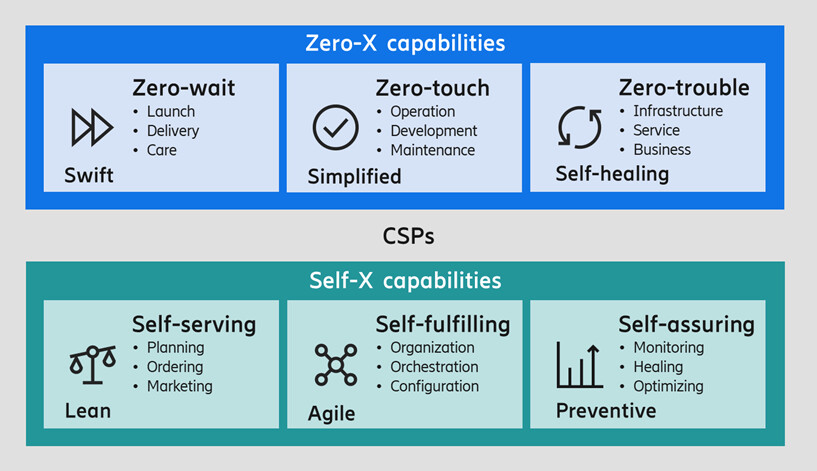
Figure 1: Self-X and Zero-X: foundations of autonomy (Adapted from TM Forum)
Self-X capabilities focus on automating an application, a network function, or autonomous domain operations with minimal to no manual intervention. Outlined in TM Forum frameworks, these include self-planning, self-diagnosing, self-healing, and self-optimization. The goal is not just rule-based or runbook automation, but systems that can make dynamic decisions based on the context and environmental changes that fall outside pre-coded rules.
Zero-X capabilities bring autonomy to the business processes that are customer and partner facing to provide superior interaction experience. Processes such as product personalization, price negotiation, quote management, onboarding (customer, partner and device) and offer activation happen with minimal or no human involvement. For example, an enterprise customer can request a differentiated connectivity service, agree on pricing, and onboard devices within minutes through digital channels.
In this model, intent-driven interactions – through conversational interfaces like chatbots – trigger end-to-end execution. This is where autonomy becomes visible: zero-wait, zero-touch and zero-trouble experiences across the full lifecycle.
Why monetization must evolve with network autonomy
Autonomy is a priority at the network and service layers, and it cannot stop there. To deliver seamless experiences, business processes must evolve at the same pace.
Business automation must extend across commerce and party management, with end-to-end closed loops centered on the customer. These loops ensure that business processes stay aligned with the needs of the consumer of CSP services.
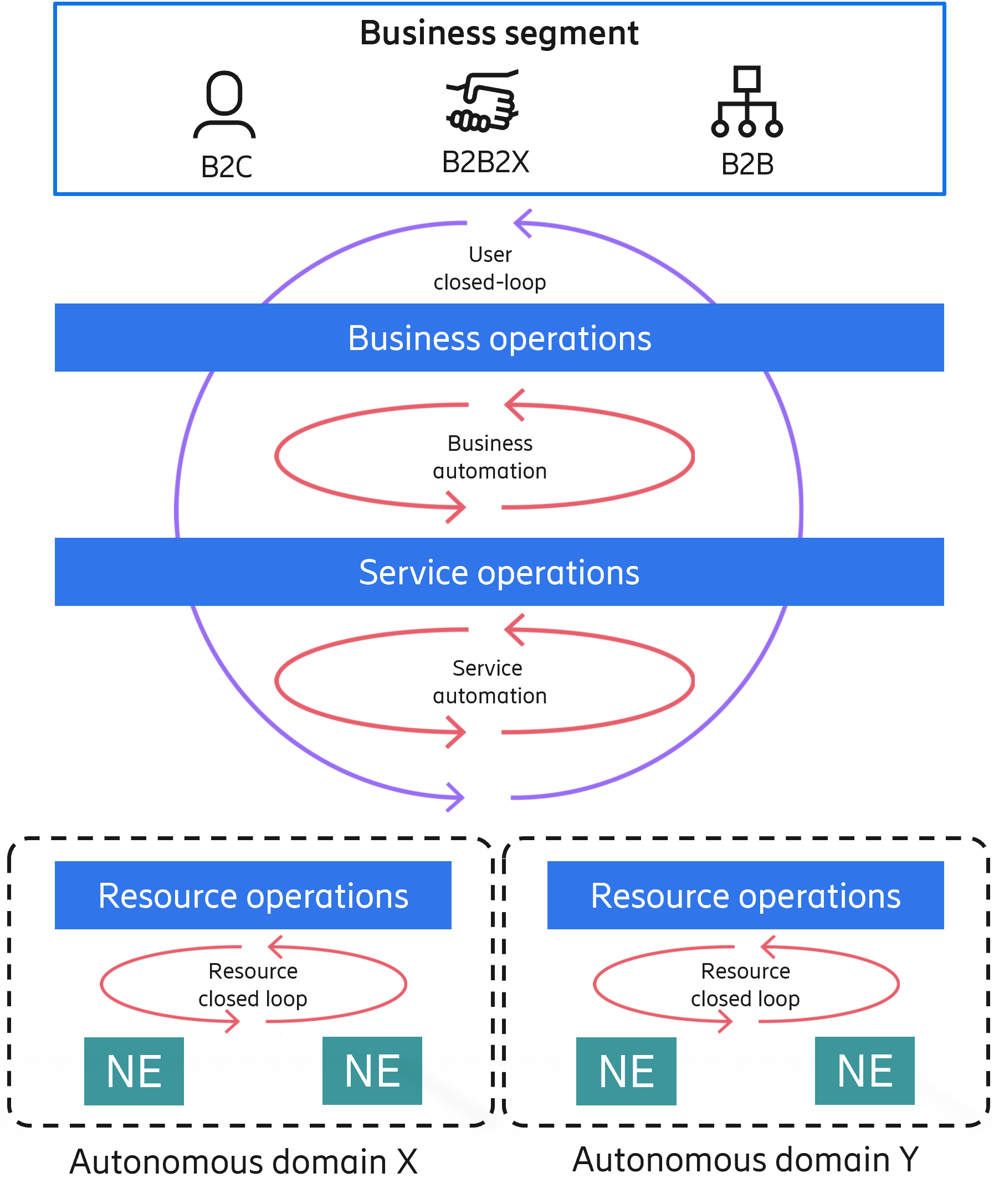
Figure 2: Business and service operations are at the center of autonomous networks
Customers and partners interact primarily with the business layer. Every interaction – ordering, charging, billing, support, and agreement management – must be fast, accurate, and consistent.
For example, delivering zero-wait experience for an enterprise service requires more than network readiness. It depends on the ability to:
- personalize offers instantly based on expressed intent
- deliver quotes and close contracts quickly
- activate offers without delay
- onboard devices smoothly
Similarly, Service Level Agreement (SLA)-based services require continuous alignment between service performance and commercial agreements. This includes handling SLA compliance, breaches, and associated actions automatically.
Complexity in business operations is intensifying with evolving business models and partnership models in B2B and B2B2X scenarios. The enterprise customer handles onboarding via self-care applications. They have demanding requirements that require CSP to model complex enterprise hierarchies and set various charging and billing specific parameters at individual and department levels. Industrial use cases such as factory floors or fleet handling demand rapid onboarding of millions of devices, activated and de-activated in near real-time to support business agility.
Complex partnership models, complex settlement processes, sponsoring scenarios and “on behalf of” services are increasingly growing. Autonomous business processes reduce human errors and lead time.
Monetization is at the heart of autonomous networks
Monetization captures the value of the superior experience provided to customers through strong service and network layer autonomy. Hence availability and resilience of the monetization software stack is critical as it has a direct impact on revenue.
An always-on monetization requires self-healing closed control mechanisms to detect or predict software stack level faults and act on them almost in real-time. Such mechanisms rely on telemetry data analysis backed up by strong domain and software architecture knowledge to support closed loop decisions (to either prevent predicted failures or resolve detected failures in near real-time). This not only reduces human resources in managing monetization but also ensures revenue is captured without interruption.
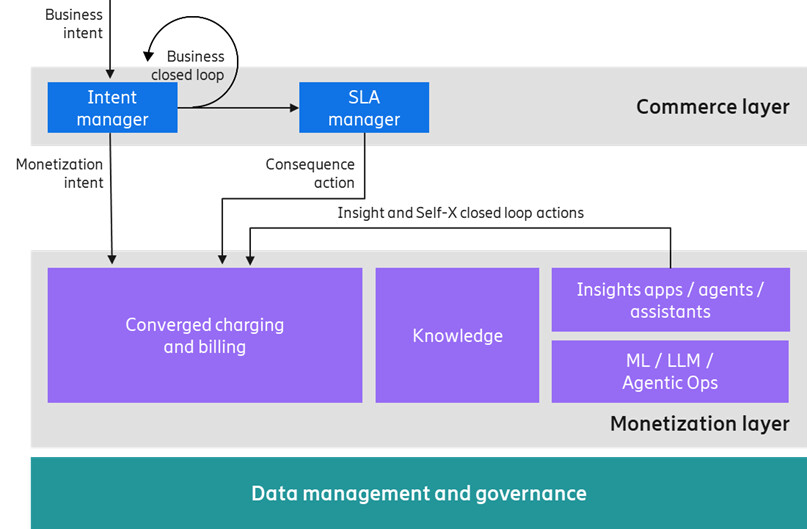
Figure 3: Intent-driven monetization enables a new dimension of experience and SLA-driven pricing
The business layer is evolving to become a composite autonomous domain that can consist of individual autonomous domains: monetization, product management, sales mgmt, order handling etc.
Customers start their buying journey by describing their intents with natural language, e.g., "I need a very fast and stable connection for point-of-sales terminals". These intents are translated into corresponding connectivity and device connectivity services with accurate pricing. Once the contract with applicable SLAs has been signed, the customers smoothly onboard their devices using a self-care app. After service instantiation, closed control loops automatically adapt the network to ensure that the business agreements are honored, but if a breach still occurs, the commercial SLA manager takes consequence handling actions.
The business layer acts on business intent captured in core commerce. This intent can come from the CSP (e.g., creating or launching a new market offer by combining own and partner products) or from its customers and partners (e.g. an intent to personalize a product, negotiate price, create a contract, or onboard devices with guaranteed SLAs). These intents must be translated into executable actions across systems, with closed-loop control ensuring outcomes are delivered as agreed. The closed control loops make sure that the assurance clauses of the business agreements are honored, which include consequence handling actions.
AI (ML and LLM based) and knowledge-driven agentic approaches are the key technology enablers to achieve autonomy in the business and operational processes. Monetization needs to evolve to consider generated insights for steering decisions e.g., billing-time discounts or promotions to be applied based on perceived experience, or customer value or churn score. AI and knowledge-driven decision making is instrumental in driving closed loops in self-x operations.
Evolve the business layer for autonomous execution
The business layer must move beyond static, rule-based execution to systems that monitor, evaluate, decide, and act within defined policies—with humans in a supervisory role.
This requires embedding Self-X capabilities into monetization processes as in:
- Self-configuration to enable automatic adjustment of pricing, discounts, and partner terms when market conditions or offers change.
- Self-optimization to detect churn signals, usage patterns, or anomalies and to trigger real-time actions, to improve business performance.
- Self-healing to identify failed charging events or settlement issues, to resolve root causes, and to reprocess transactions automatically. Self-healing in the context of operations automation is to heal monetization applications when a failure is detected or predicted.
These Self-X capabilities enable Zero-X experiences described earlier:
- Zero-touch settlement, where partner charging and revenue sharing are executed automatically across ecosystems.
- Zero-wait onboarding, where customers and partners are provisioned in minutes through intent-driven processes.
- Zero-trouble, where continuous closed loops proactively make sure that customers and partners do not face issues related to product purchase, contract creation, payments, service activation or perceived services experience
This shift also makes new business models viable. Reducing manual effort lowers the cost to serve customers, enabling CSPs to profitably deliver new innovative experiences at scale, where service lifecycle costs would otherwise have been prohibitively high.
The goal is personalized, experience-based monetization
There are limited opportunities to grow revenue by simply selling larger bundles and higher speeds. In highly competitive markets with heavy price competition, CSPs find that users do not consume the large monthly bundles, and tend to move to smaller and cheaper plans, creating “a race towards zero”. To break this downward spiral, a new currency is needed to articulate the new value enjoyed: Experience.
Offering a premium experience promises guaranteed performance when it matters, whether for gaming, video, or immersive applications. Offers can be recurrent for regular consumers of demanding applications but can also be temporary, for example offers delivering enhanced user experience with premium content on large sports or music events. The point is that the direct focus is on the delivered experience.
Business users can rely on being able to deliver superior experience to their end customers, via, for example, premium event connectivity for video producers, mobile journalists, and influencers. Experience-based market offers depend heavily on the 5G core concepts of network slicing and differentiated connectivity. These are based on different performance levels depending on the application type, combined with existing concepts like prioritized QoS flows for specific applications.
Scaling a large variety of experience based market offers demands robust automation. Creating new offers, making them available to customers, negotiating quotes, onboarding enterprise customers, partners and devices, defining multi-sided business models and setting up complex enterprise hierarchies require too much manual work. The process must be automated to keep costs in check or service prices run the risk of becoming prohibitive.
Premium offers come with attached SLAs describing contracted guaranteed performance levels. The SLA management process measures performance level against contracted SLA (which is a measure of perceived service experience). The monetization process must consider this both for monetization purposes and to apply consequence actions if SLAs are breached. The granularity of the experience consideration can be at different levels: device, service, product, contract and customer. Monetization must be flexible enough to provide this granularity of configuration.
Make SLAs measurable and actionable
Charging a premium requires the ability to measure and enforce the delivered service levels in the network and to secure that they meet the contracted SLAs. This means continuously monitoring service KPIs and linking them directly to SLAs.
Closed-loop mechanisms must proactively predict risks of breaches of the contracted service levels and trigger actions to avoid the same. Should a breach still happen, it must detect performance degradation early and trigger corrective actions.
From the contractual perspective, SLAs can include an agreement that a CSP can expand the resources temporarily at unexpected peaks and charge extra for these resources. If breaches still occur, monetization systems must handle them consistently. This may include compensation models such as partial refunds.
Ultimately, customers value an uninterrupted experience more than compensation. Monetization systems must support both prevention and resolution.
Evolved monetization is key for growth in autonomous networks
The autonomy journey often starts with network operations, then extends into service and business domains. Monetization sits at the center of business operations and must evolve accordingly.
Monetization becomes a key control point in CSPs’ autonomous networks vision to ensure that innovation translates into revenue, while maintaining simplicity and operational efficiency across B2C, B2B, and partner ecosystems.
In the business domain, autonomy offers:
- rapid offer creation and deployment
- real-time charging based on service performance
- seamless onboarding of customers, devices, and partners
- consistent handling of SLAs and commercial agreements
Ericsson Charging and Billing Evolved enables autonomous networks to unlock revenue opportunities through intelligent monetization. Centered at the heart of your business support systems, it enables you to launch offers faster, monetize differentiated connectivity services, and support multi-sided business models with real-time partner settlement. As autonomy scales, it ensures every experience delivered is measurable, chargeable, billable, and profitable, connecting business intent directly to revenue outcomes.
Read more:
- Know more about: Telecom charging and billing solutions
- Read the brief: Ericsson Charging and Billing Evolved
- Learn how to: Transform monetization in the 5G and autonomous network era
- Explore how: Core Commerce: Drive new business models
- Appledore research: Ericsson Charging and Billing Evolved