










Inside the silicon that powers 5G: Making chips reliable before they exist
-
My journey into semiconductor engineering began with a curiosity about how digital designs become real-world technology.
-
At Ericsson, that curiosity has evolved into working on purpose-built silicon that helps power modern 5G networks.
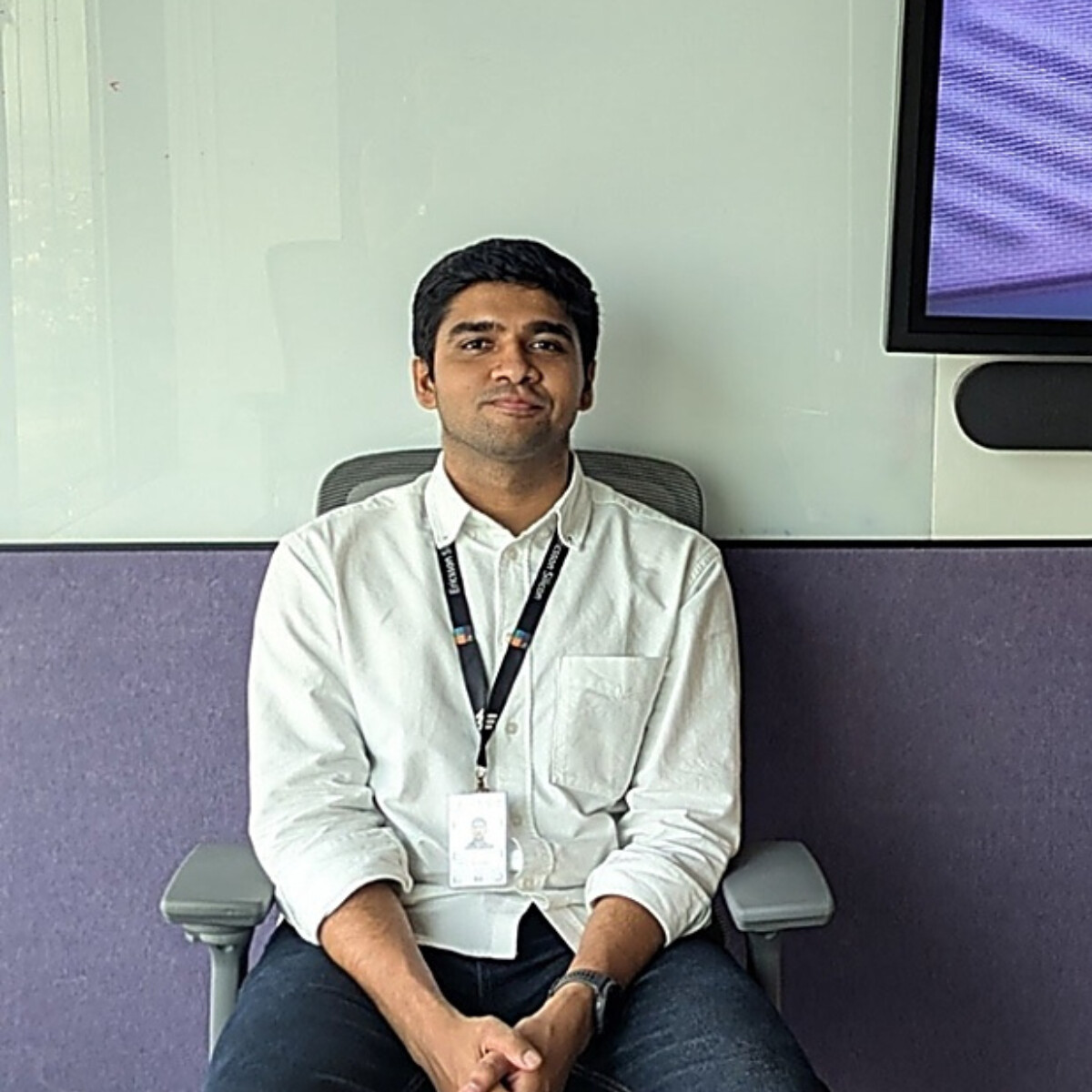
Experienced Engineer- FPGA Verification
Experienced Engineer- FPGA Verification
Experienced Engineer- FPGA Verification
I did not start out planning a career in semiconductors. The shift happened during my undergrad when I worked on a Digital-to-Analog Converter project. That was the first time I saw how digital logic translates into something physical. Signals that start as abstract code end up as real-world outputs you can transmit, hear, or measure.
That moment stayed with me. It led me into ASIC and CPU verification, and today I work as an FPGA verification engineer at Ericsson. Except for now, the systems I work on are part of global communication infrastructure.
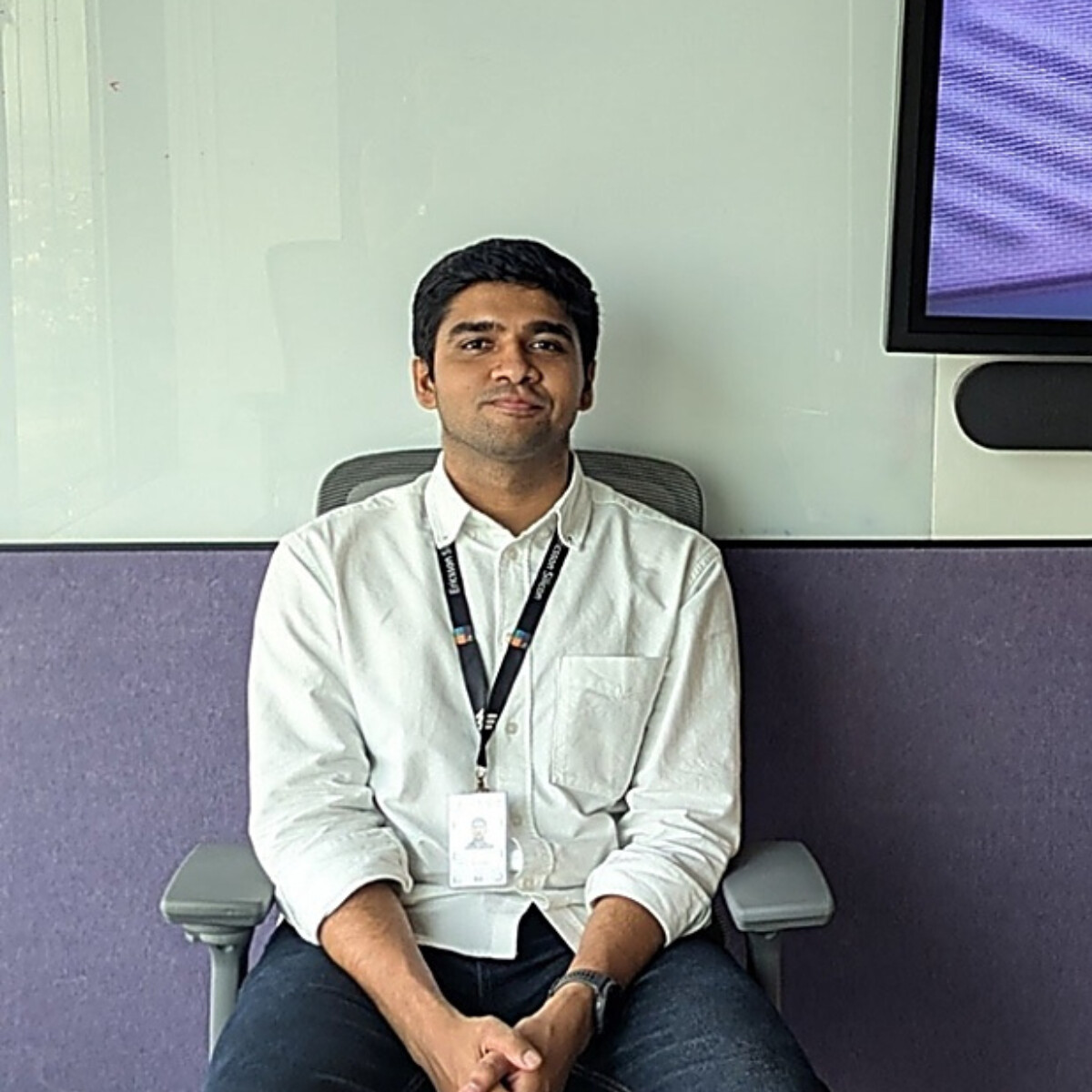
Where silicon meets real-world networks
At Ericsson, purpose-built silicon plays a critical role in delivering the performance, capacity, and energy efficiency that modern 5G networks demand. This is where my work fits in.
As an FPGA Engineer, I work on the technology that sits at the heart of that innovation. In simple terms, my job is to make sure a chip behaves exactly as intended before it is ever built.
Once silicon is fabricated, changes are expensive and time-consuming. That's why we spend significant time simulating, validating, and stress-testing designs long before they reach production.
This is where verification becomes critical. By identifying issues early, we help ensure the silicon powering Ericsson's products deliver the reliability and performance that communication networks depend on every day.
Every time you use mobile data or make a call, there is a complex chain of processing happening in the background as data is encoded, signals are prepared for transmission, and systems continuously manage speed, reliability, and interference.
At the center of all this are Ericsson silicon components performing high-speed processing. The reliability people depend on isn’t by chance, it’s engineered, validated, and built into Ericsson's silicon.
A day in silicon verification
My day-to-day work is a mix of technical depth and collaboration. It involves:
- Understanding design specifications and architecture
- Building verification environments using SystemVerilog and UVM
- Running simulations and debugging failures
- Working closely with design and tool teams
A lot of it feels like solving layered problems. One issue can connect to multiple parts of the system.
But that’s also what makes it meaningful. I am not just checking correctness in isolation, I am contributing to systems that ultimately power networks used by millions of people every day.
Designing for scale, performance, and efficiency
What makes this space exciting for me is that, at Ericsson is not just the complexity, but the scale and intent behind it.
We are not building isolated chips. The systems I work on support evolving communication technologies like 5G and beyond where performance and energy efficiency are just as critical as functionality.
Every design decision at the silicon level influences throughput, latency, network stability, and power consumption. Through verification, I contribute to ensuring that these systems perform consistently, not just in controlled environments, but at real-world scale.
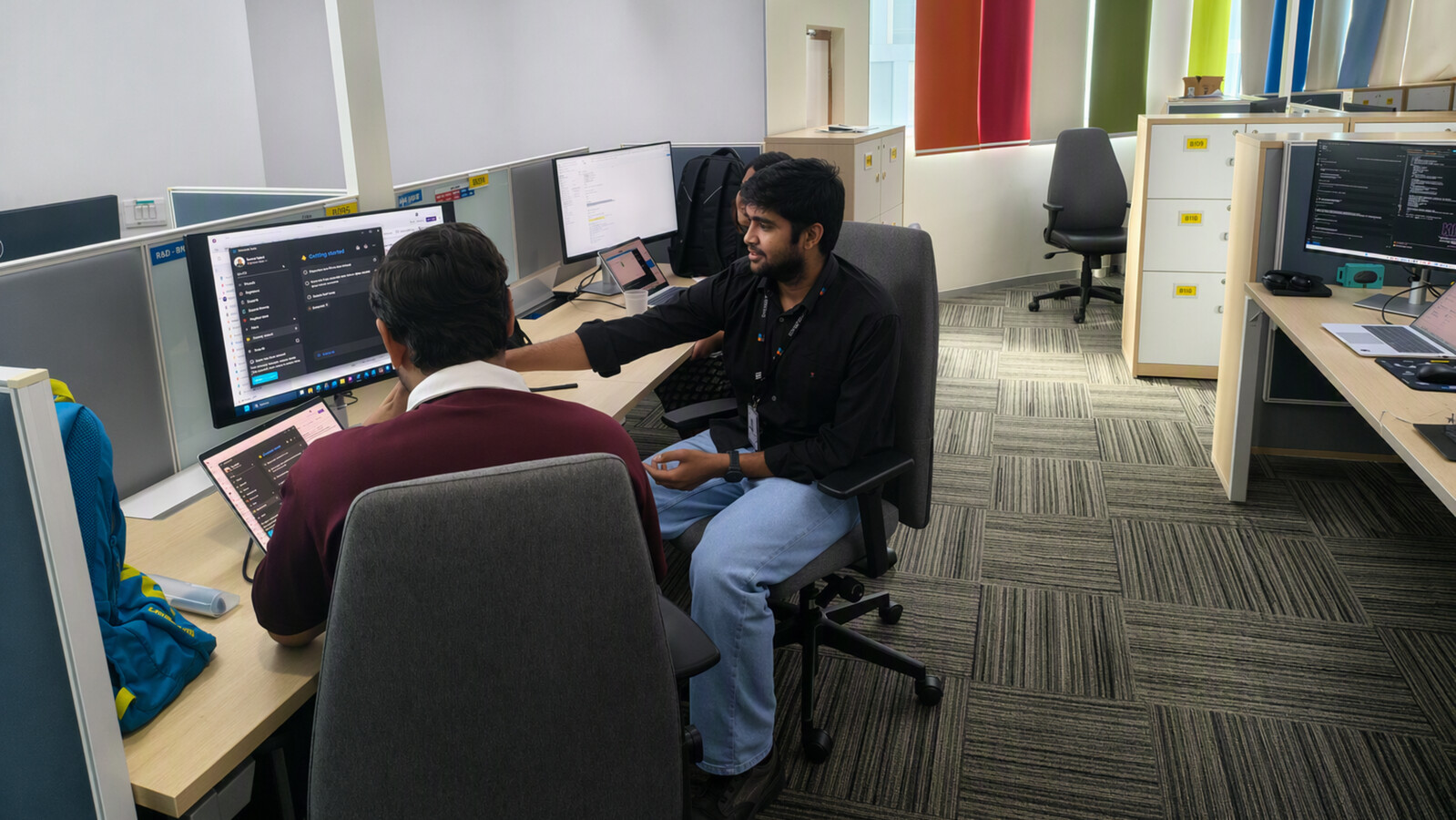
Purval (seen on the right) working with his colleague in the Bangalore office.
Ownership that shapes real systems
One thing I really value is the level of ownership engineers have here.
You are not limited to assigned tasks. There is space to explore ideas early, experiment, and build something from scratch. Those ideas do not stay at a conceptual level. You can present them to architects and stakeholders, and if they resonate, they can influence actual product directions.
That ability to contribute beyond execution makes a big difference!
How AI is entering silicon workflows
AI is gradually becoming part of semiconductor verification workflows, including in the kind of work I do.
Today, it helps in areas like faster log analysis, debugging support, and automating repetitive verification tasks, making processes more efficient and reducing manual effort.
Looking ahead, AI could play a bigger role in intelligent debugging and advanced test generation.
However, this remains a domain where human understanding is essential. Interpreting specifications, analysing edge cases, and making system-level decisions still rely on engineering judgment. For me, AI works best as a support layer, enhancing how we work, rather than replacing it.
What makes the work meaningful
What keeps me motivated is not just the technical challenge. It is also the impact.
Knowing that I am working on systems that support communication at a massive scale and my work contributes to making networks more reliable, faster, and more efficient is truly encouraging
At Ericsson, the environment reinforces that.
There is also a strong focus on collaboration, knowledge sharing, and continuous learning. You are encouraged to explore, question, and improve. That combination keeps the work interesting.
For anyone considering this path
If you are looking to get into this space, my advice would be to start by building strong fundamentals in digital design and system concepts.
A big part of what I do today relies on logical debugging which means the ability to break down complex problems and understand how different parts of a system connect. That’s something you develop over time with practice.
What helped me most was learning to approach complexity one layer at a time. In verification, things can feel overwhelming at first, but as you go deeper, patterns start to emerge, and the systems begin to make sense.
It’s a journey of continuous learning, but also one that becomes incredibly rewarding as you start seeing how your work fits into larger, real-world systems.
Interested in a career at Ericsson?
If you're looking for a place that doesn't just enable but actively encourages you to grow into the best version of yourself, explore open opportunities on our jobs page.