







“You hardly see it. It’s invisible.” Michael Gebhardt on the work powering the world’s mobile networks
- Discover how Senior Specialist Michael Gebhardt is solving some of the most complex engineering challenges behind the world's mobile networks.
- From advanced signal processing to future 6G technologies, explore the invisible work helping billions of people stay connected every day.

Talent Marketing Content Specialist
Talent Marketing Content Specialist
Talent Marketing Content Specialist
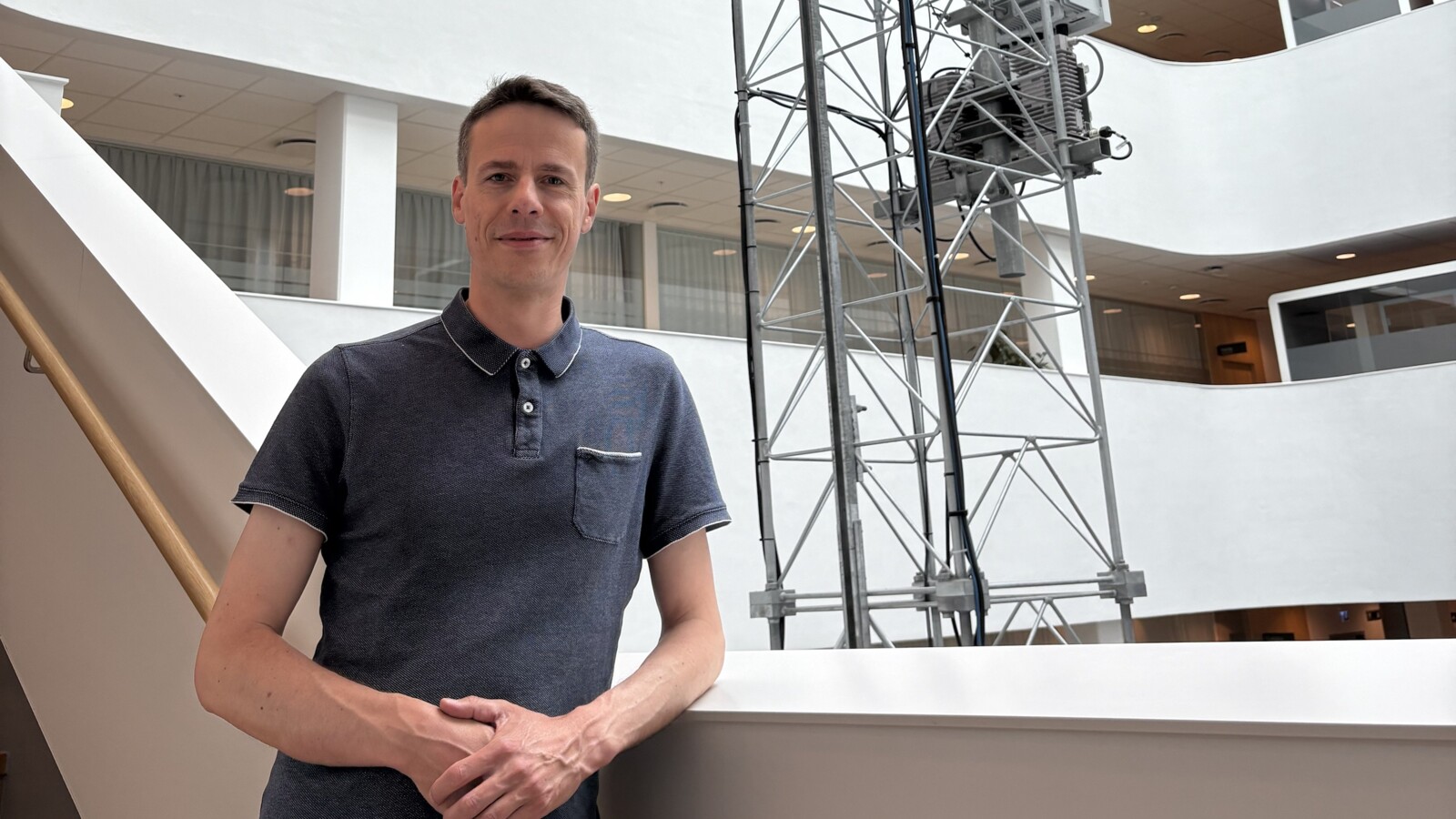
Michael Gebhardt inside the Ericsson Kista, Stockholm office
For nearly 20 years, Michael Gebhardt has worked on some of Ericsson’s most technically complex radio challenges, helping enable the connectivity billions of people rely on every day.
Most people never stop to think about how mobile connectivity actually works. They open their phones in crowded football stadiums, stream videos on packed commuter trains, or send messages from remote locations without considering the engineering complexity happening in the background. For Michael Gebhardt, that invisible complexity has been the focus of his career for almost two decades.
A fascination that led to Ericsson
Michael joined Ericsson in 2007 after studying electrical engineering at the Royal Institute of Technology in Stockholm, specialising in communication theory, signal processing, microwave technology, and RF engineering. At the time, mobile technology itself was what drew him into the field.
“For some reason, I was fascinated with mobile phones,” he says. “Back then they were still quite a new thing. I was fascinated that you could communicate wirelessly and carry the phones around.”
That early fascination eventually became a career spent solving highly specialised engineering problems within Ericsson’s radio organisation. Today, Michael is a Senior Specialist focused on RF linearization technology, a field that sits deep inside the performance and efficiency challenges of modern radio systems.
His role spans multiple areas at once. “One part is making sure the work we are doing is aligned with the needs from the products we are developing,” Michael explains. “Then I answer technical questions related to my field of expertise, review patent applications, and support knowledge development within the team.”
That final part is something he particularly enjoys. “I arrange courses and lectures formally, but also informally. People come to me and ask if I can explain something in more depth, and I’m always very happy to do that.”
Solving problems inside the radio
Michael’s team works primarily with digital pre-distortion, commonly referred to as DPD, an area of nonlinear signal processing used to improve the efficiency of radio transmitters. The challenge itself is highly technical.
“You would like to operate your radio transmitter with high power efficiency,” he explains. “Unfortunately, when you do that, it tends to distort the signal. So we need to do something about that.”
The solution involves developing advanced signal processing techniques that allow Ericsson’s radio systems to operate efficiently while maintaining signal quality. What makes the work particularly interesting, according to Michael, is how many different engineering disciplines come together inside a single problem.
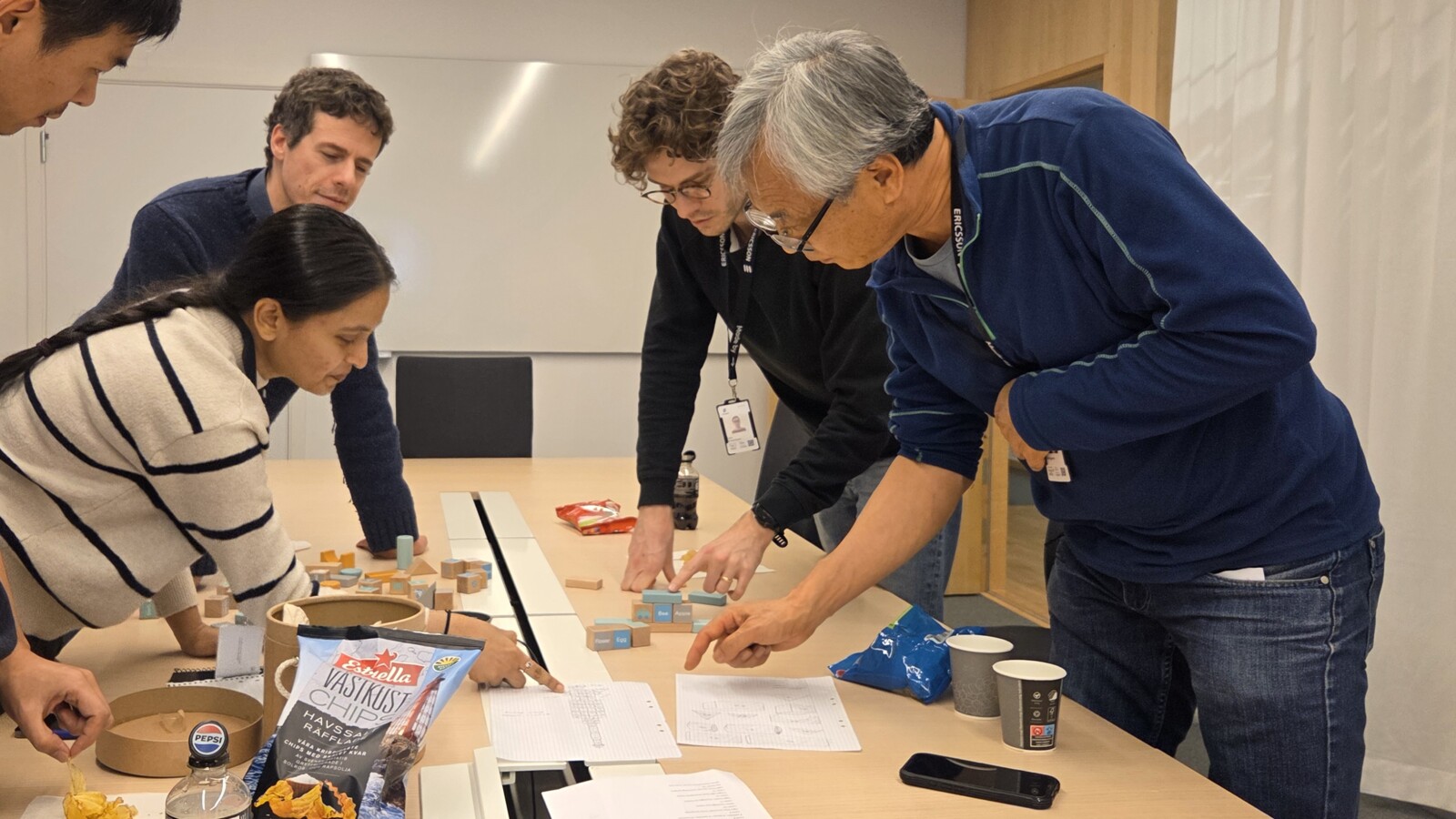
Michael and his team
“We have relations to control theory, numerical optimisation, RF engineering,” he says. “The devices we deal with are RF power amplifiers, so we need to know a little bit about them as well. It’s not just the digital stuff.”
That combination of disciplines is something Michael returns to often. The work requires both breadth and depth, with engineers needing enough understanding across multiple technical areas to collaborate effectively, while also developing deep expertise in specialised domains.
“You need broad knowledge that can be brought together,” he says. “But then you also need to specialise deeply into select areas.”
The engineering process itself stretches far beyond pure theory. Ericsson’s radio systems rely heavily on custom-built ASICs, application-specific integrated circuits, designed specifically for the performance requirements of mobile networks. That means ideas cannot simply work mathematically. They also need to work physically inside hardware.
“We develop algorithms, simulate them, and figure out what works,” Michael explains. “But then we also have to assess the cost of implementing that on a chip in terms of area required, power consumption, heat development, and things like that.”
The team works across the full development cycle, from conceptualising algorithms to verifying them in the lab.
“We actually sit in the lab and check that it does what it’s supposed to do,” he says. “That’s a non-negligible part of the work.”
From brainstorming to “the quiet chamber”
One of the strongest themes throughout Michael’s career is solving highly complex engineering problems where answers rarely appear immediately. Recently, Michael’s team faced a challenge involving a new DPD algorithm that initially performed well but became unstable over time.
“It seemed to work for a while and then it crashed,” he says. “The challenge first was figuring out why.” Solving the issue required expertise from multiple domains, including numerical optimisation and machine learning.
“We gathered people with backgrounds in numerical analysis, numerical optimisation, machine learning, and others,” Michael explains. “First we looked at the information we had and started brainstorming what could be wrong.”
From there, the process became highly iterative. Engineers gathered lab data, tested hypotheses, ruled ideas out, refined models, and repeated the process until they narrowed down the root cause.
“What if we turn that knob? What happens to the data in the lab?” Michael says, describing the process. “Eventually we gained the stability we were looking for.”
But collaboration is only one part of the work. Michael also describes the quieter side of engineering, where deep technical thinking often happens individually before ideas are brought back to the wider team.
“You have these meetings to bring together the information you have,” he says. “Then out of that meeting, you bring some ideas and dig deeper by taking paper and pen, or simulation software, and deepen your knowledge before bringing that back into the meeting the next day.”
Michael jokes about “withdrawing into the quiet chamber” to work through the maths alone, but for him, that balance between individual deep thinking and collaborative problem solving is a core part of the work.
Engineering impact on a global scale
Although Michael’s immediate team consists of around 15 people, the reality of the work extends far beyond a single office or organisation chart. Over the years, Ericsson’s engineering environment has become increasingly global, with collaboration now spanning teams across Sweden, China, Canada, and other locations.
“When I started, we worked much more locally,” Michael explains. “Now we work much more globally coordinated.”
That shift has brought new challenges around communication, coordination, and knowledge sharing across large distributed engineering teams.
“How do we make sure we don’t do double work?” he says. “How do we make sure we don’t lose ideas from all these people?”
Despite the complexity behind the scenes, the impact of the work eventually reaches an enormous scale. Michael laughs slightly when asked where people can actually see the results of his work in the real world.
“To answer bluntly, you hardly see it,” he says. “It’s invisible.” But the outcomes are everywhere.

A packed stadium with thousands of people using their mobile phone.
“There is no way to enable billions of people globally to surf the internet with their phones without the kind of work we do,” he explains. “To pack a football stadium with people and everyone still has connectivity in their phones, that’s quite a challenge that is enabled by what we are doing.”
The engineering challenges themselves vary dramatically depending on the environment. One challenge involves supporting extremely dense urban environments with huge numbers of simultaneous users. Another involves delivering connectivity across very large geographical areas with relatively few users. Both require continuous innovation at the radio level.
Learning beyond the job description
Even after nearly 20 years at Ericsson, Michael is still learning entirely new areas of technology. One of the most exciting developments for him today is the emergence of Integrated Sensing and Communication, or ISAC, a capability expected to play an important role in future 6G networks.
The concept would allow mobile base stations to function not only as communication infrastructure, but also as radar systems.
“With 6G, we expect radio base stations to double as radar stations in some cases,” Michael explains. “That’s a very new challenge.”

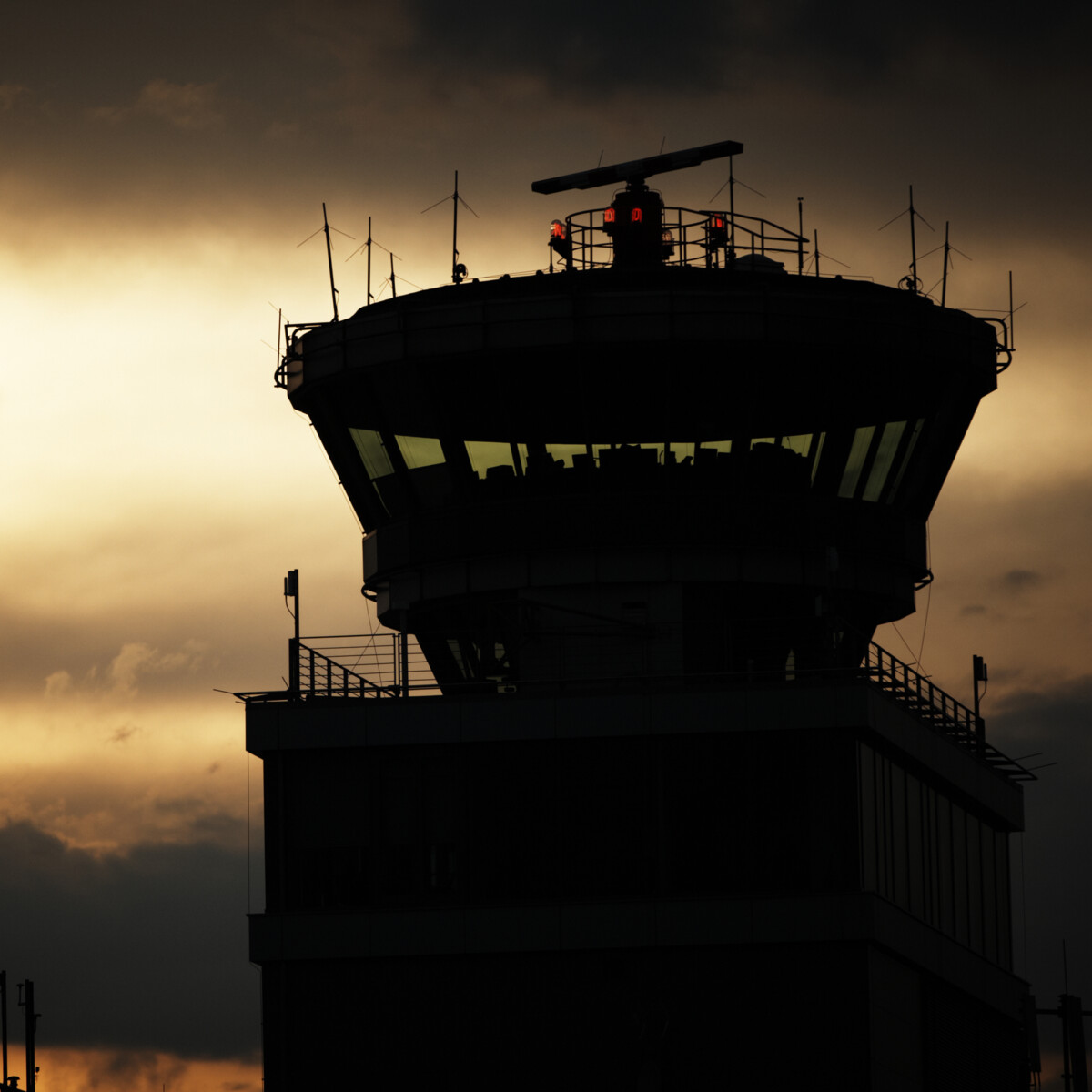
Ericsson radio tower in action.
The technology builds upon many of the same physical foundations already present in telecommunications systems, including radio transmitters and advanced signal processing hardware. But it also introduces entirely new technical problems to solve. Right now, Michael is actively studying radar theory while developing solutions for how those concepts could work within mobile network environments.
“I’m reading radar textbooks at the same time as I’m developing solutions for the specific scenario where we use our mobile base station as a radar station,” he says.
But once again, theory alone is not enough.
“You can’t just extract things directly from textbooks,” he explains. “The constraints of the mobile telecommunication world still apply, so you have to come up with solutions for those specific challenges.”
That constant evolution is part of what has kept the work engaging over such a long career.
“If you had asked me 10 years ago if I would ever work with radar, I would have said no,” Michael says. “And if you had asked people even earlier whether we would operate power amplifiers in this nonlinear regime, many probably would have said no as well.”
For him, that continuous change is one of the most rewarding parts of working in the field.
“There’s continuity, but it’s intellectually challenging all the time,” he says. “I’m quite confident it will remain that way as we look into the future.”
And while most people may never think about the engineering happening behind their mobile connection, Michael and his colleagues will continue solving the invisible challenges that keep the world connected.
Closing thoughts
As Ericsson continues shaping the future of programmable, high-performing networks, teams like Michael’s are already exploring the next generation of connectivity challenges, from advanced signal processing to integrated sensing in 6G.
For engineers who enjoy solving deeply complex problems at global scale, that future is already being built today.
Explore opportunities with us to be part of the team building the future of connectivity at Ericsson.