Skip navigation
""

Africa’s digital evolution

Step into what's next for Africa

MWC Kigali 2025

Oct 21, 2025 09:00
to Oct 23, 2025 18:00 (CAT)
Kigali Convention Centre in Rwanda, Africa

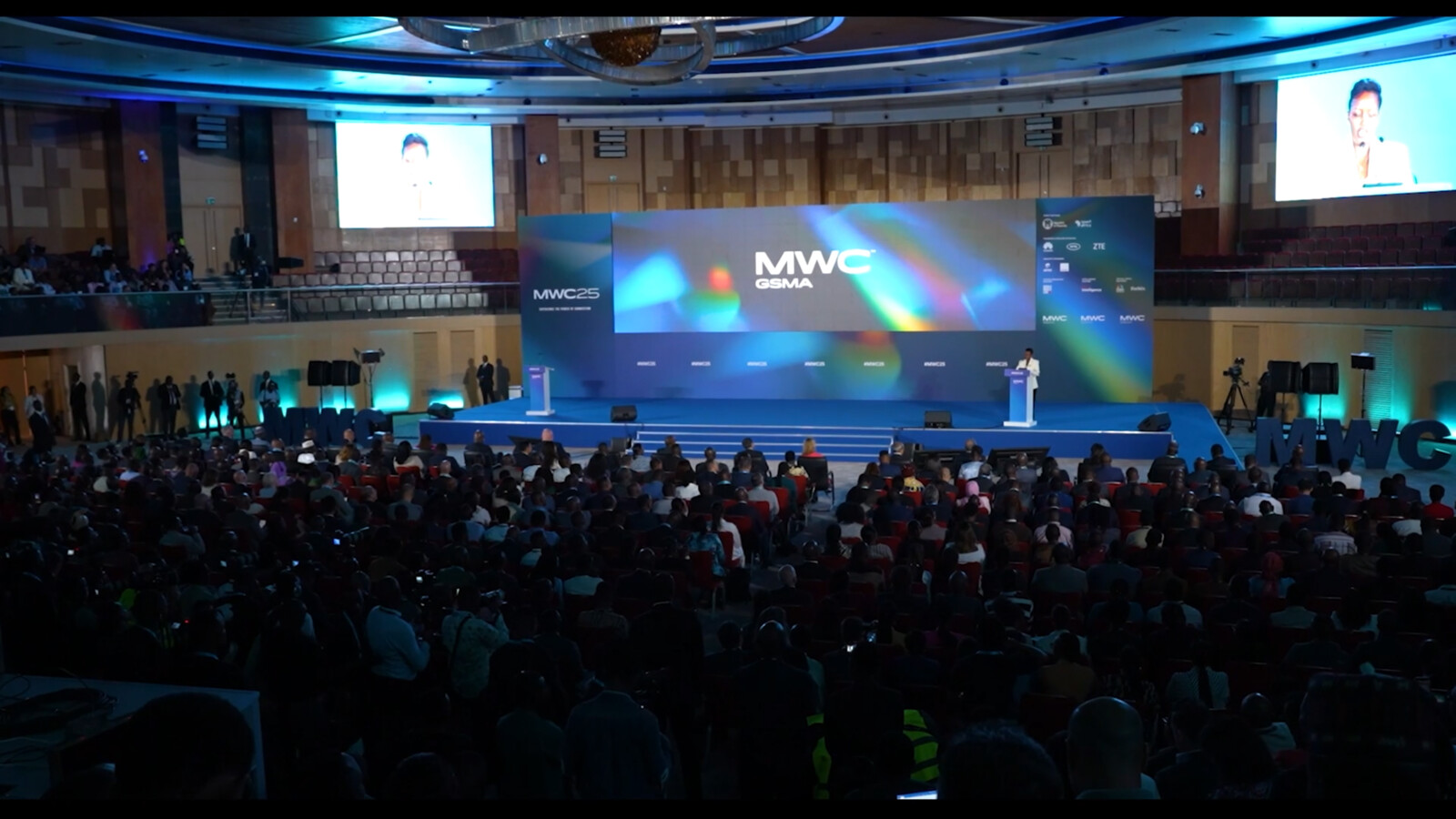
Join us from October 21–23, 2025, at the Kigali Convention Centre in Rwanda, where Ericsson’s industry peers, thought leaders, and innovators converge to accelerate Africa’s digital evolution.

At MWC Kigali 2025, the spotlight is on mobile connectivity as the catalyst for socioeconomic growth across Sub-Saharan Africa. Governments and businesses are harnessing 4G and 5G networks alongside AI and IoT to drive productivity, service delivery, and digital transformation, unlocking new revenue streams and reshaping industries.

The event will welcome 3400+ attendees from over 90 countries, featuring 1400+ companies, 90 hours of content, and 230+ renowned leaders. The EMEA leadership team attending the event include:

  • Patrick Johansson, President and Head of Market Area Europe, Middle East and Africa
  • Alain Maupin, Vice President and Head of Customer Unit East and North Africa
  • Majda Lahlou Kassi, Vice President and Head of Ericsson West and Southern Africa
  • Ante Mihovilovic, Vice President and Head of Networks, Ericsson Europe, Middle East and Africa
  • Kirsty Fitzgibbon, Vice President and Head of Marketing & Communications & SCR, Ericsson Europe, Middle East and Africa

Key themes

Opportunity beyond coverage

  • Ericsson is driving innovation in Africa by modernizing 4G RAN and enabling a smooth path to 5G Standalone, leveraging FDD Massive MIMO to improve coverage and capacity.
  • Unlocking new revenue streams through digital services, cloud-based applications, and tailored solutions for consumers, enterprises, and governments.

Ericsson is advancing Africa's telecommunications landscape by modernizing existing 4G networks and paving the way for 5G Standalone rollouts. These initiatives leverage advanced technologies like APIs and Massive MIMO for coverage and capacity improvements, assisting in building the infrastructure needed for next-generation connectivity. Strategic partnerships, such as those with MTN Rwanda, highlight Ericsson’s commitment to expanding network capabilities, enhancing digital inclusion, and enabling widespread access to education, healthcare, and economic opportunities.

Ericsson's dedication to digital inclusion extends to private LTE and IoT-driven network solutions. These technologies empower industries such as mining, ports, and oil & gas with enhanced automation, improved safety, and greater productivity. Initiatives like the partnership with Comsol are integral to supporting industrial transformation in Africa.

Fixed Wireless Access serves as a crucial enabler of connectivity, particularly in rural and underserved regions. Ericsson’s cost-optimized 4G-based FWA solutions ensure quick deployment and sustainable broadband access, delivering benefits to communities such as improved digital education systems, as demonstrated in Senegal. Additionally, a ConsumerLab survey in Nigeria indicates strong household interest, with 3 in 5 participants expressing willingness to adopt 5G-based FWA services. Currently, FWA services are being offered across multiple African markets, including South Africa, Nigeria, Rwanda, and Tanzania.

Efficiency through network innovation

  • Private cellular networks empower industries like mining, ports, and oil & gas through secure connectivity that facilitates automation, enhances safety, and boosts productivity.
  • Expanding broadband access with Fixed Wireless Access (FWA), enabling connectivity for rural and underserved communities rapidly over existing 4G and 5G networks.

Ericsson is leading the transformation of telecommunications in Africa by implementing programmable and intelligent network operations. These technologies significantly reduce network energy costs—accounting for up to 45% of network OPEX—and enhance user experience by delivering performance-based services.

Ericsson's innovative radio solutions, such as the Multisector Triple-band Radio 6646 deployed with MTN, FDD and TDD combined Triple-band Radio 4466 in Airtel OpCos, and other advanced models like Dual-band 32T/R M-MIMO Antenna Integrated Radio 3229 in Djibouti, showcase superior customer experience and energy efficiency. Other notable deployments include FDD MM 3284 in MTN Nigeria and YAS opcos across several countries like Senegal and Madagascar. These technologies help telecom operators achieve greater energy efficiency, expand coverage, and improve network performance in diverse environments.

Ericsson's AI-driven RAN solutions optimize network management and intelligently allocate resources, such as spectrum between 4G and 5G, leading to operational cost reductions and enhanced network efficiency. These advancements are critical for bridging infrastructure gaps and reducing Total Ownership Costs (TCO), enabling the rollout of next-generation connectivity in economically constrained regions.

Technology for society

  • Ericsson supports education initiatives by connecting schools to the internet, boosting GDP and empowering communities. Programs like Connect to Learn, UNESCO Digital Transformation Collaborative, and UNICEF Giga enhance access for millions.
  • Ericsson Wallet Platform: Through the Ericsson Wallet Platform, financial inclusion has reached more than 119 million users globally. This platform provides secure and accessible financial services, enhancing economic opportunities for individuals without traditional banking services.
  • Mobile money open API service: Ericsson's award-winning Mobile Money Open API service accelerates innovation within the fintech ecosystem. By empowering mobile payment platforms, this initiative further promotes the growth of mobile financial services across Africa, encouraging economic development and increasing access to modern financial tools.
  • UNICEF Giga initiative: Ericsson plays a leading role as a private-sector partner in the UNICEF and ITU-backed Giga initiative. The initiative has benefitted over 7.79 million students across 14,500 schools in 34 countries through enhanced internet connectivity and infrastructure. It aims to bridge the digital education divide, reflecting Ericsson's commitment to empowering young learners globally.
  • Connect to Learn program: Ericsson’s Connect to Learn initiative has reached more than 485,000 children and young adults across 43 countries. This program leverages digital technology to transform education systems, providing access to digital platforms and fostering digital literacy.
  • Smart Africa Digital Academy (SADA): In collaboration with Smart Africa, Ericsson is driving initiatives to enhance digital skills across the continent. SADA has delivered upskilling programs to over 100 policymakers and regulators from 19 African countries, equipping them with the knowledge needed to guide their countries through the digital transformation process.

MWC Kigali 2025: Daily engagement highlights

Stay updated with key moments, announcements, and insights as Ericsson engages in shaping Africa’s digital transformation at MWC Kigali 2025. Below is a placeholder for daily updates.

As global conversations on connectivity and digital inclusion unfold, MWC Kigali 2025 presents unparalleled opportunities for us to:

  • Gain insights into market opportunities tied to Africa’s rapidly growing mobile ecosystem, including the rise of 4G and 5G, forecasted to contribute $10 billion to the region’s economy by 2030.
  • Explore digital solutions and partnerships emphasizing financial inclusion, AI advancements, and API monetization—critical to addressing Africa’s usage gaps and fuelling innovation.
  • Engage with thought leaders and policymakers, strengthening Ericsson’s role in shaping networks and empowering communities with technology.

Stay connected

MWC Kigali is more than an event—it’s a chance for us to continue forging meaningful connections that amplify innovation, empower communities, and create impact across Africa. Let’s join the conversation on Africa’s progress and strengthen our position as a trusted partner in digital transformation.
Highlights from Day 1

Highlights from Day 2

Highlights from Day 3