










DEC 7, 2022. November 2022 ushered in a new celebration of European inventiveness: European Inventors Week. Organized under the patronage of the European Commissioner for Innovation, Research, Culture, Education and Youth, Mariya Gabriel, the event brought together inventors, scientists, policymakers, and the continent’s youth to discuss how Europe can lead global innovation in the decades to come.
Ericsson was proud to support European Inventors Week 2022 as the week’s main industry partner. Our company has a strong legacy of bolstering Europe’s innovation footprint, from manufacturing some of the first telephones to developing the technologies underpinning mobile networks from 2G to 5G. Each year we invest about USD 4 billion into R&D with the aim of pushing the innovation envelope.
As head of marketing & communications for Ericsson’s IPR & Licensing team, I had the pleasure of sitting in on some of the key EIW discussions taking place in Brussels. These timely discussions covered everything from the state of European inventiveness to the role of intellectual property rights (IPR) in supporting Europe’s twin green and digital transition. Below are my three takeaways from the week.
1. Europe’s twin transition will demand innovative tools and technologies
“Innovation is needed for Europe’s green and digital transitions. Inventors’ knowledge and ideas are crucial”, said MEP Maria da Graça Carvalho at European Inventors Week’s panel on the future of digitalization. There’s no doubt that fulfilling Europe’s ambition to achieve climate neutrality and digital leadership will require continued technological innovation.
Throughout history, from the Industrial Revolution to today, the biggest innovations have led to exponential economic growth and prosperity. As a rule, it tends to be the regions where they originate that see the biggest impact. Boosting innovation stands to make Europe more competitive in a period marked by increasing geopolitical challenges.
2. 5G is an important enabler of green and digital innovation
One innovation that offers enormous potential for driving Europe towards a world-leading, net-zero and digital economy is 5G.
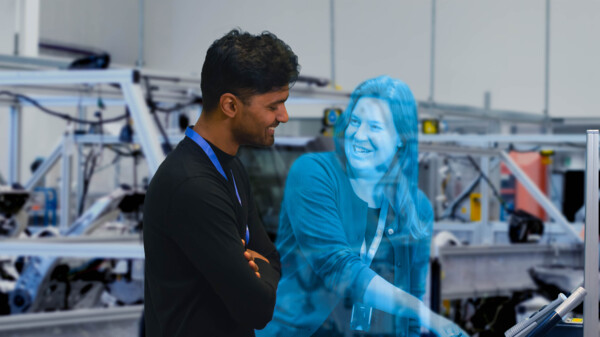
The exhibition of our holographic communication technology at European Inventors Week offered a glimpse into how 5G can spur digital innovation. Powered by consumer-grade mobile devices and the 5G network, our holographic communication technology enables fully immersive, real-time, 3D experiences that provide a greater sense of spatial awareness, proximity and presence. This technology could be deployed across a range of use cases, from medical imaging and telepresence to remote collaboration and co-creativity.
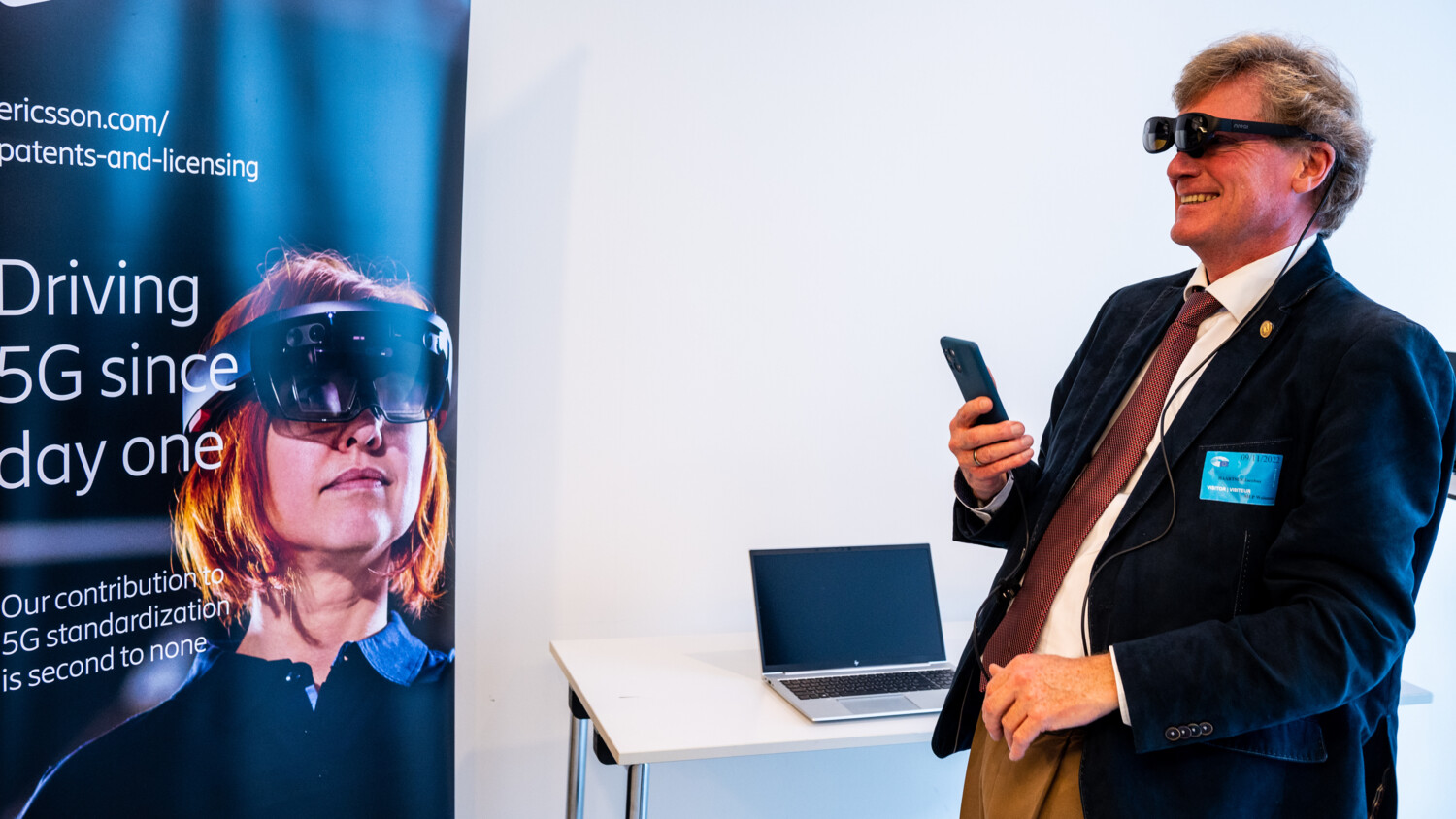
Bluetooth inventor Dr. Jaap C. Haartsen with the Ericsson holographic communication demo at European Inventors Week
At the same time, thanks to faster connectivity speeds, ultra-low latency and greater bandwidth, 5G opens the door for green innovation. For example, the 5G network can facilitate the private and public sector deployment of efficient logistics, renewable energy systems and low-carbon transportation to combat carbonization and climate change. Already today we see how 5G can enable better performance of smart connected power distribution grids, thus accelerating the shift to renewables.
And this is just the start. The research journey for the next generation of cellular standards, 6G, is already well underway, promising yet more innovation opportunities for the twin transition.
3. Guaranteeing tomorrow’s innovation starts with intellectual property rights today
Europe cannot accelerate technological progress and lead global innovation without inventors. In this sense, the continent’s future depends on policymakers sustaining a policy landscape which engenders imagination and fosters creativity. Europeans have enormous inventive potential, but they must feel empowered to uncover the inventiveness that lives within them.
Maintaining a strong intellectual property rights framework is a critical part of tapping into this inventive capacity. Invention takes time and money. To justify investments into research and entrepreneurship in the long term, inventors need to know that their intellectual property will be protected by a stable legal framework. By ensuring inventors are fairly compensated for their ideas, IPR signals to young people that being an inventor is a viable career path.
Put simply, the next generation of European inventors need to know that the effort they put into developing ground-breaking innovations will be recognized and rewarded. Only with this understanding will they have the freedom and drive to do what they do best: invent.
To catch up with the inaugural edition of European Inventors Week, visit https://www.inventorsweek.eu/.