













Head of Innovation Ericsson ANZ
Head of Innovation Ericsson ANZ
Join our guests Ender Shutao Jiang, Founder and CEO of Hiverlab and Dilip Sawhney, Managing Director of Rockwell Automation India, as they take us on a journey into the world of smart manufacturing and how they're overcoming the challenges through the power of connectivity.
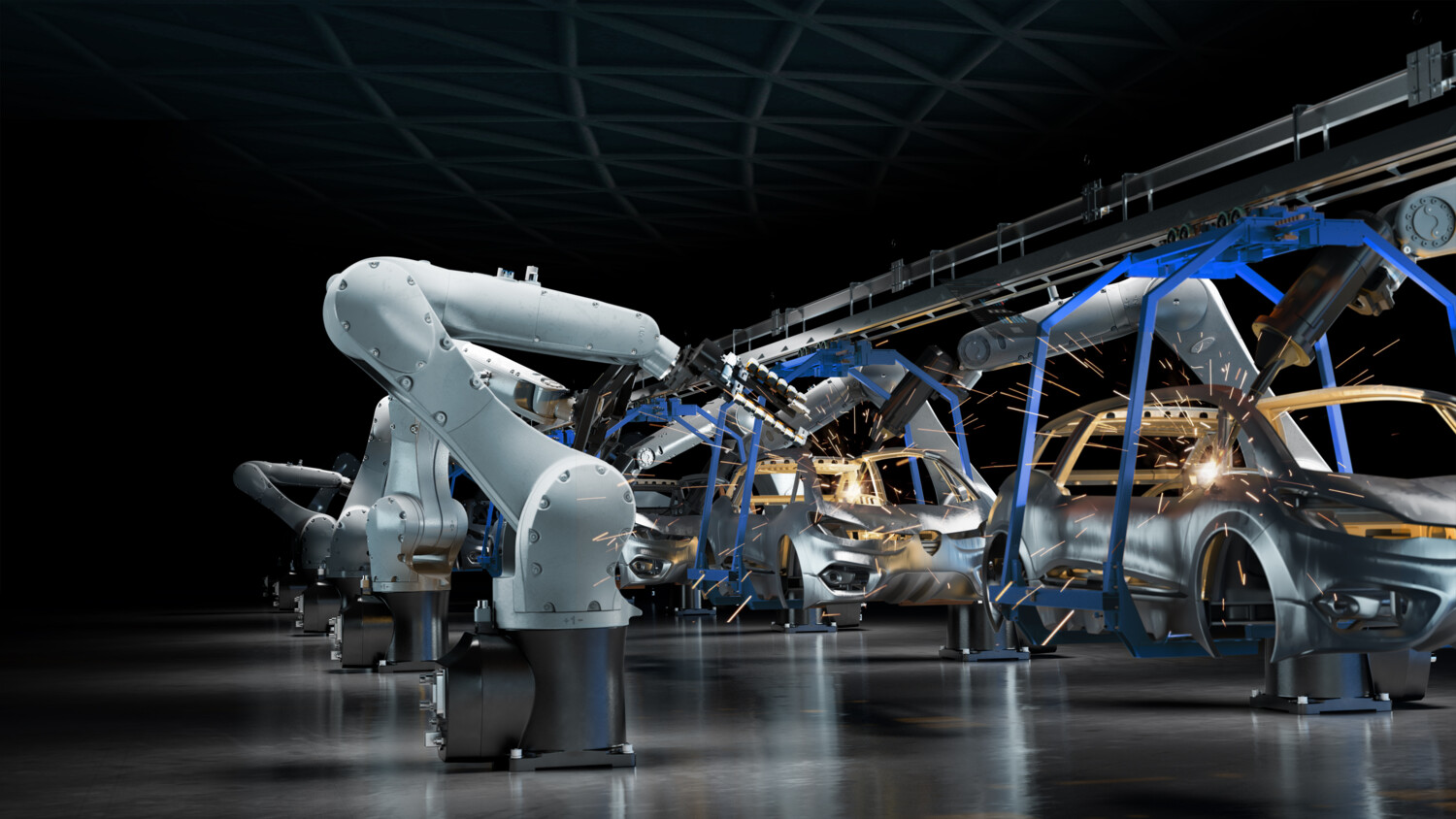
Smart Technology Set to Revolutionize Asia Pacific's Manufacturing Industry
Smart manufacturing is driving innovation across the region. We discuss how technology can help manufacturers improve efficiency and sustainability.
The manufacturing industry is faced with a number of challenges. These issues range from rising costs to problems in the supply chain. As a result, businesses are turning to a variety of smart technologies to solve their problems. We are seeing the trend of smart manufacturing rise across the world. This includes the Asia Pacific region as well.
In the third episode of Tech Cetera, Season 2, we explore smart manufacturing in the Asia Pacific. Our host, Sarah Goss discusses this topic with our two guests:
- Dilip Sawhney, Regional Director, Rockwell Automation.
- "Ender" Shutao Jiang, Founder, Hiverlab.
Combining human and machine skills
Both Rockwell Automation and Hiverlab have unique perspectives when it comes to smart manufacturing.
Rockwell Automation is a world leader in industrial automation and information. The company has a presence in over 80 countries. This gives Rockwell Automation a good overview of industry challenges and opportunities. Dilip also provides insights into the evolution of manufacturing practices in the region.
Hiverlab is a technology company, with a focus on data analytics, virtual reality, and cloud computing. Its mission is to help organizations prepare for their digital future. It focuses on things like data analytics, virtual reality, and cloud computing. Ender also has an interesting perspective on human interaction with immersive technologies.
The conversation first kicks off by discussing what smart manufacturing means. Dilip makes the distinction between conventional and smart manufacturing. He emphasizes the element of connectedness.
Smart manufacturing is the result of implementing digital technologies and connecting all processes together. This transformation allows humans and machines to work collaboratively to increase efficiency.
This description raises the question of what human and machine interaction looks like.
Ender describes this relationship as being the same as that of an individual and a hammer. AI is a tool that acts as an extension of humans. It requires the right inputs by humans to tackle a particular problem. However, at the end of the day, humans will still need to conduct a complete diagnosis of the issue.
Later in the episode, Dilip points out that human skills will always be critical. Humans will need to constantly innovate to keep up with evolving standards and requirements. He gives the example of the areas of cybersecurity and sustainability which require human elements of empathy and intelligence. Smart technology according to him enables humans to innovate faster.
Digital Twins as a use case
One of the most exciting aspects of smart manufacturing is digital twins. Digital twins use simulation and machine learning to aid decision-making. The power of simulation makes this technology extremely useful.
Both guests share examples, highlighting the impact of this smart technology. They also discuss how digital twins can improve sustainability and efficiency.
Dilip highlights how simulations can help train and upskill machine operators. This allows them to be familiar with the technology before using it. He also discusses how digital twins can be utilized for more complex tests. An example of this is trialing a manufacturing process.
Ender stresses that smart technology allows companies to improve processes and structures before they are built. This significantly improves efficiency and sustainability. It also allows considerable cost savings.
Wireless and 5G connectivity enabling smart manufacturing
The power of smart manufacturing can only be fully realized with 5G infrastructure. But it is still a journey to move from cable connections to wireless connectivity in Asia Pacific.
Ender explains why wireless connectivity is so important. He gives the example of Internet of Things (Iot) sensors for power ratings on a manufacturing floor. The process of establishing cable connections could take up to nine months. It might also require halting certain business-as-usual activities.
This halting of activities compromises both productivity and efficiency. It also makes the process more expensive. In contrast, wireless connections are much easier to dock. Setting up this kind of connection will also be more cost and time efficient.
Dilip references his conversations with customers in India and discusses the impact of wireless connectivity and 5G. Establishing a stable wireless connection simplifies the process of establishing network connectivity in a typical factory. It eliminates the time, energy and effort required for elaborate cable engineering and cable containment.
However, the benefits are not limited to saving resources. This is also a more sustainable set-up, that often eliminates tens to hundreds of kilometers of cables. The next step to fully optimise smart manufacturing is to support it with a 5G infrastructure.
Ericsson’s smart factory in Texas serves as a great example of how technology can enable sustainability practices. Designated a Sustainability Lighthouse by the World Economic Forum for pioneering sustainability achievements—one of only three factories in the world to have this designation. It’s powered by 100% renewable energy and designed to be 24% more energy efficient than other factories using innovation use cases such as energy and environmental monitoring and smart irrigation.