










Artificial intelligence is moving from pilot projects and lab environments into core business processes, industrial systems and public services. As this shift accelerates, one reality becomes clear: AI can only perform as well as the infrastructure it depends on.
In the next industrial phase of AI, best-effort connectivity such as 4G and Wi-Fi will not be sufficient to provide the reliability, security or performance that emerging applications require. To unlock AI’s full value for industry and society, AI and networks must evolve together, with advanced connectivity built on 5G Standalone today and 6G tomorrow.
From background utility to AI infrastructure
For years, connectivity was seen mainly as a basic service: necessary for everyday life but not always treated as a strategic asset. AI changes that. As AI moves from centralized cloud training to decentralized, real-time applications, networks become part of the AI infrastructure stack, alongside semiconductors, data centers and cloud.
This shift is driven by three trends. First, AI systems increasingly need to act on live data from machines, sensors, cameras and users, not only historical datasets. Second, workloads are becoming more distributed across devices, edge nodes and cloud environments. Third, AI is moving into areas where failure has real consequences, including industrial automation, healthcare, energy, transport, public safety and defense.
Why best-effort connectivity is not enough
Traditional mobile broadband and Wi-Fi networks are built on a best-effort delivery model. They aim to provide good average performance, but they cannot guarantee specific levels of latency, reliability or availability under all conditions. For many consumer use cases, this is acceptable. For AI-driven applications in industry and public services, it may not be enough.
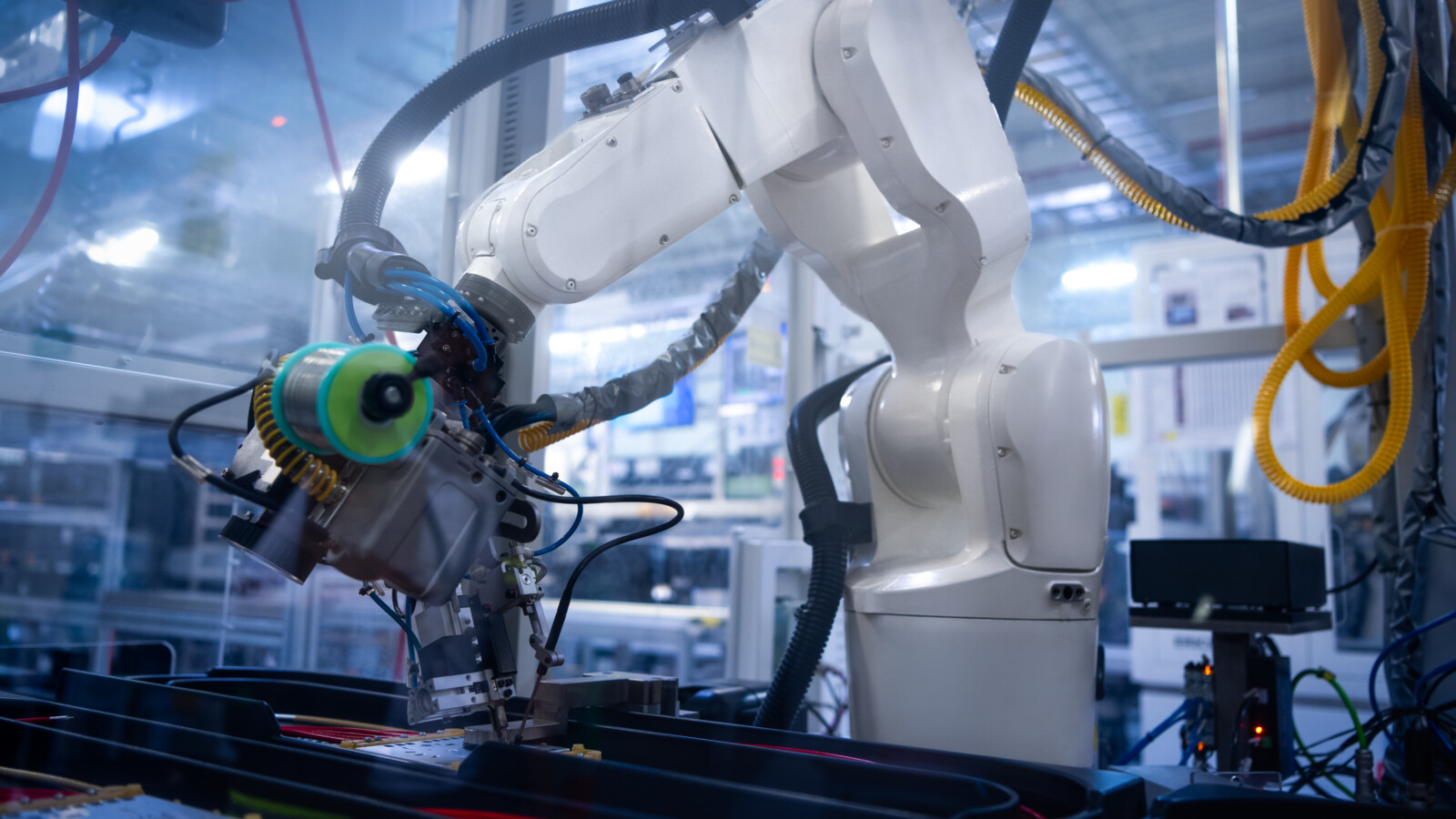
AI introduces new demands. Factory automation, robotic systems, remote operations and time-critical healthcare applications need predictable latency and reliable performance. Computer vision, AR/VR, collaborative robots and autonomous systems require stronger uplink capacity, because large volumes of sensor and video data need to move from devices to edge or cloud systems. Ericsson Mobility Report analysis shows that uplink traffic is already growing faster than downlink for many service providers, and scenario modeling suggests additional AI traffic could make uplink traffic three times higher in 2031 than in 2025.
As AI moves into factories, hospitals, transport systems and other critical environments, the cost of poor connectivity becomes much higher. A delay, outage or unstable connection can disrupt operations, slow decisions or undermine trust in the service itself. That is why the next phase of AI will depend on networks that can deliver predictable performance, strong security and reliability.
5G Standalone is the foundation for AI-ready networks
The evolution from best-effort connectivity to advanced connectivity starts with 5G Standalone. 5G Standalone means both the radio access network and the core network are fully 5G. This architecture enables more stable latency, higher reliability and availability, network slicing and the exposure of advanced network capabilities through APIs. These capabilities matter because AI-driven services will increasingly need connectivity that can be adapted to specific performance, security and reliability requirements. Over time, 6G will build on this foundation, with AI-native design, higher uplink performance and new capabilities such as integrated sensing and communication.
From megabytes to outcomes
AI will also change how networks create value. Traditional subscription models based mainly on data volume are reaching their limits. The next wave of growth will depend more on performance, reliability, security and the ability to support specific outcomes.
For consumers and businesses, this could mean premium differentiated connectivity for gaming, immersive media or fixed wireless access. For enterprises, it could mean assured performance services linked to industrial automation, logistics, mission-critical operations or AI-enabled applications. For developers, network APIs can expose capabilities such as quality on demand, location, security and identity, helping new services make use of the network more directly.
Why this matters for Europe
Because AI depends so heavily on advanced networks, connectivity policy is in many ways now also economic and industrial policy. Europe’s ability to scale AI in manufacturing, healthcare, transport, energy and public services will depend partly on whether it can build the network foundation those sectors require.
That means treating 5G Standalone as strategic infrastructure for AI, industrial transformation and competitiveness. It also means creating investment conditions that support network modernization, including more predictable spectrum policy, streamlined regulation and a framework that allows differentiated connectivity and quality of service where it is needed.
Security also must be part of the baseline. If AI is increasingly used in critical sectors, the networks supporting those services must be trusted, resilient and secure by design. AI and connectivity should therefore not be treated as separate policy agendas. Europe’s competitiveness will depend on how well they are developed together.
AI needs networks built for what comes next
AI is poised to reshape industries, public services and everyday life. But its impact will depend on whether the networks behind it can provide the performance, security and resilience that advanced applications need.
Advanced connectivity based on 5G Standalone, and over time 6G, is how Europe can move from best-effort connectivity to networks that are more predictable, differentiated and programmable. This is the infrastructure AI will need to deliver value at scale.
The next phase of AI will not be built on models alone. It will depend on the networks that connect data, devices, machines and people in real time. Regions that build those networks quickly and securely will be better placed to turn AI from pilots into productivity, from experimentation into services, and from ambition into competitive advantage.