










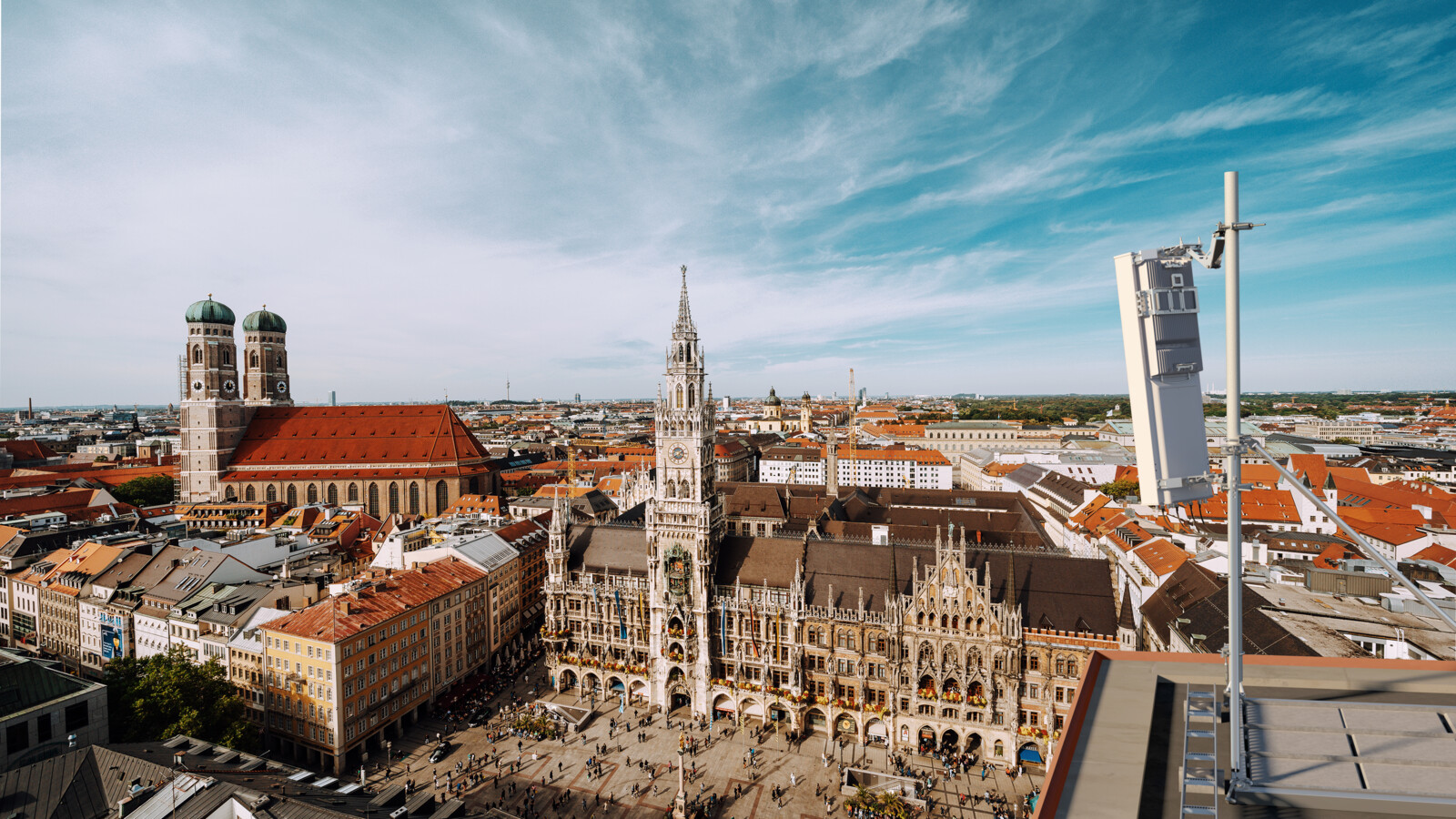
Europe is at a crossroads. It has strong foundations in connectivity: world-class technology companies, deep R&D capabilities and broad 5G population coverage. But it also faces a persistent connectivity investment gap at the very moment when competitiveness, resilience and strategic autonomy increasingly depend on next-generation networks such as 5G Standalone and, over time, 6G.
Closing this gap means building the digital infrastructure Europe needs for AI, industrial transformation and mission-critical services, supported by investment conditions that give operators the confidence to plan for the long term.
Europe’s connectivity paradox
Europe’s telecom market is one of the most fragmented in the world, with more than 100 mobile network operators and relatively small average subscriber bases compared with continent-scale players in the US, China or India. This fragmentation weighs heavily on sector economics. Around 75 percent of European operators do not earn their cost of capital, even as the need for network investment continues to rise.
At the same time, Europe has set ambitious goals to strengthen competitiveness, accelerate digitalization and build greater resilience across its economy and public services. Those goals depend directly on advanced connectivity.
This is Europe’s connectivity paradox: the region has made strong progress on 5G coverage, but it does not yet have the investment conditions needed to build the next generation of networks at scale. The next phase will depend on networks that are more programmable, secure, energy-efficient and capable of supporting AI-driven applications.
Next-generation networks need a stronger investment case
Moving from initial 5G deployments to full 5G Standalone capabilities is not simply an incremental upgrade. It requires investment in fully 5G cores, deeper mid-band deployment, cloud-native architectures, automation and stronger security.
These networks need to do more than deliver higher average speeds. They need to provide predictable, secure and high-performing connectivity for more demanding use cases. They need to support network slicing and differentiated services, so operators can move beyond commoditized bandwidth towards performance-based and platform-driven models. They also need to integrate AI and automation to manage complexity, improve performance and reduce energy consumption.
This requires sustained investment in spectrum, network densification, cloud-native cores, transport, RAN and supply-chain resilience. Without better investment conditions, operators will struggle to justify these upgrades at the pace Europe needs. The risk is that Europe remains dependent on older architectures while other regions move ahead with more advanced, programmable and trusted networks.
What is holding investment back
Several structural factors continue to make network investment more difficult in Europe.
The first is scale. Europe’s fragmented market structure means investment is spread across many operators, each with limited capacity to modernize networks quickly. This increases per-unit network costs and makes it harder to absorb the upfront investment required for 5G Standalone, automation, AI and cloud-native evolution.
The second is spectrum policy. Spectrum is fundamental to next-generation network investment, yet approaches to license duration, renewal conditions and pricing still vary widely across Europe. In some cases, spectrum policy has focused too heavily on short-term auction revenues rather than long-term deployment and service outcomes. More predictable frameworks, longer investment horizons and stronger European coordination would make it easier for operators to plan and invest at scale. Recent GSMA analysis suggests that more investment-friendly spectrum renewal policies could avoid around €30 billion in aggregate costs, resources that could instead support network modernization and 5G Standalone rollout.
The third is regulatory complexity. Connectivity is increasingly recognized as essential to AI, cloud and industrial transformation, but regulation remains complex, reporting-heavy and nationally divergent. Fragmented implementation of security measures, including the EU 5G Toolbox, also creates uncertainty for operators and investors. Without greater simplification and convergence, Europe will continue to face higher costs and slower rollout of advanced network capabilities.
How Europe can better incentivize network investment
Improving Europe’s investment conditions is not about a single policy lever. It is about creating an environment where long-term network modernization becomes the rational choice.
That starts with treating advanced connectivity as critical infrastructure. 5G Standalone and advanced 5G should be recognized as strategic priorities in Europe’s industrial, AI and resilience agendas, not only as telecom upgrades. Funding programs and public-sector initiatives should reward deployment of advanced, trusted connectivity, especially where it can unlock productivity, inclusion or resilience gains.
Spectrum policy also needs to become a stronger investment enabler. More harmonized approaches to license duration, renewal conditions and pricing principles would give operators greater certainty. Fee structures that reward deployment, rather than simply maximizing short-term auction revenues, could support faster rollout of 5G Standalone and mid-band capacity.
Europe also needs market structures that support sustainable investment. Scale alone is not enough, but without scale it becomes harder to fund the modernization required for next-generation networks. Competition policy needs to reflect the realities of a market where security, resilience and long-term investment capacity matter as much as short-term price effects.
Regulation should also make advanced services easier to deploy. Simpler authorization processes, reduced administrative burden and more consistent security, and supply-chain rules would help operators plan with greater confidence. Open Internet rules and guidelines should more clearly support differentiated quality of service, slicing and industrial-grade connectivity for advanced use cases.
Public investment has a role too. It must not replace private capital, but it can help unlock it when carefully targeted and technology neutral. Strategic funding for industrial zones, transport corridors, rural areas and public-sector digitalization can help accelerate deployment where advanced connectivity creates wider economic or societal value.
Why this matters for Europe
If Europe does not improve investment conditions for next-generation networks, the risks go beyond telecom. The region could fall behind in AI adoption, industrial transformation and advanced public services. Critical infrastructure could remain more exposed to cyber and operational risks. Operators could struggle to monetize differentiated services, limiting their ability to fund further modernization.
The opposite is also true. If Europe creates the right conditions for investment, connectivity can become a strategic advantage. Advanced networks can support AI-driven industries, more resilient public services, smarter energy systems, connected transport and mission-critical operations. They can also give operators a stronger business case to invest in the capabilities Europe will need over the next decade.
An effective Digital Networks Act will be one that drives investment in the advanced, trusted connectivity infrastructure Europe needs. Reducing fragmentation, improving spectrum policy and strengthening investment certainly are important because they help create the conditions for high-quality, reliable and resilient networks that support Europe’s competitiveness.
Turning strong foundations into strong capabilities
Europe does not lack technology, talent or ambition. What it lacks are investment conditions that match the scale of its digital goals.
The next phase of connectivity will not be won through coverage alone. It will depend on whether Europe can turn strong foundations into strong capabilities: networks that are secure, programmable, energy-efficient and ready for AI-driven, data-intensive use cases.
Better investment conditions are how Europe gets there. They are what will allow operators to modernize networks with confidence, support the transition to 5G Standalone and 6G, and build the infrastructure Europe needs for competitiveness, resilience and long-term growth.