








Realizing 5G smart-port use cases with a digital twin
5G New Radio is the most effective and cost-efficient technology available to meet the connectivity requirements of advanced automation use cases in the smart ports of the future. To accurately dimension and realistically model the performance of a private 5G network in a smart-port environment, we have created a digital twin powered by state-of-the-art graphical processing unit computing.
Ericsson CTO Erik Ekudden’s view on smart ports
5G New Radio (NR) technology is emerging as one of the cornerstones in the development of the smart ports of the future, with the ability to support everything from the remote operation of wirelessly connected cranes and automated guided vehicles to the wireless transmission of video streams recorded by multiple cameras.
This article presents the findings of Ericsson researchers who have created a digital twin powered by cutting-edge GPU computing to accurately dimension and realistically model the performance of a private 5G network in a smart-port environment. Their findings reveal the value of leveraging the full range of spectrum assets available in 5G, and the particular importance of Massive MIMO in smart ports.

A smart port makes use of automation and innovative technologies including artificial intelligence to enhance both efficiency and safety, while simultaneously lowering costs. In most cases, today’s smart ports use wired networks for connectivity.
A wirelessly connected port uses wireless technology such as Wi-Fi, 4G or 5G for connection.
In a 5G-connected port, 5G NR delivers ubiquitous and reliable wireless connectivity with low latency that enables next-level automation and provides port operators with a comprehensive, end-to-end view of their operations, right across the terminal.
5G New Radio is the most effective and cost-efficient technology available to meet the connectivity requirements of advanced automation use cases in the smart ports of the future. To accurately dimension and realistically model the performance of a private 5G network in a smart-port environment, we have created a digital twin powered by state-of-the-art graphical processing unit computing.
Most smart ports today rely heavily on wired sensors, cameras and other data-gathering devices, a solution that has delivered significant benefits but which also has obvious limitations. The wireless connectivity that 5G New Radio (NR) can provide enables a range of new smart-port use cases that are impossible to connect with wires, as well as making it possible to remove the wires on existing use cases, thereby offering enhanced flexibility at a lower cost [1]. With all the capabilities of 5G NR, the vision of a wirelessly connected port is significantly closer to becoming an everyday reality.
Smart-port use cases
A recent Ericsson report identified several promising use cases for 5G-connected smart ports [1], including remote-controlled ship-to-shore (STS) cranes, automated rubber-tired gantry (RTG) cranes and AGVs.
Remote-controlled ship-to-shore cranes
The purpose of STS cranes is to move containers between ships and the dock. They are increasingly remote-controlled and supervised by operators sitting in a control hub. Remote crane operation is a commercial solution that vendors such as ABB provide. Control data with strict latency and reliability requirements is exchanged between cranes and a remote hub. Each crane is equipped with 3D sensors and HD video cameras that monitor the surroundings from various angles. Video streams are transmitted continuously, which imposes stringent requirements in terms of bandwidth, latency and reliability.
Automated rubber-tired gantry cranes
Automated RTG cranes are used to stack containers. The number of RTG cranes is typically three to four times the number of STS cranes. In terms of sensors and cameras, RTG crane equipment is similar to that of STS cranes. However, automated RTG cranes can carry out many of their operations in an autonomous manner, which means that video streams may not be transmitted continuously and that a crane operator may supervise several cranes simultaneously. An automated RTG crane operator only takes over using remote control to resolve extraordinary incidents.
Automated guided vehicles
AGVs are used extensively for container handling in ports today. They navigate through restricted areas in the port guided by a safety controller, which requires a reliable exchange of positional (and other) data gathered by 3D sensors using wireless connectivity. AGVs are also equipped with video cameras for supervision and human intervention, especially for navigating through areas where people are located.
Network requirements of the key use cases
Figure 1 provides a summary of the requirements of wirelessly connecting cranes and AGVs. High-quality video streams and control information are the main types of data to be exchanged. Cranes equipped with multiple HD cameras will generate significant data volumes, which poses a major challenge to the capacity of a wireless network. AGVs, on the other hand, are likely to be equipped with only one or two cameras. Furthermore, both cranes and AGVs exchange control data with a remote hub using standardized communication protocols for automation, such as PROFINET [2]. This requires low latency and high reliability from the wireless network.
| Device type | Video cameras per device | Bitrate per camera [Mbps] | Numbers of devices | Total video traffic per device [Mbps] | Remote control data per device [kbps] | Network latency (one way) [ms] |
| STS crane | up to 20 | 8-20 | 10 per km of quayside | 200 | <600 | 15-25 |
| RTG crane | up to 20 | 8-20 | 3-4 times the number of STS cranes | <200 | <600 | 15-25 |
| AGV | up to 2 | 8-20 | 2-3 times the total number of cranes | 20 | <600 | 15-25 |
Figure 1: Requirements to support wireless crane and AGV use cases
Creating a digital twin
The most efficient way to evaluate network performance in a 5G-connected port is to create a digital twin. By serving as a virtual representation of a real-world entity, a digital twin enables accurate assessment of the functionality of that entity without having to actually build it in the physical world. The digital twin of a wireless network is created by combining a digital 3D model with the ability to accurately model propagation effects and emulate radio network procedures and capabilities.
Figure 2 is a snapshot from the digital twin we created using a realistic 3D model of a seaport that we imported from a commercial supplier [3]. It includes photorealistic models of ships, containers, and STS and RTG cranes, and comprises close to 10 million vertices. In its current form, it is 0.35km wide and 1km long, which amounts to an area of 0.35sq km, comprising a small to medium-sized port. The digital 3D seaport model may be reconfigured to resemble a port of any size, allowing for the creation of a digital twin of any physical port.

Figure 2: Digital 3D model of a seaport showing radio propagation between a radio node (mounted on a lamppost) and a mobile terminal
Graphical processing unit accelerated computing
While conventional simulation techniques would mandate a vast reduction in the level of detail of the digital 3D seaport model, graphical processing unit (GPU) accelerated computing offers unprecedented opportunities and elevates the way digital simulations are conducted to the next level. GPU-based rendering and visualization originally emerged in the movie and gaming industries and have revolutionized 3D graphics. More recently, GPUs have been adopted for a multitude of applications, ranging from machine learning, robotics and computer-aided design to various kinds of artificial intelligence.
In the context of running computer simulations for a wireless network, ray-tracing GPUs have emerged as a disruptive enabler by facilitating complex radio propagation modeling that delivers an unprecedented level of detail compared to traditional central processing units and ray-tracing techniques. However, the application of commercial ray-tracing GPUs for radio propagation modeling is far from straightforward. The difference in wavelength between rays of visual light and radio frequencies is several orders of magnitude, giving rise to different propagation effects, such as diffraction and diffuse scattering.
To realize the potential of GPU-accelerated computing, Ericsson is cooperating with NVIDIA, a leading manufacturer of GPUs, in high-fidelity radio propagation modeling and visualization of 3D graphics [4]. The ambition is to be able to process any advanced 3D graphics model represented by triangles, from a real city, over stadiums and factory halls to a seaport [5].
Radio propagation
The seaport model shown in Figure 2 illustrates the valid radio propagation paths between a radio node mounted on a lamppost at a height of 20m and a mobile terminal positioned at a height of 1.5m. A propagation path may be composed of up to three specular reflections, diffractions and diffuse scattering on rough surfaces. Using the digital twin of the seaport, we are able to test various smart port use cases without a real deployment in a physical port.
How 5G capabilities meet the use-case requirements
5G NR is the most effective and cost-efficient technology available to meet the connectivity requirements of the smart ports of the future. In most markets around the world, 5G spectrum is allocated on mid band between 3GHz and 5GHz, as well as on high band above 25GHz, which is also known as millimeter wave (mmWave).
Figure 3 illustrates a representative 5G NR band configuration applicable to the majority of markets, which we have used to realize smart port use cases. The antenna configuration is denoted in the form VxHxP, where V, H and P account for the number of radio chains in the vertical, horizontal and polarization domain, respectively [6].
| Spectrum option | Carrier frequency | Bandwidth | Antenna configuration (VxHxP) | TDD pattern |
| Mid-band TDD | 3.5GHz | 100MHz | 4x8x2 | 4:1 |
| High-band TDD | 28GHz | 800MHz | 16x24x2 | 4:1 |
Figure 3: 5G NR band and antenna configuration
Without resorting to sophisticated radio network simulations it is clear that mid band, with 100MHz bandwidth, lacks the capacity to serve the bitrates generated by STS and RTG cranes. With eight times the bandwidth, high band appears more suitable. On the other hand, mid band provides better coverage, due to the larger radio wavelength, and may therefore be the better option to serve AGVs, which roam around the port and may suffer from shadowing in non-line-of-sight (LoS) scenarios.
Challenges
A port presents significant challenges to the capacity of a wireless network that mandate a dense deployment of base stations. The combination of short distances between base stations and the relatively open propagation environment of most ports can cause excessive levels of inter-cell interference.
Stringent requirements on reliability and bounded latency add further challenges to the ability to deliver the required network capacity. Moreover, in a smart-port scenario, as in many other industrial applications, most data is generated on the UL, while most public 5G networks serving mobile broadband services are configured to predominantly serve data in the DL. This is reflected in the DL-heavy time division duplex (TDD) pattern of 4:1, which assigns four times as many resources to the DL than the UL and is being adopted in most public networks globally.
Unfortunately, regulatory requirements often mandate the same DL-heavy 4:1 TDD pattern even for dedicated private networks aimed to serve industrial applications. Coexistence with public networks that often operate in adjacent bands further complicates the adoption of a more balanced TDD pattern for private networks, especially on mid band.
Massive MIMO
Massive multiple-input, multiple-output (MIMO) is a cornerstone of 5G NR, and its ability to boost the capacity of wireless networks is well-documented [6, 7]. It is based on adaptive antenna arrays that employ numerous radio chains. Mid-band antenna arrays typically have a size of 16-64 radio chains, while the array dimension for high band often approaches several hundred. As shown in the antenna configuration column in Figure 3, our work is based on the assumption of antenna arrays with 64 radio chains for mid band and 768 radio chains for high band.
Massive MIMO is composed of spatial multiplexing and beamforming. Spatial multiplexing means superimposing multiple parallel data streams on the same time-frequency resources, while beamforming adaptively shapes the signal energy in the spatial domain to direct the signal toward the desired destination. Beamforming improves coverage by enhancing the link quality as well as mitigating the detrimental effects of inter-cell interference by reducing the spillage of signal energy elsewhere.
5G NR distinguishes between two types of spatial multiplexing: single-user (SU) and multi-user (MU) MIMO, as well as combinations thereof. For SU-MIMO, all spatial data streams serve one user, while for MU-MIMO spatial streams are directed to different users who are well separated spatially.
It has been demonstrated that the combination of beamforming, SU-MIMO and MU-MIMO enhances the capacity of a wireless network sixfold, both in dense urban and suburban scenarios [6]. Given the 12-times larger array dimension, beamforming gains on high band are significantly larger than for mid band. The fact that beamforming in the user equipment (UE) is a common feature in high band further mitigates inter-cell interference.
Realization of the smart-port use cases
Using our digital twin, we have conducted radio network simulations to assess the ability of 5G NR to serve the wireless crane and AGV use cases depicted in the 3D port model in Figure 2. Base stations are deployed on lampposts 20m above ground. Each site is equipped with three sectors that have a service area of 120 degrees in azimuth. Deployments ranging from four to eight sites are simulated, which equates to 12 to 24 sectors. The equivalent inter-site distance is between 320m and 225m, which is in line with contemporary mobile networks in dense urban environments.
Figure 4 shows the capacity of a 5G network in terms of the data volumes served per sector in gigabits per second. The throughput requirement in the DL and UL is set to 100Mbps and 20Mbps, respectively. Owing to the DL-heavy TDD pattern, DL capacity significantly exceeds UL capacity. Likewise, the capacity achieved on high band is significantly superior to mid-band capacity, due to the larger bandwidth.
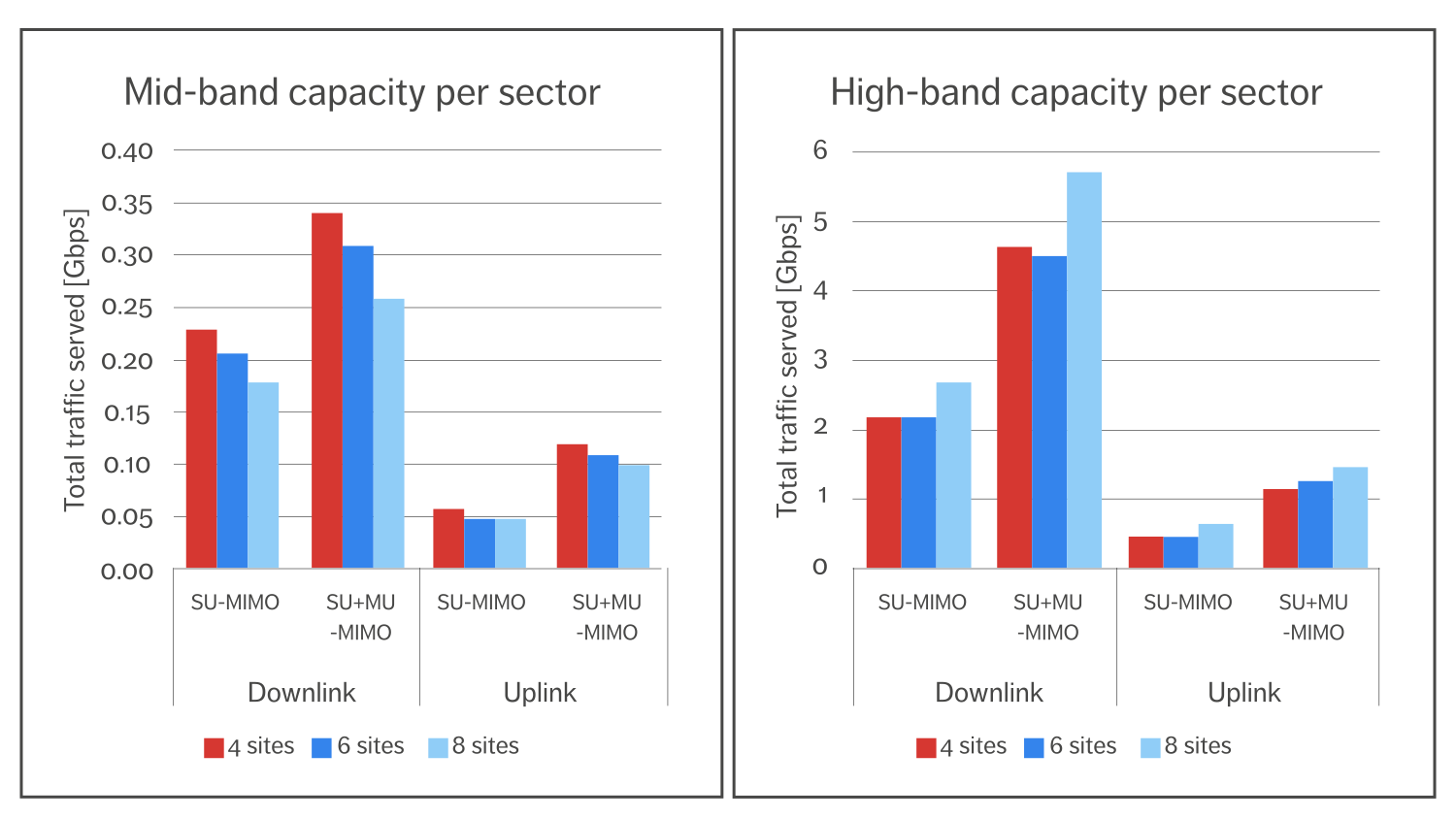
Figure 4: 5G NR capacity achieved on mid and high band for both the DL and the UL
Interestingly, the capacity per sector decreases for mid band with an increasing number of sectors, while it increases for high band. This means that for mid band, doubling the number of sectors from 12 to 24 boosts capacity by about 60 percent, compared with a capacity gain of 150 percent for high band.
The reason for this is twofold: first, in contrast to mid band, coverage on high band improves when the number of sites increases from four to eight. Second, the larger array dimension in high band produces a narrower beam, mitigating inter-cell interference and giving rise to an improved signal-to-interference-plus-noise ratio (SINR).
In absolute terms, high-band capacity is more than tenfold in many cases, while there is only an eightfold difference in bandwidth. Clearly, the UL on mid band is the bottleneck in meeting the capacity demands of the considered use cases. Utilizing the full UL feature set, including the combined use of SU-MIMO and MU-MIMO, is therefore of paramount importance.
Figure 5 shows the 5G network capacity achieved with 24 sectors for the wirelessly connected crane and AGV use cases. A port of this size typically accommodates 40-50 cranes and 80-150 AGVs that predominantly produce UL traffic. This equates to about two cranes and three to six AGVs per sector that need to be served. A significantly larger number of devices can be supported by suspending transmissions or reducing the number of active video streams when an AGV or an automated RTG is in a safe area where unsupervised autonomous operation is possible.
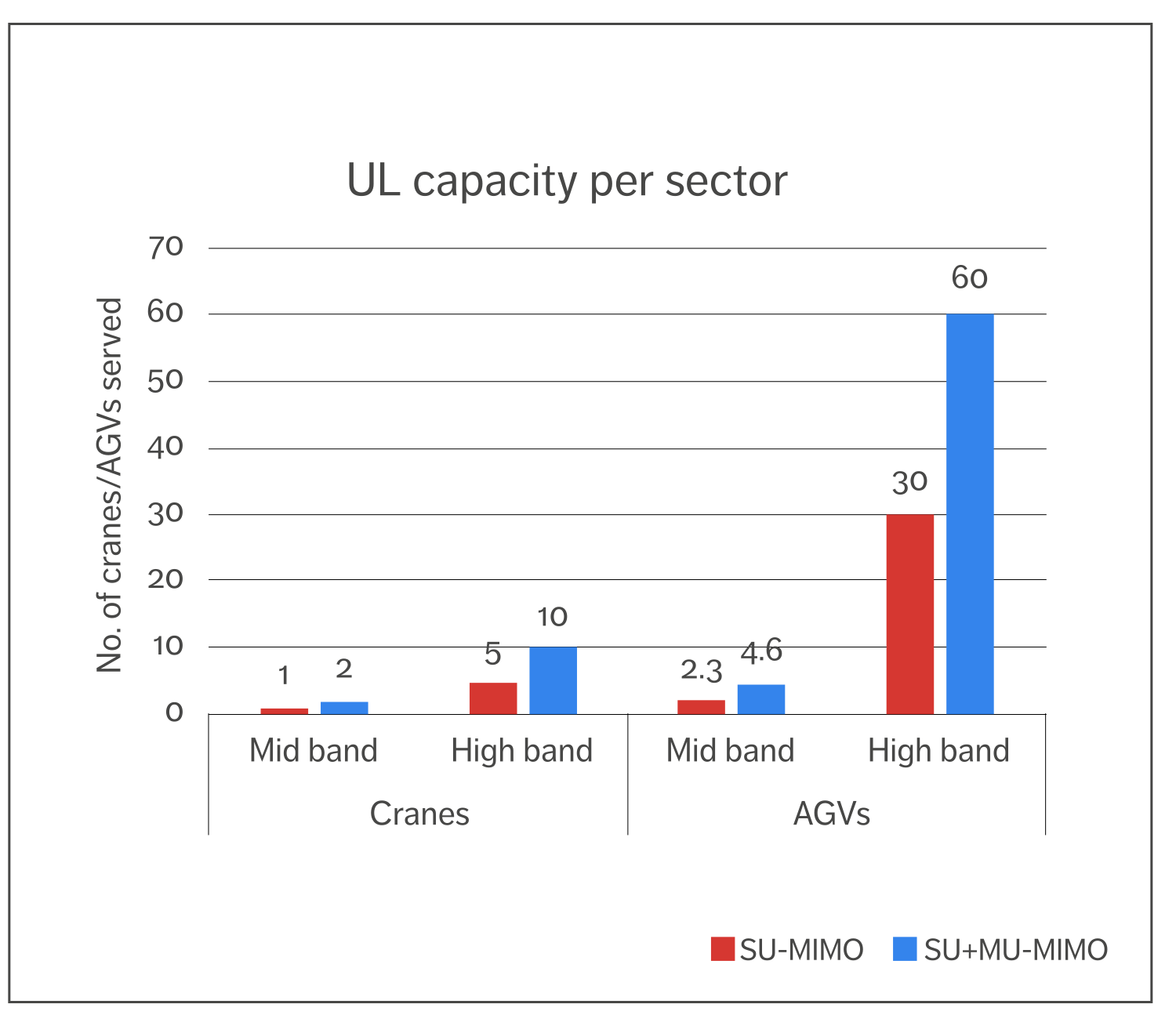
Figure 5: Number of 5G-connected cranes and automated guided vehicles served for mid and high band
However, cranes and AGVs move around the port, which may lead to an uneven distribution of devices that calls for an overprovisioning of sector capacity to avoid congestion in cells that temporally accommodate many devices.
We assume that each 5G-connected crane produces 200Mbps of data. On mid band the required SINR to serve one or two cranes per sector with SU-MIMO and MU-MIMO respectively is prohibitively high, which effectively rules it out for connecting cranes. In contrast, up to 10 cranes per sector may be served on high band. Since the height of the cranes allows for the placement of UE antennas above container stacks and most other obstacles, thereby ensuring a stable LoS connection to the base station, high band appears suitable for this use case.
Given the throughput requirement of 20Mbps per AGV, the MU-MIMO capacity on mid band of serving up to five AGVs may not be sufficient to meet the target of six AGVs per sector. This is in sharp contrast with high band, which significantly exceeds the AGV requirement. However, unlike cranes, AGVs move around more freely and UE antennas must be mounted at low heights, well below the height of a container, increasing the possibility of blocking the direct LoS propagation path. These shadowing effects may compromise the reliability of the wireless link especially for high band, making mid band the preferred choice for serving AGVs.
Bridging the gap
There are four methods that may help to bridge the gap between the mid-band capacity that is delivered and that which is required. The first method involves using a more UL-heavy TDD pattern that allows for a better match between the supply and demand of UL capacity. Unfortunately, however, regulatory constraints and coexistence with public networks imply that changing the TDD pattern may be difficult, especially for mid band.
The second method involves increasing bandwidth by combining the spectrum assets of dedicated private and public networks. As seaports are restricted areas, public consumption of mobile broadband services is likely to be low in the vicinity of the port. Some of the spare capacity in public networks could therefore be redirected to serve the smart port.
The third method is to configure a dual-band 5G network with carrier aggregation between mid and high band. This approach makes it possible to dynamically distribute traffic between mid band and high band to serve AGVs in LoS and non-LoS conditions, respectively.
The fourth method is to employ adaptive codecs that allow for rate adaptation of the video streams. Morever, the number of simultaneously active video streams per crane may also be adjusted to reduce the bitrate requirement consequently improving the network capacity.
Delivering reliable connectivity at bounded latency
In addition to serving the required traffic volumes, a connected port demands reliable connectivity at bounded latency. Our simulations indicate that high band achieves lower latencies than mid band, due to shorter transmission and reception cycles. The main benefit of mid band, on the other hand, is that ubiquitous connectivity is maintained, whereas high band may suffer from spotty coverage due to shadowing in non-LoS conditions. Both mid and high band are therefore indispensable components in connecting the smart ports of the future.
Conclusion
The digital twin of a smart port that we have created at Ericsson makes it possible to realistically model the performance of a 5G network in a port environment. Our research indicates that massive multiple-input, multiple-output (MIMO), including beamforming and multi-user MIMO, will play a key role in fulfilling smart-port requirements.
One of the main challenges in delivering wireless connectivity in a port is the imbalance between the supply and demand of uplink (UL) and downlink (DL) capacity, due to the DL-heavy time division duplex pattern that is predominantly used in 5G networks today. Significant benefits will be gained from using the different frequency bands allocated to 5G to serve different purposes in a port. The high UL capacity needs of wirelessly connected cranes require the use of high-frequency bands in the millimeter wave range, while the mid-band frequencies below 6GHz will provide reliable connectivity for use cases with unrestricted mobility, such as automated guided vehicles.
References
- Ericsson, Connected Ports: A guide to making ports smarter with private cellular technology, February 2021
- PROFIBUS & PROFINET International, PROFINET, the leading Industrial Ethernet standard
- TurboSquid, Sea Port 3D model by onurzgen
- NVIDIA, GTC November 2021 Keynote with NVIDIA Founder and CEO Jensen Huang, GPU Technology Conference (GTC) November 2021, [Online from 45:57 to 48:09]
- IEEE.tv, Advanced High-Fidelity Channel Modelling and Methodology – Demo – 2021, Brooklyn 6G Summit (B6GS), Asplund, H, et al.
- Academic Press, Advanced Antenna Systems for 5G Network Deployments: Bridging the Gap between Theory and Practice, 2020, Asplund, H; Astely, D; Larsson, E, et al.
- Ericsson Technology Review, Meeting 5G network requirements with Massive MIMO, February 16, 2022, Astely, D; von Butovitsch, P; Faxér, S; Larsson, E