




Skip navigation
""

Decrease in ICT’s carbon footprint slows down

ICT sustainability

Electricity consumption continues to increase in the ICT sector

Key findings

Electricity consumption continues to grow in the sector, largely due to AI.

The adoption of renewables has slowed, leading to only a slight decrease in greenhouse gas (GHG) emissions compared to last year.

ICT sector electricity consumption remains around 4 percent of the total, increasing in line with global consumption.

Electricity consumption increasing

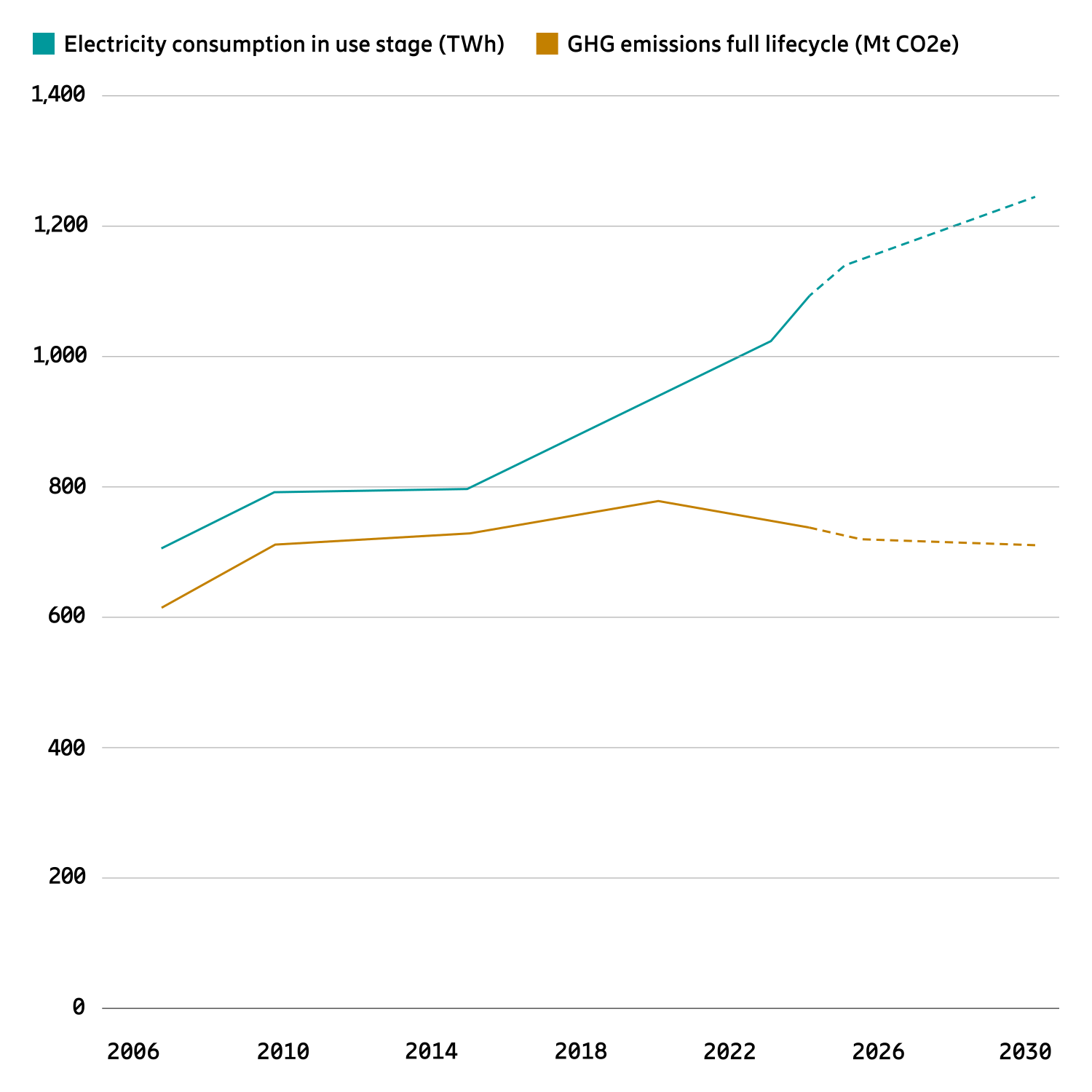
Global ICT sector electricity consumption in the use stage was estimated to be nearly 1,100 TWh in 2024, up from about 940 TWh in 2020. About 40 percent of the total usage relates to user devices and IoT. The main growth is in the data center segment, where electricity consumption has grown about 9 percent yearly since 2020. This corresponds to about 90 TWh, compared to the rise of 25 TWh 2010–2020. The increase is largely related to AI. For the network segment, the increased electricity usage is about 2 percent per year since 2020, corresponding to about 23 TWh, and mainly relates to an increase reported by the three major Chinese service providers. Between 2010 and 2020 the network electricity usage increased by 88 TWh. The ICT sector’s electricity consumption remains about 4 percent of the global total, increasing in line with global consumption.

The total estimated GHG emissions for the entire lifecycle in 2024 were still about 750 million metric tons (Mt) of carbon dioxide equivalents (CO2e), reduced by about 1 percent since 2023. In 2020, it was about 780 Mt. The decrease in reported emissions in 2024 compared to 2020 relates to increased investments in renewables by ICT companies and less fossil fuels generally in electricity production. During 2024 however, investments in renewables grew more slowly compared to previous years.

Figure 8: ICT sector development up to 2024 and forecast to 2030
ICT sector development up to 2024 and forecast to 2030
Line graph showing that electricity consumption in the use stage rose steadily from around 700 TWh to around 1,100 TWh between 2007 and 2024, with a noticeably sharper increase starting from 2023. It is forecast to rise at this increased pace up to 2030 to reach over 1,200 TWh. An additional line shows that full-lifecycle greenhouse gas emissions rose slightly from around 600 Mt CO2e to peak at just under 800 Mt CO2e in 2020, and thereafter decreased steadily up to 2024. It is then is forecast to keep decreasing steadily to reach around 700 Mt CO2e in 2030.

Looking forward to 2030

Up to 2030, it is forecast that electricity consumption will continue to rise gradually in all areas of ICT. The increase in electricity consumption has been greater in the last two years than in previous years, mainly due to the development and adoption of AI. In our current forecast, this increased growth rate is expected to continue during 2025, but thereafter fall back to the previous growth rate. However, this will depend on the future development of AI.

The carbon footprint of the sector is forecast to continue to decrease by 2030, due to an increased share of renewable energy used by networks and data centers, as well as generally in the global electricity grid. This will also reduce GHG emissions from device usage and production.

With the current AI impact, geopolitical situation and slower shift to renewable energy, both electricity usage and GHG emissions are expected to be higher compared to 2024’s forecast.[1]

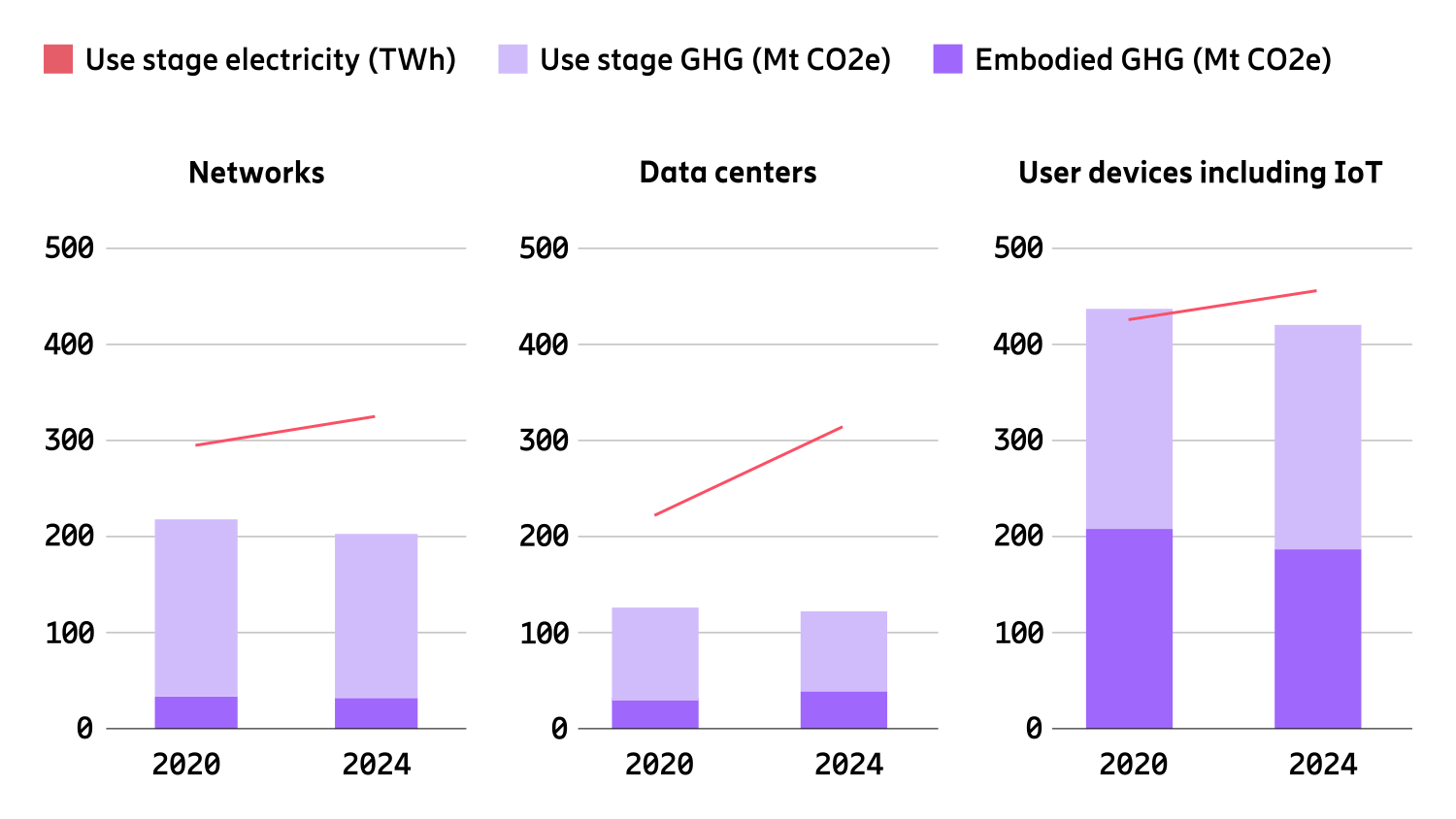
Figure 9: ICT sector 2024 versus 2020
ICT sector 2024 versus 2020
Series of three graphs showing electricity consumption and emissions in the ICT sector in 2020 compared to 2024. 1. In networks, total GHG stayed at around 200 Mt CO2e, falling slightly between 2020 and 2024, with the majority of this being use stage GHG and a small amount being embodied GHG. Use stage electricity rose only slightly between 2020 and 2024, from just under 300 to just over 300 TWh. 2. In data centers, total GHG stayed at just over 100 Mt CO2e between 2020 and 2024, with the majority of this being use stage GHG and a small amount being embodied GHG. Use stage electricity rose from just over 200 to just over 300 TWh between 2020 and 2024. 3. In user devices including IoT, total GHG fell slightly from almost 450 to just above 400 Mt CO2e between 2020 and 2024, with around 200 Mt CO2e being embodied GHG in both years and the remainder being use stage GHG. Use stage electricity rose between 2020 and 2024, from just over 400 to just over 450 TWh.

ICT sector

The ICT sector is defined as: data centers, meaning all deployments of servers, from small racks to large hyperscale data centers including all infrastructure; networks, comprising mobile and fixed networks, including enterprise networks and communication satellites; user devices such as PCs, monitors, phones, tablets or customer premises equipment (CPE) such as routers and modems; and Internet of Things (IoT), including payment terminals, surveillance cameras, smart meters, smart home devices and other IoT and machine-to machine (M2M) communication modules. All segments consume electricity in the use stage, which leads to GHG emissions. The full carbon footprint includes the use stage and the embodied GHG emissions, which covers materials, production, transport and end-of-life treatment.

Next steps

Ericsson Mobility Visualizer

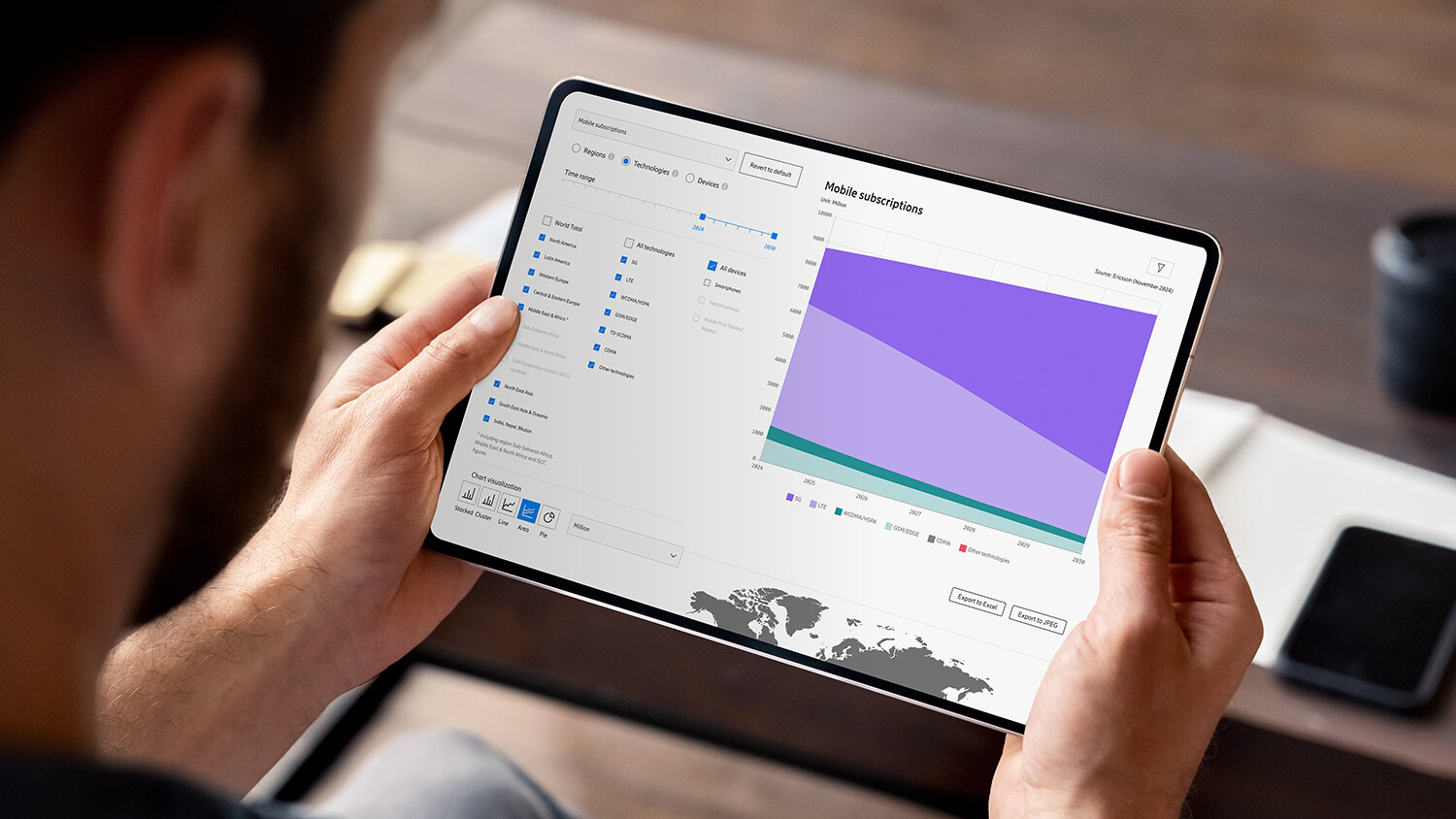
With our Mobility Visualizer tool, you can examine the forecast data that underpins the Ericsson Mobility Report in our interactive web application.

Discover the data

Ericsson Mobility Calculator

Explore the relationship between the usage of various app types and monthly traffic per subscription with our interactive Mobility Calculator tool.

Explore the calculator

Articles

Discover the Ericsson Mobility Report articles where we discuss trends, case studies, service provider opportunities, and the past, present and future of connectivity.

Discover the articles

Ericsson Mobility Report

Our forecasts are based on past and current data, validated with extensive network measurements. Discover the latest figures for 5G, IoT, fixed wireless access and more.

Explore now
Subscribe to receive Ericsson Mobility Report updates

Get the latest Ericsson Mobility Reports and quarterly updates – the moment they are published!

The face of mobile communications is changing faster than ever. Stay up to speed with projections and analyses of the latest trends in the mobile industry, including subscriptions, mobile data traffic and population coverage.

Subscribe now to get the full reports and quarterly updates sent directly to your inbox.

Subscribe now