Sustainability and ICT
ICT sector’s footprint stable despite more subscribers and data usage
- The ICT sector consumed about 4 percent of global electricity in the use stage, representing about 1.4 percent of global greenhouse gas (GHG) emissions in 2020.
- Up to 2030, it is forecast that electricity consumption will grow slightly, while carbon emissions will fall.
- The industry could further reduce its impact by focusing on renewable energy and improving energy efficiency.
The ICT sector’s use of electricity is the primary contributor to its GHG emissions. In addition to the use stage, all emissions related to materials, manufacturing and transportation are included within this carbon footprint. Reported data from over 150 companies in the ICT sector value chain was used in the 2020 study.1,2 The forecast to 2030 is based on observed trends in the entire ICT sector.
ICT sector development 2007–2020
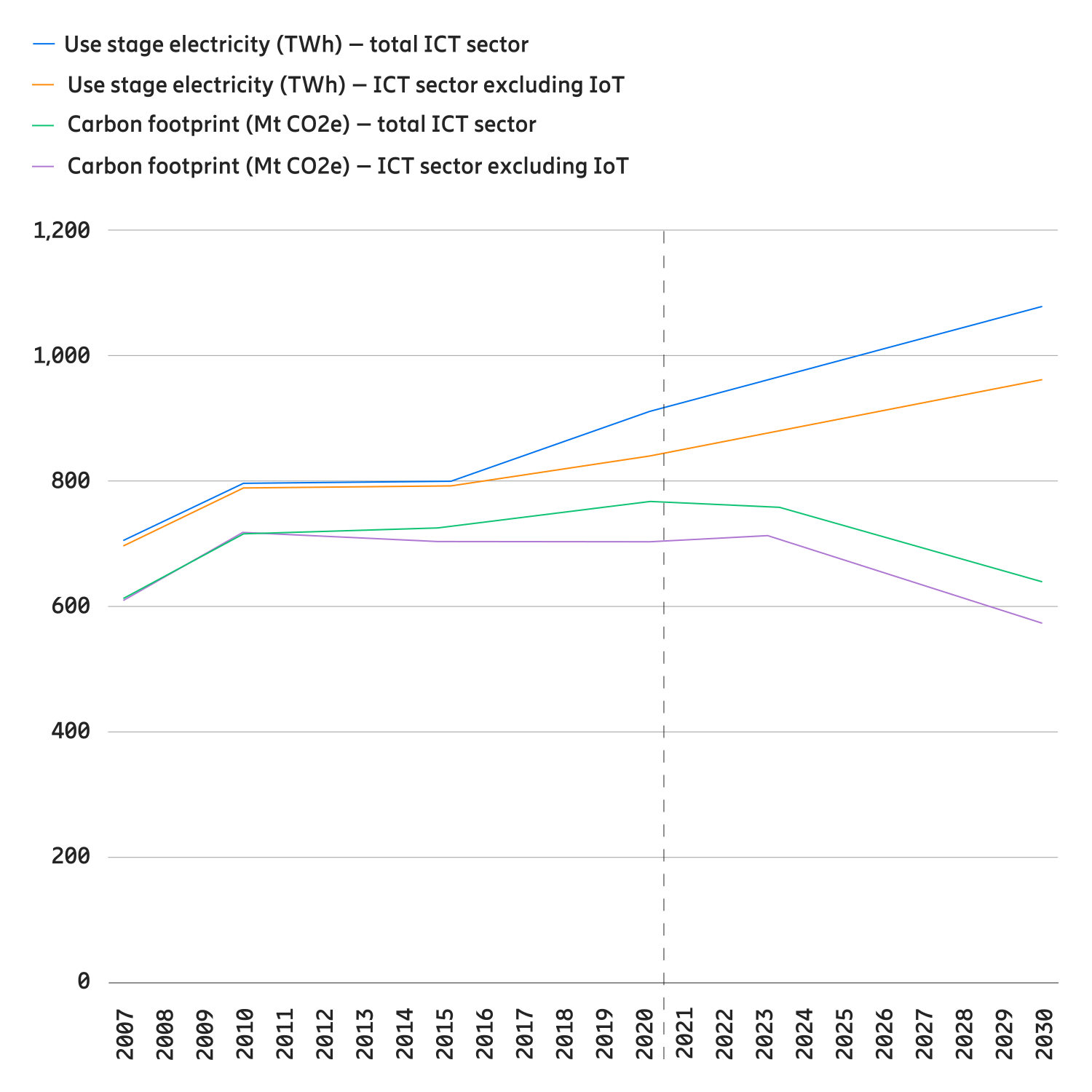
Use-stage electricity consumption in the ICT sector increased from 710 TWh in 2007 to 915 TWh in 2020. In 2020, the carbon footprint of the ICT sector was estimated to be 763 million metric tons (Mt) of carbon dioxide equivalent (CO2e), compared to 620 Mt of CO2e in 2007. The increase is mainly related to the use of IoT/machine-to-machine (M2M) technologies, and especially connected surveillance cameras (see lower lines in Figure 25). Many data centers and networks have increased the share of electricity they derive from renewable energy sources, as shown by slower growth of the carbon footprint (see Figure 25).
The amount of fixed and mobile data traffic increased about 40 times, while the number of ICT subscriptions (fixed and mobile) has increased 2.75 times since 2007. When considered with the electricity usage detailed above, this shows that electricity usage and carbon footprint has decreased per ICT subscription (not counting IoT subscriptions). Carbon footprint per subscription has decreased from 125 kg to 70 kg CO2e. For a smartphone user and mobile broadband subscription, the footprint is about 25 kg CO2e, similar to 2007 when the smartphone was introduced.
Figure 25: ICT sector development 2007–2020 and forecast to 2030
The ICT sector is defined here to include data centers, mobile and fixed networks, user devices such as PCs (regardless of purpose), monitors, phones, tablets, customer premises equipment (CPE) such as routers, modems and so on. Payment terminals, surveillance cameras, smart meters, smart home devices and other IoT/M2M communication modules are here referred to as IoT devices. TVs, cable TV and broadcast networks, printers, paper media and other devices are defined as part of the entertainment and media sector and not included in the ICT sector, but are estimated in the cited 2020 study.
Looking forward to 2030
The forecast to 2030 shows an increase in overall ICT electricity usage during use stage, as networks will be built out and subscriptions will rise globally. The ICT sector’s carbon footprint is forecast to reduce, as the electricity grid emission factor is forecast to reduce by at least 25 percent, and networks and data centers are expected to further increase the share of renewables. The forecast is based on development from 2007–2020 and subscriptions and sales trends.
The ICT sector could further reduce this forecast by focusing on materials used and energy efficiency, in addition to increased use of renewable energy. Faster sunsetting of older technologies such as 2G and 3G will directly impact use-stage electricity and lower the projected increase. Joint action is necessary to get on par with the 1.5-degree trajectory to 2030, as stated by the International Telecommunication Union (ITU)3 as well as supporting Net Zero emissions targets.
1. “ICT Sector Electricity Consumption and Greenhouse Gas Emissions – 2020 Outcome” SSRN (April 2023).
2. “Assessing embodied carbon emissions of communication user devices by combining approaches” Renewable and Sustainable Energy Reviews (September 2023).
3. L.1470: Greenhouse gas emissions trajectories for the information and communication technology sector compatible with the UNFCCC Paris Agreement, International Telecommunications Union (ITU-T) (2020).