Mobile subscriptions outlook
An additional 660 million 5G subscriptions were added globally in 2025
Key findings
5G subscription uptake continued in the second quarter of 2026, with 155 million new subscriptions bringing the total close to 3.3 billion.
Two-thirds of all mobile subscriptions are expected to be 5G at the end of 2031.
The first commercial launches of 6G are expected in around 2030, with variations between regions and countries.
During 2025, around 660 million 5G subscriptions were added globally, with the total accounting for one-third of all mobile subscriptions at the end of the year. The highest penetration was in North America with 79 percent, followed by North East Asia at 60 percent, Western Europe at 54 percent and the Gulf Cooperation Council (GCC) countries at 53 percent. By the end of 2027, the number of 5G subscriptions is expected to increase by 1.2 billion compared with the end of 2025, and will overtake 4G as the dominant mobile access technology by subscription nine years after launch.
Around 390 service providers have now launched commercial 5G services, and more than 90 of those have launched 5G standalone (SA).[1]
As subscribers migrate to 5G, the number of 4G subscriptions continues to decline. During the second quarter of 2026, 4G subscriptions declined by 62 million, bringing the total to around 4.5 billion. 3G subscriptions declined by 18 million during the same period, while 2G subscriptions dropped by 23 million.
2G and 3G network sunsetting continues around the world. The phasing out of 3G networks is predicted to happen more quickly than that of 2G in the coming years, but the timeline for this transition varies based on country and service provider. By the end of 2025, 80 service providers had completely finished shutting down their 3G networks, while 46 service providers had fully turned off all 2G services.[2]
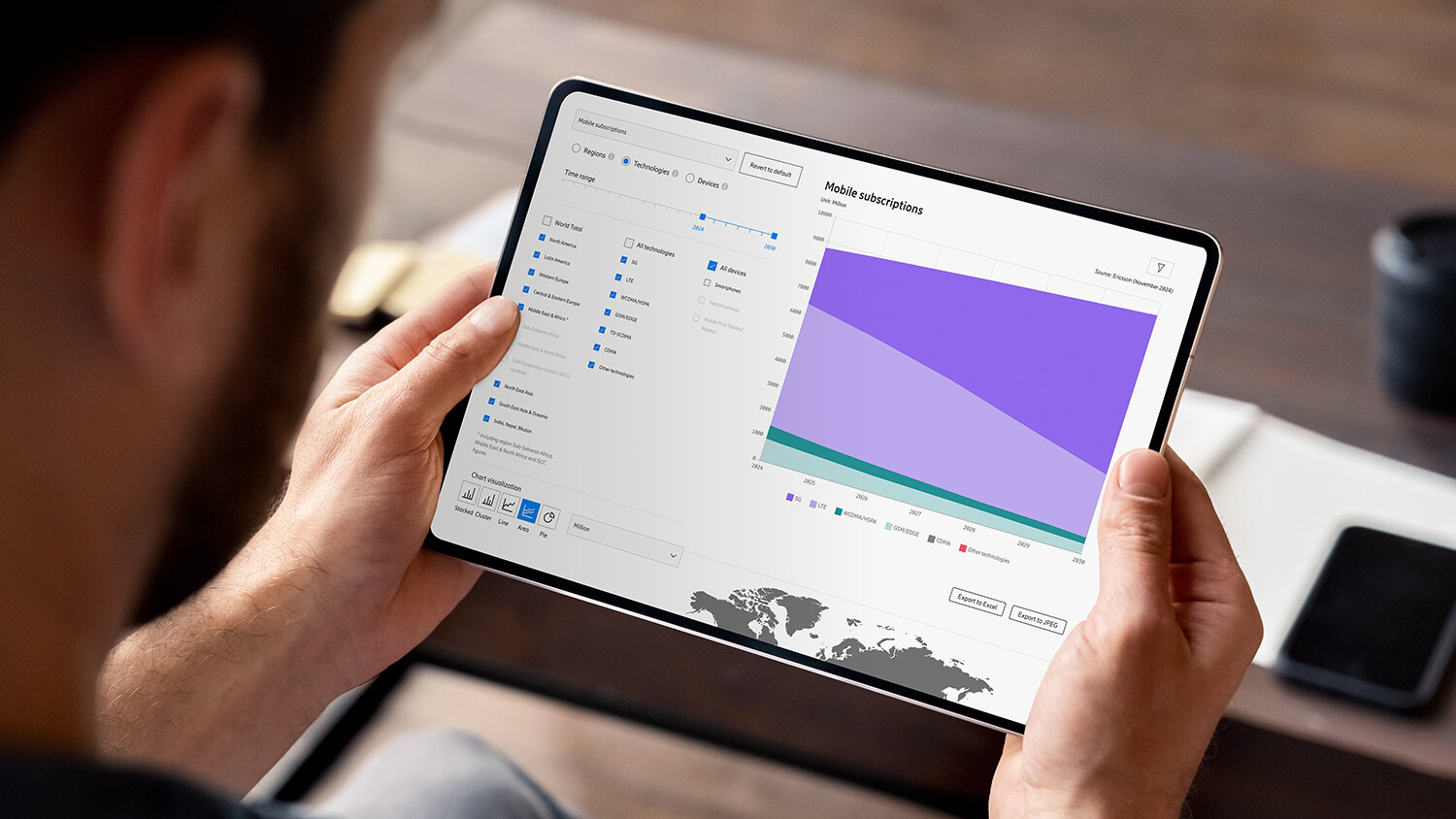
Figure 1: Mobile subscriptions by technology
5G subscriptions are forecast to reach 6.4 billion by the end of 2031.
Two-thirds of all mobile subscriptions expected to be 5G at the end of 2031
Global 5G subscriptions are forecast to reach 6.4 billion in 2031 and comprise two-thirds of all mobile subscriptions. Leading service providers are expected to continue deploying 5G SA globally, with subscriptions projected to reach around 3.9 billion in 2031, representing approximately 60 percent of all 5G subscriptions at that time. This is a somewhat more conservative outlook than six months ago, reflecting a moderate 5G SA subscription growth in India toward the end of the period and slower 5G SA adoption in Latin America, Europe and the Middle East.
In 2031, it is predicted that Western Europe and North America will have a 5G subscription penetration of 95 and 92 percent respectively, with the GCC countries and North East Asia following with a penetration of just below 90 percent.
6G on the horizon
Standardization discussions for 6G[3] have begun. AI-native 6G is expected to bring new capabilities, including: full support for integrated sensing and communication (ISAC); seamless integration between terrestrial and satellite networks to reduce coverage gaps; and a strong focus on energy efficiency. 6G is anticipated to have a core network built on the architectural principles of 5G SA and a new Radio Access Network (RAN) architecture with a new radio interface. For traditional use cases, such as enhanced mobile broadband (eMBB), Fixed Wireless Access (FWA) and the Internet of Things (IoT), 6G will advance the performance and service differentiation with guarantees. As enhanced and new network technologies open up new service possibilities, use cases like massive digital twinning, autonomous mobility and wide-area mixed reality are likely to gain broader commercial adoption.
The first implementable specifications for 6G are targeted for finalization by the end of 2028 or early 2029. The first commercial 6G services are anticipated to appear around 2030, varying between regions and countries. Early adopters are predicted to be the US, China, Japan, South Korea and the GCC countries, which all launched commercial 5G services relatively early compared to many other countries. India is positioning itself to accelerate its 6G timeline relative to its 5G deployments. Europe is expected to launch 6G about one year later than it did for 5G, relative to other regions, reflecting its later 5G SA deployment.
Global 6G subscriptions[4] are forecast to reach 180 million by the end of 2031, not including early uptake of subscriptions for AI-enabled devices such as autonomous vehicles, smartglasses and drones. If 6G subscription uptake happens earlier, the current forecast could be surpassed significantly.
Satellite broadband subscriptions
In recent years, there has been a growth in satellite networks, in particular large constellations of low-Earth orbit (LEO) satellites. These satellite networks can provide multiple services such as direct-to-device connectivity and fixed broadband internet. To meet the fixed broadband connectivity needs as we approach 2031, the mix of fiber, 5G FWA and satellite technologies will all be crucial to support an increasingly digital world. Globally, satellite broadband subscriptions are forecast to increase from around 10 million at the end of 2025 to around 33 million by the end of 2031. By comparison, there will be a projected 350 million FWA connections on mobile networks by 2031. The total number of all types of fixed broadband connections will be around 2 billion by 2031.
The number of subscriptions using a satellite broadband service operating in the fixed-satellite service (FSS) spectrum, using a dedicated satellite terminal/CPE, typically a dish or high-gain antenna.