Use stage had relatively small impact
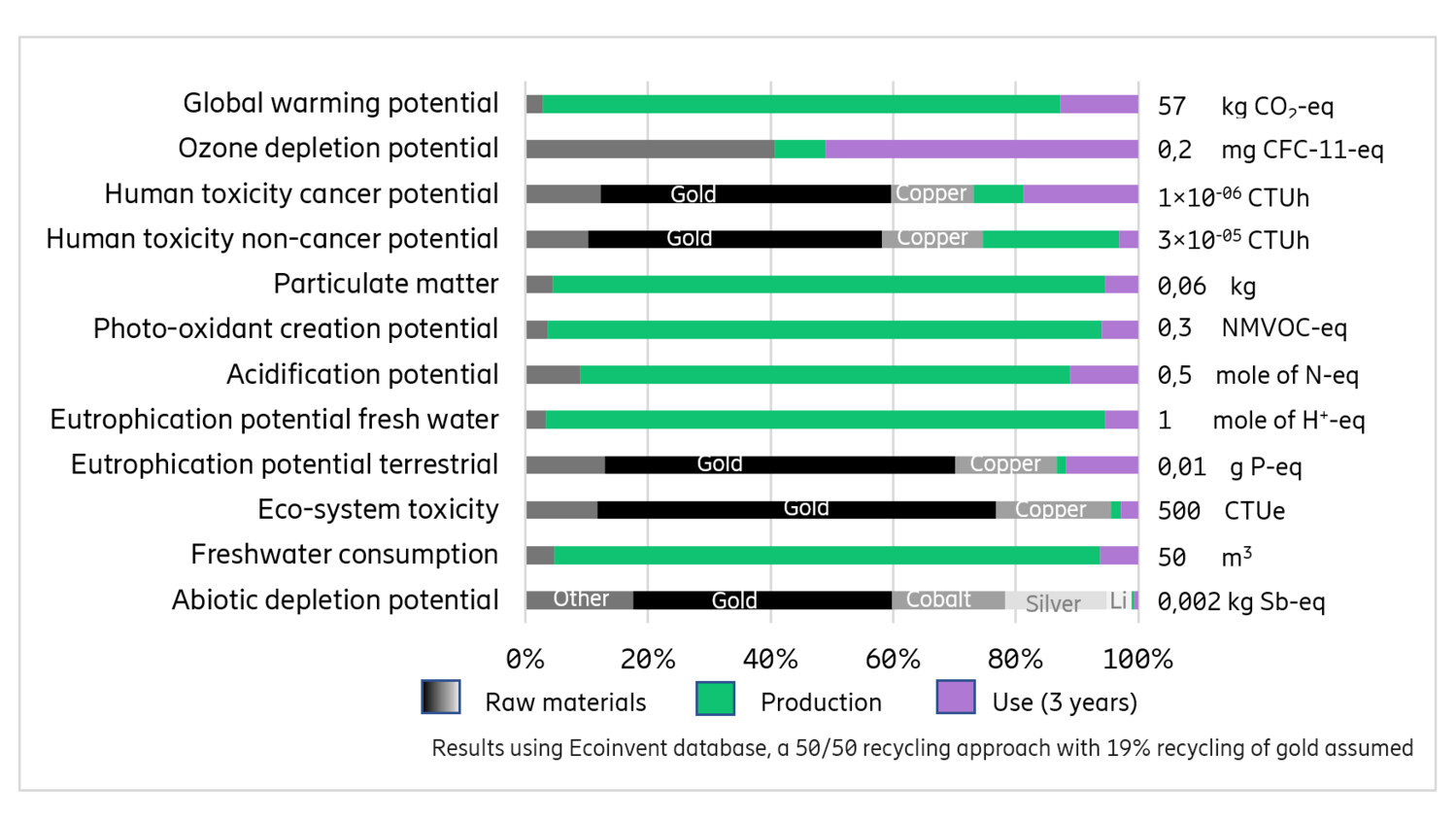
The total global warming potential was 57 kg CO2-equivalents (CO2-eq) for the smartphone, using a medium usage scenario with a lifetime of three years and a battery charging every two days. Per year the impact was 19 kg CO2-eq. These figures exclude the use of network and data centers.
The use stage, hence the smartphone energy consumption during a presumed lifetime, had relatively small impact on the overall results in almost all impact categories. For instance, the annual global warming potential impact from the use stage was 7 kg CO2-eq out of the total 57 kg CO2-eq for the smartphone itself.
Substantial increase if network included
To get the full impact from using the smartphone, an additional impact from networks (mobile and WiFi) and data centers needs to be added. The total annual global warming potential of 19 kg CO2-eq increased to 62 kg CO2-eq when the allocated impact from network and data centers was included for the medium usage scenario. This can be compared to the annual global average carbon footprint of 7000 kg CO2-eq per person, hence less than 1%. Similarly, six years of smartphone usage equals one return flight London-Barcelona (flightemissionmap.org).
The global warming potential impact for the phone itself varied considerably with the expected lifetime but not as much from varying data traffic. The network part varied with its usage.
Other impacts
Global warming potential is not the only impact category considered in a life cycle assessment (LCA). As for the global warming potential, production gave rise to the most significant contribution also for particulate matter, acidification, eutrophication of fresh water and photo-oxidant creation potentials. The raw material acquisition was the dominating stage for ozone depletion potential, human toxicity cancer potential, human toxicity, ecotoxicity and eutrophication of terrestrial ecosystems.
Specifically, gold and copper mining dominated the raw material toxicity impacts using the EcoInvent database. The absolute levels were shown to vary significantly with which database and default material models that were used. In the abiotic depletion category gold stood for the largest impact share followed by cobalt, silver and lithium, and all others. Especially the rate of recycled gold and how the end-of-life treatment stage were modeled influenced the results.
Smartphone use in perspective
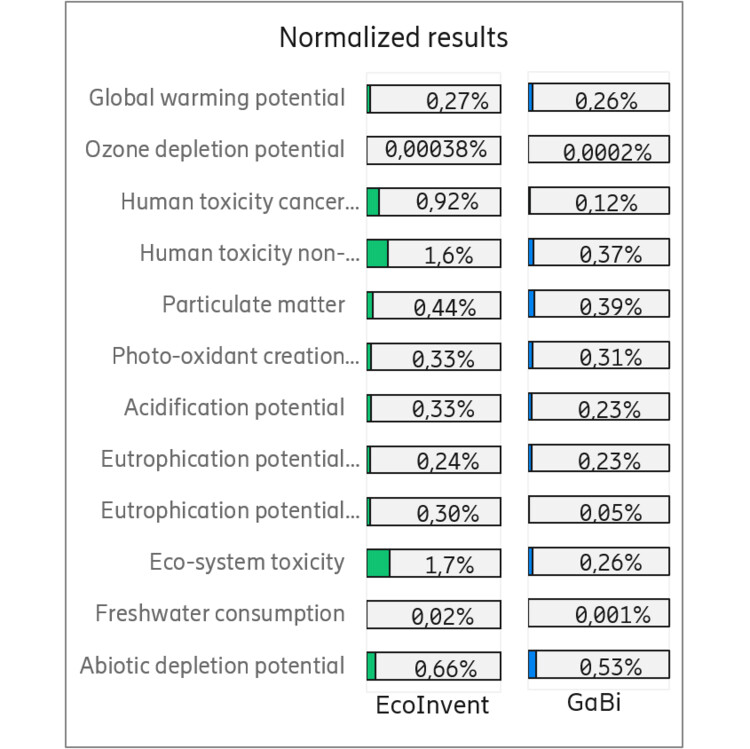
By normalization, the annual use of a smartphone in this study was compared to the overall annual impact per person globally according to available reference values as defined in the LCA database. For global warming potential the life-cycle impact of this smartphone was about 0.26% of an average person´s total impact. For other impact categories the normalized results differed somewhat depending on the database used (EcoInvent or GaBi). The highest normalized values were found for human and eco-system toxicity, but no normalized result exceeded 1.7%.