6G spectrum - enabling the future mobile life beyond 2030
The next generation of mobile wireless communication, 6G, is rapidly becoming a hot topic of discussion within the ICT industry and in academia. The availability of sufficient spectrum in a timely manner is essential for the success of 6G. Considering the first commercial deployments of 6G, which are planned for 2030, and the time-consuming process for licensing spectrum, activities toward ensuring spectrum availability for 6G need to be initiated as soon as possible.
This whitepaper is a revision of the 2023 version.
Introduction
5G is still in its early phase and is ramping up even faster than previous generations of cellular communication. While there are multiple waves of deployments and upgrades yet to happen in many parts of the world, the ICT industry, academia, and standardization bodies have already begun to discuss and invest in new technologies to power the next generation of limitless wireless possibilities beyond 5G and 5G-Advanced toward 6G. Ericsson believes that future networks will be a fundamental component to virtualize all parts of life, society, and industries, fulfilling the communication needs of humans as well as intelligent machines. To realize the future network vision enabled by 6G and to deliver its full potential, there is a need to secure timely spectrum availability. This white paper focuses on the role of spectrum to unleash the full potential of 6G, the importance of existing spectrum as well as additional spectrum and the need to consider proper authorization regimes.
The envisioned way of life in 2030 and beyond
By 2030, 5G will have already been shaping both industry and society for 10 years. New applications and services will have appeared, and lessons will have been learned from 5G deployment. 5G is a revolutionary technology, which enables machines to communicate with each other and with people, and a continued revolution with 6G is expected, bringing the digital and physical worlds together.
Ericsson has started the journey toward understanding what life will look like in 2030 and beyond and how the network will be able to deliver this, exploring the technology components that will make it possible. It is expected that by 2030, the first 6G networks will be deployed and some of the envisioned use cases will become a reality. More complex use cases will follow as 6G evolves.
As mentioned in the white paper 6G – Connecting a cyber-physical world [1], the society of 2030 is expected to have transformed around increasingly advanced technologies, where networks act as the communication and information backbone, allowing communication to take place anywhere and at any time.
Future 6G networks will open new technological possibilities for immersive, ubiquitous, and sensory digital experiences. 6G applications when deployed on a massive scale, will transform the way people live. The Internet of Senses has the potential to greatly reduce the need to travel for work, leisure, education, or healthcare, and therefore contribute significantly to reducing greenhouse gas emissions delivering a massive societal impact.
Digital sensory experiences can also reduce carbon footprint by dematerializing products and enhancing services so that less energy and fewer resources are consumed. Also, advanced XR and holographic communication will enable a new paradigm shift in the field of healthcare, education, industries, entertainment, and so on. E-health for all is one of the 6G targets, aiming at providing cost-effective video/XR doctor consultations remotely to everyone, including in remote rural areas. Enabling immersive and inclusive hybrid learning for everyone, from anywhere is another use case with a huge societal impact.
Figure 1 below provides an overview of use case categories Ericsson envisions with 6G technology:
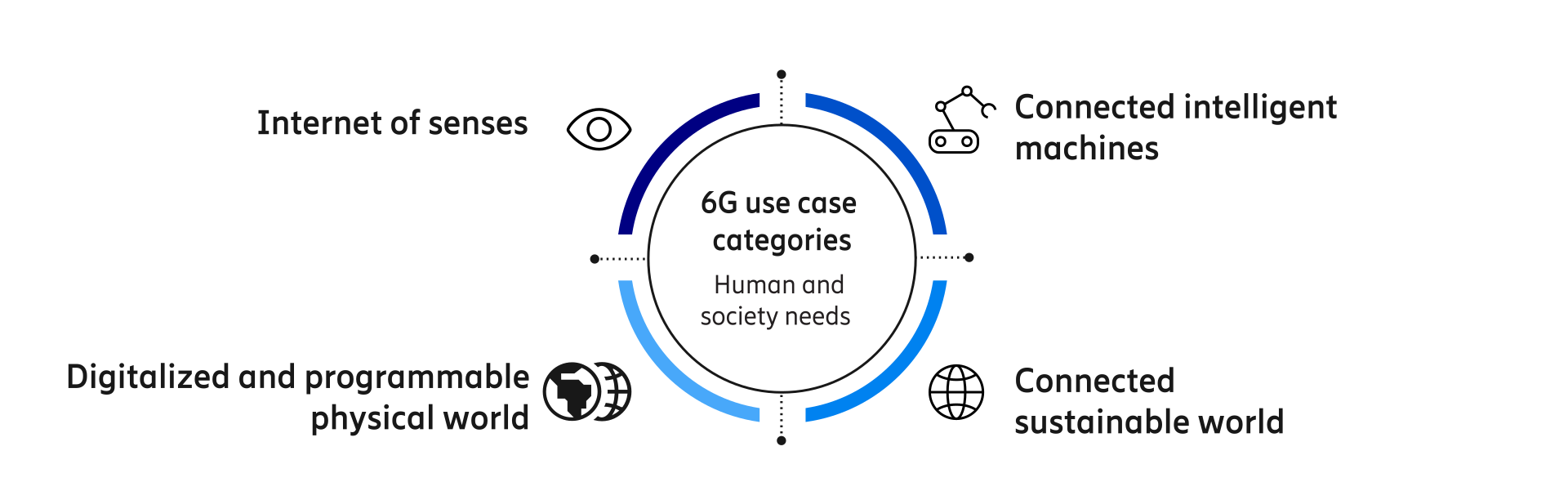
Figure 1: 6G use case categories
The Internet of senses
In the Internet of senses, visual, audio, haptic and other technologies allow human beings to have digital sensory experiences similar to the ones experienced in the physical world.
Connected intelligent machines
By 2030, mobile networks will support new types of intelligent entities, like AI- powered intelligent machines talking to each other. Collaborative robots or cobots is a key use case.
Connected sustainable world
It’s of utmost importance to minimize ICT sector’s environmental footprint at the same time as the positive effects delivered by current and future mobile networks are maximized.
Digitalized and programmable physical world
In the future, all physical things and places in the real world - buildings, roads, factories, farm fields, pets, etc. - will be doubled in the digital world by software and powered by AI. Digital twin is an important use case.
The journey toward 6G is not straightforward and will be shaped through years of continuous learning from the evolution of 5G, and the exploration of groundbreaking new technologies for visionary use cases. To meet these future challenges, 6G needs to continue to push beyond the technical limits of 5G, moving toward immersive communication, and the omnipresent Internet of Things (IoT). In addition, entirely new capability dimensions should be explored integrating compute services and offering functionality beyond communication such as spatial and timing data. The technological path to 6G is shown in Figure 2.
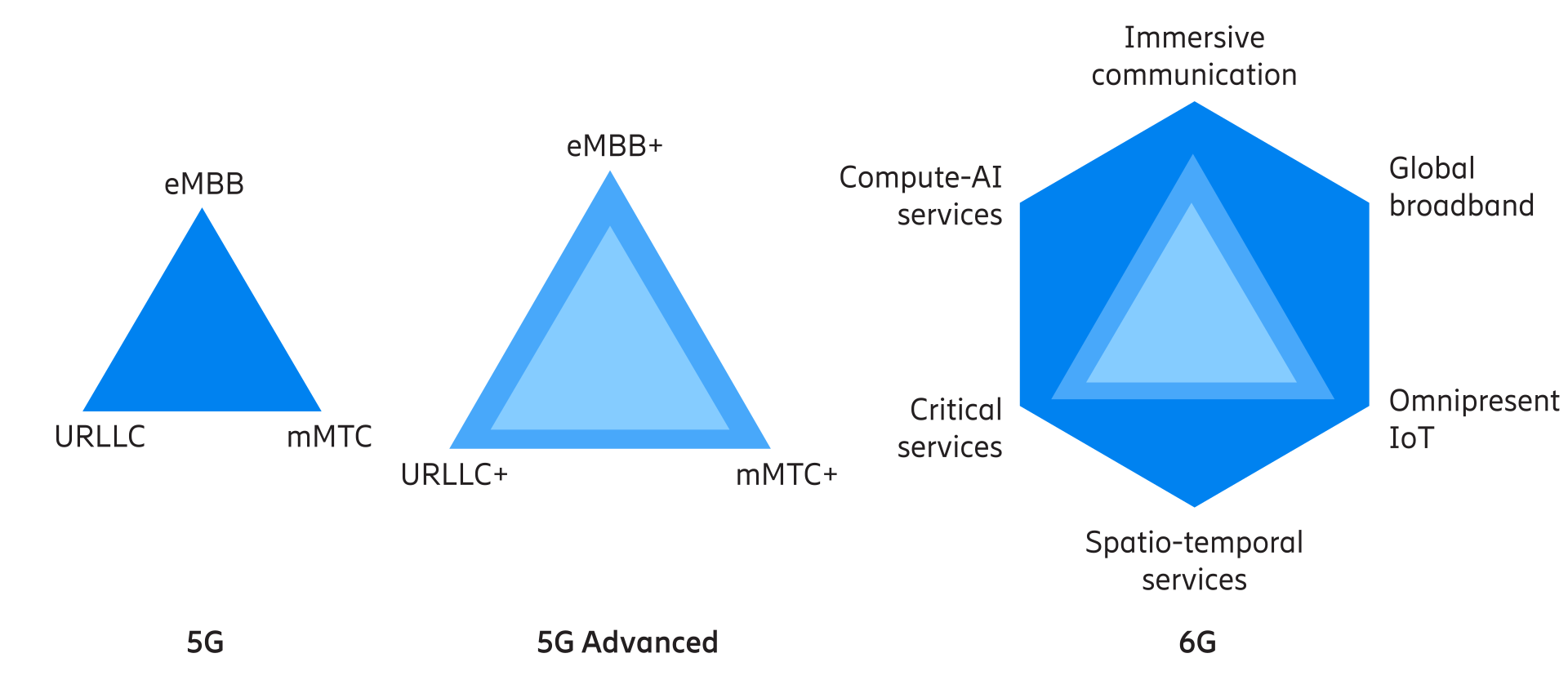
Figure 2: Growing from 5G to 6G
The 6G use cases and their spectrum implications
6G will serve a wide range of use cases. Clearly, mobile broadband will continue to be an important use case. The November 2023 issue of the Ericsson Mobility Report [2] indicated that mobile network data traffic keeps climbing. Traffic is expected to grow exponentially for many years to come, and cost-efficient support of this traffic increase is therefore of uttermost importance for 6G networks, translating into the need for additional spectrum even without considering the new use cases.
When it comes to new use cases such as holographic communication, even seemingly modest requirements will significantly drive the need for additional spectrum. Most applications will require both outdoor and indoor mobility and while Wi-Fi and other indoor solutions are expected to play an important role in partially offloading indoor traffic, mobile networks remain key to enabling wide-area mobility and to ensuring low delays inside and outside of confined environments. What value would, for instance, the large-scale metaverse and holographic use cases add if only enabled at home? Thus, spectrum suitable for wide-area coverage must be made available.
Click the below milestones to find out how the modes of communication can evolve from 2024 to 2030 and beyond.
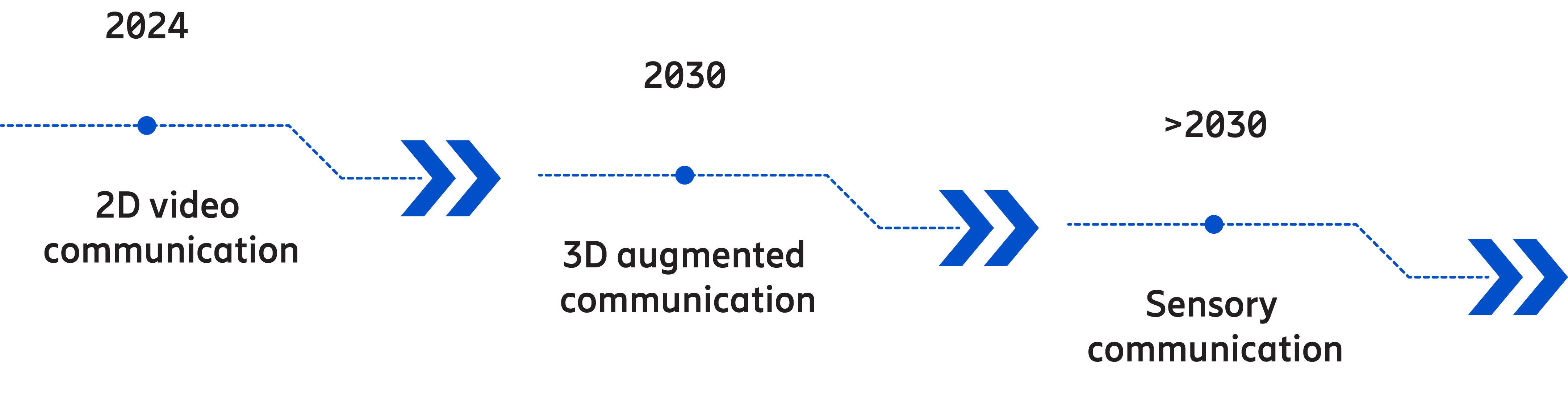
Figure 3: Evolving modes of communication 2024 to 2030 and beyond
To assess the amount of spectrum needed for holographic communication one must take the high data rates required into account. The data rate requirements are driven by the need to encode a multitude of high-resolution images of the objects captured from different angles with low delays to facilitate a realistic and smooth viewing experience and to reduce motion sickness. The requirement of low delay restricts the possibilities for video coding, thereby posing further demands on the data rates necessary. A common estimate is that for a single user uplink and downlink, data rates of 100 Mbit/s and 1 Gbit/s, respectively, need to be supported for high-resolution holographic communication [3].
Not only is holographic communication demanding from a data rate perspective, but it is also more challenging from a capacity perspective. In a wide-area urban environment with 0.004 user/m², this would translate into 1.6 Mbit/s/m² in the downlink assuming that 60 percent of the traffic is offloaded to Wi-Fi. In a relatively dense three-sector network with inter-site distances of 200 m, this translates into 55 Gbit/s/site. Assuming a downlink spectral efficiency of 7.8 bit/s/Hz in each sector (noting that even though IMT-2030/6G is in general expected to have higher spectral efficiency compared to that of IMT-2020/5G, the latency requirements of holographic communication is a limiting factor), this translates into approximately 2.4 GHz of spectrum suitable for wide-area coverage. Over time, the photo- realistic holographic communication will be complemented with multisensory extensions such as touch, taste, and smell to increase the level of immersion beyond audio-visual and realize the internet-of-senses vision. This will further drive the amount of data to handle. Clearly, the numbers depend on the assumptions made, but the fact that future holographic communication and the internet of senses will require significant amounts of spectrum suitable for wide-area coverage still holds.
The massive digital twin is yet another driver for wide-area spectrum. Several digital twin applications such as smart cities will require wide-area spectrum offering good capacity. For instance, building a high-precision 4D digital map of a city requires collecting data and information on the city’s buildings, vehicles, roads, traffic situations, water management, sanitation, garbage collection, and electricity services, just to name a few examples.
Although the data rate from each sensor in many cases is modest, the sheer number of sensors results in challenges in terms of aggregated data rates. For example, assuming 15 kbit/s from each sensor and 10 sensors/m², 150 kbit/s/m² will be required. Access to a digital twin is not only expected in very dense urban deployments, but also in less dense suburban areas where a lower spectral efficiency is expected. Noting the UL-heavy traffic connected to this use case, with an inter-site distance of 500 m and an uplink spectral efficiency of 11 bit/s/Hz (approximately twice that of 5G), around 300 MHz of wide-area spectrum is required for communication purposes. Also, in this case, the exact numbers depend on the assumptions made—for example, no video or other high-data-rate sensors were assumed above—but it is clear that a fair amount of wide-area spectrum is required.
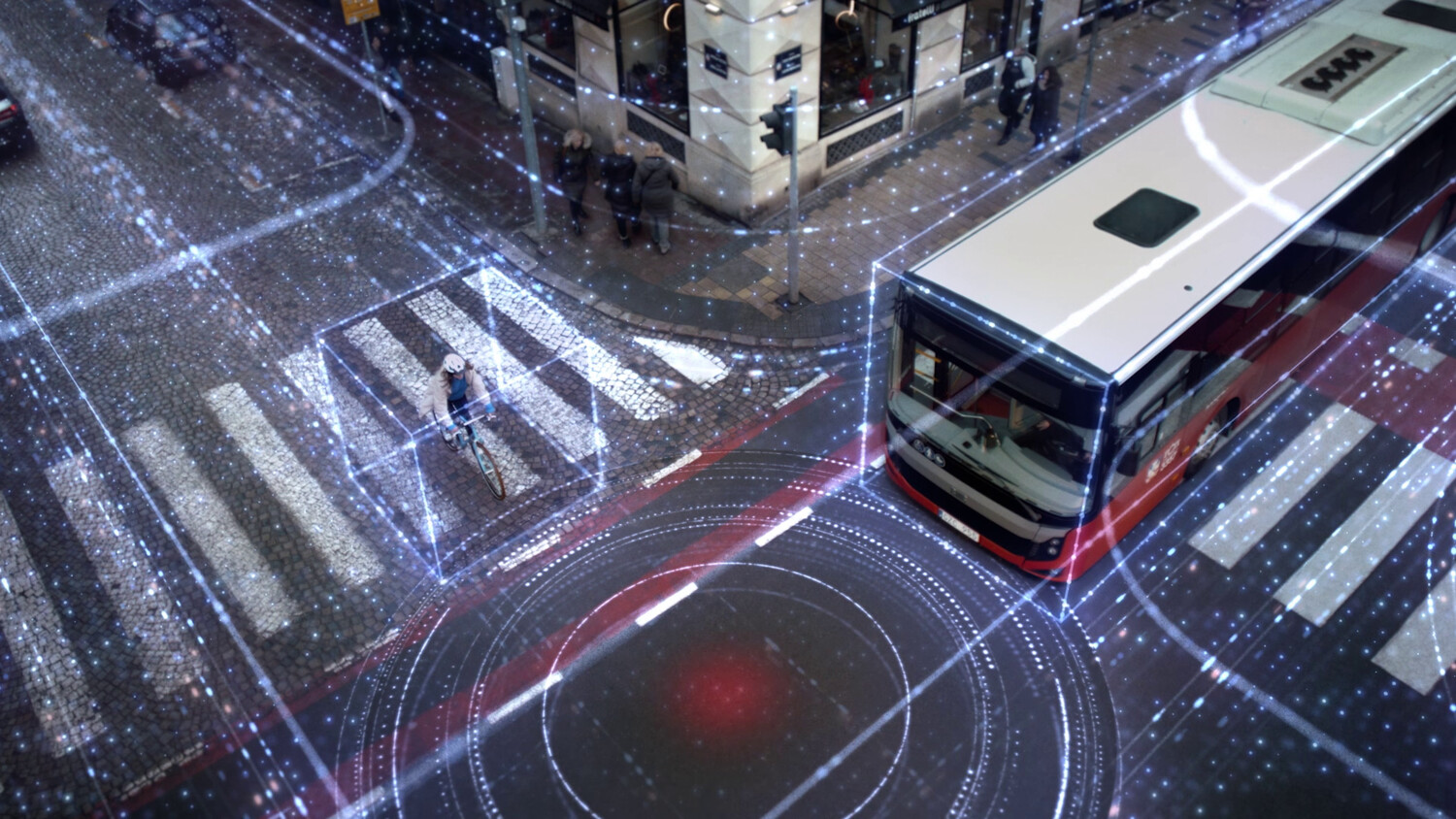
Figure 4: Massive digital twin, smart city example – A digital copy of the real world
Radio-based sensing, that is, radar-like operations, can also provide input to the digital twin in addition to the sensors discussed above. For example, a base station located in a street intersection can be used to estimate the position or speed of vehicles to assist traffic safety applications. If 0.5 m range resolution is needed, at least 300 MHz of bandwidth is necessary.
The spectrum needs for massive digital twin and radio-based sensing are in addition to what is motivated by holographic communication as they are uncoordinated use cases by different users. This leads to in total about 3 GHz of wide-area spectrum.
In addition to the use cases requiring wide-area coverage, there are also some use cases for which local area coverage is sufficient. Examples could be professional high-resolution holographic communication in factories and hospitals, wireless connectivity of compute units in data centers, or indoor mobile broadband. The data rates required vary depending on the use case but could easily be about 100 Gbit/s, indicating a spectrum need in the order of 10–15 GHz in such a local scenario, complementing the wide-area spectrum.
Finally, it is important to note that the set of use cases discussed in this section is not exhaustive and represents new use cases on top of the continued growth of existing services such as traditional mobile broadband, fixed wireless access, and augmented reality (AR)/virtual reality (VR).
The indisputable need for additional spectrum
5G technology has gained a lot of interest from local regulators in recent years, and efforts have been made by these agencies to allocate spectrum in low-band, mid-band, and high-band ranges. The extent of 5G deployments differs across the world, partly due to the different paces of spectrum allocations. It is expected that by 2030, enough spectrum in all these ranges would have been released to unlock the full potential of 5G and its evolution (5G-Advanced).
Low-band spectrum or spectrum in the sub-1 GHz range, and in particular, spectrum in the 600 MHz and 700 MHz range provide the basic coverage layer for mobile networks. This is the only range that can reach remote and deep rural areas, helping to bridge the digital divide and bring equal opportunities to all parts of society. Digitalization of rural areas by smart agriculture to achieve net zero emission targets also requires sub-1GHz spectrum. Additionally, connectivity everywhere while on the move (for example, rural roads) can only be achieved with enough spectrum in this range. Sub-1 GHz is not only critical for rural areas but also for deep indoor coverage in dense areas (for example, in basements). Due to the large propagation characteristics of this range, nationwide mobile licenses represent the most suitable authorization regime.
Propagation characteristics in the high-bands or mmWave range, for example, 26/28 GHz or 40 GHz, on the other hand, enable high capacity in localized dense environments as well as very low latency and high reliability required for enterprises. Allocations in this range vary from nationwide to local-area connectivity (with areas of different sizes) across the world. It may be noted that while deployments do not strictly require nationwide licensing, such authorization regimes indeed bring benefits, for example, in terms of investment and flexibility to deploy as necessary within a country.
Mid-band spectrum is in between these ranges, providing a balance between capacity and coverage and consequently, is essential for cost-effective wide-area networks. It includes the already available 3.3-4.2 GHz and 4.4-5 GHz, and in the future will include the 6.425-7.125 GHz bands. In fact, this range has become the most allocated globally for 5G, which can be evidenced by the number of devices supporting it. Enough spectrum in this range is essential to enable the continued data growth for mobile broadband and the introduction of XR across city areas, both indoors and outdoors, including mobility in the 5G era. Device availability is already blooming, to name a few examples: Apple Vision Pro, Meta’s Quest 3, Meta's Ray-Ban glasses, Varjo XR4, etc. It is worth mentioning that the reduced device size will enable users to wear them across wide-areas. Towards 2030, Ericsson expects users to be able to experience all day XR, where the XR device would be used as a main device for all our communication, similar to today’s smartphone. This range is also key to addressing the capacity needs in major roads as well as to bringing fixed connectivity to small towns and villages not reachable by fiber, improving inclusion across society. Authorization regimes in this range must allow wide-area deployments (for example, by nationwide licensing). Additionally, this spectrum can also help address enterprise needs, for example, through mobile network operators (MNOs).
Networks deployed by 2030 are expected to benefit from a more spectrally efficient technology and thus gradually migrate to 6G as per market needs. This is a common exercise today and it is expected that this will continue to happen. As a second step, communications service providers can combine densification with acquiring additional spectrum to expand their deployments to include both macro and small cells, as required in a case-by-case scenario. The availability of the right amount of spectrum in the different ranges at the right time is key for a nation to succeed in connectivity, and thus national regulators play an essential role.
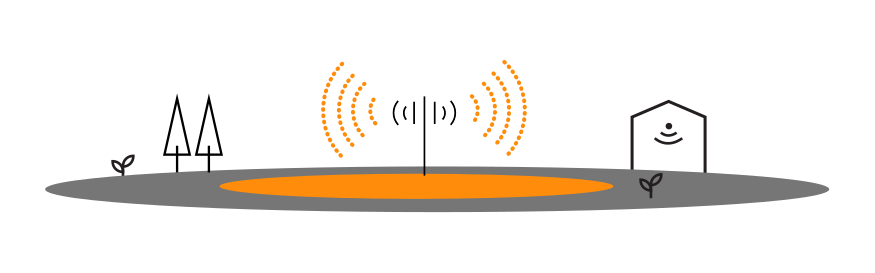
Even if the spectrum available by 2030 in low, mid and high bands would be used by 5G and 6G as per market needs, given that spectrum regulations are technology neutral, this will not be enough to enable both the enhancements of 5G (5G-Advanced) as well as the 6G vision. Figure 5 illustrates the spectrum timeline from today to 2030.
Spectrum in
|
 |
Spectrum in
|
Figure 5: Spectrum availability from 2024 to 2030
As calculated above, just a set of 6G use cases would require around 3 GHz of wide-area spectrum. This is far from the amount of wide-area spectrum that will be made available by 2030 even in the optimal scenario. The amount and exact spectrum available in each nation, that allows for the best balance between coverage and capacity (that is, most cost-efficient wide-area deployments), differs largely across the world, but even when considering that all potentially available spectrum in the mid-band range to MNOs/CSPs would be used entirely to deliver these 6G use cases, spectrum shortfall is found.
Figure 6 shows the spectrum needs calculated previously, the spectrum available today in the mid-band range, and the potentially maximum available spectrum in this range by 2030 for a number of countries. Assuming a simplistic calculation, in which all this spectrum would be used to address these 6G use cases, a shortfall will occur in all markets. Availability of mid-band spectrum today varies between 700 MHz–1 GHz and the potentially maximum available spectrum by 2030 in this range fluctuates between 800 MHz–1.5 GHz across the markets included in the figure. This translates into a shortfall of 1.5–2.2 GHz of spectrum for the considered 6G use cases under the most optimistic assumptions in terms of spectrum availability by 2030.
These numbers will have to be studied further in the future to add further precision, noting that less optimistic assumptions on the available wide-area spectrum by 2030 could result in a higher shortfall than indicated here.
In order to achieve coverage, as wide as possible, spectrum must be considered in the closest proximity to mid-bands, the 7–15 GHz centimetric range, noting that there are also propagation differences within this range and again, the closer to the mid-band range (below 7 GHz), the larger the reuse of the existing grid and thus reduction of the number of new sites, costs, and power consumption.
For certain use cases, which require extreme data rates, the spectrum needs go beyond 10 GHz, as explained above. However, these are more localized use cases for which a higher frequency range offering larger amounts of available spectrum can be considered (that is, sub-THz range) to maximize efficient use of spectrum.
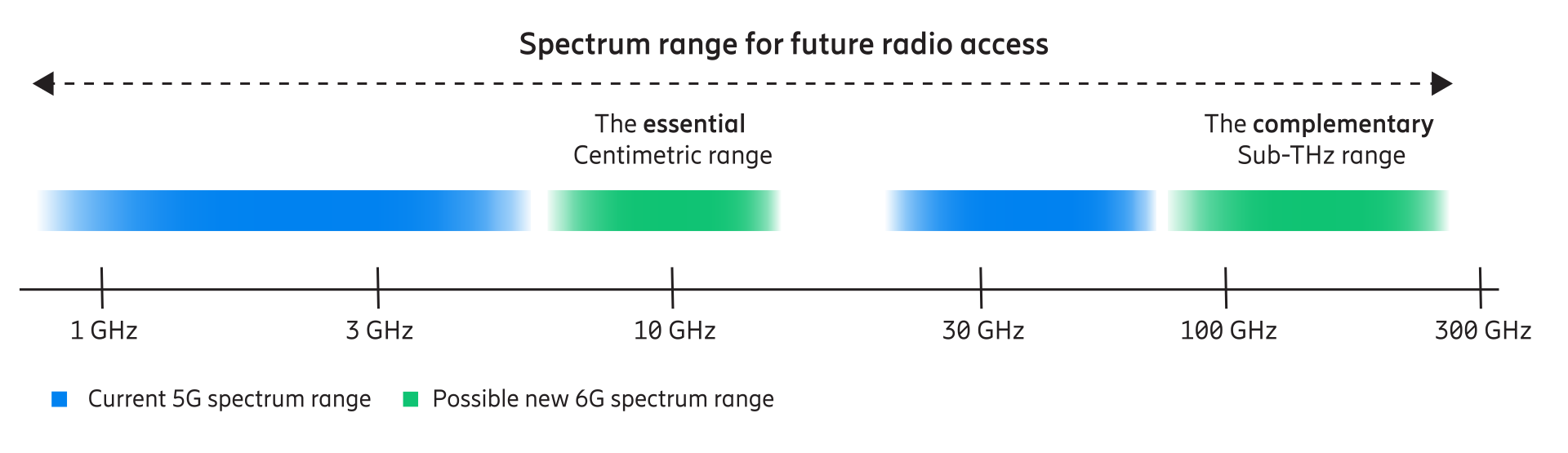
Figure 7: Possible new 6G spectrum ranges
Figure 8 draws a summary of the characteristics of a 6G multi-layer network, including existing and future spectrum (from the low band to the sub-THz range).
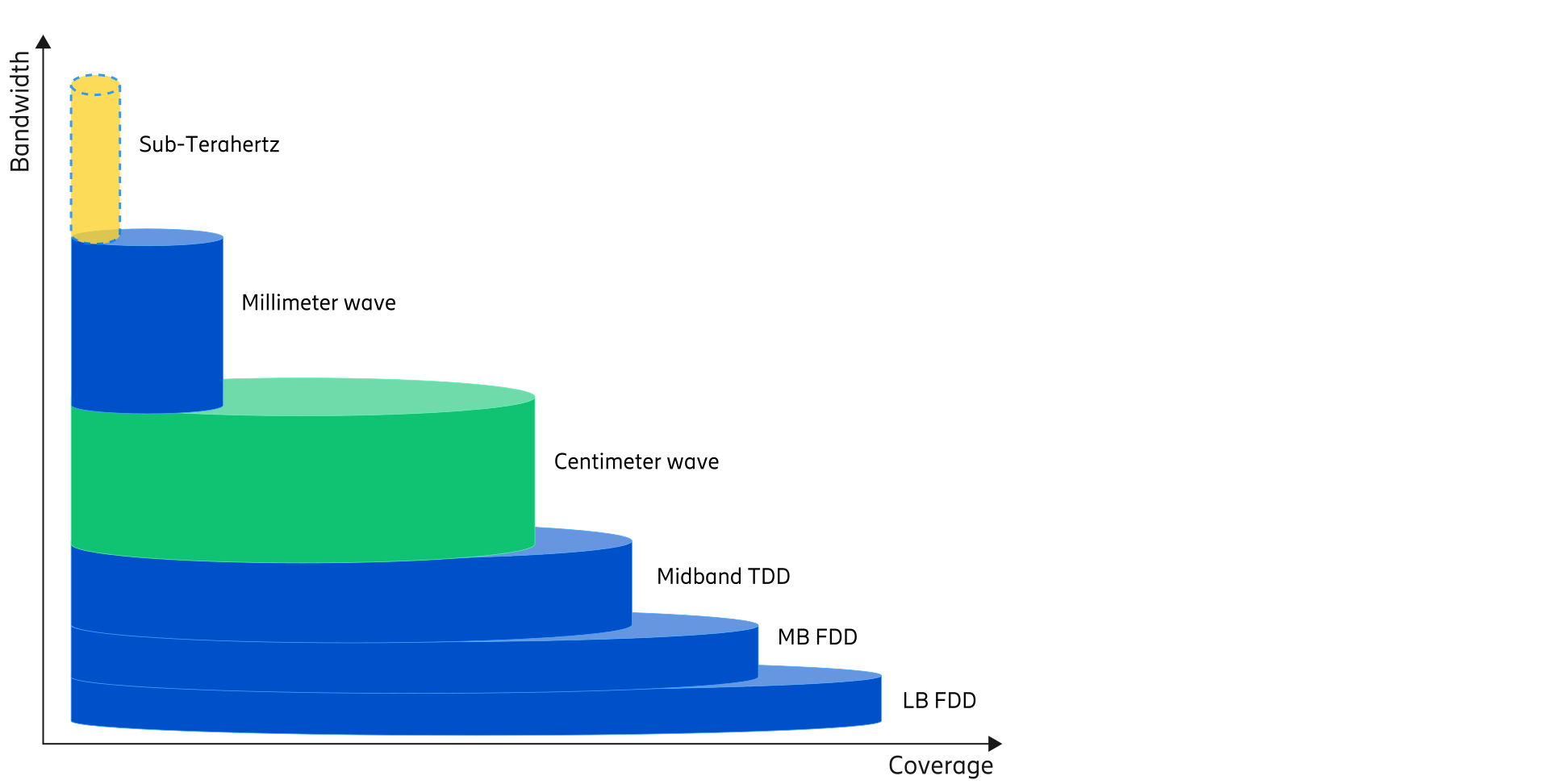
Figure 8: Bandwidth and coverage characteristics for the different spectrum ranges
The importance of the 7-15 GHz centimetric range
As previously mentioned, the additional spectrum from within the 7–15 GHz range is necessary to realize the capacity-demanding use cases in future 6G networks and is key to enabling mobility for many of these use cases. In fact, mobility and coverage restrictions would deprive such use cases of their full potential and value to society. From a coverage point of view, the lower the frequency bands are, the wider the area that can be covered. This naturally rules out high frequency bands and points toward the nearest range to mid-bands, namely the centimetric range where the envisioned futuristic life can be made mobile.
Figure 9 below depicts the main driving use cases [4] for additional spectrum in the centimetric 7–15 GHz range.
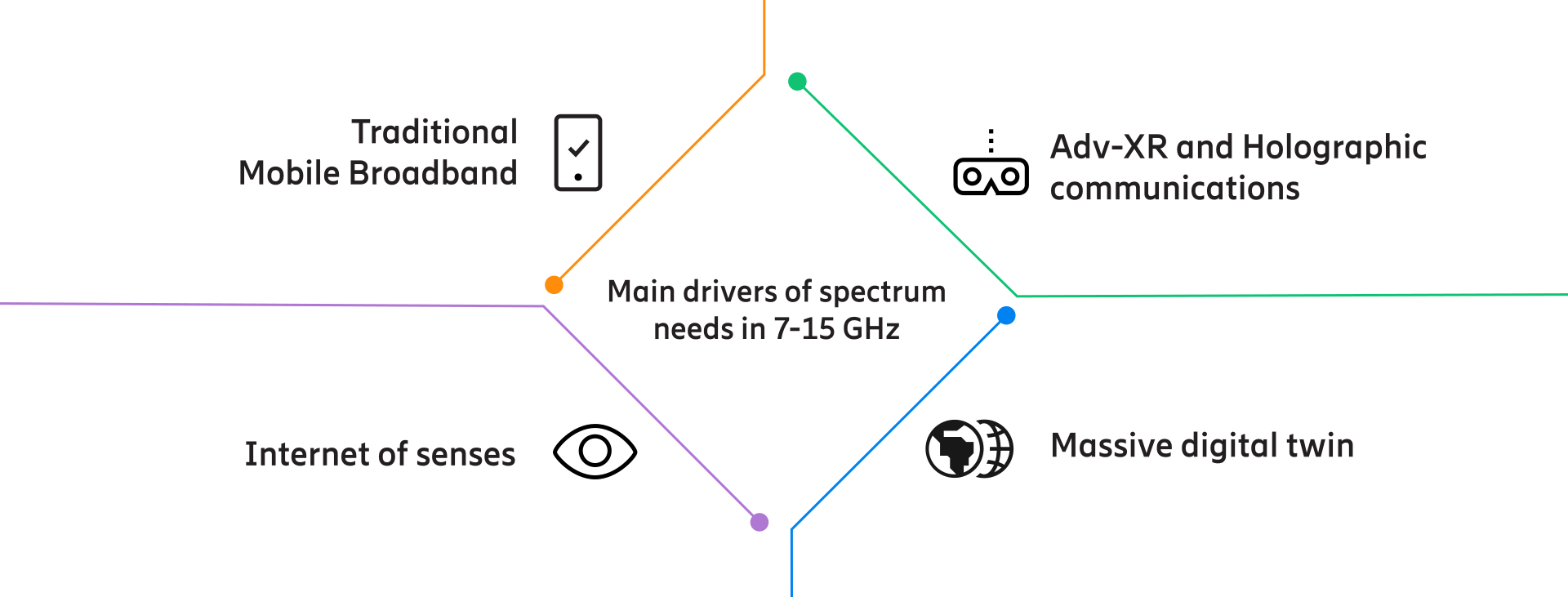
Figure 9: Main driving 6G use cases in the 7-15 GHz centimetric range
Adv-XR and Holographic communications
XR and its evolution to support Holographic communications is expected to be the next paradigm shift after the smartphone, thus a main driver.
Massive digital twin Smart cities and high precision
positioning such as interactive 4D maps of whole cities that are precise in position and time are yet another driving force.
Internet of senses
Interacting with our senses of sight, sound, taste, smell and touch across the internet may further drive network traffic.
Traditional Mobile Broadband
Serving more people and increasingly data-hungry mobile applications (Mobile network data traffic doubled in the last 2 years [2]).
Potential frequency bands in the 7-15 GHz range
Ericsson carried out an analysis of the current usage and future trends in the different bands and evaluated the characteristics of the different frequency ranges to better understand their respective capabilities and limitations as of 2022. Primary allocations to the mobile and fixed services in the 7-15 GHz range exist today in the International Telecommunication Union Radio Regulations (ITU-RR) together with primary allocations to other services. Hence, studying coexistence with these co-primary incumbent services will be an important task in the coming years. This analysis concluded that the bands 7.125-8.5 GHz, 10.7-13.25 GHz and 14-15.35 GHz have sharing potential with incumbents. It is to be noted that the ranges 7.125-8.4 and 12.7-13.25 GHz are under consideration in the US [5], [6] and that some of this frequency range will be considered by ITU.
While not all these bands may become globally harmonized, harmonization of spectrum bands and technical conditions remains at the core of a healthy product ecosystem, which would benefit both business and society.
What could be noted at this stage is that some services are less challenging than others in terms of coexistence with 6G mobile networks. For instance, coexistence with the uplink of the satellite service (that is, where the satellite receiver up in the sky would need to be protected from 6G interference) could potentially be achieved by controlling the energy sent by 6G in the direction of the sky. Another example is coexistence with the fixed service, where solutions such as geographical coordination could be applied. Spectrum sharing and coexistence capabilities are becoming more important than ever due to the difficulty of finding a clean spectrum and the determined goal of efficiently using scarce spectrum resources. Ericsson recognizes the challenge and is committed to exploring this area.
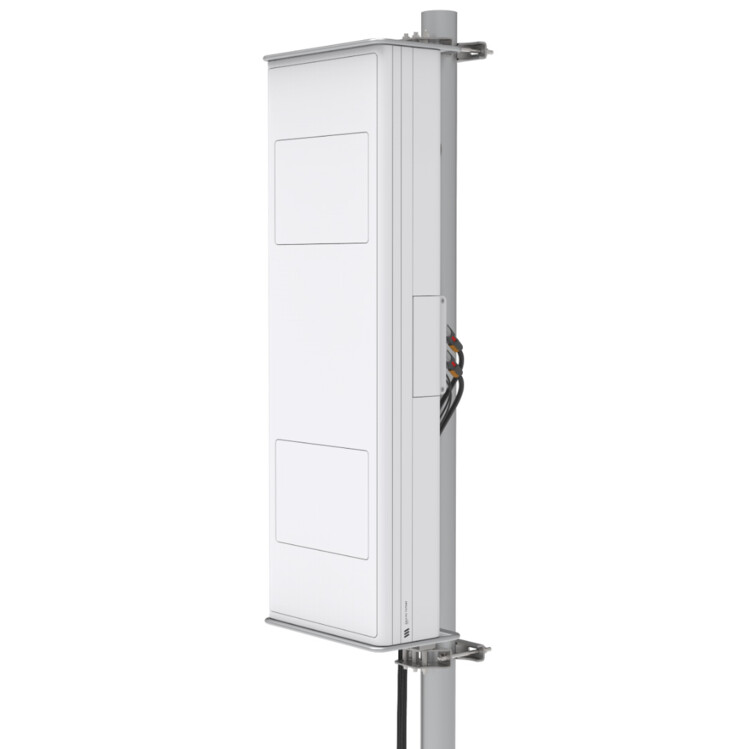
Figure 10: Base station radio prototype for Ericsson’s testbed in the 7-15 GHz range
Ericsson is developing a RAN system testbed for the centimetric range 7-15 GHz. The testbed contains radio and baseband prototypes for both RAN infrastructure and user equipment and will be used for outdoor trials in small test networks. The focus is on wideband and multiband features to accommodate different spectrum opportunities.
Finally, it must also be emphasized that authorization regimes in the centimetric range should enable mobility for different use cases to best benefit citizens. It is expected that the use cases in this range will mainly require capacity in busy areas (that is, across cities). Mobile service providers would require wide-area licenses to best plan their network investments.
The complementary role of the sub-THz range (92-300 GHz) for niche scenarios
The extremely high frequency range of 92-300 GHz has the potential to provide wide blocks of lightly used, or even unused spectrum, which contributes to its unique yet challenging nature. The sub-THz range can uniquely offer the Terabits per second (Tbps) speeds and extremely low latencies that will be key enablers for niche 6G use cases. However, this benefit comes with limitations in terms of coverage and mobility. Such extreme performance will be required in certain areas and scenarios, for example, direct device- to-device communications or extreme gaming. The characteristics of this range make it complementary and, thus it cannot substitute the need for lower frequencies (for example, centimetric waves) to enable the coverage and mobility that will be the prime requirements for most 6G use cases.
Potential frequency bands in the sub-THz range
Physics and technological development are two main elements to consider when exploring this frequency range. The former favors the lowest possible frequencies and their advantageous propagation characteristics compared to the higher frequencies of this range and precludes frequencies associated with atmospheric attenuation peaks. It is crucial to consider the attenuation factor in a frequency range where the size of the wavelengths is close to that of typical raindrops.
The technological development and component maturity factors also indicate yet another advantage of the lower edge of the sub-THz range. The use of the sub-THz frequency range relies on the development of components and an equipment ecosystem. This will need time to reach maturity, starting from the lowest sub-THz frequencies and slowly moving upwards in frequency.
Combining the above facts, we can see the emergence of two bands, the W (92-120 GHz) and D (120-175 GHz) bands. These bands are of interest for both 6G access and Xhaul (for example, Fronthaul, backhaul) networks. Hence, a solution that accommodates the needs of both services and ensures an equally powerful Xhaul development to support future access networks and their extreme requirements should be considered. In fact, the W band could offer the extreme bandwidth (that is, about 15 GHz in total) for 6G access, while the D band with its ~30 GHz of bandwidth would be needed for Xhaul evolution. It is to be noted though that the usage of the D band does not necessarily need to be limited to Xhaul. Pending on coexistence with 6G access, this band would offer additional capacity and possibilities for many 6G sub-THz use cases and applications.
Ericsson is developing a testbed RAN system in the sub-THz frequency range, using the band 92–100 GHz, providing a peak throughput higher than 100 Gbps. Through tight integration of radio components and very high antenna gains employing beam forming on both the network and device side, the system will be able to provide mobility in a limited coverage area.
Looking at the sub-THz range, it is expected that a combination of licensed (including W and D bands) and unlicensed bands will satisfy the various 6G use cases, depending on requirements and types of deployment. As for previous mobile generations, 6G use cases requiring QoS or reliability will require a licensing regime that ensures predictability, both in terms of spectrum availability and interference, which in turn enables investments. It is to be noted that the type of licenses that would be required in the case of such high frequency bands will most likely be for confined areas. On the other hand, other use cases that can be delivered on a best effort basis (i.e., without guarantees), can work under an unlicensed regime, which also opens the doors for experimental research.
The sub-THz range, even if interesting from a research perspective, is not mature enough for commercialization, neither in terms of business case nor radio components. Thus, we don’t expect it to become part of the first wave of 6G, it may become relevant in the longer term.
The pathway to 6G spectrum
As for previous generations, both technology and policy need to be in place for the success of 6G. Standardization work for 6G is already underway both in 3GPP and ITU-R. The ITU IMT-2030 standardization is expected to be finalized by 2030 while 3GPP will be finalized a bit earlier; Ericsson expects that the first implementable 3GPP 6G specification will be available in 2028, thus spectrum needs to be available accordingly.
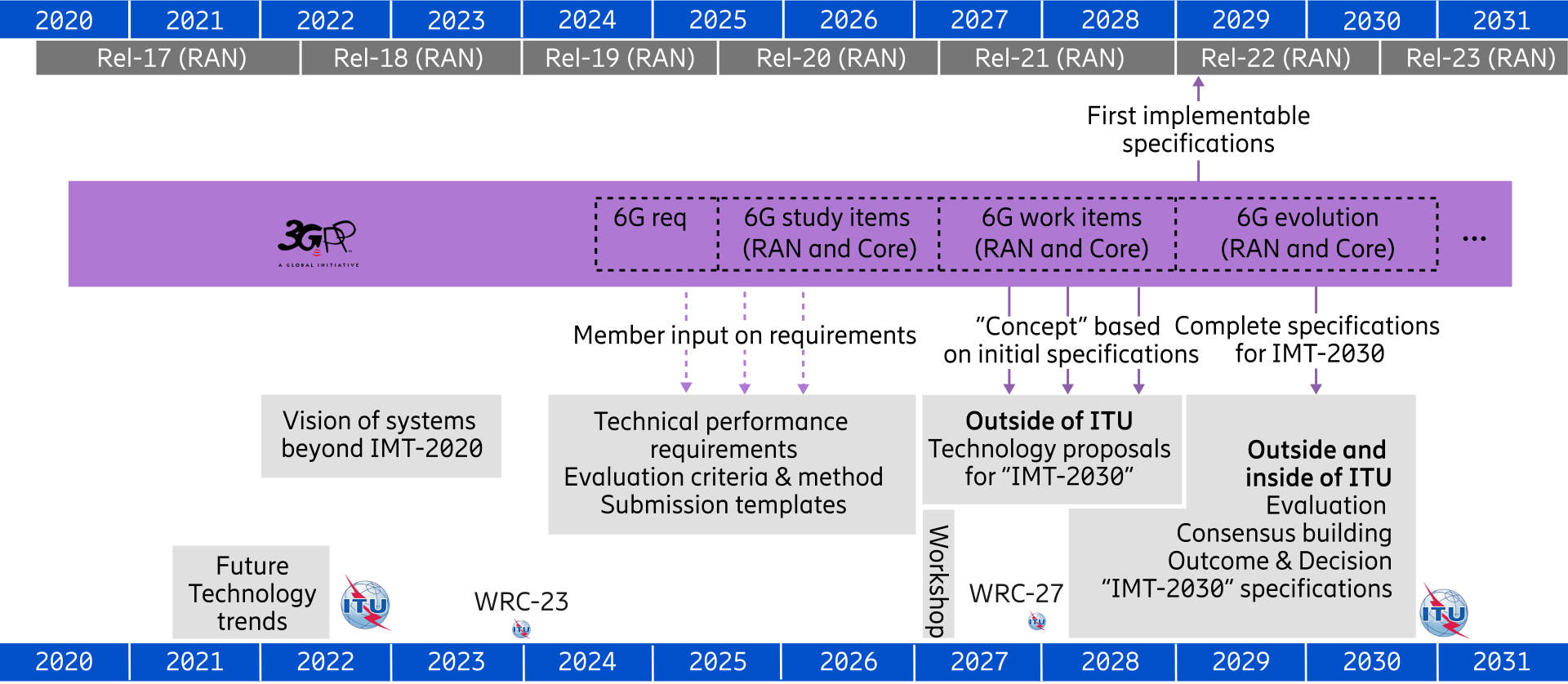
Figure 11: Ericsson’s view on ITU-R and 3GPP timelines — simplified view
The process for providing sufficient 6G spectrum requires contributions from and cooperation between several stakeholders, including vendors of mobile equipment, MNOs, spectrum regulators, representatives of other services (incumbents), and research organizations. Vendors and research organizations together develop the technology for the new generation of mobile networks. Vendors and CSPs/MNOs provide input on expected spectrum needs and associated timing as well as spectrum’s characteristics for deployment, and subsequently, all involved stakeholders collaborate on assessing these needs and on the required regulatory changes. Spectrum regulators need to take into account these needs and overall societal needs, including other services.
Access to spectrum can be achieved in different ways, such as through the ITU World Radiocommunication Conferences (WRC), regional decisions, or decisions on a per country basis. Whichever method is pursued, harmonization of the selected frequency bands and technical conditions on ideally a global or at least regional basis is key to unlocking economies of scale and providing numerous benefits to consumers and enterprises across many markets. This blueprint has been demonstrated by the success of previous generations of mobile networks.
The ITU process involves decisions taken at WRCs that take place roughly every four years. Whereas a global, regional, or country allocation of a frequency band to the mobile service together with an IMT identification does not imply a requirement for the implementation of IMT in any country, it is nevertheless an important opportunity for harmonization of IMT frequency bands that provides a critical message to the ICT industry to deliver equipment (The intention of an identification of a frequency band for IMT is to provide equipment manufacturers with guidance on which spectrum may be made available for IMT services. Such identification is not binding for any country or region and does not preclude the use of the frequency band for other services). This harmonization opportunity deserves particular attention. Whereas modern equipment does support larger bandwidths, allowing for adaptability to national or regional circumstances, it is still critical to have a large degree of harmonization. For instance, the 3 GHz frequency range (within 3.3-4.2 GHz) is used for 5G on a global basis with some variations between different countries, but with the different frequency bands used in close proximity to each other providing substantial design advantages for equipment vendors. This frequency range has been harmonized through a mixture of WRC and regional decisions.
Furthermore, the ITU’s work provides a well-defined process for studying and deciding on the technical conditions for a set of frequency bands to be applicable for a large part of the world, through so-called sharing studies, for the avoidance of harmful interference between different services, which otherwise would have to be handled on a regional basis. Additionally, some of the services to be protected require a global approach for protection, for example, satellite services.
The ITU process as described above starts with a decision at a WRC to define an agenda item, which is followed by ITU studies and a decision being made at the following conference. WRC-23 (Dubai, United Arab Emirates, 20 November to 15 December 2023) defined Agenda Item 1.7 for WRC-27 on “Sharing and compatibility studies and development of technical conditions for the use of International Mobile Telecommunications (IMT)”, which includes the bands 7 125-8 400 MHz (or parts thereof), and 14.8-15.35 GHz. Additionally, WRC-23 defined a preliminary agenda item for WRC-31 on “the consideration of spectrum above 100 GHz for International Mobile Telecommunications”, Agenda Item 2.6. The decisions at WRC-23 confirmed the global interest for spectrum in the centimeter range for the evolution of mobile technologies.
In addition to these decisions taken at WRC-23, one should also note the initiative taken in the U.S., where the band 7.125 – 8.4 GHz was included in the National Spectrum Strategy (published by NTIA November 13, 2023), to be studied for wireless broadband use.
Conclusion
The next generation of mobile wireless communication, 6G, is already intensely discussed within the ICT industry and in academia. Countries and regions have initiated large research projects, and plans are being made for the standardization of this next generation. A critical component for the success of 6G is the availability of sufficient spectrum in a timely manner. Spectrum targeting 6G use cases must be made available at the same pace as technology evolves to meet capacity demands and other communication requirements. Noting the timing of activities mentioned above with the first commercial deployments in 2030 and the time-consuming process for licensing spectrum, activities towards ensuring spectrum availability for 6G need to be initiated as soon as possible.
In this whitepaper, several capacity-requiring 6G use cases have been explored and the need for additional spectrum both for wide-area use cases as well as more localized ones have been estimated. The wide area use cases require about 3 GHz of wide-area spectrum and reflect the need for outdoor and indoor mobility. Examples of such use cases are holographic communication, the internet of senses, massive digital twins, and the exponential increase in mobile broadband communication. The characteristics of such use cases imply that the existing mid-band spectrum will be insufficient to meet capacity needs and that the mmWave spectrum will be unable to provide the coverage needed. The conclusion is that larger bandwidths than mid-band will be required, but in proximity to the mid-band spectrum to provide similar propagation characteristics. The 7–15 GHz centimetric range is thus recommended and studied in some detail in this white paper with the aim of providing 1.5-2.2 GHz of additional spectrum, noting that characteristics within this range differ and the closer to mid-bands the larger the re-use of existing network grids.
The localized set of use cases reflects user needs for extreme data rates in niche scenarios. Examples are remote surgery and professional high-resolution holographic communication, for which beyond 10 GHz of needed spectrum has been calculated. For these specific use cases that may have extremely high bitrate requirements, spectrum in the sub-THz frequency range may be suitable. Coverage is limited, but extremely high bitrates can be provided, indeed Terabits per second; the W band is recommended for such use. Additionally, the envisioned band for the evolution of Xhaul, that is, the D band, is an opportunity to explore in terms of sharing. Nevertheless, it is important to indicate that a licensing regime is recommended in these bands with consideration of the area to cover. Spectrum authorization in other bands within the sub-THz range is expected to be partly licensed and partly license exempted, depending on requirements and types of deployment. QoS or reliability demands (that is, availability, interference free operations) point to a licensing regime to ensure predictability. This range is not expected to be sufficiently mature for commercialization in the first wave of 6G.
In summary, whereas it will be possible to deploy 6G in the existing spectrum and additional 5G/5G-Advanced spectrum available by 2030 (under technology neutral spectrum regulations), there is also a critical need to provide additional spectrum in the 7-15 GHz centimetric range, and in particular as close as possible to the mid-band range, i.e., 7125- 8400 MHz. In addition, the complementary sub-THz range, where substantially larger spectrum chunks could be made available, but with restricted coverage, is expected to become of potential interest at a later stage. Studies towards IMT identification at WRC-27 of the band 7125-8400 MHz provide a key opportunity for spectrum harmonization in time for 6G deployments.
Glossary
Contributors