Voice and SMS transformation following 2G/3G Sunset
With the introduction of 4G and 5G, Communication Service Providers need to plan for 2G/3G closure to reuse the spectrum and reduce costs. This white paper provides recommendations on how to prepare for closure in the Circuit Switching and IP Multimedia Subsystem domains.
With the introduction of 4G and 5G, there is a need to plan for the 2G/3G closure in order to reuse the spectrum and to eliminate the cost of 2G/3G equipment. Most communications service providers (CSPs) will close 2G/3G networks at some point in time, but the strategies and timelines differ and depend on the starting point, for example, licenses, Voice over Long-Term Evolution (VoLTE) penetration, roaming agreements and installed bases of IoT devices.
Introduction
4G and 5G have enabled CSPs to gain access to new frequency bands and to re-farm the 2G/3G spectrum, allowing it to be used in a more efficient way. This results in more capacity and lower costs for mobile broadband. Energy efficiency and security are also improving as the transition from 2G/3G to 4G/5G is progressing.
The transition from 2G/3G networks to 4G/5G is globally progressing with more than 50 percent of all mobile voice subscriptions moved to VoLTE or Voice over New Radio (VoNR) by now according to the latest Ericsson Mobility Report1. Some CSPs have already closed their 2G and/or 3G networks but most of these legacy networks are still in operation.
The transition is expected to continue at a fast pace and many CSPs have already reached a VoLTE penetration exceeding 90 percent where it would be possible to retire both the 2G/3G networks for voice purposes. However, some challenges remain for these CSPs, such as IoT devices and emergency calls from vehicles (eCall) in the European Union (EU), preventing the final closure. Additionally, inbound roaming needs to be considered before closing a CSP’s own 2G/3G network, and outbound roaming to 2G/3G networks usually needs to be supported as CSPs around the world have very different timelines for their VoLTE launches and transitions.
This white paper covers important areas to be considered during the evolution from CS voice networks to VoLTE and VoNR. This includes recommendations on how to prepare in the Circuit Switching (CS) and IP Multimedia Subsystem (IMS) domains to close a 2G and/ or 3G network and how to adapt to 2G/3G sunsets in roaming scenarios.
The evolution to VoLTE and VoNR
Prerequisites for closing 2G/3G and CS core
The introduction of VoLTE, and later VoNR, to gradually replace 2G/3G is a long process, which can take more than 10 years. In addition to the introduction of IMS, the 4G/5G radio network needs to provide sufficient coverage and have voice services enabled and tuned. A sufficient base of VoLTE capable phones is also a prerequisite for replacing 2G/3G for voice services, and to achieve this, communication of shut-down plans needs to take place several years in advance. Sometimes, commercial incentives for mobile subscribers also need to
be considered to avoid churn at closure. Mobile virtual network operators (MVNOs) in the network also need to be prepared and aligned with the plans. Figure 1 provides an overview of the prerequisites to close 2G/3G and the CS core. IoT devices, eCall, and roaming aspects will be covered in subsequent chapters.
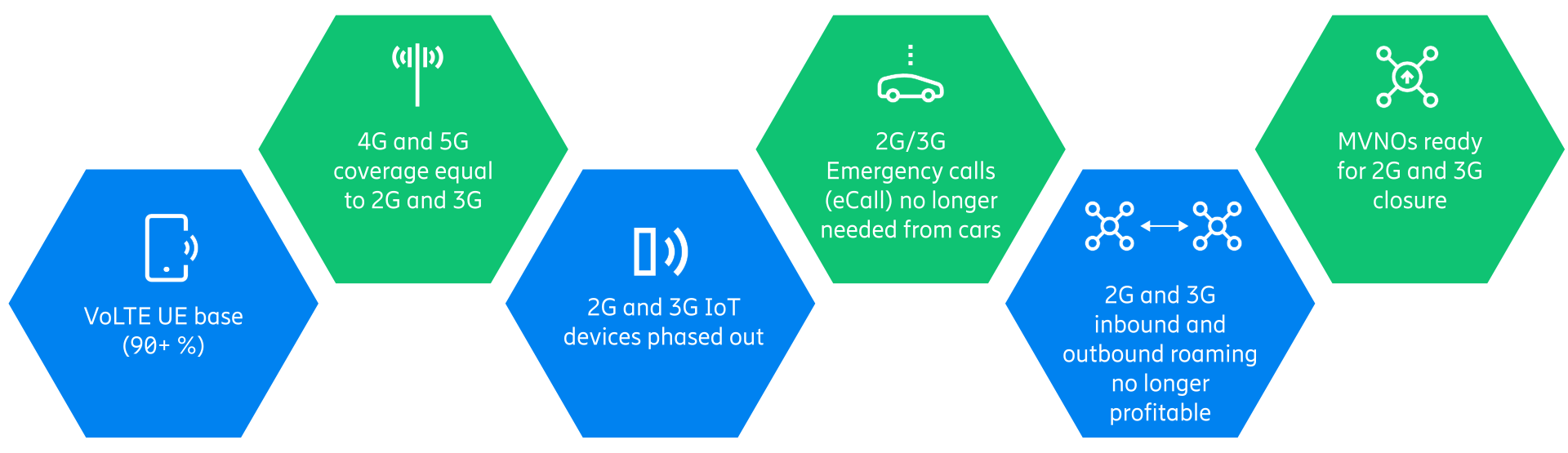
Figure 1: Prerequisites for closing 2G/3G and CS core
The transition from a pure CS voice network to VoLTE and VoNR consists of many steps. The steps vary between CSPs, and some are optional. The order of the steps may also vary between CSPs. An overview is provided in Figure 2, and many of the steps are covered in detail in subsequent chapters.
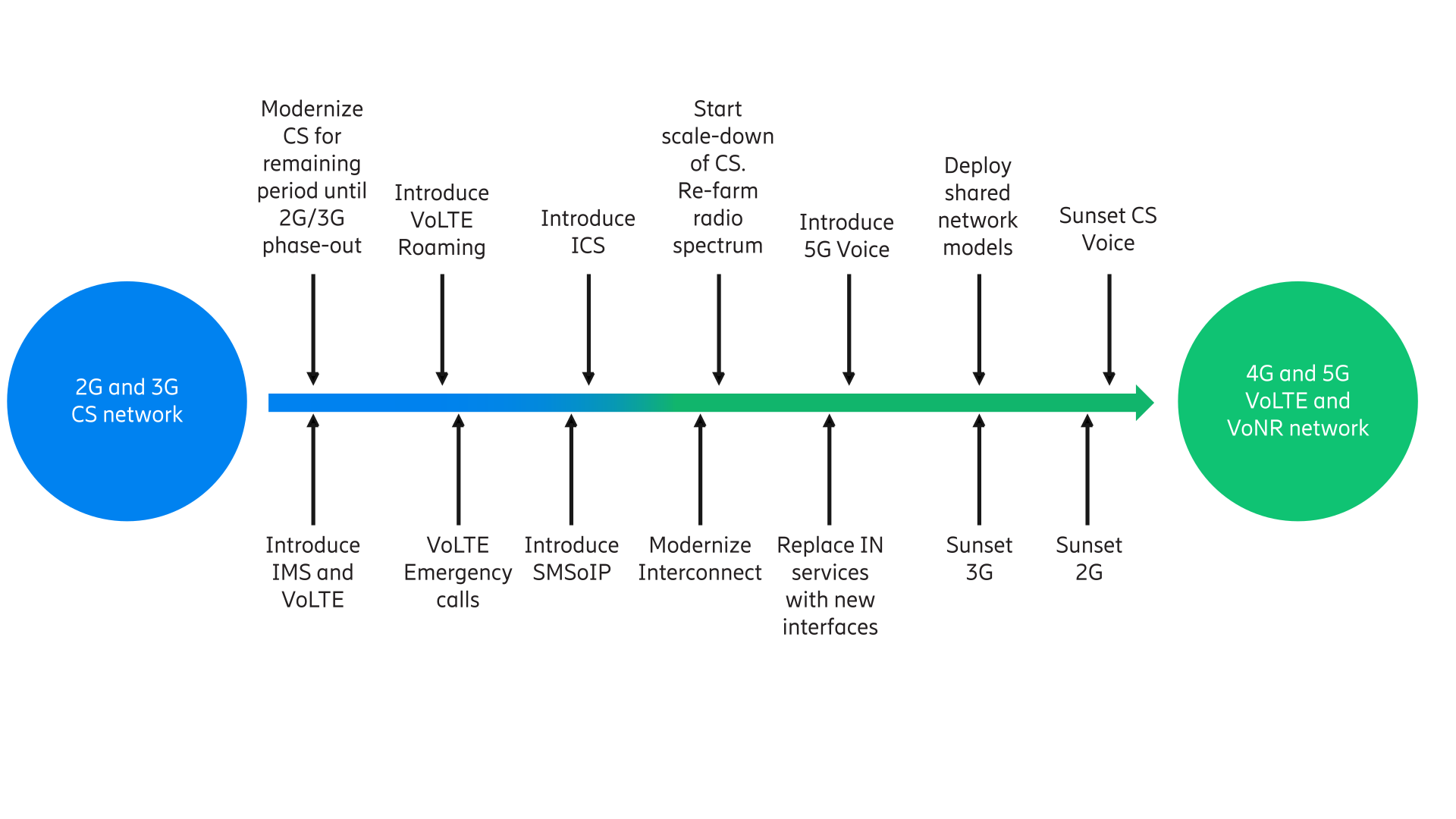
Figure 2: Example of Voice transformation
Modernization of network interconnect
Many mobile networks today still rely on circuit switched technology, including TDM interfaces, for interconnecting to other networks. The Session Initiation Protocol (SIP) is gradually being introduced, enabling transcoder free operations for calls between networks, resulting in better voice quality, reduced HW cost and better bandwidth utilization. Interworking with new services like video is also becoming possible.
After SIP is utilized on the interface to other CSPs, the CS domain is still in many networks the solution for distributing incoming traffic. This type of solution makes sense when most of the subscribers are still using 2G/3G but is not efficient in the long run, when users are moving to VoLTE as it means unnecessary usage of HW and an extra delay during call establishment and on the media plane. Therefore, an IMS-based solution is the only distribution function needed in the future. The figures below show a typical setup where the CS domain distributes the incoming traffic and a recommended setup at a time when most of the subscribers are using VoLTE. As an alternative, the IBCF can also be used to distribute traffic to the right domain based on ENUM queries.
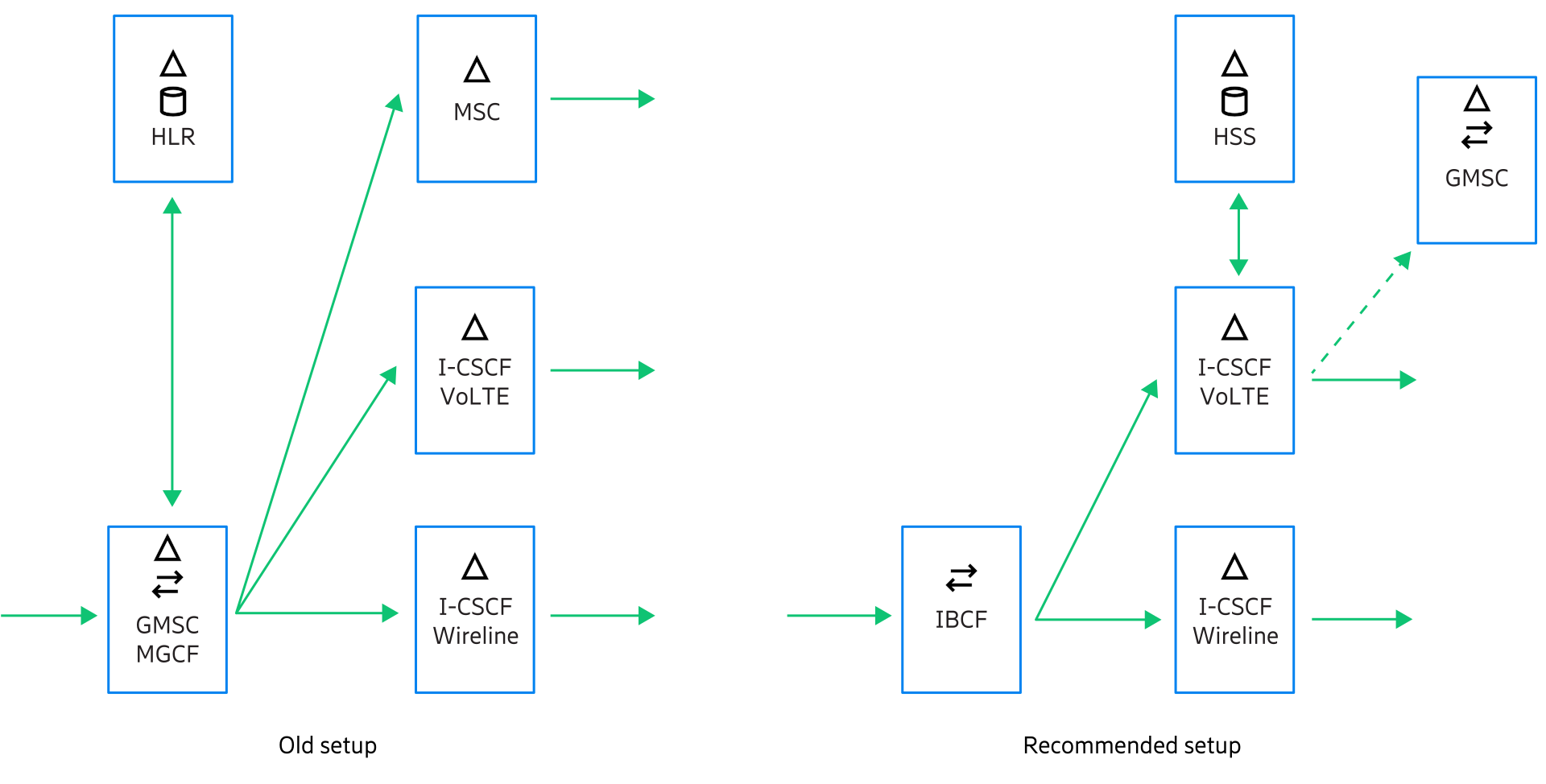
Figure 3: Incoming call from foreign network
Preparing for the migration and scaling down of 2G/3G
Sunsetting of 2G/3G and migration of related services can take many years. To remain fully operational during this period, the HW and SW need to be maintained and supported. It is important to also consider new regulatory and security requirements that may necessitate new SW updates.
As the 2G/3G traffic is migrated to 4G/5G, there is an opportunity to save costs by consolidating the legacy network. Scaling down of the 2G/3G network with mobile switching center (MSC) in pool makes it possible to seamlessly remove and decommission pool members.
Another way of consolidation is the modernization of the MSCs through virtualization. This allows synergies with other virtual network functions (VNFs) utilizing the same virtualization infrastructure. Furthermore, modernization means that fewer nodes can manage the remaining traffic, hence simplifying the scaling down of the 2G/3G network.
2G/3G radio network sharing with other national service providers can also be considered through the usage of the Multi-Operator Core Network (MOCN) functionality. This will free up the 2G/3G spectrum for 4G/5G usage and reduce costs for the remaining 2G/3G radio network. This possibility is further elaborated on later in this white paper.
Modernization of legacy services
An evolution from CS to IMS is an opportunity to modernize or phase out several legacy services as this involves a major network update. Traditional supplementary services, like call forwarding or call hold, are generally supported in IMS. IMS Centralized Services (ICS) provides the means to utilize a single service engine in IMS during the transition from CS voice to VoLTE/VoNR. However, all roaming partners are not likely to support ICS, meaning that a limited set of supplementary services needs to be supported for inbound roamers and a service profile for outbound roamers also needs to be defined in the HLR. ICS still provides a way to offload the CS domain and is an important step towards the centralization of services that S8HR introduces.
Value added services (VAS) provided by Customized Applications for Mobile network Enhanced Logic (CAMEL) have been widely deployed in CS networks. Although these mechanisms are also supported in IMS deployments, alternatives are recommended. For prepaid services, the 3GPP specified Ro interface is an attractive alternative if the prepaid systems require modernization. Representational State Transfer (REST)-based exposure interfaces, like the Open Mobile Alliance (OMA) OneAPI, is an alternative for many new and existing VAS services.
If the CSP supports services utilizing Unstructured Supplementary Service Data (USSD), the IMS equivalent USSD using IMS (that is, USSI) can be deployed as a long-term replacement. USSI is carried over SIP, and a USSI Gateway is used to interwork with the legacy USSD infrastructure. However, the recommended strategy is to replace USSD services with more modern alternatives and utilize USSD through Circuit-Switched Fallback (CSFB) for the migration period. An example of a more modern alternative is to provide a smartphone app utilizing a REST interface for managing prepaid accounts.
Outbound 2G/3G roaming and SMS in 4G
When the 2G/3G service has been phased out in the home network, there is still a continued need to support outbound roaming in many networks that will only or partly offer 2G/3G capabilities for voice, SMS, and emergency calls. Even if VoLTE has been deployed in most countries today there will still be large areas that are only covered by 2G/3G services for the foreseeable future. Some CSPs are still expanding their 2G/3G capacity and modernizing their networks through virtualization to support users beyond 2030.
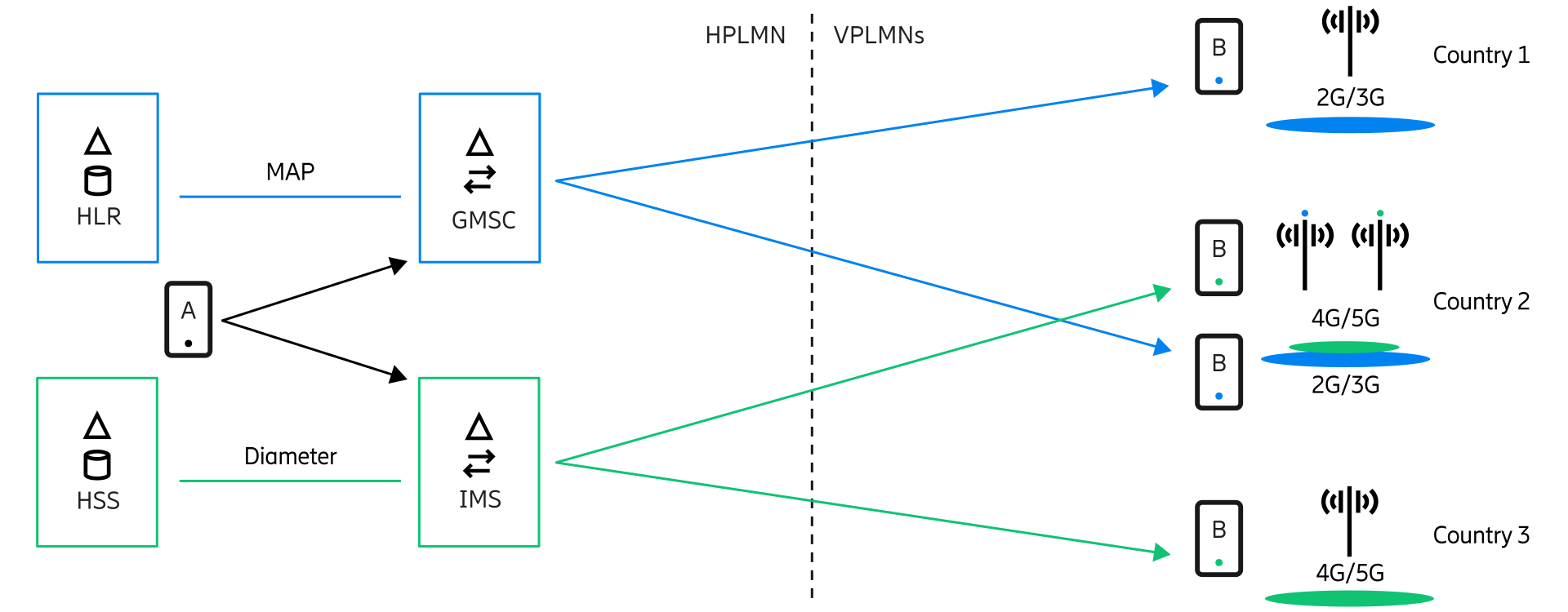
Figure 4: Outbound voice roaming in 2G/3G and 4G/5G coverage
Besides support for outbound roaming in 2G/3G networks, there is also a continued need to support SMS over non-access stratum (NAS)2 in the 4G access. Today, this is provided by the MSC through the SGs-interface to the 4G MME. SMS over NAS is typically used for initial over-the-air (OTA) device configuration and for low-cost IoT devices for which the SMS over IP solution is neither feasible nor cost-effective. CSPs may use the alternative to the MSC and SGs-interface which is the Diameter-based SGd-interface between the SMSC and MME. These CSPs will however still need a GMSC if they want to offer outbound roaming in 2G/3G networks.
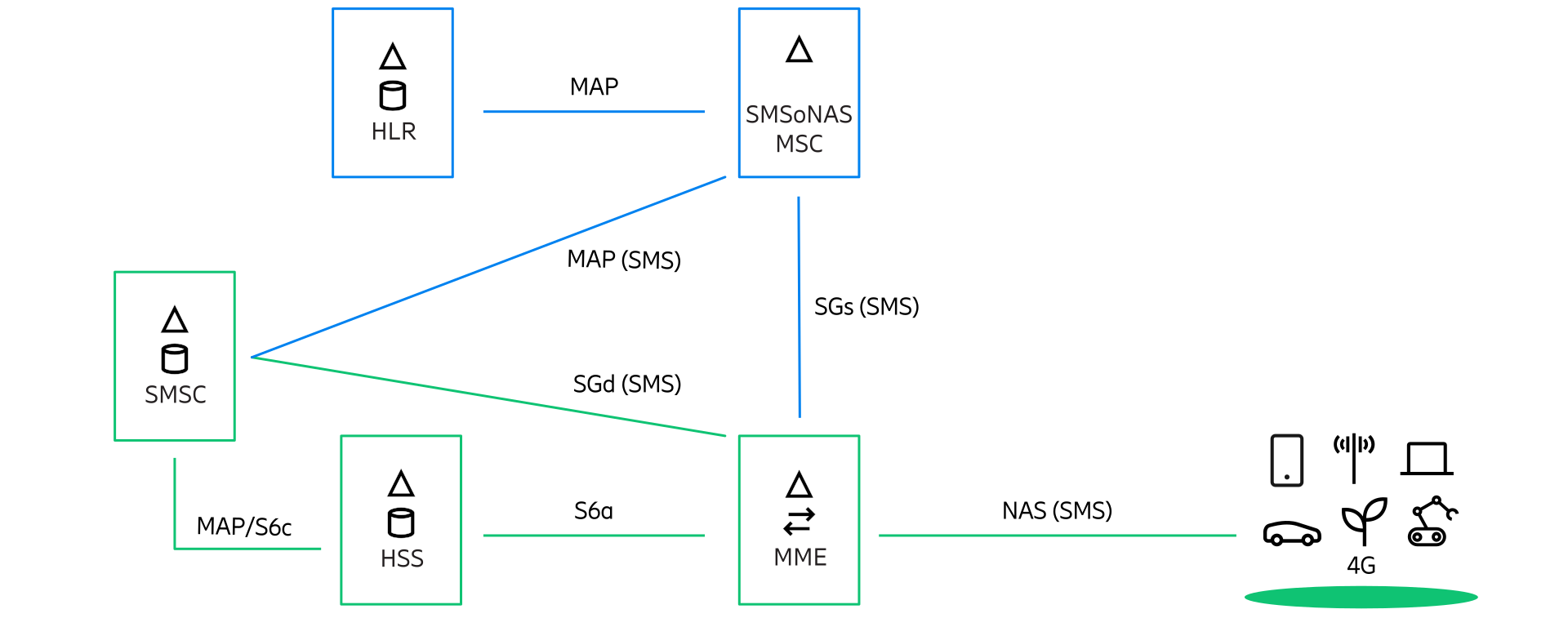
Figure 5: SMSoNAS options for the 4G access
To continue supporting both outbound roaming in 2G/3G networks and SMS over NAS in the 4G home network, it is recommended to keep at least a redundant pair of MSCs in service even after the 2G/3G service has been discontinued in the home network. The MSCs will then continue working as combined Gateway MSCs (GMSCs) for call routing toward the outbound 2G/3G roaming networks, and as SGs-MSCs for SMS over NAS in the 4G home network. Later when the very last outbound 2G/3G roaming agreement has been discontinued, the GMSC and home location register (HLR) can be removed, and the SMS over SGs (SMSoSGs) solution can be replaced by the SMSoSGd solution.
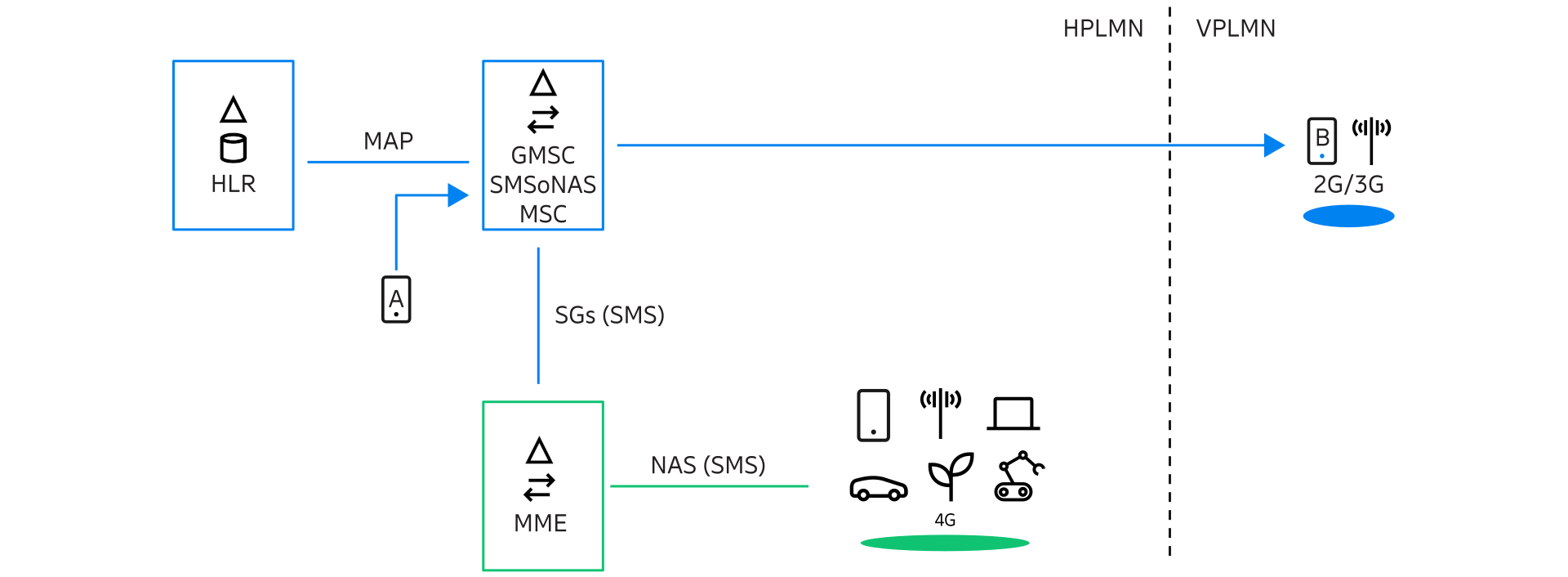
Figure 6: Combined GMSC and SMSoSGS-MSC
Maintaining limited 2G/3G network capacity for specific use cases
Emergency services
When VoLTE networks were introduced, emergency calls were initially handled by 2G/3G through CSFB. To reduce capacity and coverage in the 2G/3G networks, VoLTE emergency calls need to be deployed.
Automatic emergency calls from vehicles, for example, eCall in Europe, is a special case as the modems in cars are not easy to upgrade to support Next Generation-eCall (NG-eCall). It remains an open question how regulators will act to secure these types of emergency calls in the long term as the number of vehicles with 2G/3G eCall will be significant for at least the next 10-15 years. Therefore, guidelines are needed by regulators to allow CSPs to plan their network evolution. The EU also needs to regulate NG-eCall, that is, eCall on VoLTE/ VoNR, before national regulators can proceed with their planning. Authorities are also impacted as NG-eCall requires upgrades of the public safety answering points (PSAPs).
IoT
Updating existing 2G/3G-based IoT devices is a big and costly task for many companies and consumers. However, an update also means future-proofing devices, better data throughput, reduced power consumption, and in some cases better coverage. Early planning is key to a successful transition, that is, CSPs need to give notice to their customers years in advance before closure. As most of these early IoT devices utilize 2G, this is a contributing reason why in some cases 3G networks are often closed first. Cooperation between CSPs is also an option in the later phases, for example, through shared network concepts like MOCN. From a commercial perspective, the question of how to phase out early IoT devices for a CSP also has to be considered, that is, in some cases sharing the upgrade cost with customers, for example, an electricity company which can be justified by the benefits of 2G/3G closure. On the other hand, some CSPs may see a business opportunity in supporting old IoT devices while competitors close their 2G/3G networks.
More information about what 2G/3G sunset means for IoT can be found in3.
Inbound CS voice roaming
Inbound CS voice roaming is often a good source of revenue for CSPs which is at risk when sunsetting the 2G/3G network. All inbound roaming revenues from users that have not yet upgraded to VoLTE-capable devices will then be given to competing CSPs that continue supporting 2G/3G for a longer period.
Laggards
The CSPs’ subscribers that insist on keeping their old 2G/3G phones until they no longer work may still provide good profitability from their monthly payments and virtually no retention and acquisition costs for subsidized devices. As for CS inbound roamers, the revenue from this group is also at risk when sunsetting the 2G/3G network. This is because competing CSPs may either continue supporting 2G/3G for a longer period or offer attractive 4G/VoLTE packages that drive customers to change CSP.
MOCN sharing for cost-effective 2G/3G extension
An alternative to completely stop offering 2G/3G services for eCalls, IoT devices, inbound CS roamers, and laggard subscribers that haven’t upgraded to VoLTE capable devices, is to deploy a nationwide 2G and/or 3G MOCN.
MOCN can be used as a cost-efficient tool for two or more CSPs for sharing a common radio access network including the radio spectrum. The CSPs can then gradually migrate as much 2G and/or 3G spectrum to the 4G or 5G accesses as possible, while keeping just enough spectrum for 2G/3G to serve the remaining tail of eCall, IoT, inbound roamers, and laggards.
The MOCN functionality can be seamlessly introduced in the network and existing roaming agreements can be maintained as if continuing to run separate access networks. The sharing constellation can be kept in service until the number of users reaches such a low level that there is no longer a motivation for the 2G/3G service from a revenue or regulatory point of view.
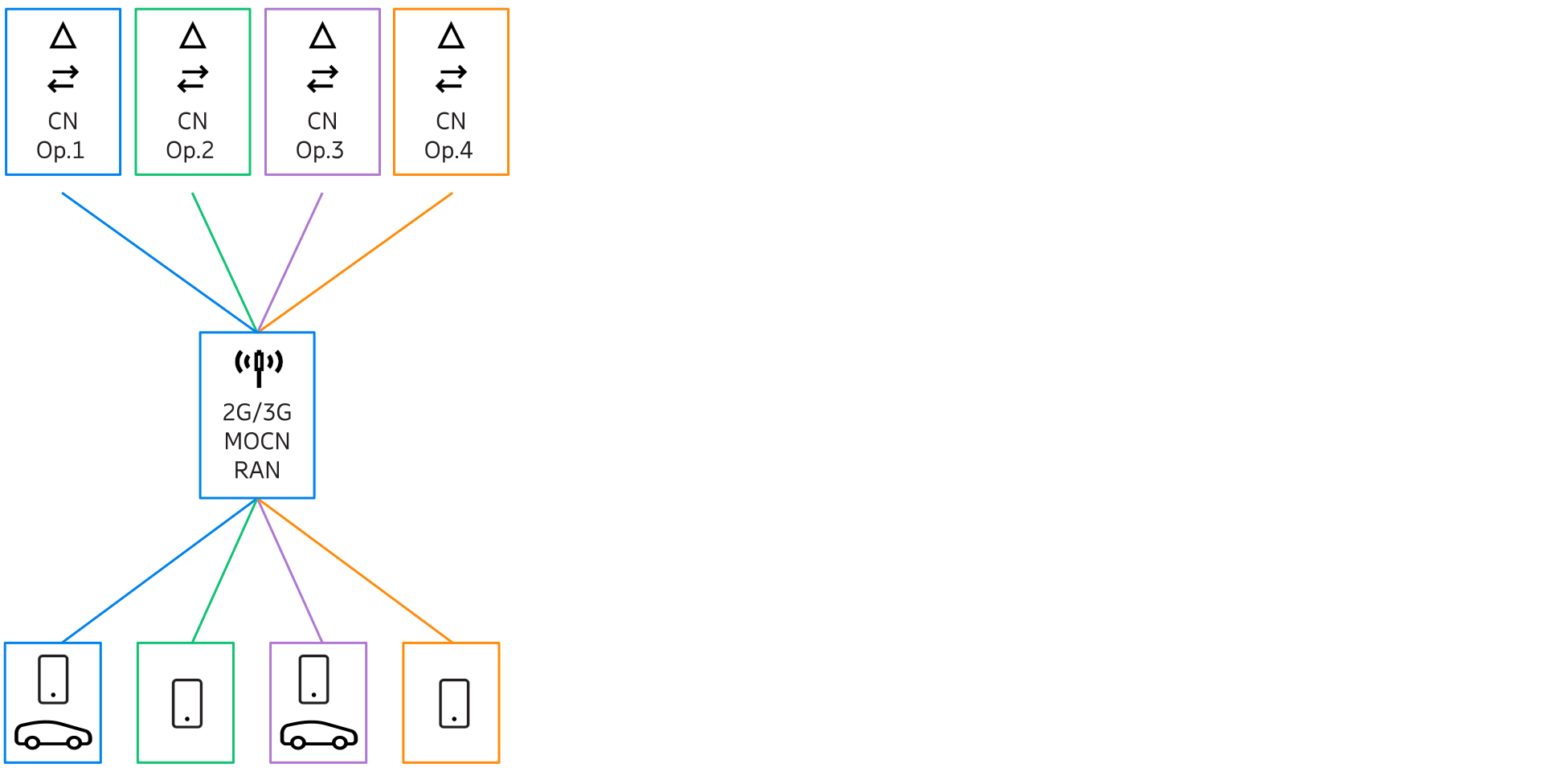
Figure 7: MOCN sharing for IoT, eCall, inbound roamers and laggards
The MOCN RAN can be provided by one of the existing 2G/3G CSPs or an independent but co-owned company can be set up to run the MOCN RAN on behalf of the core network operators.
VoLTE S8 Home Routed (S8HR) Roaming
Inbound VoLTE S8HR roaming
When eventually sunsetting the 2G/3G accesses, it is important to enable inbound VoLTE roaming well in advance to not lose out on future roaming revenues to competing CSPs.
As the 2G/3G network will no longer be available to handle emergency calls for inbound roamers through fallback from the VoLTE to the CS voice network, it is critical that VoLTE emergency calls are supported by IMS also for inbound roamers.
As calls and SMSs4 to and from inbound roamers are not handled by the local IMS, except for emergency calls, the local packet core network must have the capability to tap all SIP signaling related to inbound roamers to an LI function for analysis. For calls that are associated with LI targets, the packet core must also be able to tap the actual voice and/or video media to the LI function.
Outbound VoLTE S8HR roaming for CS-only CSPs
CSPs that today offer outbound roaming with partner CSPs in countries that are about to or have already sunset their 2G/3G networks must prepare for and launch VoLTE roaming with these partners. Otherwise, they will not be able to roam with them and in the concerned countries anymore. Examples of countries that have progressed far in their 2G/3G sunsets are the US, South Korea, Japan, and Taiwan. Several countries in Europe will also follow over the coming years. This means that CS-only CSPs must deploy outbound VoLTE roaming before VoLTE has been introduced in the home network. Fortunately, in most of these cases, 4G data S8HR roaming has already been deployed meaning that the packet core infrastructure and international connectivity are already in place. This drastically simplifies the VoLTE S8HR roaming deployment. However, CSPs that have not yet launched VoLTE in the home network must spend relatively high efforts on deploying and integrating an IMS and certifying VoLTE devices only for supporting a limited number of outbound VoLTE roaming users.
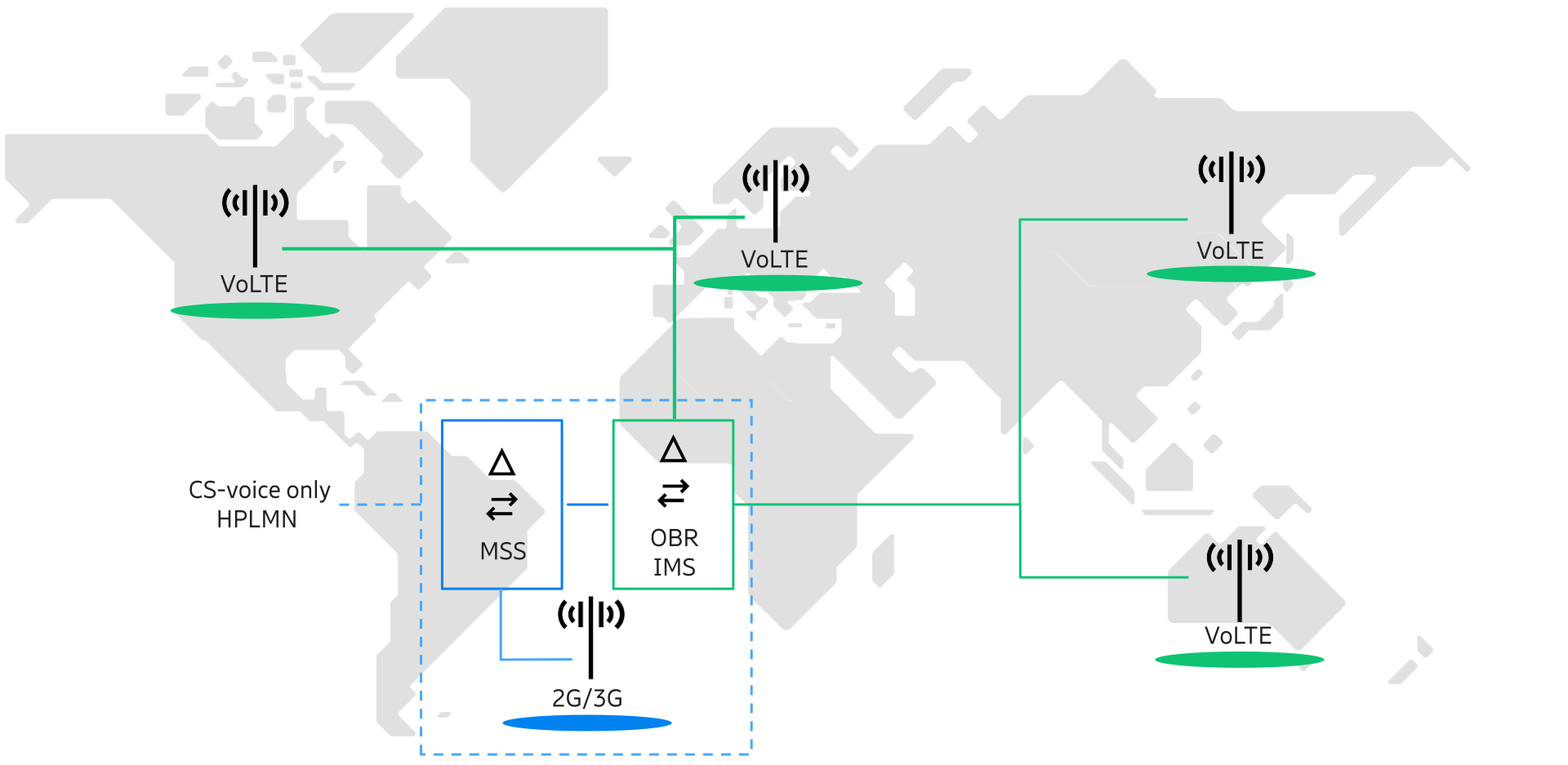
Figure 8: Outbound VoLTE roaming IMS for CS-voice only CSPs
The investment in an IMS for outbound VoLTE roaming can also be used for VoLTE roaming in countries that support both VoLTE and CS voice to offer a better service to more users and to increase the usage and value of the investment. The IMS can later also be used for the VoLTE deployment in the home network if expanding HW capacity and SW licenses. In the short term, it can also be used to offer WiFi Calling for indoor coverage extensions and SIP trunking for a more competitive and future-proof enterprise solution compared to the CS-based PRA/PRI solution.
Conclusion
4G and 5G allow CSPs to get access to new frequency bands and to re-farm the 2G/3G spectrum to be used in a more efficient way. This modernization means more capacity, better energy efficiency, and improved security.
Voice, SMS, IoT, and emergency services need to be ensured when sunsetting 2G/3G. Voice remains a key service for CSPs and will be complemented by new communication services running on IMS.
A part of the existing HLRs and CS core should be modernized to handle SMS and outbound roaming in 2G/3G networks. These network elements may also be needed to handle the remaining 2G/3G voice traffic, IoT, eCall and inbound roaming in the home network. A MOCN is a cost efficient way of providing the 2G/3G services for the last year before complete sunsetting.
The network transformation is an opportunity to modernize many legacy services, ensuring user satisfaction and a future-proof network. A smooth transformation requires careful planning and timely communication. Consumers and enterprises, need time to adapt and hence phase-out plans need to be communicated several years before closure.
Glossary
Contributors