Skip navigation
Previous searches
    Suggested searches
      ""

      AI, cloud and mobile form the foundation of enterprise digital transformation

      行動網路賦能AI驅動的企業轉型

      Available in:

      電信商可以幫助企業釋放以AI為引領的數位轉型的全部價值。行動網路為企業安全、可靠地擴展AI提供所需的即時基礎能力。

      研究顯示企業越發認為AI是數位轉型不可缺的一部分,但只有少數企業真正實現全組織內規模化部署。

      AI是數位轉型的驅動力,但如果缺乏穩健的行動網路和雲端能力支撐,AI本身難以取得成功。

      透過提供幫助企業充分釋放AI主導數位轉型的解決方案,電信商有望從單純的網路提供者轉型為策略合作夥伴,從而創造新的收入來源。

      AI無法獨自成功執行

      企業如今需要更強的敏捷性、可擴展性和行動性,以支援分散式營運和即時資料處理。AI正迅速成為這一轉型的引擎,但要取得成功,必須構建以行動、雲端與AI為一體的現代數位化基礎,使其共同自動化核心營運任務,釋放創新和成長所需的資源。將形成可在不同案例間重複使用的能力,實現規模效應,從而提升效率、最佳化體驗並加速創新。愛立信1委託開展的研究證實,A I被視為數位轉型的關鍵要素,只有在穩健的行動與雲端能力支撐下,AI的全部價值才能得以實現。然而,研究也揭示出明顯的執行差距:儘管近九成組織認為AI至關重要,但真正成功在其營運中實現規模化部署的企業只佔少數。

      AI的預期超出企業的數位化程度

      在我們的研究中,37%的企業表示其數位轉型進程正在加速並呈現積極態勢。AI不再侷限於IT領域――它已經嵌入到各類業務職能中,並越來越多地承擔起核心營運任務。

      然而,一個關鍵差距依然存在。雖然88%的企業預計其AI解決方案將依賴即時資料,但關鍵支撐技術的採用水平仍然偏低:僅8%的企業已在多個業務領域全面規模化部署AI,或採用了基於雲端的技術和解決方案;僅有18%的企業在廣泛採用能夠提供安全、可靠、即時行動連接的蜂巢技術和解決方案。

      AI發展願景與技術採用之間的落差,代表著一項明確的市場機會。電信業者具備有利條件,可透過提供安全且持續在線的企業連接解決方案,縮小這項落差,滿足AI驅動營運對連接能力的需求。

      圖24:企業技術採用現況

      AI

      Only 8% have fully scaled Al

      Cloud

      Only 8% have full cloud adoption

      Mobile

      Only 18% have wide mobile adoption

      Base: 100 decision-makers across 5 industry segments in large companies in North America, Europe and Asia.

      Mobility: Powering enterprise AI

      Enterprises increasingly rely on distributed data sources – mobile devices, industrial sensors, vehicles and field equipment – to feed analytics and models that inform operations, customer engagement and new services. AI platforms, data lakes and analytics engines are often distributed across cloud, on-prem and the edge, and the demands of these use cases reshape enterprises’ network requirements. Mobile connectivity enables seamless data flow and unified workflows, evolving mobility from a basic utility into an imperative, strategic asset that underpins safety, productivity and new revenue streams.

      Realizing value from AI requires the alignment of network services with business processes and measurable outcomes. This represents a pragmatic opportunity for service providers; to move from being pure infrastructure vendors, to become strategic partners, by packaging connectivity, edge compute, security and managed services for enterprises as part of their AI roadmaps to meet specific transformation objectives.

      Mobile connectivity and cloud provide the real-time foundational capabilities enterprises require to scale AI securely and reliably. On the mobile side, enterprises in this study rank security (78 percent), reliability (72 percent) and bandwidth (67 percent) as the top enablers, highlighting the need for protected, dependable, high-throughput data flows. Mobile delivers the real-time connectivity that AI depends on. Of the surveyed enterprises, 80 percent have plans to increase their mobile investments.

      Moreover, 75 percent identified 5 use case categories where they believe AI will have a significant business impact:

      • Tracking and monitoring – continuous sensor and location telemetry for assets, goods and customers, needing scalable connectivity and edge processing.
      • Connected operations – remote control, autonomous mobile robots (AMRs) and industrial control requiring private networks, low-latency edge compute and secure orchestration.
      • Enterprise collaboration – real-time, secure Unified Communication and interoperable workspaces needing QoS, managed end points.
      • Customer engagement – omnichannel, video and conversational AI with edge inference.
      • Digital devices – kiosks, wearables and vehicles requiring device lifecycle, SIM/eSIM and security.

      圖25:行動連接如何成為擴展企業AI的基礎

      Mobile connectivity adoption today
      AI advances digital transformation

      AI’s significance in advancing digital transformation in recent years was rated

      6.7/10


      AI’s expected importance for advancing digital transformation over the next 2–3 years was rated

      7.9/10

      Mobile as an enabler for AI

      36%

      of enterprises consider mobile solutions to have a large/fundamental impact on the ability to enable and scale AI across multiple use cases.

      Mobile investments will increase

      80%

      of enterprises plan to increase their mobile investments, with 37% of them increasing by more than 20%.

      Note: Survey of over 100 CxOs, senior decision makers and managers across 5 industry segments in large companies in North America, Europe and Asia.

      行動連接為何至關重要

      儘管AI更易成為媒體頭條,雲端也在架構設計中備受關注,但真正決定企業以AI為
      主導的數位化轉型能否成功的,恰恰是基礎架構中的行動網路部分。全球覆蓋、多
      電信商支援以及對全球標準的遵循,確保AI工作負載能夠在不同地點和業務單元之
      間即時擴展,不會形成瓶頸。

      首先,行動網路提供了連接分散式營運所需的範圍和覆蓋。單一企業可能涵蓋多個
      地點,並包括移動車隊,每個部分都有不同的效能、安全和監管要求。5G、專用網
      路和無線廣域網(WWAN)可以根據每個站點和每個案例進行客製,同時作為統一
      企業架構的一部分進行集中管理。

      其次,5G固有的低延遲、高可靠性和強大的安全性,使得在低延遲或中斷不可接受
      的場景中部署AI和自動化成為可能,例如安全關鍵環境、高價值生產線或即時客戶
      互動。這一點尤其重要,因為包括AI電腦視覺、AR輔助營運和物理AI(使機器能夠
      即時感知實體世界並與之互動)在內的新興應用,將推動上行流量的快速成長,對
      歷史上以下行流量最佳化為主的行動網路提出新的要求。

      第三,行動網路正日益演變為可程式化的平臺。藉助5G獨立組網(SA)和網路API,電信商可以將差異化的連接特性――例如有保障的吞吐量、低抖動或位置感知能力――直接開放給企業開發者和獨立軟體供應商(ISV)。這使得他們能夠設計出可按需動態請求所需網路效能的AI驅動應用。以網路能力為基礎打擊欺詐的解決方案,是電信商變現的首批案例之一,因為這已成為企業數位轉型中的緊迫需求。

      From connectivity provider to strategic AI partner

      Our research highlights that enterprises increasingly see mobility, AI and cloud as the foundation for digital transformation, and plan to step up investments in mobile-enabled initiatives over the coming years. At the same time, many organizations struggle to move beyond isolated AI proofs of concept, citing gaps in connectivity, data readiness and operational integration as major barriers. This highlights that service providers could evolve their role to provide not only high-performance public 5G, but become orchestrators of the AI–mobile–cloud digital foundation for enterprises, for example as a managed service provider delivering outcomes instead of only connectivity. If they evolve their networks towards AI-native, cloud-native architectures that can handle the complexity of AI workloads, service providers can help enterprises unlock the full value of AI-led digital transformation.

      As AI use cases are increasingly adopted, and enterprises demand more agility and intelligence, the importance of getting the mobile foundation right will only increase. Therefore, service providers need to evolve networks into AI- and cloud-ready platforms, build differentiated enterprise offerings around private and public 5G, and position mobile connectivity as the backbone of AI-driven digital transformation.

      Ericsson Mobility Calculator

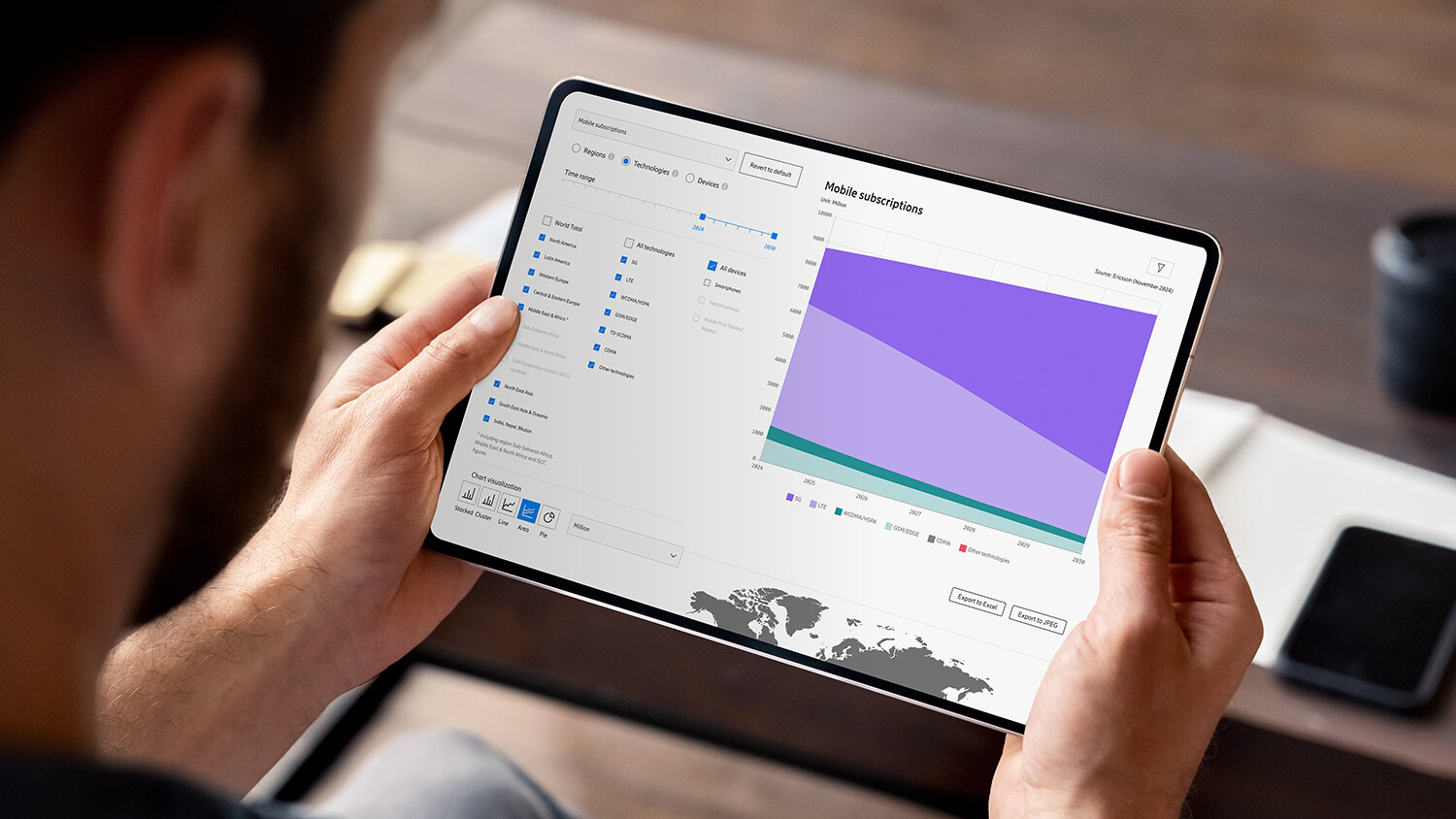
      Explore the relationship between the usage of various app types and monthly traffic per subscription with our interactive Mobility Calculator tool.

      Explore the calculator

      Ericsson Mobility Visualizer

      透過愛立信行動視覺化的資訊,您可以在查看報告中所提及的預測資料。

      Discover the data

      Articles

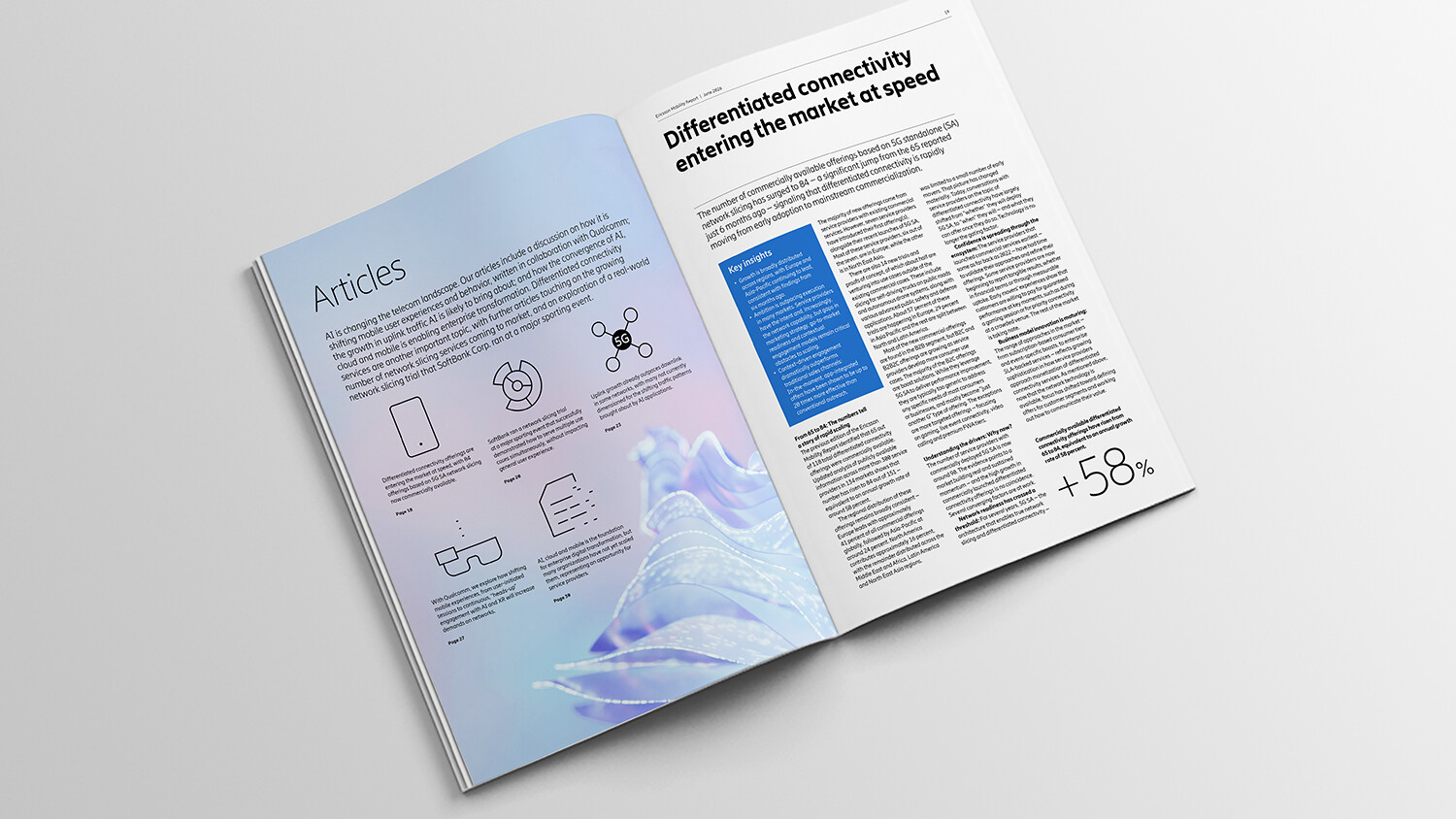
      Discover the Ericsson Mobility Report articles where we discuss trends, case studies, service provider opportunities, and the past, present and future of connectivity.

      Discover the articles

      Ericsson Mobility Report

      Our forecasts are based on past and current data, validated with extensive network measurements. Discover the latest figures for 5G, IoT, fixed wireless access and more.

      Explore now
      Subscribe to receive Ericsson Mobility Report updates

      Get the latest Ericsson Mobility Reports and quarterly updates – the moment they are published!

      The face of mobile communications is changing faster than ever. Stay up to speed with projections and analyses of the latest trends in the mobile industry, including subscriptions, mobile data traffic and population coverage.

      Subscribe now to get the full reports and quarterly updates sent directly to your inbox.

      Subscribe now

      References

      1
      The research findings draw on insights from surveys and interviews with over 100 enterprise chief officers (CxOs), senior decision-makers and managers across five industry segments in large companies in North America, Europe and Asia. Source: Arthur D Little, Ericsson.