










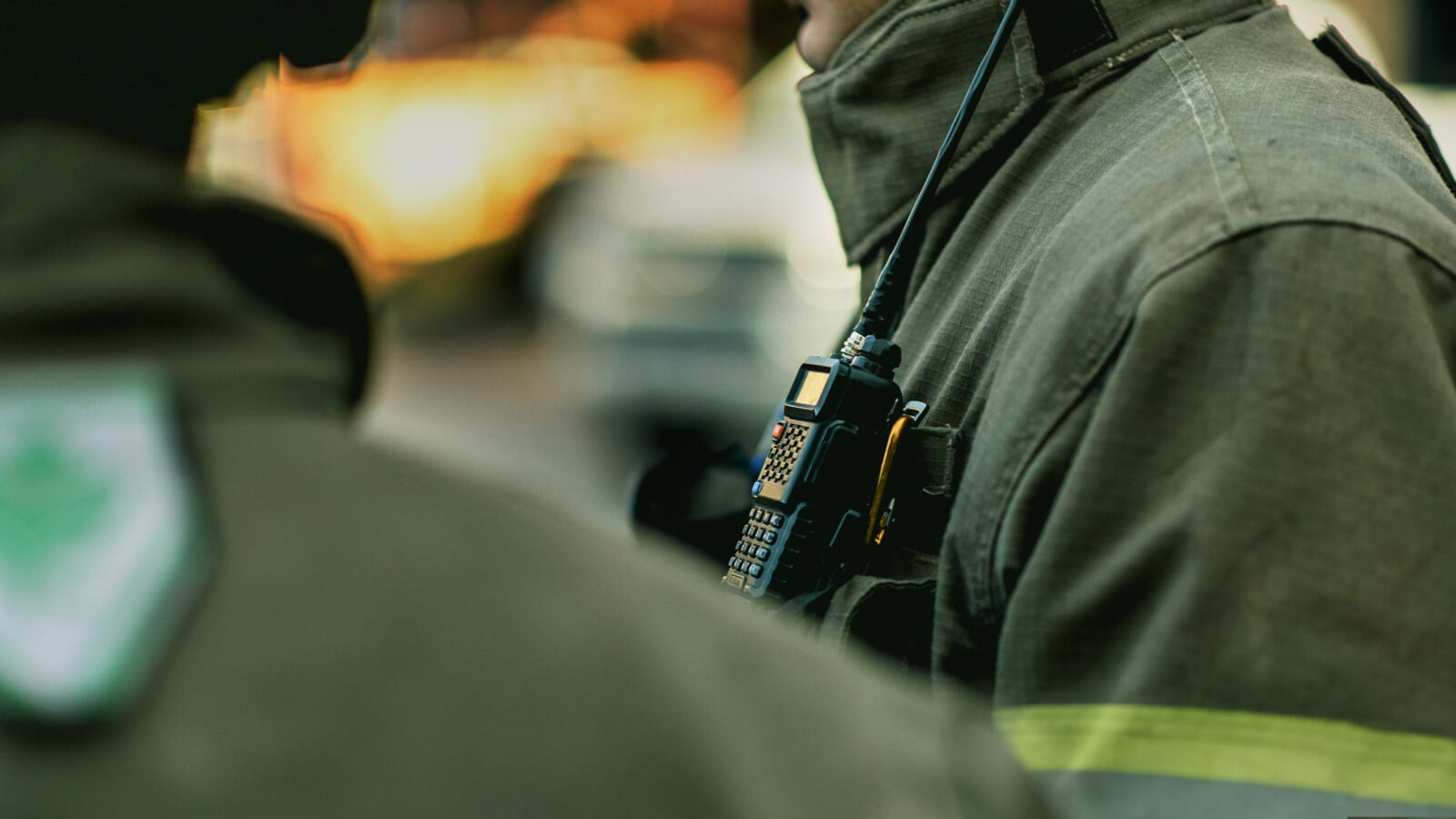
MALAYSIA'S digital transformation story has largely been told through the language of speed — faster downloads, broader 5G coverage and the rapid expansion of connected services.
But as the nation's digital economy grows more sophisticated, a new conversation is emerging: What happens when connectivity is no longer simply about convenience, but a matter of national resilience?
That is where mission-critical networks (MCN) enter the picture.
Unlike conventional mobile networks built on a best-effort basis, MCNs are designed for situations where failure is not an option. They are engineered to deliver secure, always-on and real-time communications for sectors that society depends on most — from emergency services and defence to utilities, transport and critical infrastructure.
For Malaysia, which already boasts one of the region's strongest 5G foundations, particularly through 5G Standalone architecture, MCN could become a cornerstone of the country's digital safety infrastructure.
According to Ericsson's regional head for mission critical networks & enterprise, Enrique Garcia, the shift reflects a broader evolution in how nations view connectivity.
"We are moving from a world where connectivity was the goal, to one where reliability is the requirement," he said.
"In a modern economy, digital networks are no longer just communication tools. They are becoming part of the nation's nervous system. When emergency services, smart utilities and national infrastructure depend on those networks, interruptions become more than inconvenience — they become systemic risks."
From convenience to certainty
Traditional 4G and 5G consumer networks are designed to provide strong service to millions of users, but performance can slow when networks become congested.
Garcia said MCNs operate differently.
"They are built with priority access, resilience layers and security protocols that ensure critical communications continue even when public networks are under pressure," he said.
"Imagine a packed stadium, a flash flood or a major public emergency, where thousands of people simultaneously attempt to use mobile services.
"For ordinary users, slower connectivity may be frustrating. For paramedics, firefighters or police personnel responding to a crisis, even a few seconds' delay can have life-or-death consequences," he said.
This is where MCNs make the difference.
"Conventional networks are built for convenience. Mission-critical networks are built for certainty," said Garcia.
"They ensure that voice, video and data for frontline responders are prioritised, protected and delivered instantly, even under extreme congestion or operational stress."
This includes mission-critical push-to-talk voice communications, live video feeds from incident sites, drone surveillance, real-time mapping and location tracking, and seamless information sharing across agencies.
Building resilience into the system
Malaysia is no stranger to natural disasters, particularly seasonal floods and landslides, that can damage communications infrastructure and disrupt rescue operations.
"MCN is designed with these realities in mind. Networks are built with redundancy, back-up power systems and multiple communication pathways to maintain service continuity during crises. Portable deployable units can also be rapidly activated to restore connectivity in affected zones," said Garcia.
For example, if fixed towers are damaged, temporary communication bubbles can be established within minutes to support emergency coordination.
Garcia said resilience must also extend beyond physical infrastructure to cybersecurity.
"At Ericsson, security is built into the DNA of the network from day one, not added later," he said.
"That includes encryption, strict access controls, continuous monitoring and proactive systems capable of identifying anomalies and responding quickly before problems escalate."
As Malaysia embraces digital-first services, Garcia said cybersecurity threats targeting essential systems are also rising, making trusted and secure communications infrastructure increasingly critical.
"For government agencies and operators managing sensitive public data, digital sovereignty — including keeping mission-critical data within secure national environments — is becoming a strategic priority," he said.
Powering smarter cities and safer communities
While MCN is often associated with emergency situations, Garcia its applications extend well beyond disasters.
"On ordinary days, it can improve daily public safety operations, strengthen utility management, improve transport reliability and support smarter urban planning.
"Traffic systems can be coordinated in real time. Utilities can monitor and respond faster to disruptions. Ports and logistics networks can operate with greater visibility and efficiency. Emergency services can respond with better situational awareness before arriving on site," he said.
This creates broader socioeconomic value by enabling more efficient use of public resources while improving service delivery.
Malaysia's existing 5G infrastructure provides a strong launchpad.
Rather than replacing legacy systems overnight, Garcia said the country can adopt a hybrid approach — maintaining trusted narrowband voice services while layering mission-critical broadband capabilities such as live video, AI-powered analytics and connected drone operations.
"This reduces disruption while accelerating capability," he said.
A network for the Moments That Matter
Malaysia is uniquely positioned to lead in this space because much of the heavy lifting on national connectivity has already been done.
"The next phase is not about coverage — it is about capability," said Garcia.
"As Malaysia advances smart city ambitions, modernises public safety systems and strengthens national resilience, MCNs could become one of the most important yet least visible pillars of that future," he said.
"The true measure of a network is not how fast it performs on a normal day," Garcia said.
"It is how well it performs when everything is on the line."
Explore more
Unlock the power of 5G across Malaysia
Shape the digital future of the Malaysia with 5G
View the original article here: - When every second counts, networks must not fail