











Driving environmental responsibility across our global supply chain
Conducting business responsibly is fundamental to Ericsson’s sustainability work. Through Responsible Sourcing, Ericsson sets clear environmental expectations for suppliers through the Code of Conduct for Business Partners and related environmental requirements, covering climate action, environmental risk management, and circularity. Environmental considerations are integrated into sourcing and procurement processes, and Ericsson works with suppliers and external stakeholders to reduce environmental impacts across the value chain.
Environmental governance and risk management
Environmental responsibility is a key component of Ericsson’s Code of Conduct for Business Partners and is further detailed in the Business Partner Environmental Requirements, which set clear guidelines on how suppliers are expected to manage environmental impacts in their operations and supply chains.
The area is managed in close collaboration with Ericsson’s Sustainability and Corporate Sustainability teams and is followed up at executive level. Ericsson also works together with suppliers, NGOs, and industry coalitions to continuously improve environmental practices and strengthen responsible sourcing across the value chain. This systematic approach enables transparency, regulatory readiness, and continuous improvement.

Business Partners must report incidents with potential negative environmental consequences, related to the requirements in the Code of Conduct for Business Partners and the requirements in this document, when related to its engagement with Ericsson. Incident reporting shall be done through Global incident reporting tool.


Supplier climate action
Ericsson’s commitment to global climate goals
Acting on climate change is more important than ever. In 2015, The Paris Agreement was adopted by 196 parties to limit global warming to 1.5°C above pre-industrial levels. Subsequent reports such as sixth assessment report from the Intergovernmental Panel on Climate Change (IPCC) have reinforced the urgency of halving global greenhouse gas emissions every decade to reach Net Zero by 2050.
In 2022, Ericsson set the long-term ambition to be Net Zero across our value chain by 2040. Aligning with a 1.5°C Science Based Target, a first major milestone by 2030 is to cut emissions by 50% in the supply chain and portfolio use, and to become Net Zero in our own activities.


Supplier climate action program
The Ericsson supplier climate target is supported by our Code of Conduct for Business Partners, our procurement process and is a contribution to Ericsson’s overall climate action approach.
Suppliers for whom energy use or greenhouse gas (GHG) emissions represent significant environmental impacts must calculate their carbon footprint in CO₂e using the GHG Protocol, covering Scope 1 and Scope 2 emissions and, where relevant, Scope 3 emissions. Suppliers are expected to establish reduction targets and implement transition plans to lower emissions over time. To determine whether scopes 1, 2 and 3 should be applied, the supplier should refer to the SBTi criteria for 1.5°C targets. Climate performance increasingly informs procurement decisions and long-term supplier relationships.
Reducing emissions in Ericsson’s supply chain
To achieve Net Zero target by 2040, Ericsson recognizes the crucial role of suppliers who provide specific products and services with high embodied carbon emissions. These suppliers are requested to set ambitious climate targets and have a credible climate reduction plan aligned with Ericsson’s Net Zero ambition, meaning: (1) halving absolute greenhouse gas emissions by 2030 and (2) achieving Net Zero emissions by 2040. Furthermore, suppliers shall demonstrate continuous improvement over time by (3) increasing data quality and transparency and (4) implementing and tracking emissions reduction measures.
The results of this assessment are used as input to supplier performance evaluations and will be considered in sourcing and awarding decisions.

Supplier circularity
We promote circular economy principles to reduce dependency on virgin resources and minimize environmental impact across the product life cycle. We work with suppliers who share our ambition to reduce waste, use more sustainable materials, and design products that support a circular economy. By increasing transparency around materials—including critical raw materials—we can together build a more responsible, sustainable and future‑ready supply chain. Our goal is to collaborate on solutions that lower environmental impact while strengthening long‑term business value.
Learn more about Circularity across Ericsson’s operations, read about The pathway to a circularity - Ericsson's journey.
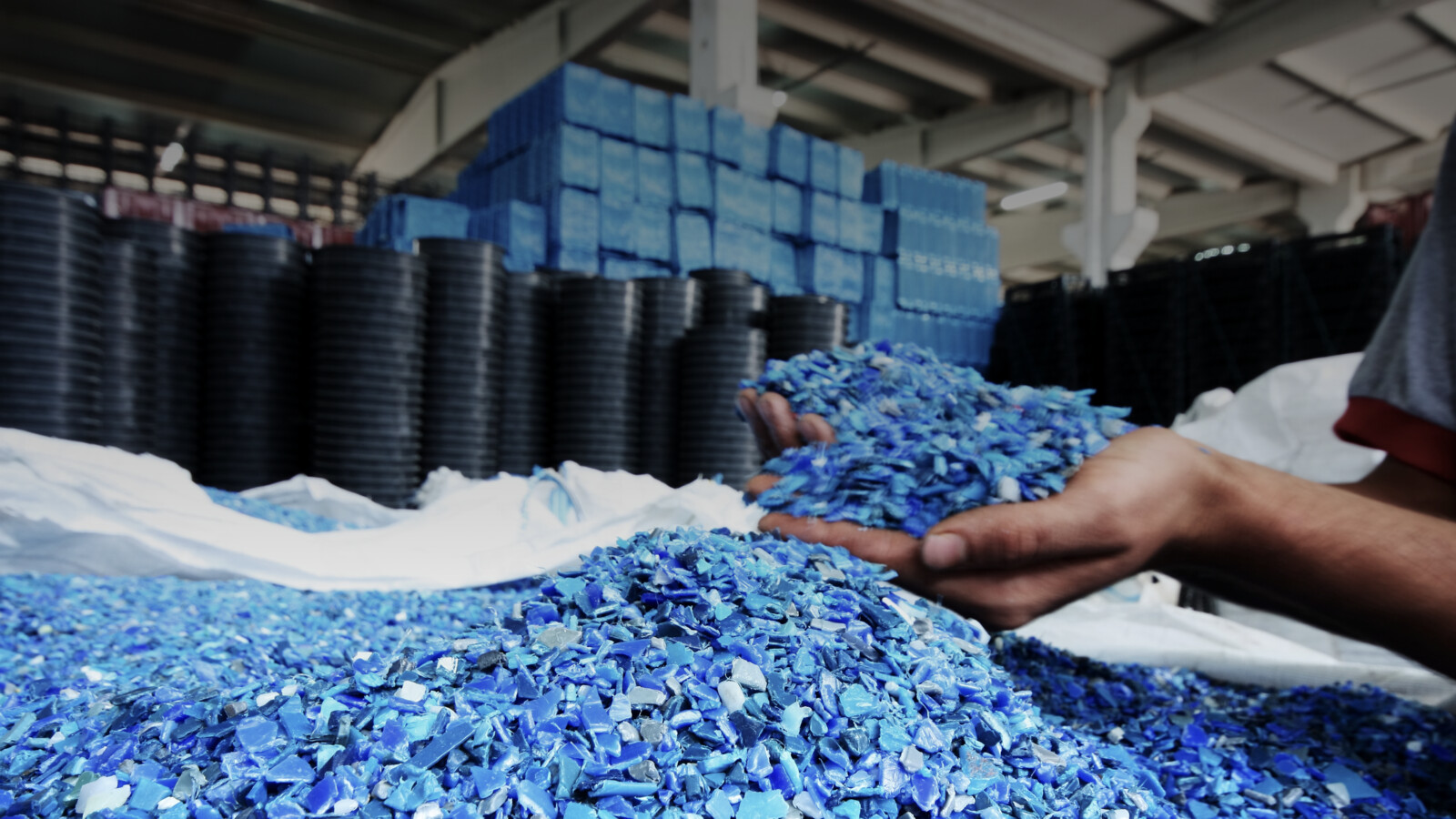

Waste management
By reducing the amount of material used and then using and reusing resources efficiently we impact the amount of waste that goes to landfill. This is a way of thinking that starts already in the design phase of both development and operations. All suppliers are encouraged to plan and develop waste management programs. More information about Ericsson’s commitment to reducing waste can be found on the Supply waste.