










Get your 5G going with microwave backhaul

Portfolio Manager

Portfolio Manager
Portfolio Manager
Wireless backhaul when and where you need it
Microwave backhaul has been taking significant technological leaps forward and has been ready to support 5G for some time. All its enhanced capabilities are now coming into play as 5G is switched on at an incredible pace – with subscriptions expected to reach 190 million by the end of the year (Source: Ericsson Mobility Report).
In these unusual times, residential broadband connectivity is proving to be more important than ever. Yet, too many suffer from a lack of a reliable service. There is a huge momentum for fixed wireless access (FWA) delivered over 4G or 5G networks as a cost-efficient broadband alternative. By the end of 2025, a quarter of all the world’s mobile network data traffic is forecast to be FWA (Source: Ericsson Mobility Report). Microwave backhaul is an essential part of these deployments in suburban and rural areas.
Time flies: Seventh report released
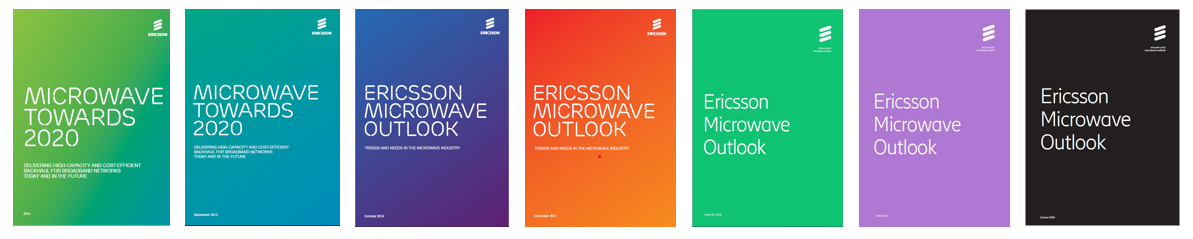
Ten years ago, we published insights into microwave backhaul regularly in Ericsson reports and technical journals. Based on the high interest they generated, we decided to establish a yearly Ericsson report focused exclusively on microwave backhaul. Initially called “Microwave towards 2020”, we soon changed name to “Microwave outlook” to reflect the fact that microwave backhaul technology will continue to evolve. Time flies and we are now releasing the seventh report. I hope all readers have enjoyed our reports as much as we have in preparing them. I am extremely proud to be a part of this initiative.
My favorite section from the 2020 edition is our global outlook on backhaul media distribution. Microwave continues to be an essential component in the 5G era and, by 2025, 62 percent of backhaul connections globally are expected to be based on microwave – excluding fiber-dense countries China, South Korea and Japan.

Another article in the report worth mentioning concerns the future use of 6GHz, which has become a seriously hot topic. Spectrum is always of extra interest since it is a finite and extremely valuable resource. Beside the existing and extensive use of long range backhaul in this band, there is growing interest in 5G and unlicensed use. The risk of interference will make analytics tools more important for microwave backhaul as they can indicate the root cause of a link problem.
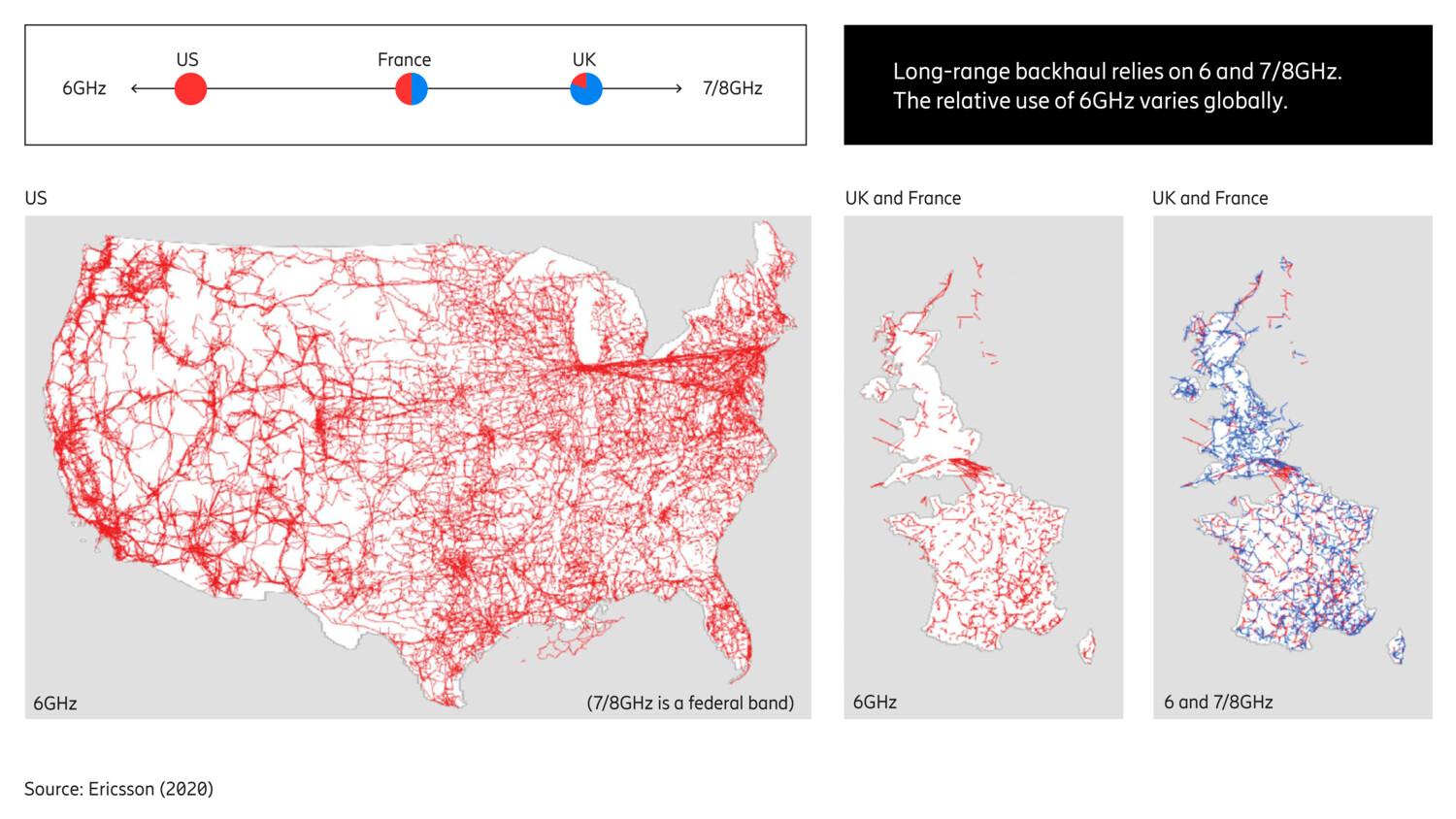
Last but not least, the overall spectrum situation looks significantly different around the globe – from markets with hardly any spectrum limitations to those with tremendous challenges, such as scattered spectrum and the lack of wide channels. Carrier aggregation, multi-band and MIMO are all efficient tools for handling the scarce and scattered spectrum. There are also some important actions that can be applied by spectrum administrations to satisfy the ever-growing demand for more capacity.
Check out the report and take comfort in discovering that your 5G transport needs have been well taken care of.
Download the latest Ericsson Microwave Outlook report here.
P.S. I need to mention the millimeter wave support in iPhone 12. This is something we couldn’t even dream about when I started working with millimeter wave some 30 years ago. Sometimes reality surpasses imagination!