










ICCA-Critical Communications Award for mission critical 5G deployable network - connectivity when it’s needed the most

Technology and Business development

Customer Solutions Director, Ericsson Americas

Global Business Development Director

Technology and Business development
Customer Solutions Director, Ericsson Americas
Global Business Development Director
Technology and Business development
Customer Solutions Director, Ericsson Americas
Global Business Development Director
Why 5G deployable network is needed
Network connectivity is the nervous system of today’s society. All activities that the general public, enterprises and governmental agencies undertake today involve digital platforms and the network-based services that power them. It is evident that the modern digital society is powered by an underlying reliable and secure network infrastructure and diverse solutions for providing the coverage is imperative.
Emergencies can be local events like accidents or fire, or large regional events like earthquakes or hurricanes. They can be short-term events or longer-term events such as a pandemic. In emergencies, having access to the right information and being able to communicate with the emergency response teams or friends/neighbors/family can make the difference between life and death.
Different types of communication can happen during an event. The governmental agencies alert the public before an emergency using public warning systems; the public reach out for help using 911 or to friends/family using social media; the first responders communicate during incident response; and the larger community receive updates about the evolving situation. In all these scenarios, network connectivity plays a crucial role in enabling communication.
Additionally, public safety is clearly seen as a rising priority in light of a general increase in natural disaster events and the number of people affected globally or in the U.S.
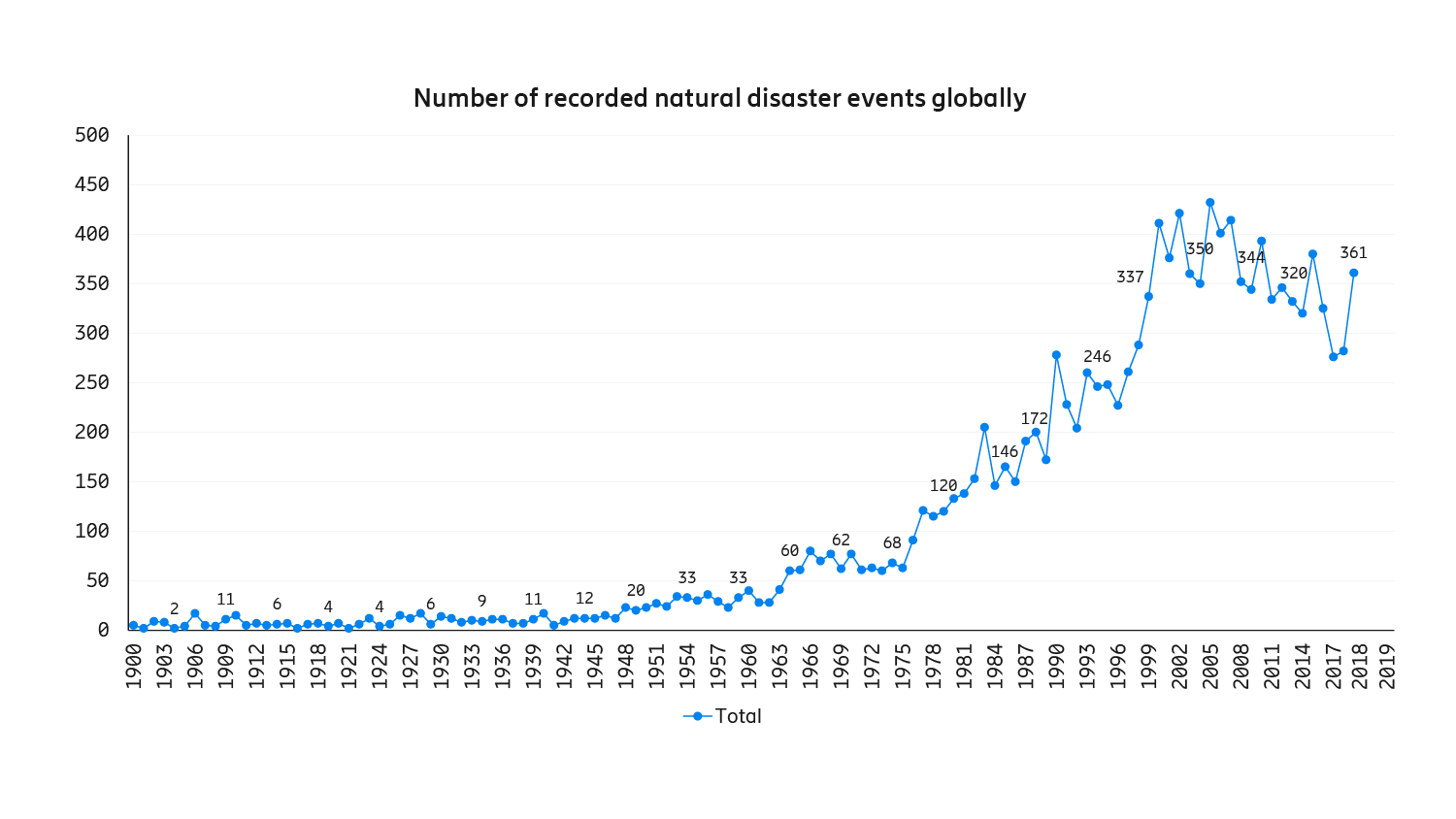
Graph 1: Global trend in the number of natural disasters
Source: EMDAT (2020): OFDA/CRED International Disaster Database
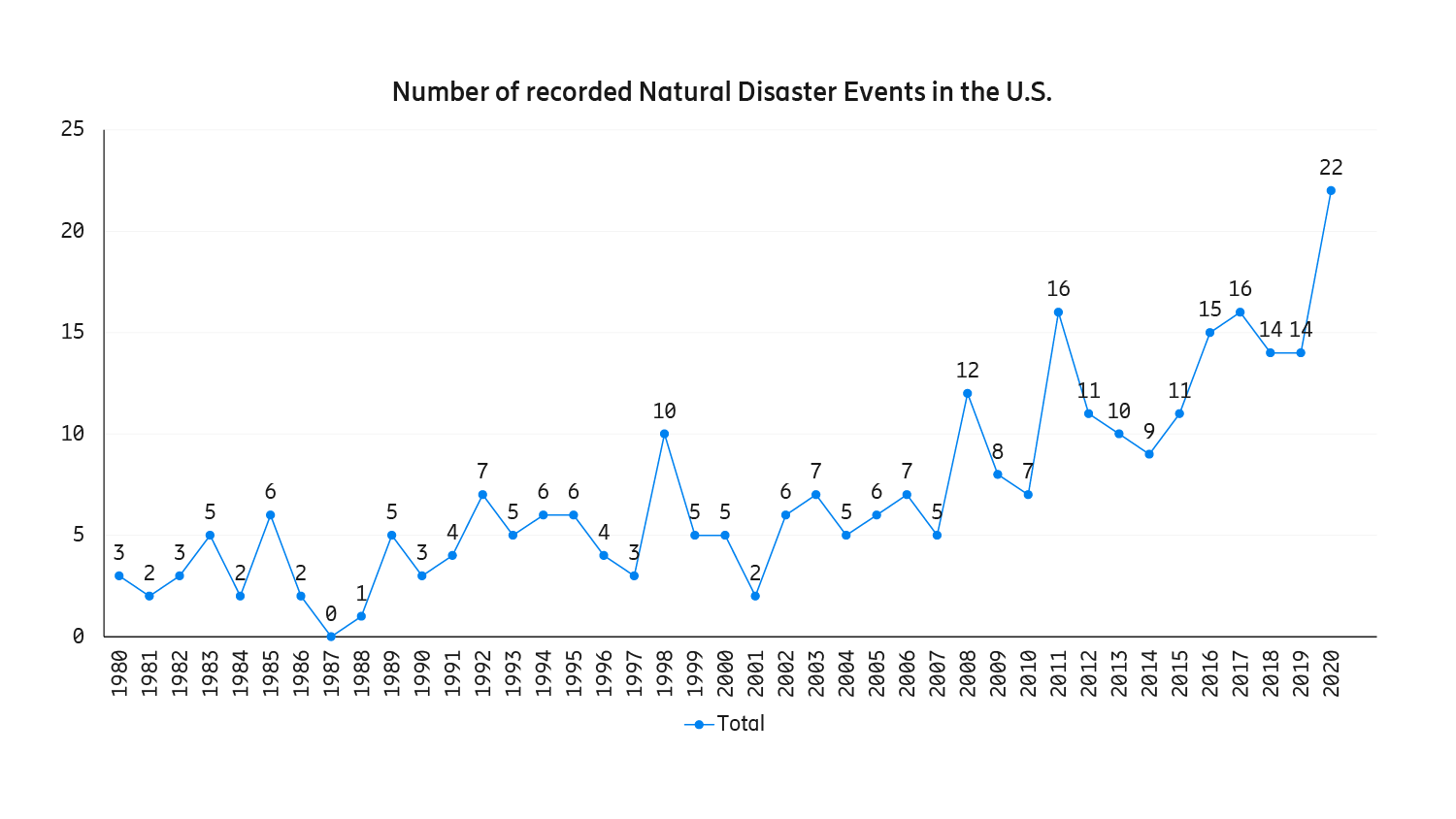
Graph 2: Number of natural disasters in the U.S.
Source: NOAA's National Centers for Environmental Information
In many cases, natural disasters have a massive impact on telecommunications as well. For example, during the recent Hurricane Ida in the U.S. in 2021, roughly half of cellular sites were out of service in the impact area. During hurricanes Sandy and Katrina in 2012 and 2005, similar outages were experienced.
Even public safety networks which were supposed to be resilient experienced massive outages. The data reports, source for graph 1 and graph 2 above about natural disaster events, show number of cell sites or base stations that were impacted and being unusable, either because of power outages or because of equipment damages. It took a very long time until full recovery. There is clearly a need for deployable system solutions.
Networks that provide connectivity include the public macro 4G and 5G networks that provide services to the public and specialized networks such as Land Mobile Radio (LMR) used by public safety organizations. In case the macro network needs to be augmented, network operators deploy dedicated networks to enable communication during the emergency. Emergency responders are also increasingly using mission-critical data and video services over the public broadband networks in addition to the voice capabilities offered by LMR networks.
While today’s 4G networks can provide high-quality broadband services, they often lack the coverage and capacity required for critical communication situations. Hence, newer capabilities offered by 5G networks are becoming important in building today’s mission-critical networks. In very simple terms, 5G combined with localized edge compute means ultra-high throughput, ultra-low latency and extreme reliability:
- Ultra-high throughput—Enables high-definition video streaming for quick real-time inferences and decision-making.
- Ultra-low latency—Enables applications such as drones and robots for surveillance and rescue efforts respectively.
- Extreme reliability—Means we can trust the network to carry the traffic, even in the middle of congestion and chaos; it will stay available through the disaster.
With these capabilities at hand, we can explore a wide range of use cases for public safety. One of the ways the power of 5G technology can be leveraged for emergency communications is by using deployable solutions such as Verizon’s Tactical Humanitarian Operations Response (THOR).
Mission-Critical Deployable Basic Use Cases vs. Basic Solutions
Deployable solutions can be either standalone or in combination with the public networks to:
- provide temporary/on-demand connectivity in remote rural areas or disaster recovery areas
- enhance network reliability and resilience or positioning in already “covered” areas, boosting capacity and filling coverage holes
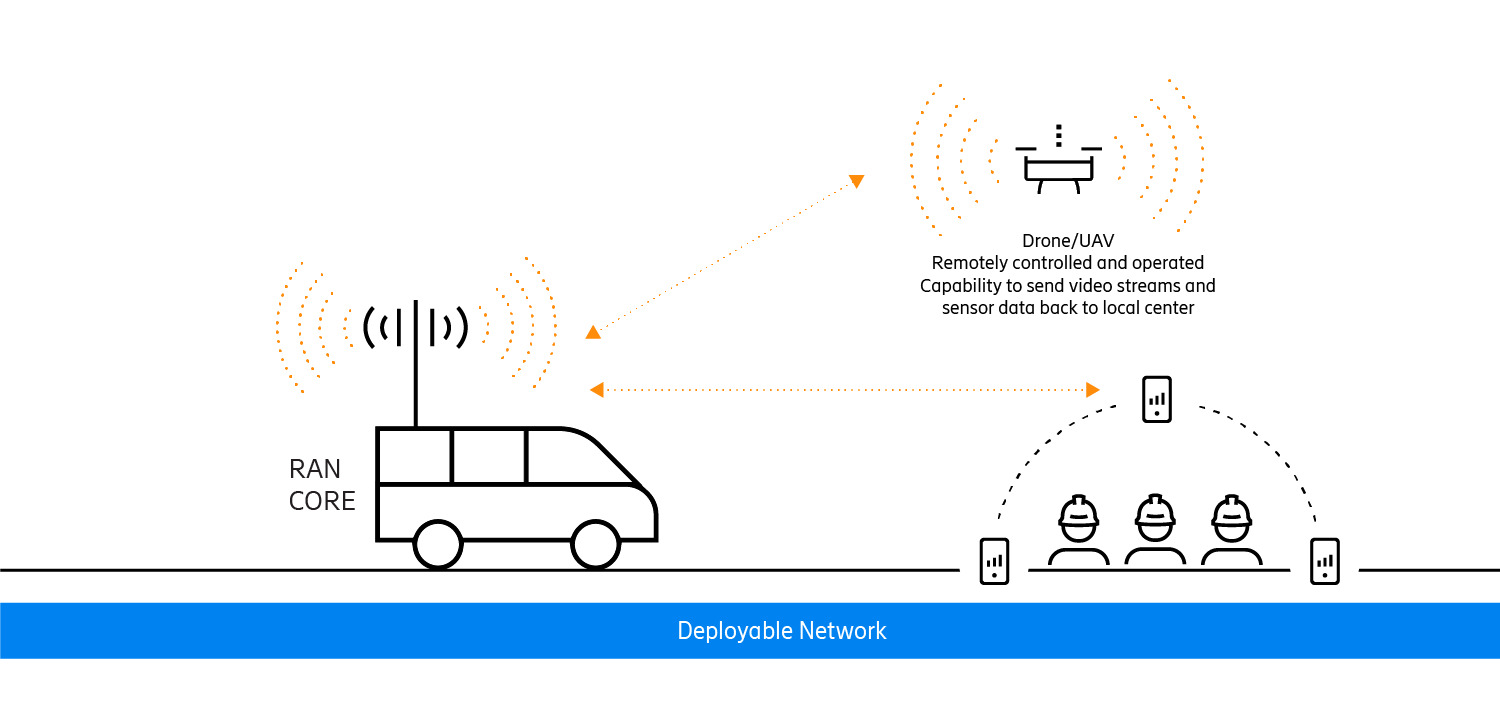
Figure 1: Standalone deployable networks
Standalone deployable solution (with a local core) provides isolated/local connectivity for on-demand communications/disaster recovery in remote areas or any areas where macro coverage is not available.
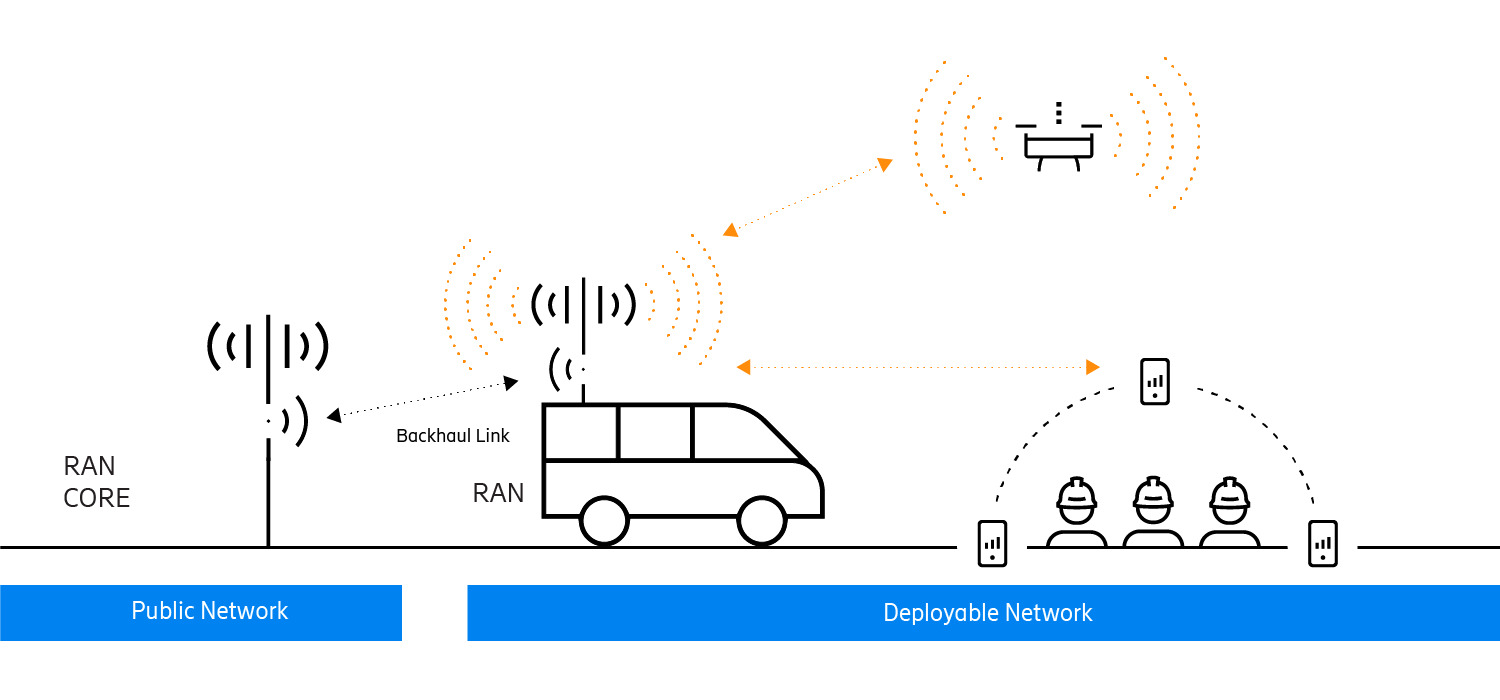
Figure 2: Public network integrated deployable networks
Public network integrated deployable solution extends network connectivity from public network via backhaul link solutions.
What is THOR?
THOR is a fully functional 5G network combined with an edge compute platform, capable of completely isolated operations during an emergency response. Some of the use cases that we are currently exploring are search and rescue operations using drones, situational awareness using location-based capabilities and mission-critical push-to-talk service combined with interoperability with Land Mobile Radio/Professional Mobile Radio (LMR/PMR) systems. Once we have an advanced platform like 5G and edge compute at our disposal, the potential to roll out new capabilities is endless.
THOR is envisioned as a fleet of vehicles in various sizes and configurations that can operate as a single deployable unit for an emergency. The fleet will have multiple trucks and trailers of various form factors. In addition to workstations, generators and other tactical gear required for emergency response, THOR incorporates the following Ericsson products and solutions for its 4G/5G network platform:
- Tailor-made solutions for multiple radio technologies/bands using the state-of-the-art Ericsson Radio System
- First implementation of optimized footprint Ericsson’s dual mode 5G Core
- Ericsson Network Manager
- Ericsson Mission-Critical Push-to-Talk application
- Ericsson MINI-LINK microwave antennas for interconnection between the vehicles
- Cradlepoint 5G device solutions for creating Wi-Fi hotspots in and around the vehicle
- Ericsson’s user plane function in conjunction with a local compute platform enables ultra-low latency use cases with local breakout.
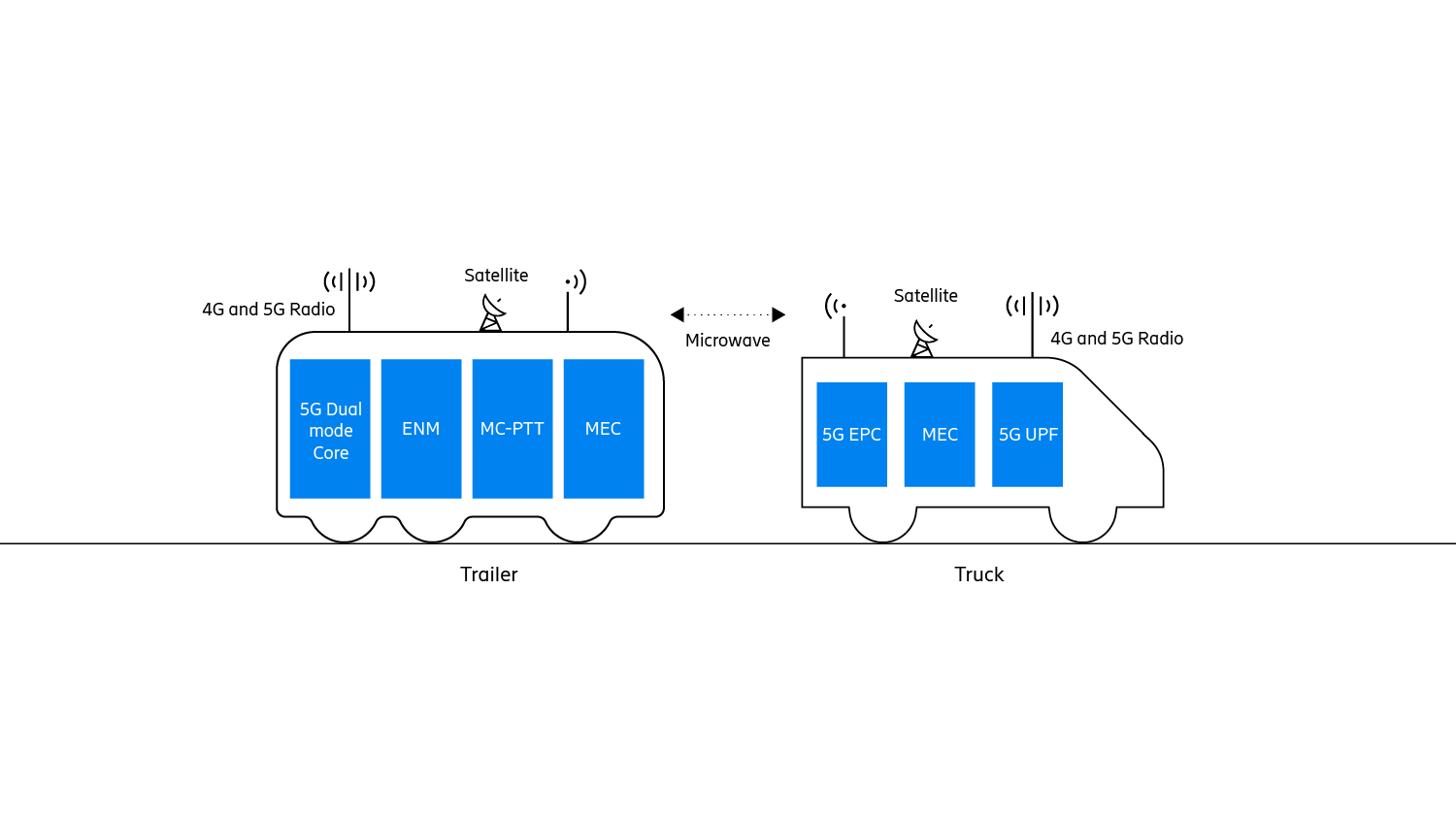
Figure 3. Network components in THOR
In addition to the network components above, THOR also has satellite dishes for external connectivity, a drone launch pad for drone operations, two generators for backup power, a local command center and a six-person cabin for first responder teams. When deployed, it can operate up to 150 hours without additional fuel and can be driven to any geographical terrain for deployment. The entire unit can be controlled using a tablet screen and can be rapidly brought into operation at the location.

Video courtesy of Verizon
Two example use cases enabled by THOR
1. Mission-critical voice and interoperability with LMR
One of the most critical capabilities for first responders is voice communication with each other during an emergency response. Today, most organizations use and trust the LMR systems for this purpose.
First responders, who are primarily relying on the P25 systems for voice, can significantly benefit from modern 4G/LTE and 5G networks. These modern networks allow first responders to incorporate data and video capabilities and the other low-latency and high-throughput applications, in addition to voice. This can result in faster response times, safer working conditions and the potential to save more lives.
A key application that THOR enables is a mission-critical push-to-talk (MCPTT) solution for all the users who are connected to the private 4G/5G network on the vehicle. All they need is their smartphones equipped with Ericsson MCPTT client.
In addition to MCPTT, THOR can interconnect with existing P25 systems using a gateway function, enabling participating emergency teams to join a group communication team.
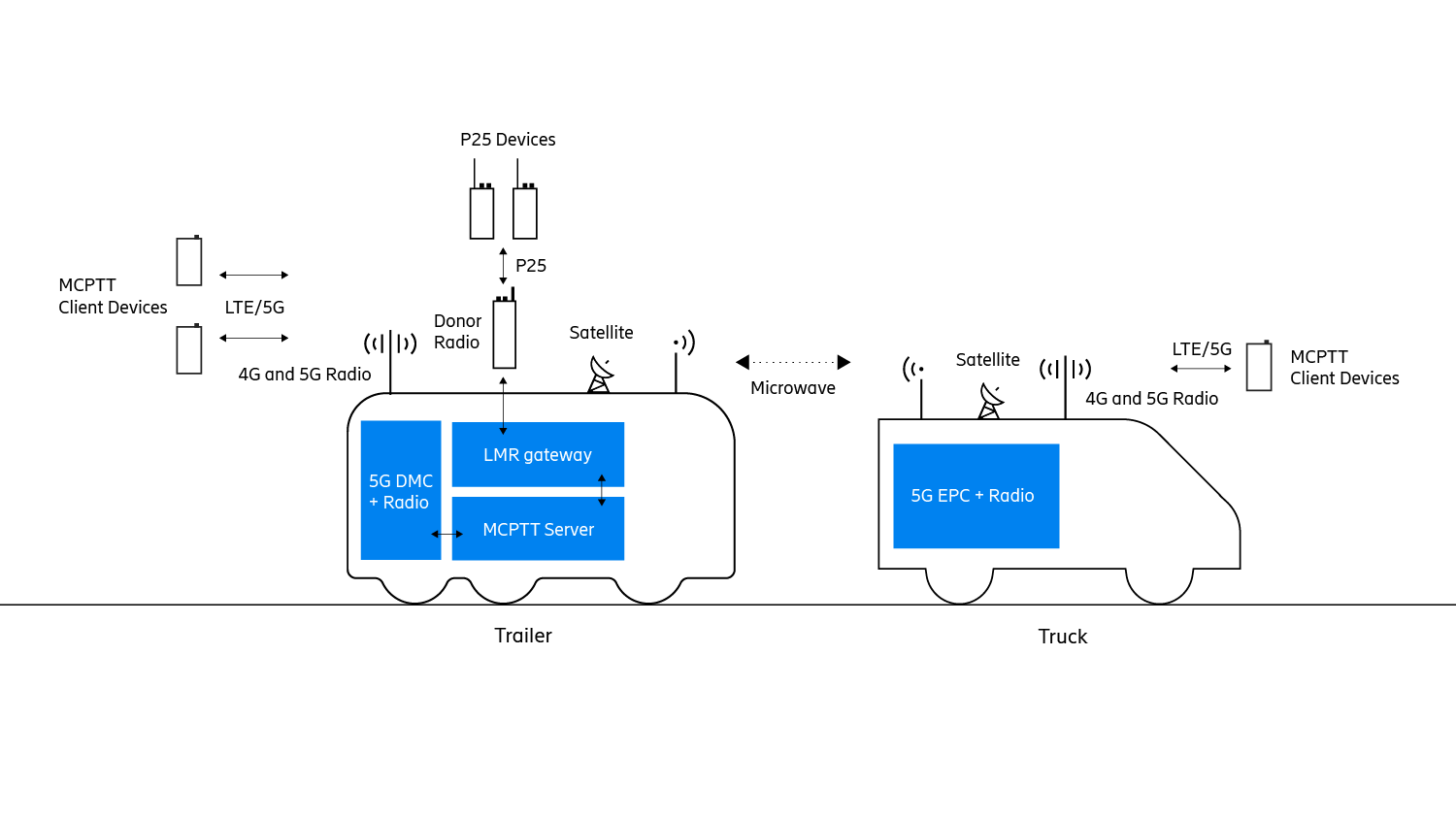
Figure 4. Mission-critical push-to-talk with interoperability to P25 systems
2. Situational awareness during emergency missions
After having a reliable voice communication channel, the second biggest need of emergency personnel is access to situational awareness information. In a large event such as fire, the ability to identify the nearest staircase, windows or presence of life in a room filled with smoke and darkness could mean the difference between life and death. Such information also significantly improves the safety of emergency responders while they are responding to a situation.
THOR intends to utilize the positioning capabilities provided by the network to identify users’ accurate location and reach them quickly. Access to 911 call information from the area would help to identify people who need help who are not connected to this vehicle’s network.
A local commander leading the rescue operations can combine all the location information of the response team and civilians who need help with video information from drones and other cameras connected to THOR on a map or on an Augmented reality (AR) screen. With a real-time situational view, the commander can make effective and fast decisions.
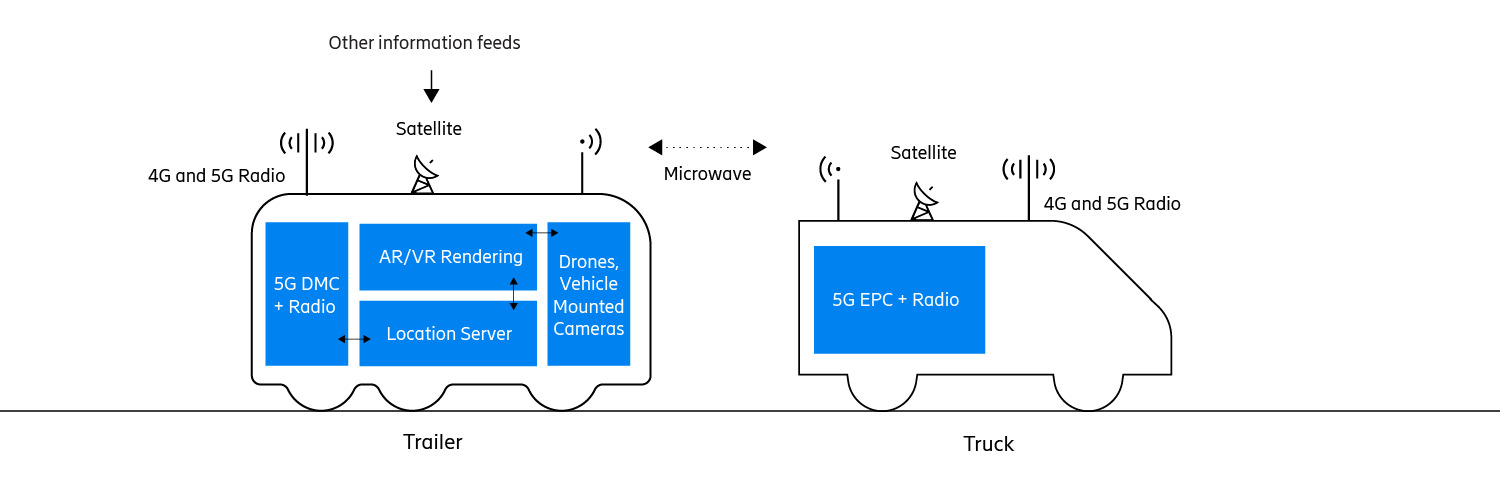
Figure 5. Situational awareness using multiple data sources
THOR as example of Ericsson-Verizon collaboration
Ericsson and Verizon jointly conceived the idea of THOR and partnered together in every step of building the network solution. THOR was designed and built by Verizon and Ericsson, with first responders in mind, to deliver a network platform regardless of the current landscape where it is deployed. Leveraging Verizon's 5G millimeter wave spectrum assets, the platform is able to provide the bandwidth necessary for mission critical solutions for first responders and government agencies. With Verizon 5G Edge, a real-time cloud computing platform on board, mission-critical applications can reside locally on THOR to deliver guaranteed low latency solutions. This is one example of the way Ericsson co-creates new 5G applications with customers, identifying real problems that we can jointly address in the society and taking concerted action to solve the issues, step by step.
Mission-critical network solutions—Market potential and the value of deployable solutions (like THOR)
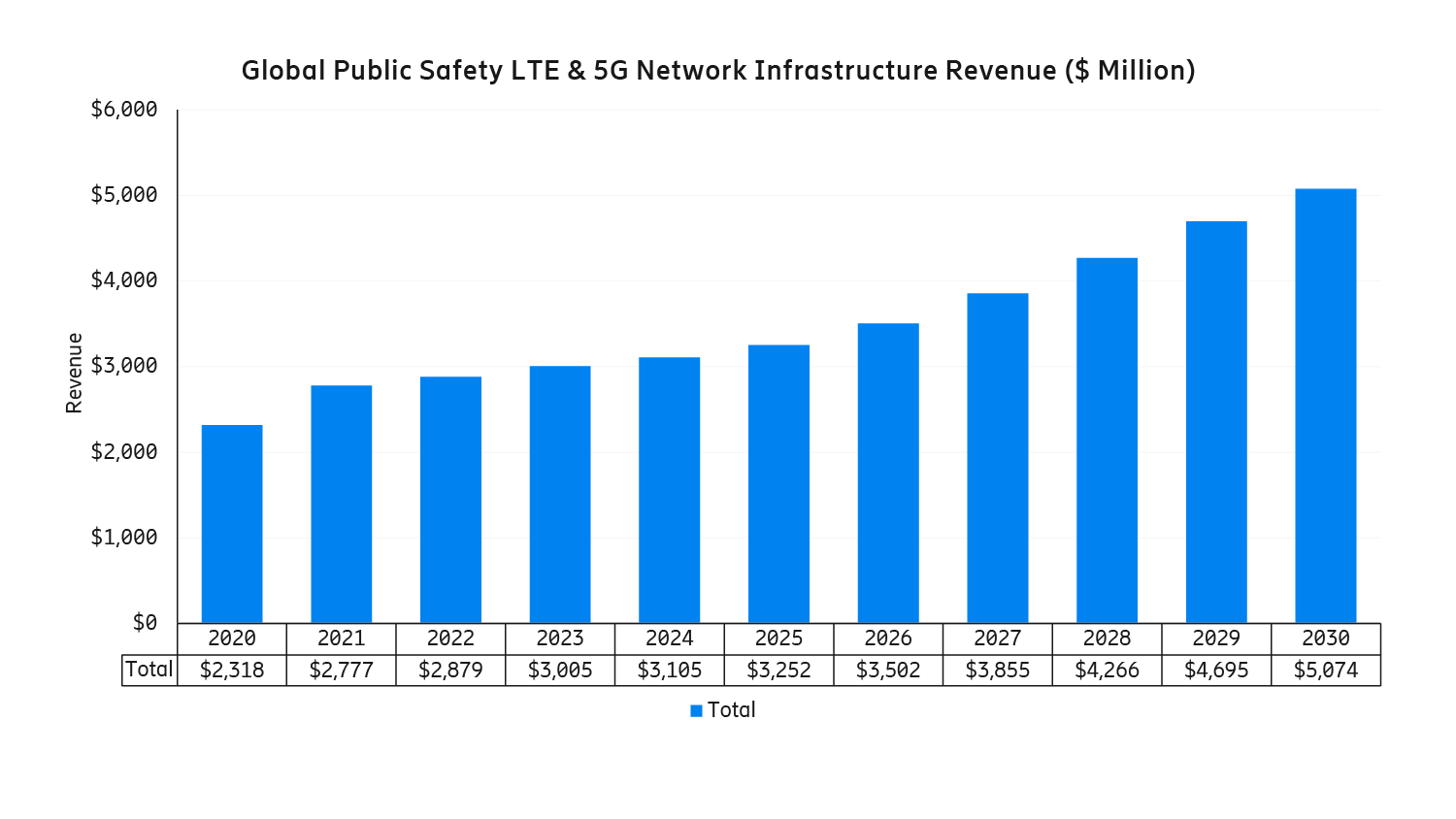
Graph 3: Global Public Safety LTE & 5G Network Infrastructure Revenue
Source: SNS Telecom & IT, The public safety LTE & 5G Market: 2020-2030
Public safety LTE and 5G network infrastructure revenue shows a general increase globally year by year (2020–2030) by CAGR of 9 percent and is expected to be USD 5,074 mUSD potential market revenue by 2030. The importance of mission-critical network infrastructure to support today’s emergency responses and the market potential report really show the need to build out mission-critical network infrastructure for public safety. The mission-critical network infrastructure will be continuously expanded, even to the already “covered” areas for boosting capacity, filling coverage holes, enhancing network reliability and resilience or enhancing positioning.
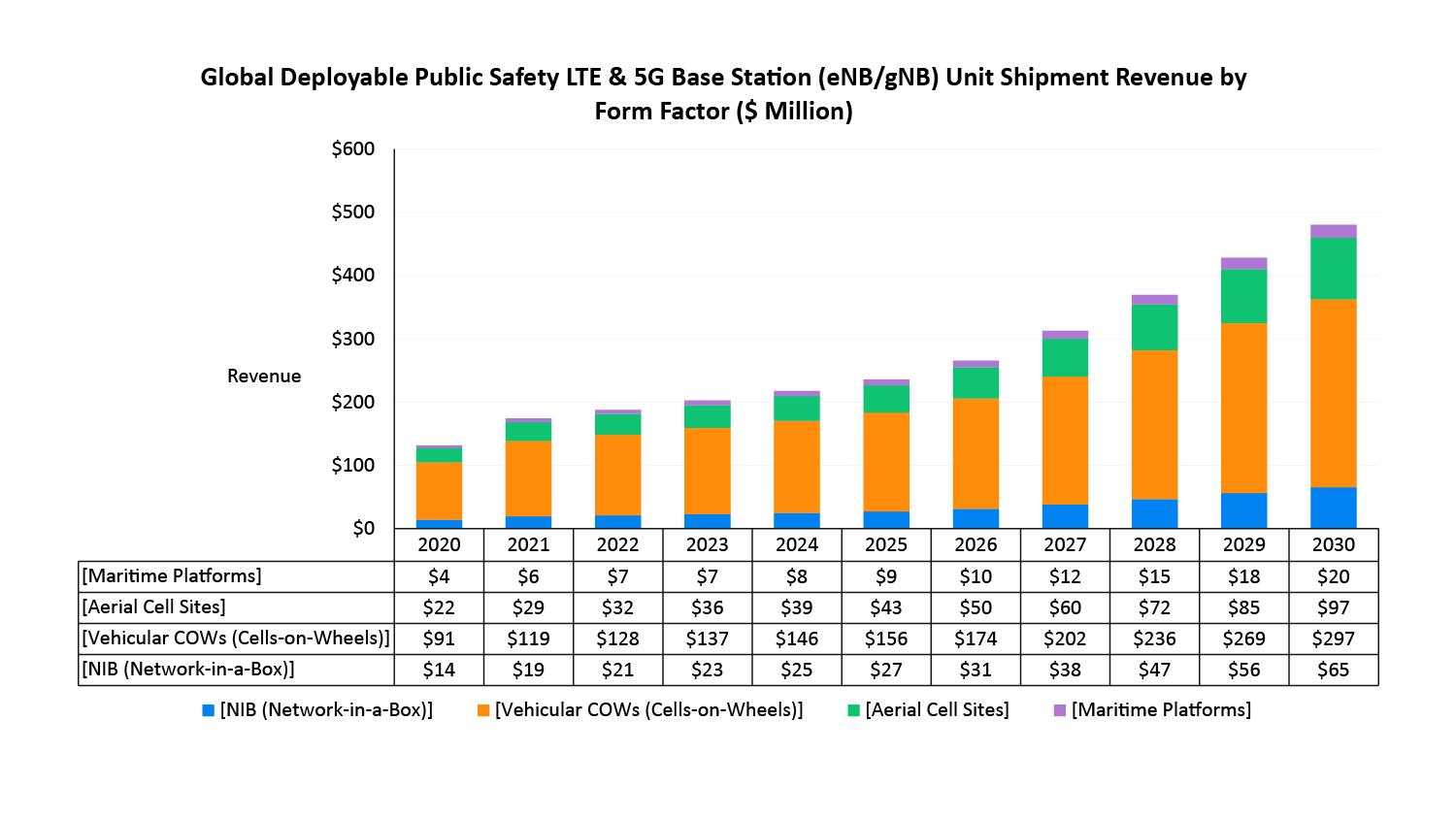
Graph 4: Global Deployable Public Safety LTE & 5G Base Station Unit Shipment Revenue by Form Factor
Source: SNS Telecom & IT, The public safety LTE & 5G Market: 2020-2030.
Deployable LTE/5G system is increasingly being viewed as a key solution for mission-critical communications to provide network coverage in remote areas, including for network restoration and remote incident response. There’s a growing interest in public safety communities to use deployable nodes for providing fast, temporary coverage in mission-critical situations, from Cell-on-Wheel (truck/trailer) to Cell-on-Wings (drone/unmanned aerial vehicle (UAV)). It is estimated that deployable network solutions, like THOR, have a market potential of over USD 300 mUSD by 2030.
Outlook for deployable solutions
A host of different technologies are maturing in the market to support the Fourth Industrial Revolution . We can build an exciting future for public safety operations if we’re capable of leveraging state-of-the-art 5G networks coupled with edge-compute in three new technologies:
- Internet of Things—With more sensors and cameras, and the ability to gather near-real-time analytics on the data from these devices, we’ll predict disasters and emergency situations earlier and prepare well in advance.
- Big data and Artificial intelligence (AI)—Social media feeds and other crowd-sourced information will generate comprehensive real-time insights and an overall understanding of what’s going on in an emergency.
- Ground-based and airborne robots—Automated Guided Vehicles (AGVs) and drones using computer vision, thermal imaging, cleaning up debris and augmenting human resource capital can make emergency response significantly safer and more effective.
Not only can public safety agencies around the world benefit from deployable solutions like THOR. Governmental agencies such as the United States’ Federal Emergency Management Association (FEMA) and utility companies that provide critical infrastructure for electricity, gas and water can benefit from such solutions. With the ability to exchange information and coordinate between various agencies, emergency management can become much more efficient.
Related links:
- Verizon Frontline unveils THOR: mobile, 5G rapid-response command center
- Teracom and Ericsson - High tower, high power
- Ericsson Mission Critical Communications
Read more
Discover how 5G core unleashes a new era of scalable and service-rich cloud-native networks.
Explore 5G core solutions that make it possible for you to deploy, scale and evolve your operations across multiple deployment scenarios.