Delivering a consistent, high performance indoor 5G experience
Most mobile traffic is generated indoors, where users increasingly expect the same high-quality 5G experience they get outdoors. For service providers, this makes indoor coverage and capacity a critical part of delivering on the 5G promise. This article explores how dedicated indoor solutions can help provide a consistent 5G experience while improving coverage and capacity in a cost-efficient way.

Head of Indoor Radio

Product Manager for Indoor
Strategic Product Manager

Strategic Product Manager
Head of Indoor Radio
Product Manager for Indoor
Strategic Product Manager
Strategic Product Manager
Head of Indoor Radio
Product Manager for Indoor
Strategic Product Manager
Strategic Product Manager
Most mobile data traffic is generated indoors
Mobile networks have traditionally been designed primarily as macro-outdoor networks. This meant that people using their phones inside offices, shopping malls, hospitals, or other buildings were often served by outdoor sites through what is known as outside-in coverage. In dense urban areas, however, a large share of mobile traffic is generated indoors, and serving that traffic from outdoor base stations becomes increasingly challenging as radio signals are weakened by walls, windows, and modern building materials. As indoor usage continues to grow, dedicated in-building solutions Ericsson Indoor 5G are becoming essential to deliver the coverage, capacity, and user experience expected from 5G.
Indoor coverage is becoming more important — and more challenging — with 5G
Existing 4G coverage layers use lower frequency bands below 3 GHz, which generally penetrate buildings more effectively than higher-frequency spectrum. This has made outside-in coverage a workable approach in many locations, particularly where indoor traffic demand and performance expectations were lower.
5G capacity deployments are increasingly based on mid-band spectrum, which varies by market but is commonly centered around TDD bands such as 3.5 GHz, with broader mid-band ranges also playing an important role in delivering the full 5G experience.
However, 4G networks and outside-in macro coverage cannot always provide the capacity and consistency required in high-density indoor environments, such as venues where many users are simultaneously streaming video, using collaboration tools, gaming, or relying on business-critical applications. Indoor 5G is therefore about delivering the right connectivity where users need it most, by making efficient use of available spectrum and placing capacity closer to the user. Mid-band spectrum provides a strong balance between coverage and capacity, making it a key foundation for high-performing indoor 5G deployments.
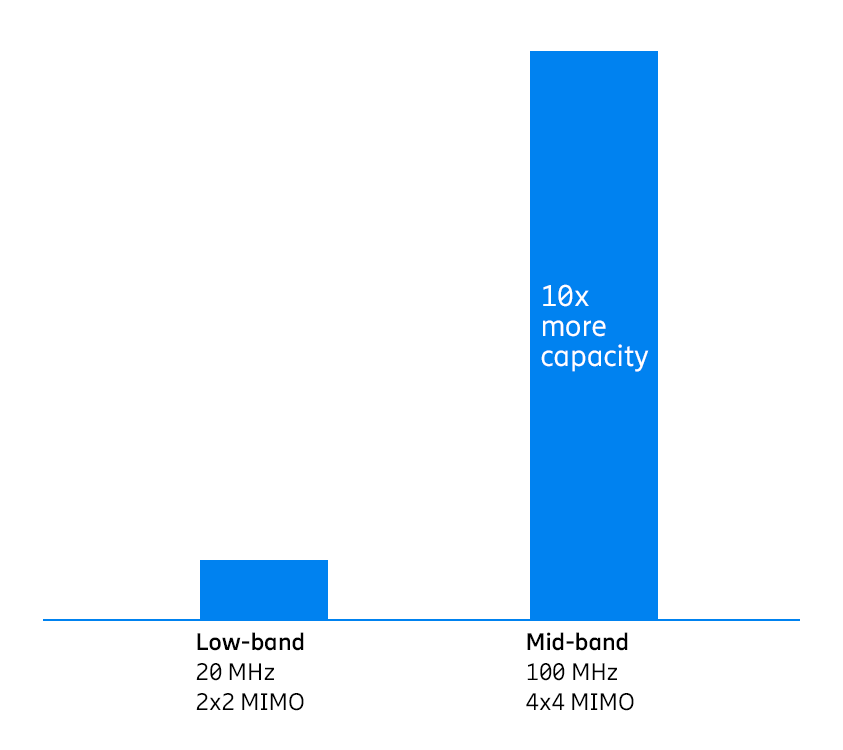
Figure 1: Difference in capacity between low and mid-band spectrum
Near-term enterprise demand is likely to be driven by 5G-connected laptops enabled by Enterprise 5G Connect[link to Enterprise 5G Connect], enterprise IT connectivity, video collaboration, secure access to cloud applications, and business-critical mobile workflows. These use cases can scale faster than more specialized applications such as XR, while still depending on consistent performance, low latency, and strong uplink as well as downlink capacity. Consumer expectations are also evolving: poor 5G performance in key locations such as event venues and airports has been shown to increase the likelihood of users switching service providers [link to Ericsson ConsumerLab 5G value report], which makes indoor experience an important driver of customer loyalty.
Improving 5G indoor coverage is challenging because outside-in coverage becomes harder to maintain at higher frequency bands, including mid-band and millimeter wave. These bands provide more capacity and better performance, but they also experience higher attenuation when radio signals pass through walls, windows, and other building materials. The result is weaker indoor signal strength and a greater need for dedicated indoor deployments in buildings and venues with high traffic demand.
Modern, energy-efficient buildings can make this challenge even greater. Materials such as metallized or IRR-coated windows, insulated walls, foil-backed panels, and reinforced concrete may significantly increase penetration loss, further limiting the ability of outdoor sites to deliver a high-quality indoor 5G experience.
In short, indoor 5G creates a clear opportunity for service providers, neutral hosts, enterprises, and property owners to deliver a more consistent and differentiated connectivity experience. To capture this opportunity, they need in-building solutions that can overcome penetration losses, place capacity where traffic is generated, and scale cost-efficiently across different venue types.
Traditional indoor solutions can be costly and complex at higher frequencies
Traditional indoor solutions, such as distributed antenna systems (DAS), can become increasingly complex and costly when used for higher-frequency 5G deployments, especially where high capacity, multi-operator support, and dense venue coverage are required. There are two main types of DAS: passive and active.
- Traditional Passive DAS: Based on placing high-power radios in a central location and using coaxial cables throughout the building to reach each antenna point. Passive DAS deployments may not support higher 5G bands efficiently, and components such as couplers, combiners, and coaxial cabling can introduce significant attenuation at mid-band frequencies. Supporting 5G may therefore require upgrades to components, cabling, and MIMO capability. This can make Passive DAS costly and often unsuitable for delivering full 5G mid-band performance without significant modernization.
- Active DAS: In this case, coaxial cables can be replaced with fiber throughout the buildings. However, active components such as Master Units (MUs), Remote Units (RUs) and separate management systems drive up OPEX. Additionally, external antenna-based RUs used on mid-band typically require 30% more antenna points when compared to frequency division duplex (FDD) low-band deployment. The result is that Active DAS requires more antenna points and components, also making it an expensive and complex solution.
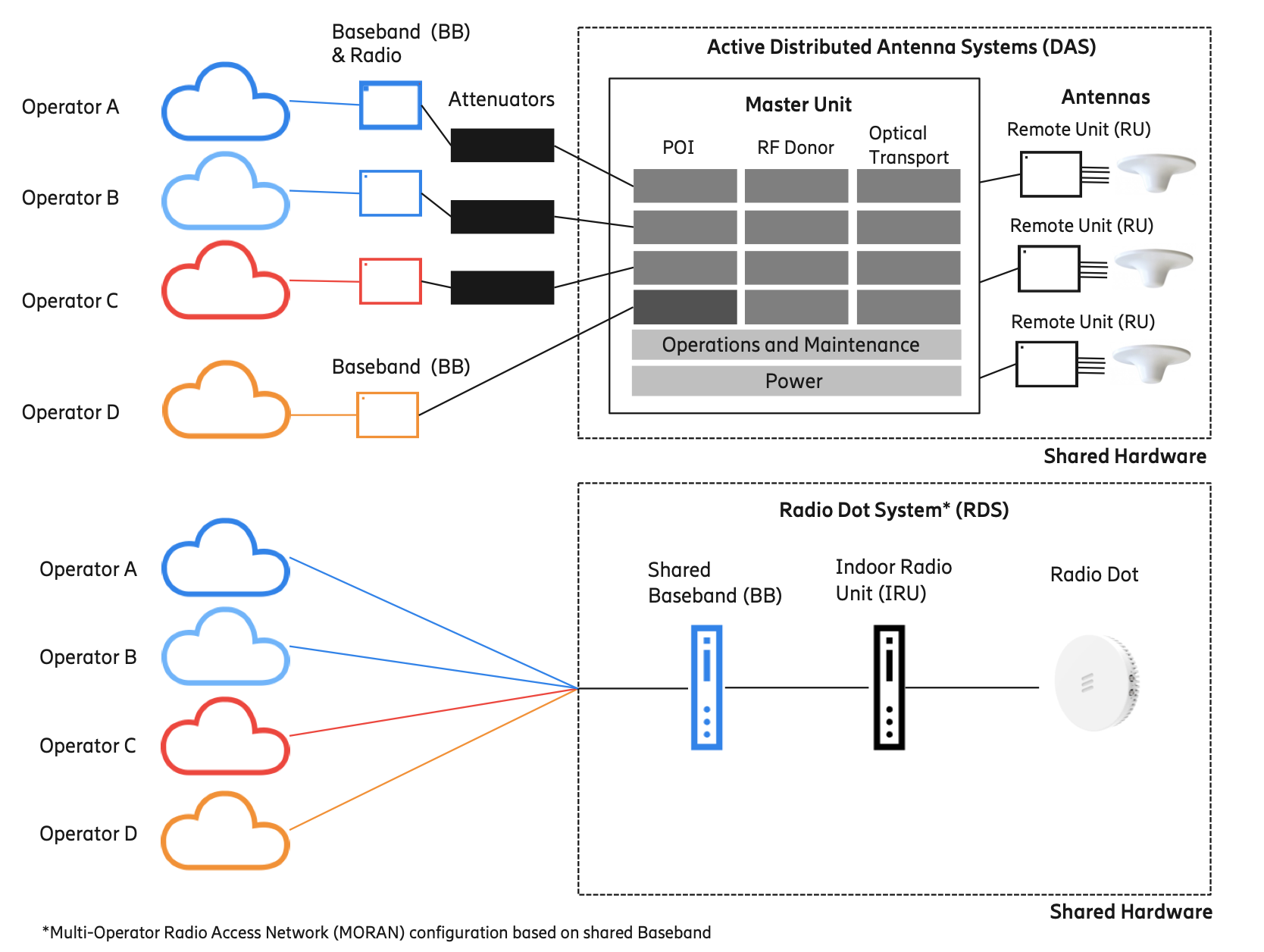
Figure 2: Visual representation of an Active DAS and an RDS.
As a result, many indoor 5G deployments require a simpler, more scalable approach to improve coverage and capacity cost-efficiently.
A scalable approach to high-performing indoor 5G coverage
With the Ericsson Radio Dot System [link to Ericsson Radio Dot System], Ericsson provides a compact, modular, and high-performing indoor radio solution for a wide range of indoor environments. The system combines a simplified architecture with small form factor radios, low power consumption, and tight integration with the wider Ericsson Radio System, helping service providers and neutral hosts deliver indoor 5G with less complexity.
Compared with traditional distributed antenna systems, the Radio Dot System can reduce the number of antenna points and components, simplify installation, and use standard LAN cabling instead of coaxial cable to connect indoor radio units to Radio Dots. Its capacity, spectrum support, and multi-operator capabilities make it well suited for shared indoor deployments [link to neutral host / shared indoor 5G case] led by a communications service provider, neutral host, or enterprise partner. This allows multiple operators to use a common indoor platform while maintaining control of their own spectrum and services, creating operational benefits for operators, IT managers, CIOs, property owners, and building managers.
Ericsson analysis has shown that RDS-based solutions can offer significantly lower CAPEX than comparable Active DAS deployments in multi-operator and multi-vendor environments. The OPEX case can also be strengthened by fewer active components, lower power consumption, reduced space requirements, and the ability to use the same operations and maintenance processes as the macro network. By reducing system complexity, indoor small-cell architectures can also help improve reliability and simplify troubleshooting.
The Ericsson Radio Dot System is deployed by more than 125 operators in over 70 countries, in venues such as offices, shopping malls, hotels, airports, hospitals, stadiums, and multi-dwelling units. The solution supports advanced indoor capabilities including multi-band 4G and 5G, multi-operator deployments, 4x4 MIMO, carrier aggregation, network slicing, and indoor positioning. These capabilities help create new opportunities for enterprises and service providers, from enhanced mobile broadband and collaboration services to asset tracking, mission-critical communications, and differentiated connectivity.
Preparing indoor networks for the next step
Indoor connectivity is becoming a business-critical part of the 5G experience. As 5G-connected laptops, enterprise IT connectivity, secure cloud access, video collaboration, and private networks become more widely adopted, indoor networks will need to support more demanding and more diverse performance requirements. Over time, 5G Standalone, network slicing [link to Ericsson network slicing], differentiated connectivity, AI-enabled applications, and XR will further increase the need for flexible and future-ready indoor platforms. A future-ready indoor platform must therefore be able to serve different venue types and business models, from CSP-led deployments to neutral host and enterprise-led models.
In conclusion, Ericsson Radio Dot System provides a scalable indoor platform designed to deliver high-performing, multi-operator 5G coverage with a low total cost of ownership. By combining capacity, coverage, operational simplicity, and support for future capabilities, it helps service providers, neutral hosts, and enterprises meet today’s indoor connectivity needs while preparing for the next generation of indoor digital experiences.
References: