Heather, to start off, can you share Ericsson’s approach to sustainability?
Absolutely. We start with a foundation of responsible business in everything we do. Building from this foundation, we focus on two key areas where we know we make a big difference – environmental sustainability and digital inclusion.
I’ll drill down on the environmental side a bit more. We take a holistic view on what we can do to reduce our own carbon footprint; how we can help our customers reduce their impact; and how collectively we can help society reduce emissions through the deployment of ICT solutions.
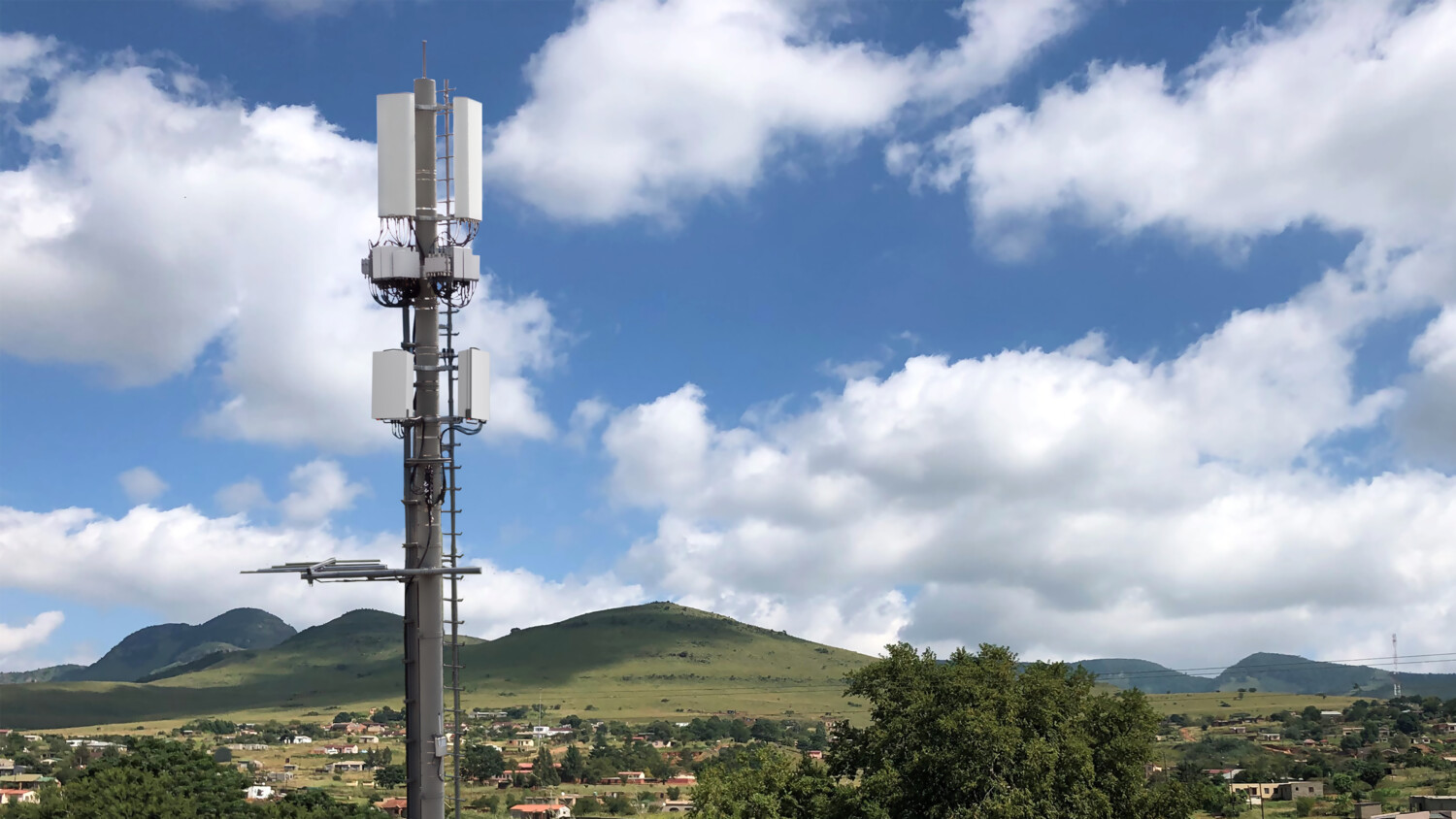
One part of this is our “Breaking the energy curve” approach to our customers’ networks. Here, we highlight a unique network-level value proposition that enables an exponential growth of data traffic without increasing energy consumption. Savings can be achieved by building the network with the latest technology solutions, activating energy-saving software, building 5G with precision, and operating site infrastructure intelligently.
Carl, it sounds like this has a clear business impact?
Yes, significantly reducing energy consumption has a big impact on the total cost of ownership. Energy is one of our customers’ biggest costs – it adds to about USD25 billion annually. In that sense, we are having a direct positive impact on our customers’ profit and loss.
So, this is an example of how sustainability-driven solutions are inextricably linked to creating customer value. But it also shows how we simultaneously create value for a broader stakeholder group by reducing emissions and energy dependence.
Carl, how would you describe Ericsson ambitions, long-term?
Ericsson wants to create value for the future. And we are convinced long-term success will drive value for all our stakeholders – ranging from our customers and employees to our partners, shareholders, and people who build businesses on top of the network platform we help create, as well as end consumers.
Continuing on that thread, how would you describe the relationship between sustainability and executing on our strategy?
Sustainability is an integral part of Ericsson’s strategy which is aimed at helping our customers to capture the full value of connectivity. As we have seen in recent years, it has led to a dramatic turnaround in our performance which we completed in 2020. And we know our focus on sustainability has been a critical contributor to this success, not least when it comes to work within energy consumption and the energy performance of our products.
The long-term ambition for our own operations is reflected in the target of becoming carbon neutral in 2030, and, as we show in the 2020 Sustainability report, we are well on track to achieving this. In 2020, we achieved a 57 percent reduction in absolute terms compared to a 2016 baseline.
We see this target as integrated with our other long-term financial targets, aimed at ensuring our long-term competitiveness. By having our own house in order, we have a strong foundation to create financial value.
As Börje, our CEO recently wrote, there is a clear shift in the demands of customers, employees, governments and investors. They expect companies to be climate leaders - and with good reason – as it drives value for business as well as society.
With our corporate turnaround now complete, how do you see that sustainability will continue to drive value for us and our stakeholders? Carl, let’s start with you.
As we move forward, our strategy remains in place with the focus on creating long-term value to strengthen the business. Obviously, one key part is continued focus on R&D investments, further strengthening our product portfolio and offerings to the market with improved financial returns as a result.
With over two decades of sustainability research and lifecycle assessments by our colleagues at Ericsson Research, we understand the challenges customers are facing and are well-positioned to build on the breakthroughs we have achieved when it comes to energy efficiency.
Heather, what is your view on Ericsson’s impact on broader society going forward?
We understand the role our technology can play in society. Through our research, together with other climate thought leaders, we know the ICT sector represents only about 1.4 percent of total carbon emissions. As an industry, however, we can impact at least 15 percent of total CO2 emissions by 2030. In essence, we are a solutions sector when it comes to climate action – with the technology available today.
As society enters the 5G era, these opportunities will increasingly come to fruition. This will be most clearly seen with enterprises that choose cellular connectivity as a primary access technology. We believe this transformation will drive sustainable development in the future while creating an opportunity to grow our own long-term value.
Let’s take manufacturing as an example: By cutting the cord and using cellular connectivity, factories can become more flexible and produce less waste, while keeping productivity higher. Our own 5G Smart Factory in the US is an exciting example of what will become normal in the coming years. By utilizing next-generation digital technologies, it increases production efficiency, reduces resource consumption and utilizes renewable energy, requiring 24 percent less energy consumption and using 75 percent less water.
Carl, would you like to add to this?
I would just say that this highlights what a critical part Ericsson plays throughout the whole value chain. While we are obviously confronting a massive challenge when it comes to climate change, I am optimistic when I think of the potential that our industry and 5G has to offer and the impact we can make.
Before we conclude, Carl – what about future ESG reporting?
Our sustainability report is one of the most important tools we have for communicating with our stakeholders. Ericsson has a strong position in environment, social and governance (ESG) reporting, having made ESG disclosures for over 20 years.
Today, investors and other stakeholders are calling for standardized and uniform ESG disclosures. We are positive about initiatives to converge and align different ESG frameworks. This is important to ensure fair and consistent stock valuation. Until there is a global standard for ESG reporting we will continue to answer our stakeholder’s calls to align our reporting to global ESG best practices.
We are also proud to be among the first wave of companies to publicly commit to aligning our reporting to the World Economic Forum’s (WEF) Measuring Stakeholder Capitalism initiative. These metrics aim to show, in a measurable and consistent way, how companies create value for a broad range of stakeholders. We see the Stakeholder Capitalism metrics as an excellent means to show the world how we are delivering on this purpose, and how this in turn helps us continue to build a resilient and sustainable company.
To sum up, Heather what are your reflections on the future?
Before I look forward, I’ll reflect back. More than 25 years have passed since Ericsson published its first environmental report in 1993 – not long after the first Earth Summit in Rio in 1992. It makes Ericsson one of the pioneers in the sustainability space.
As I look ahead to this year’s global climate meeting, COP26, I am excited by the opportunities we have to drive climate action in our industry and across other sectors, to deliver impactful technology and be part of the solution to the climate challenge.
Carl, a final thought?
I can only echo what Heather said. Over time, Ericsson’s longstanding commitment to sustainability has remained both proactive and progressive. Looking ahead, I am convinced that it will be the intersection of business and positive impact on society that will continue to create sustainable value.
Related links
Ericsson Annual Report 2020 published
Ericsson’s sustainability performance drives business and societal value
Learn more
Explore our Sustainability and Corporate Responsibility Report 2020
Read more about Ericsson and sustainability and corporate responsibility in general
Read Heather’s blog post on the Great Reset: the power of collaboration.
Read Ericsson CTO Erik Ekudden on how digitalization with 5G enables further acceleration of climate action