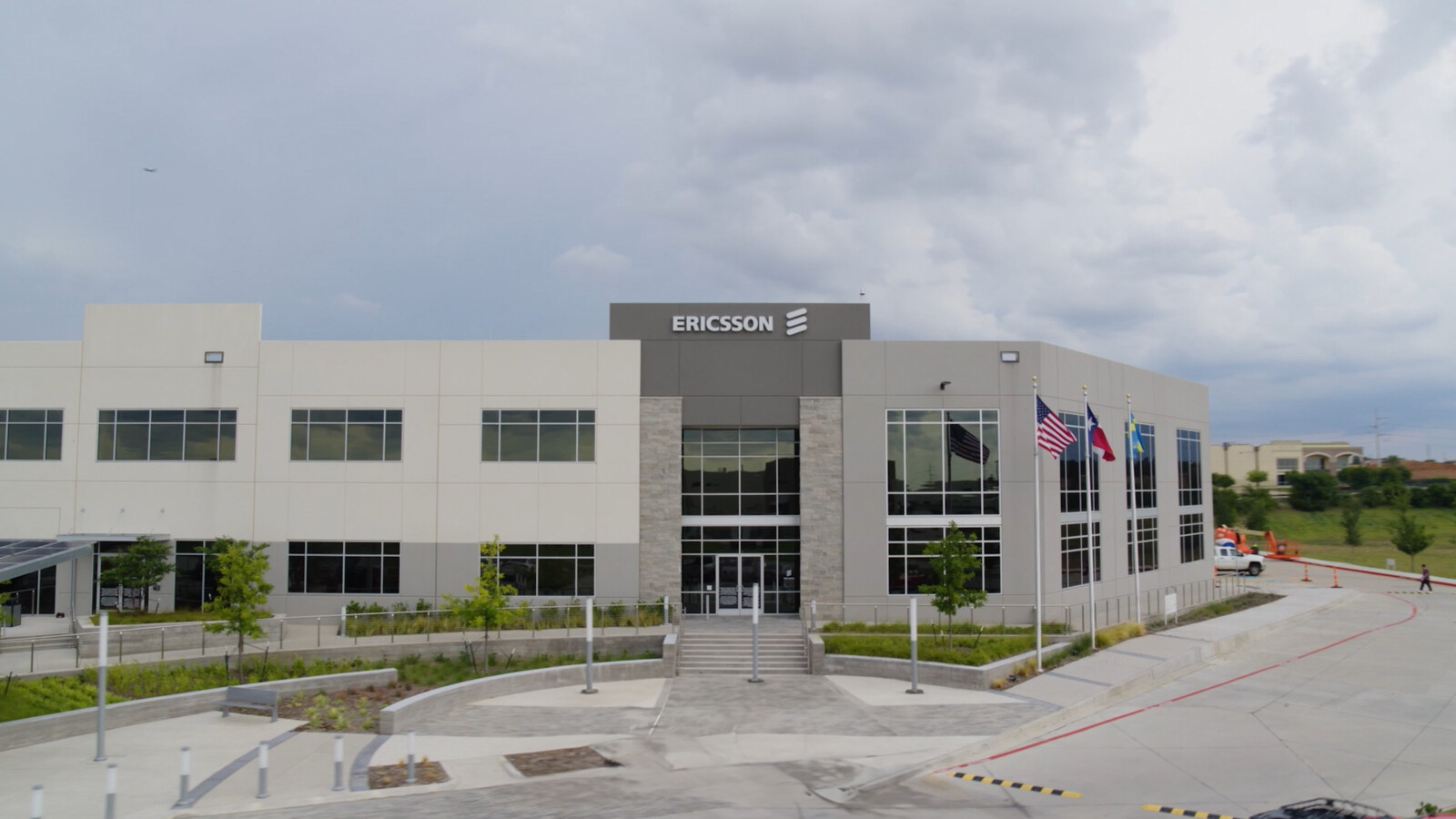
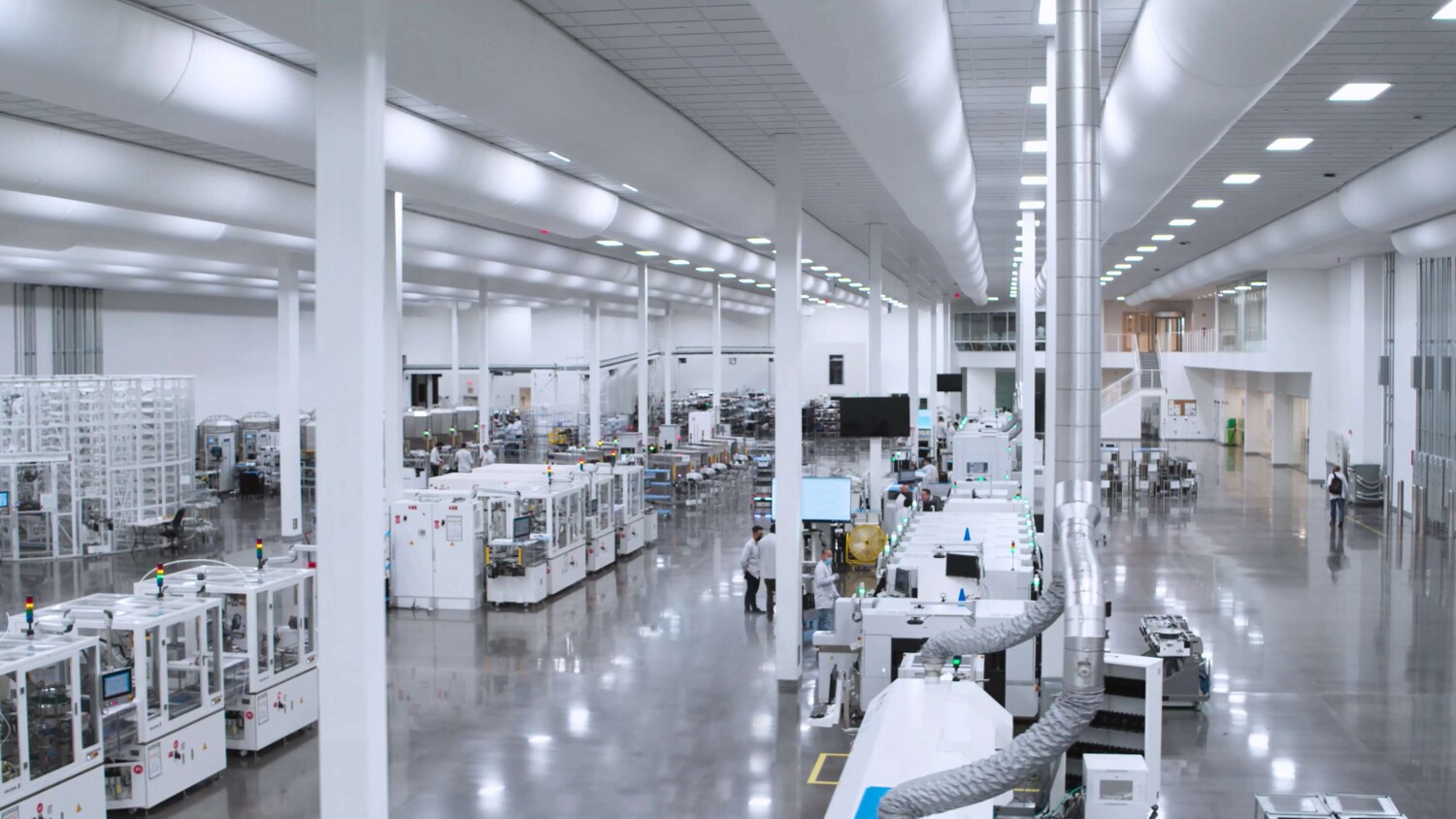
Ericsson USA 5G Smart Factory

Smart Manufacturing

At the Ericsson USA 5G smart factory, we assemble the equipment that will power 5G networks across the U.S. The factory is a full scale operation realizing the potential of 5G with Industry 4.0 to enable intelligent automation and leverage real time data across operations.

Ericsson has been connecting the United States for nearly 120 years. As a trusted partner to all of the major service providers and many regional carriers across the country, we have been strengthening our investments in the U.S. to be even closer to our customers. The 5G smart factory will help accelerate 5G deployment, which will give the U.S. a first-mover advantage, create new jobs, and usher in a new era of technological advancement.

USD 100 m
investment
> 200
new jobs created
300000
sq. ft.
> 200
robots in operation

Welcome to Ericsson’s USA 5G Smart Factory

Listen to Erik Simonsson, Head of Industry 4.0 at Ericsson, as he introduces the latest 5G factory in Lewisville, Texas. An innovation in production, and Industry 4.0, the Ericsson 5G Smart Factory is highly automated and efficient, while also powered 100% by renewable electricity.

Ericsson USA 5G Smart Factory recognized as ‘Global Lighthouse’ by the World Economic Forum

Ericsson’s USA 5G Smart Factory in Lewisville, Texas, has been recognized by the World Economic Forum as a global front runner in the Fourth Industrial Revolution (4IR). The Forum has awarded the site with its prestigious “*Global Lighthouse” designation in recognition of Ericsson’s deployment of next-generation technology at the site and its subsequent impact – including an impressive 2.2 times improved output per employee when compared to a similar site without the automation and 4IR improvements.

Learn More

Industry 4.0 is transforming manufacturing

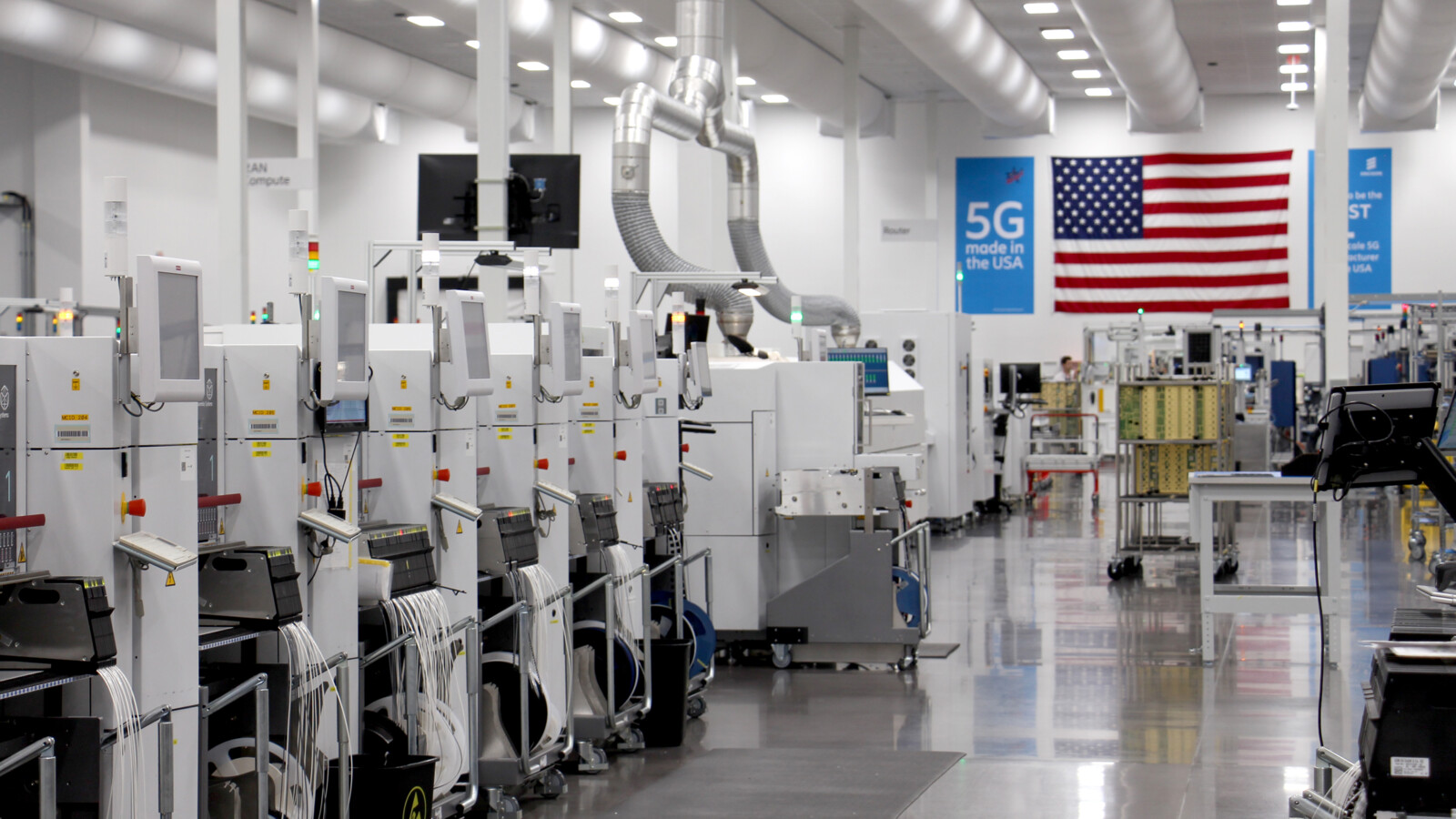
The 5G smart factory produces 5G and Advanced Antenna System radios to boost network capacity. The state-of-the-art factory is equipped with fast and secure cellular connectivity.  It is a highly automated 5G smart factory and sets a precedent for how smart manufacturing can optimize processes for efficiency and increase production through automation.

The 5G smart factory is an example of Ericsson’s investment in the U.S. It enhances our secure supply chain, assembling Ericsson's 5G equipment close to our U.S. customers.

Use cases

Use cases are a way of sharing how we are solving real problems with technology. The Ericsson USA 5G Smart Factory use cases cover a wide range of application areas that can solve business challenges for a variety of contexts. Some of the factory’s key use cases are highlighted below.

Explore how CBRS-based smart wireless connectivity is empowering Industry 4.0 Ericsson

Energy monitoring and management

Energy monitoring and management


Factories are held responsible for a significant amount of energy usage. Lack of visibility into energy consumption at the device-level prevents factory management from incorporating optimization strategies. This 4G connected energy monitoring and management solution gathers data of all energy appliances in the factory for tracking. By doing that, it can show real-time energy consumption as well as turn particular appliances on/off based on preset rules. Factory energy consumption can be reduced by 5 percent.

Challenge
  • Buildings, including factories, use 40 percent of our energy and 70 percent of our electricity
  • Lack of visibility into energy consumption at the device-level prevents optimization strategies
Solution
  • Enables monitoring of all energy appliances and ability to turn them on/off based on rules
  • Gathers data out of the building management systems (BMS) for tracking in the data lake and shows real-time energy consumption on big screen
Estimated impact
  • Cost: 5 percent reduction in energy bill from better monitoring and control of energy consumption
  • Visibility: Better visibility into actual power consumption leads to increased ability to negotiate power consumption unit price from energy providers
Potential applications
  • Manufacturing
  • Agriculture
  • Retail & smart buildings
 

Augmented reality for remote support

Augmented reality for remote support


Maintenance in factories is difficult due to a lack of on-site expertise. Having maintenance labor maintained at each site, and flying the vendor out for repairs is expensive.

The cost is high for maintenance labor maintained at each site, and flying the vendor out for repairs is also costly 5G powered Augmented reality (AR) will provide factory teams with virtual guidance from experts to troubleshoot and repair equipment. The system with a headset can share audio, video, and annotations in real time for quicker and more precise support wherever the service people are around the world. The augmented reality support will decrease labor, travel, and vendor costs as well as increasing equipment uptime.

Challenge
  • With nearly 27 percent of US manufacturing workers set to retire over the next ten years, it will be increasingly difficult to complete certain repairs due to lack of on-site expertise and specialized knowledge
  • The cost is high for maintenance labor maintained at each site. Flying the vendor out for repairs is also costly.
Solution
  • Augmented reality headsets used by maintenance teams to troubleshoot and repair equipment by:
    • Connecting to central or vendor support teams
    • Getting step-by-step, system generated and knowledge-base powered guidance in real time
Estimated impact
  • Labor: 10 percent decrease in plant maintenance labor
  • Downtime: 5 percent decrease in equipment downtime because of more efficient troubleshooting
  • Cost: 20-25 percent reduction in vendor service cost
  • Travel cost: 40-50 percent reduction in travel cost
Potential applications
  • Manufacturing
  • Energy & Utilities
  • Healthcare
 

Digital adherence for safety and quality

Digital adherence for safety and quality


Helmets, electrostatic discharge jackets, eye protection, and shoe coverings—safety and security for both employees and visitors in facilities like factories are of the utmost importance. However, it is both time-consuming and cumbersome to manually check everyones adherence to safety and quality rules. The video analytics platform uses a camera to detect attire and objects and notifies whether safety attire is used or not. The right equipment could improve compliance and reduce incidents in the facility by 10 percent.

Challenge
  • As manufacturing becomes increasingly connected, enterprises need to find more modern ways to ensure safety and security for both employees and visitors
  • Manually checking that employees and visitors are adhering to safety and quality rules by, for example, wearing safety jackets and shoe covers is cumbersome
Solution
  • Video analytics platform with attire detection that notifies with a “yes” or “no” whether visitors and employees are wearing safety jackets, shoe covers, hearing and eye protection
  • The platform can detect people, objects and events
Estimated impact
  • Compliance: 10 percent improvement in compliance and reduced incidents
Potential applications
  • Manufacturing
  • Energy & Utilities
  • Healthcare
 
Environmental monitoring

Environmental monitoring within the factory

Environmental monitoring within the factory


Environmental factors impacting industry output can cost a manufacturing plant up to USD 10,000 in output and increased waste. Temperature and humidity can also affect production and the working environment for employees. The environmental monitoring solution collects environmental factors, such as humidity and temperature across the factory floor in a data lake for analysis purposes. These insights can lead to higher manufacturing quality and a 5 percent reduction in waste production conditions.

Challenge
  • Environmental factors are impacting industry output, for instance, a day of with temperatures above 90 degrees can cost a manufacturing plant up to USD 10,000 in output and increased waste
  • Difficult to understand exactly how the environment (e.g. humidity) impacts the production/working environment for employees
Solution
  • Collect environmental monitoring data, such as humidity and temperature, from across the factory floor and store it in the data lake for correlation purposes
Estimated impact
  • Quality: 5 percent reduction in waste due to out of production conditions, such as high temperatures and humidity
Potential applications
  • Manufacturing
  • Energy & Utilities
  • Agriculture
  • Retail & smart buildings
 

End-to-end digital thread for radio production

End-to-end digital thread for radio production


Machine downtime causes a significant cost for manufacturers. Lack of component history makes troubleshooting the root of the failure difficult, costly, and time-consuming. The end-to-end digital thread solution gathers and logs a complete history of each radio’s components, supplier info, test results, and tracking from previous troubleshooting. The single source of truth enables a rapid root-cause analysis which reduced repair costs by approximately 20 percent.

Challenge
  • Unplanned downtime costs USD 50 billion per year for manufactures globally
  • Lack of component history makes it difficult to identify root cause of failures leading to: machine downtime, more rework and higher repair costs, and recurring failures
Solution
  • A complete history of each radio’s components and production including: supplier info, test results, troubleshooting and who it’s performed by
  • Single source of truth (in the data lake) for the radio’s history enabling rapid root-cause analysis
Estimated impact
  • Cost: 15-20 percent reduction in repair costs from less machine downtime, rework and fewer recurring failures
Potential applications
  • Manufacturing
  • Healthcare
 

Alerting and escalation using wearable devices

Alerting and escalation using wearable devices


To continuously check all appliances in a facility is time-consuming and leads to production loss. Smart Devices will provide real-time alerts to the service provider and suggest immediate action based on past actions taken. The faster response time enabled by the smart alerting system increases machine uptime.

Challenge
  • Operators/material set-up assistant gets no alert when there is an issue (e.g., material magazine is empty)
  • Immediate action not possible if operator is not around the production line computer, leading to production loss
  • No guidance on immediate next step available to operator
Solution
  • Smartwatch will provide real-time alerts or critical alarms to operator and suggest immediate workflow actions
Estimated impact
  • Uptime: 5 percent increase in machine uptime from faster operator response time
Potential applications
  • Manufacturing
  • Energy & Utilities
  • Public safety
  • Healthcare
 

Digital material tracking and visualization within the factory

Digital material tracking and visualization within the factory


To continuously check all appliances in a facility is time-consuming, and material magazines can be empty for a while before it gets detected and refilled by a factory worker, which leads to production loss.

Smart Device will provide real-time alerts to the service provider and suggest immediate action based on past actions taken. The faster response time enabled by the smart alerting system increases machine uptime.

Challenge
  • Missing critical assets can have a considerable impact on production - one hour of industrial downtime has an average cost of USD 100,000
  • Low visibility of critical assets in real-time (within factory)
  • A lot of time spent in looking for assets in the factory leads to rework and waste
Solution
  • An asset-tracking solution that digitally integrates with factory floor sensors to track critical assets’ location, condition and status in real-time
  • Provide production insights to operators and managers by tracking production progress
  • Real-time visibility of finished goods into the production floor
Estimated impact
  • Labor: 10 percent increase in repair tech productivity
  • Cost: 5 percent reduction in rework and waste
  • Efficiency: 2-5 percent cost avoidance on indirect spare purchase items
Potential applications
  • Manufacturing
  • Retail & smart buildings
  • Healthcare
 

Digital performance management

Digital performance management


Critical assets have low visibility in real time in the factory. Industrial downtime due to missing critical assets in production can be costly due to increased waste and time spent on rework.

These insights from the production line provide operators and managers with visibility, increase productivity and reduce costs from rework and waste.

Challenge
  • Missing critical assets can have a considerable impact on production—one hour of industrial downtime has an average cost of USD 100,000
  • Low visibility of critical assets in real time (within factory)
  • A lot of time spent looking for assets in the factory leads to rework and waste
Solution
  • An asset-tracking solution that digitally integrates with factory floor sensors to track critical assets’ location, condition and status in real time
  • Provide production insights to operators and managers by tracking production progress
  • Real-time visibility of finished goods into the production floor
Estimated impact
  • Labor: 10 percent increase in repair tech productivity
  • Cost: 5 percent reduction in rework and waste
  • Efficiency: 2-5 percent cost avoidance on indirect spare purchase items
Potential applications
  • Manufacturing
  • Retail & smart buildings
  • Healthcare
 

Machine learning based visual inspection

Machine learning based visual inspection


Visual inspections are often time-consuming and come with a high risk for error. Illumination conditions and background clutter impacts the ability of traditional machine vision inspections. By using a high-resolution camera and machine learning algorithms for visual inspections, the accuracy of the inspection is increased and inspection time is reduced.

Challenge
  • Visual inspections are time-consuming, and errors typically range from 20-30 percent
  • Traditional machine vision struggles to handle, for instance, illumination conditions and background clutter
  • High false positives and missing errors result in machine downtime and rework
Solution
  • Using a combination of high-resolution camera and machine learning algorithms, we improve the accuracy of the board inspection in the production area
Estimated impact
  • Labor: 5 percent decrease in inspection time
  • Throughput: 5 percent increase in throughput based on reduced false positive failures
Potential applications
  • Manufacturing
  • Energy & Utilities
 

Automated unpacking process

Automated unpacking process


Manual labor is traditionally used for 50-80 percent of factory activities. The decanting process, gradually unpacking and placing material from one container to another, is a labor-intensive activity. Material is not always delivered in uniform orders which is time-consuming to structure and organize. The automated robot identifies and picks up material from unstructured bins. The material is then placed onto trays in a particular orientation and location so it can automatically be received by production lines. Automation of the decanting process leads to a 50 percent decrease in labor kitting time and increases production uptime.

Challenge
  • A large share of factory activities (around 72 percent) are based on manual labor, such as unpacking and carefully placing components onto trays so that they can be picked up by automated lines
  • Material coming from overseas is not always delivered in uniform order
Solution
  • Pick up materials from unstructured bins and place them onto trays in a particular orientation and location so they can automatically be received by production lines
Estimated impact
  • Labor: 50 percent decrease in warehouse operators doing kitting
  • Uptime: 5 percent increase from more efficient unpacking
Potential applications
  • Manufacturing
  • Agriculture
 

Control tower to showcase plant dashboards

Control tower to showcase plant dashboards


Up to one-third of the engineer’s time in factories, is spent finding correct and updated production data. The data is often stored in silos and it is hard to get an overview of the data from the factory. The central control tower accesses all factory systems and provides a centralized, master-overview of what is going on in the factory.

The system sends alerts when there are performance issues to enable quick responses. The solution reduces labor hours thanks to its ability to provide efficient communication and direct access to information.

Challenge
  • Finding the correct, up-to-date production data in a large factory is a cumbersome task that can consume 14-30 percent of an engineer’s time
  • In many cases, process and production information is stored in siloed systems and it is difficult to compile a real-time master view
Solution
  • Central control tower with access to all information systems
  • Integrated with shop floor, security, building management and safety systems
  • Centralized system allows for flexibility and scalability of factory
  • Alerts raised centrally facilitating quicker response
Estimated impact
  • Labor: 5 percent reduction in labor hours due to better communication and access to information
Potential applications
  • Manufacturing
  • Energy & Utilities
  • Retail & smart buildings
  • Healthcare
  • Public safety
 

Our people

The 5G smart factory provides access to innovative technologies and careers of the future. Our digitally skilled workforce is part of a team shaping the next innovation platform. Join our team.
Lyubina Doneva-Martin, Product Change Leader

Lyubina Doneva-Martin, Product Change Leader

I am so thrilled to be a part of the first New Product Introduction at the USA 5G Smart Factory. The collaborative and speak-up environment are the keys for a successful venture while bringing to life the technology of the future. Every day is different at Ericsson and I love it.

Connect with Lyubina on LinkedIn

Ragav Srinivasa Manikandan, Test Automation Engineer

Ragav Srinivasa Manikandan, Test Automation Engineer

What I like best about working at the Ericsson USA 5G Smart Factory is working in a diversified environment with highly qualified people from various nationalities. This allows me to learn different ideas and perspectives. It's riveting to do Software Testing for hardware automation at the factory.  I am so thrilled to be a part of this journey and more than fascinated to see robots carrying materials and radios around.

Connect with Ragav on LinkedIn

Jawad Yahfoufi, Producibility Engineer

Jawad Yahfoufi, Producibility Engineer

I’m excited to work at the Ericsson USA 5G Smart Factory and build the network infrastructure for the next generation tech companies, which will unlock new disruptive and innovative services that can’t be envisioned today. Currently the most valuable companies are the ones that reaped the benefits of the previous generation network to maximize their users engagement.

Connect with Jawad on LinkedIn

Sustainable manufacturing

24 %
more energy-efficient than baseline
17 %
of power required is produced by onsite solar panels
40000
gallon tanks to collect and reuse rainwater
Up to 5 x
reduction in shipping distance

Ericsson has established a target to be carbon neutral for company operations by 2030. Our investments in innovative and sustainable technologies will enable the smart factory to operate with net-zero carbon emission from building energy consumption and occupant transportation. Learn more about our climate action goals. Upon certification, the smart factory will be the first Ericsson facility globally to achieve both LEED Gold and LEED Zero Carbon certifications.

Find out how Ericsson is realizing sustainable 5G-enabled smart manufacturing in the U.S.

https://www.usgbc.org/leed

LEED Certification

The Ericsson USA 5G Smart Factory is certified LEED Gold®. Ericsson is now pursuing LEED Zero Carbon Certification for the 5G smart factory. Leadership in Energy and Environmental Design (LEED) is the most widely used green building rating system in the world. LEED provides a framework to create healthy, highly efficient, and cost-saving green buildings. LEED certification is a globally recognized symbol of sustainability achievement.

The LEED® certification trademark is owned by the U.S. Green Building Council® and is used with permission.

Sustainable Development Goals and the factory

Ericsson has a long-standing commitment to reduce risk and create positive impact through our operations and the way we do business, the products and solutions we deliver, and the use of our technology in society. Our company purpose to empower an intelligent, sustainable and connected world alings with the sustainable development agenda outlined in the UN’s Sustainable Development Goals (SDGs).

The Information and Communication Technology (ICT) industry has the potential to positively enable the acheivement of all 17 SDGs. The design and operations of the 5G smart factory are creating postive impacts aligned with SDG 9 (Industry, innovation and infrastructure), SDG 17 (Partnerships for the Goals), SDG 6 (Clean water and sanitation), SDG 8 (Decent work and economic growth), SDG 12 (Responsible consumption and production) and SDG 13 (Climate action).


Click on one of the SDG logos and find out more.

News & media

Featured

Can a factory be smart, sustainable and create jobs?

Listen to Mark Hahn, a Senior Solutions Architect at Ericsson, and his story on being part of the team that created the revolutionary 5G Smart Factory in Lewisville, Texas, USA.

Recognized as a “Global Lighthouse” by the World Economic Forum, the Ericsson 5G Smart Factory is highly automated and efficient, while also powered 100% by renewable electricity.

More in manufacturing

5G for manufacturing

In an era of intense volatility due to shorter business and product lifecycles, manufacturing companies around the globe are under extreme pressure. Margins are being squeezed more than ever as components increasingly become more varied and complex to produce, workforces are aging and becoming costlier to maintain.

Smart manufacturing

The manufacturing industry is entering Industry 4.0. In the quest for lean manufacturing and smart production, petabytes of data are being generated and streamed for analysis. This makes safe and sustainable management of data and devices a challenge.

Welcome to the smart factory

The fourth industrial revolution has arrived, and it will transform manufacturing as we know it.

Contact us

Ericsson USA 5G Smart factory

2601 S. Valley Parkway,
Lewisville, TX, 75067

View on Google map

Get in touch!

Questions? If you’re interested in learning more about Ericsson’s 5G Factory, please send us a message below.