










The AI-powered organization: Shifting the paradigm to drive better decision making

VP and Head of Automation & AI
VP and Head of Automation & AI
VP and Head of Automation & AI

When it comes to organizational transformation and turning AI and machine learning from science fiction into a reality that drives day-to-day decisions, it’s much easier said than done. Our report, Adopting AI in organizations, which surveyed more than 2,000 decision makers worldwide, is a case in point: 99 percent of respondents claimed to have faced challenges implementing AI and analytics initiatives across all three categories studied: technology, organization, and people/culture. Another significant finding was that 87 percent of respondents faced more people/culture challenges than technology or organizational challenges.
The road to AI adoption hasn’t been easy, and it’s certainly not over. But we’re making incredible progress. AI and machine learning (ML) initiatives are increasing in the boardroom, as are the opportunities for the average employee — including business and domain experts, for example, customer support engineers — to actually leverage them to make better decisions in their day-to-day work. This includes, for example, decisions to upgrade the network before quality degradation and any negative impact to customer experience.
In light of the AI adoption report, we want to discuss how many organizations (especially so-called ‘traditional’, i.e., non-digital native companies) struggle to execute, because as the report states, adopting AI is a cultural journey. We want to talk more about the ‘how’. How do we best empower everyone with AI tools? How do we choose an operating model that allows for scaling? How does an organization handle the cultural shift, and how crucial is the technology involved?
This blog post presents the top lessons we’ve learned so far on our journey to infusing AI into the fabric of Ericsson’s business.

Read the full report
Read the full findings from organizations on how they’re implementing AI, based on insights from 2,525 white collar AI/analytics decision makers.
Click hereEmpowering everyone with AI and machine learning is a must
Empowering everyone across the organization to make better decisions isn’t possible if access to data itself and the ability to work with that data is siloed to specific profiles, like data scientists or data engineers. That’s not to say that these roles aren’t critically important at our company, but they are the enablers. Roles that we’re empowering with data skills today include:
- Customer support engineers, who can better solve service requests by analyzing network logs.
- Field services teams, who can analyze connection data to check for any cross-feeder issues in a new cell site.
- Supply teams, who can better forecast lead times to estimate when a customer order might be issued and fulfilled.
With this empowerment, the end goal is not a model or an AI system in and of itself, but rather improving the time and quality of decision making. While not all business problems are machine learning or AI problems, there are many areas where machines can enhance human abilities, allowing them to analyze huge amounts of data quickly to make more informed choices.
Without data experts, employees on the business side of the company would be relegated to relatively small, limited data analysis in spreadsheets that might not provide the whole picture. By leveraging the right tools – for example, Auto-ML platforms – and collaborating with data scientists, the business and data experts can work together to build scalable and dynamic solutions.
Choose an operational model that allows for scale
At Ericsson, we have data scientists that work on enabling multiple operational or group functions of the company, like legal, HR, IT, finance, and so on. It allows these functions to benefit from a group of data experts with which they can collaborate on projects and realize their business value.
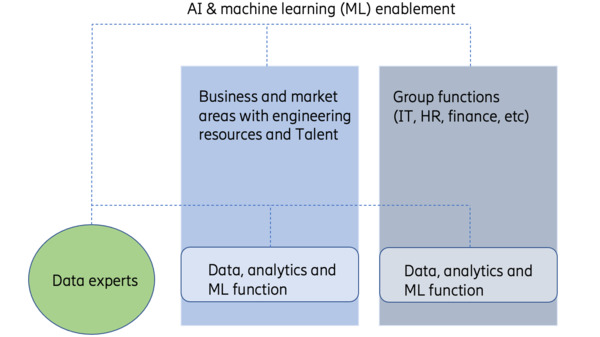
Figure 1: Hybrid AI and machine learning operational model.
However, for business and market areas that have lots of engineering talent already, we leverage more of a so-called ‘hub and spoke’ model (see Figure 1). That is, a data and analytics function sits within that group working on problems specific to the business.
In an organization as large as ours, it would have been a challenge to scale out endlessly — it’s too complex in terms of resources and orchestration. We consider the hybrid operational model because it allows functions with fewer technical resources to benefit from AI and machine learning enablement but doesn’t impact the speed at which engineering-heavy functions can execute on their data initiatives.
Don’t underestimate the cultural shift required
At organizations like Ericsson, the model in the past around data has been that access is closed unless someone can prove they need that particular access. When it comes to being a more data-driven company, this philosophy is very limiting — most people on the business side don’t know what data is being collected or where, as they’re busy focusing on their relationship with the customer.
Empowering people with data requires a fundamental paradigm shift in this model. We need to bring data out of the shadows and into the spotlight (within the limits of governance and data privacy regulations, of course) so that people close to the business see what it is and know what’s there. They can then make a connection between the problem or issue they’re trying to solve and the data that’s available which could possibly help them. In other words, we’re successful in our AI and machine learning efforts when people can explore data. Data access needs to become the rule rather than the exception.
Another cultural shift that’s challenging, yet surmountable, is training and upskilling people. We’ve found that people want to be part of the solution. They want to increase their data literacy. However, it takes a shift in mindset to seeing business problems with an AI angle. We’re putting in place training programs and in-depth curricula to not only teach the technology, but also these larger concepts.
Technology (when you choose the right tools) is the easier part
Technology and tools, while paramount, are just one small part of the data transformation puzzle. In the grand scheme of things, setting up the technology to enable people with data is the easier part.
The effort to build each successful data project is always collaborative. A business owner relies on an analyst to translate requirements into specifications, an analyst relies on the data engineer to provide the right data, a data scientist depends on the ML Engineer and Infrastructure Engineer to run a model in production.
We’ve been working with AI/ML company Dataiku for its platform features and functionalities to build bridges between people at Ericsson with different roles. We use it to connect people, to collaborate on projects (often across different geographies or business areas) and take advantage of their auto-wrangling, auto-ML and ML-Ops to automate our ML pipeline end-to-end to reduce the costs and complexity in developing and managing ML models.
Ericsson has been making progress since last year to shift the paradigm to drive better decision-making using AI/ML and scale it across the organization. This transformation requires not only the need to embrace new tools or technologies as an enabler, but more importantly, it demands a culture and a scalable operating model if it’s to successfully become an AI-powered organization. Through this transformation, we can open the door to true data innovation that enables and elevates the entire company to the highest level of data competence for the greatest possible business impact.
Read more
Read our previous blog post: Are your teams divided by AI? Unpacking AI team structure.
Learn more about Democratizing AI with automated machine learning technology.