










How to unlock the full potential of mission-critical 4G and 5G?

Head of Sales, Public Safety, Ericsson

Head of Sales, Public Safety, Ericsson
Head of Sales, Public Safety, Ericsson
Mobile communications are moving towards higher degrees of integration and convergence under 3GPP standardization. Existing mission-critical-capable 4G solutions, as well as 5G and further evolution framed within 3GPP, provide the necessary technical foundations to satisfy the requirements of mission-critical operations for different organizations and users. These include demanding operational scenarios in public safety and critical-infrastructure industries.
3GPP standardization defines the capabilities needed to make the transition as smooth as possible from legacy systems with voice-centric operations to powerful new services with improved situational awareness driven by multimedia and data centricity. The network deployment model to be adopted for the technology roll-out and implementation is linked, among other factors, to spectrum availability and regulation regarding quality of service.
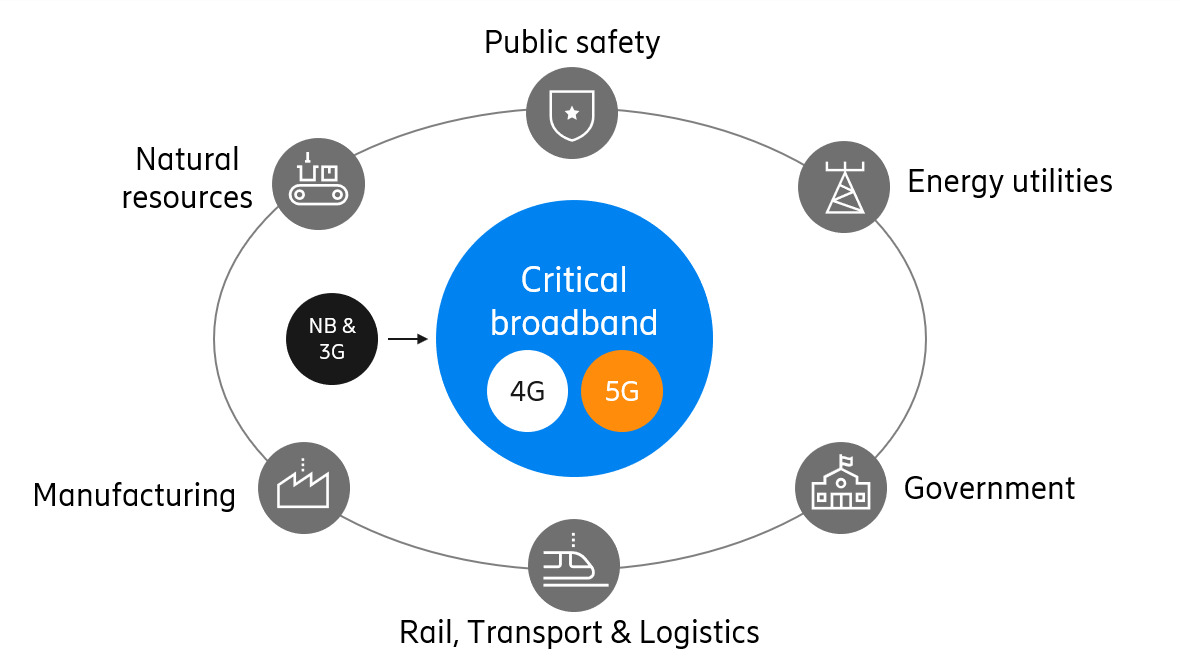
Fig. 1: Who requires mission critical 4G and 5G broadband?
Beyond the technical foundations, a detailed transition plan is essential for mission-critical broadband communications. It shall comprise and describe both technical and operational aspects to address for the effective solution rollout, service implementation, and user migration towards 4G and 5G services.
Proper planning is crucial
Mission-critical services users are increasingly requesting advanced new functionalities from their communications service providers. Data applications enabling picture or video sharing, as well as database queries or other mobile-office use cases, can deliver rich situational awareness and shorten decision-making cycles to enhance response to critical situations.
3GPP-based critical broadband bring with them an excellent set of capabilities that will keep evolving – as well as the flexibility required nowadays for system design and implementation to support and improve the operational processes of the users and organizations, and get all the powerful advantages along the lifespan of mission-critical communication solutions.
In this evolving context, proper transition planning is crucial. Users and organizations will be opening up to new capabilities and data sources that will need to be correlated, processed, and shared with the right users when it matters.
Organizations and users also require a suitable set of working procedures and operational policies for the adoption and lifecycle management of the new technologies. They also need a migration plan to cover the temporary transition phase when mission-critical broadband and legacy systems need to coexist.
Interworking with legacy communications systems is understood as a key requirement, even though legacy systems have been a limiting factor for operational evolution. This is because these technologies reached the ceiling for their performance some time ago. They are based on a voice-centric model, which ends up in limited interoperability and interworking compared to the wide range of functionalities that mission-critical broadband delivers.
Migration towards mission-critical broadband shall be based on the new capabilities and associated processes. It must be built on tools that are designed and developed for a data-centric operation model and are totally future proof. This will equip the next generation of critical operations to face new challenges, as well as fit with the overall societal move towards digitalization powered by 3GPP standardization.
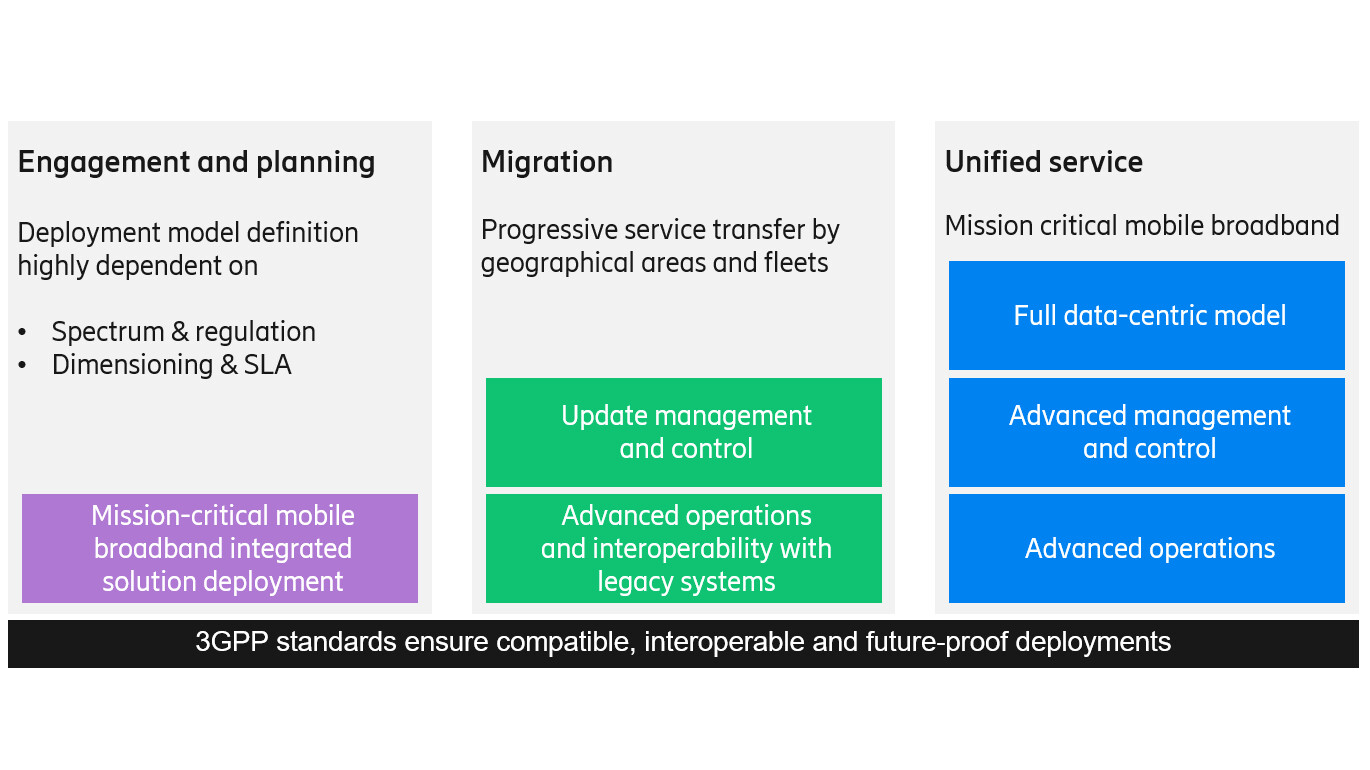
Fig. 2: The migration steps to mission critical mobile broadband.
Plan the migration ultimately towards 3GPP mission critical broadband
Migration from narrow-band to mission-critical broadband is a qualitative evolution. It should not be limited by legacy systems and/or operational procedures that were defined according to the limitations of the voice and short data services. These are based on legacy technologies that are not providing significant functional updates over the last years.
The ultimate goal for first-responder organizations is to migrate to 3GPP mission-critical mobile broadband with future-proof capabilities. The transition should not be planned as an overlay or a complement to legacy systems. This would hinder users from taking full advantage of the potential of mobile broadband. What’s more, partial adoption strategies, for instance based on hybrid products or solutions (which are mix of 3GPP and non-3GPP proprietary mission-critical solutions) should be avoided as they essentially exist to prolong the lifetime and limitations of the legacy system, which will limit innovation around new services.
If the migration strategy is planned around a hybrid approach of 3GPP and non-standard-compliant solutions, a longer period of interworking with legacy communications solutions will significantly impact the users remaining in narrowband side. This will mean that they will not be able to access the rich information delivered by the mission critical broadband solution, thus lagging for decision making and real time operations, both for daily and critical scenarios.
Mission-critical broadband services require user organizations to accept and align before the migration starts, to create an efficient and smooth transition, minimizing operational impact. In practice, when migrating a geographical area, group, organization, or fleet to a new generation of mission-critical services, a wide range of possibilities for advanced cooperation and dynamic improved situational awareness will unfold. This will lead to more efficient ways of working.
It is therefore essential to properly plan the transition from the ultimate target perspective of a seamless migration of users, organizations and services supported by a 3GPP mission-critical broadband solution, designed and developed to tackle all operational requirements of a data centric operational model.
Once the choice for an MCS layer integrated with the network core is in place, the journey continues to migrate from legacy aging systems towards new and future proof enriched mission-critical communications services powered by 3GPP based solutions. The objective is to build a unified data-centric and multimedia sharing operational model, as requested by users and organizations.
Some things to consider for the transition:
- Administration and management tools designed for 4G and 5G must be flexible, open, and friendly – while delivering the highest levels of security and performance to allow users and organizations to efficiently manage their resources.
- Operational processes defined for a 3GPP solution are essential from the earliest stages of the transition to properly settle the suitable policies for deployment, adoption and further evolution of the services and applications.
- Interoperability between broadband 4G and 5G solutions and legacy systems is fundamental for users – even during rollout.
- The mission-critical services layer must be embedded and seamlessly integrated with the 4G/5G network. This will eliminate the possibility of misaligned roadmaps,
- The service application layer must also be certified with a wide range of devices and accessories to guarantee interworking.
Next steps in the journey towards 4G and 5G
The journey towards 4G and 5G is an overall plan where the transition shall follow a generic scheme. This is the only way of ensuring that users benefit from a rich set of functionalities that support their duties, improve decision making, and make resource management as efficient as possible.
I invite you to read more about migration planning towards 3GPP mission-critical services and to explore the technical and operational aspects in our new paper.