









Can the show go on? ABBA, avatars and the future of concerts

Head of Research Agenda and Quality at Consumer & IndustryLab
Head of Research Agenda and Quality at Consumer & IndustryLab
Head of Research Agenda and Quality at Consumer & IndustryLab
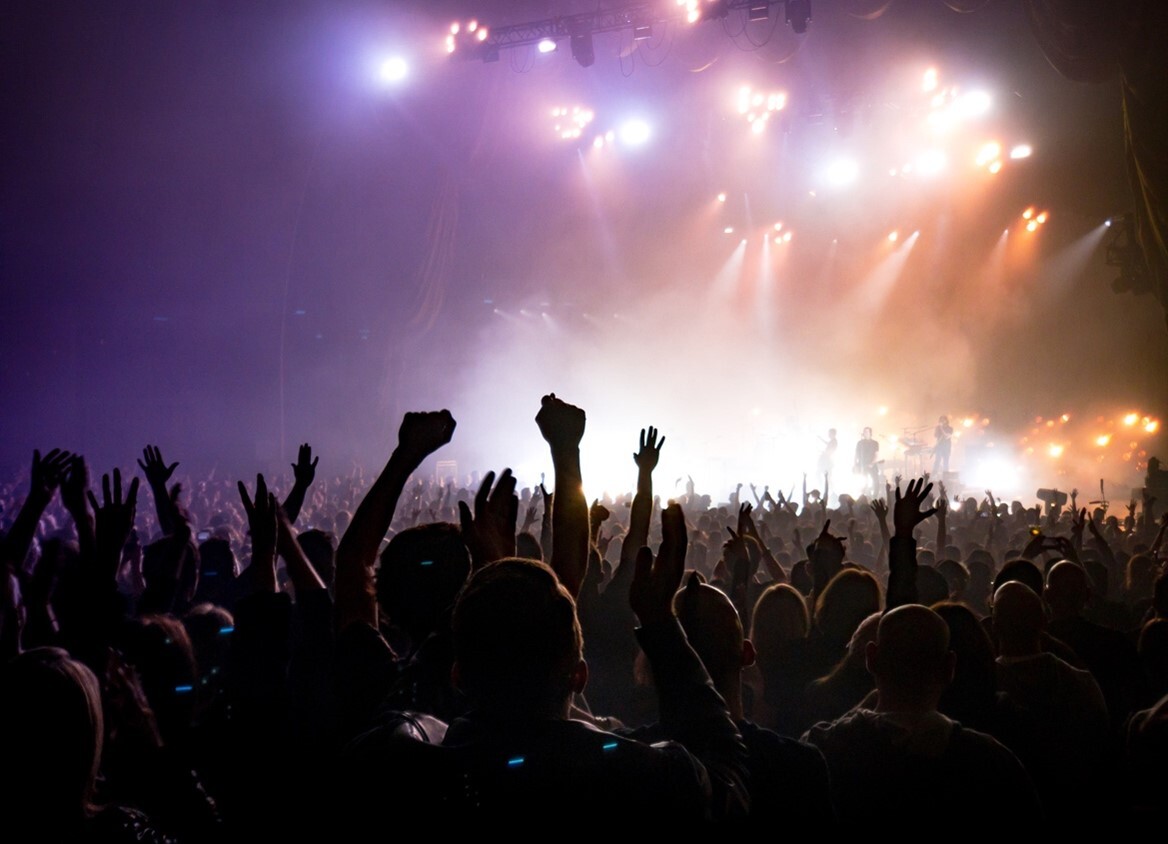
In October last year, I did something I hadn’t done in almost two years: I went to a proper rock concert. The concert had been postponed but was now finally happening. It was one of my favorite groups, the legendary underground band Van Der Graaf Generator, so I just had to go.
It was a great show but also a strange one. They were playing at a small venue in Gothenburg called the Brewhouse, everyone crowded in front of the stage and were shouting their lungs out between the numbers. Normally, I would have thought that meant the band was putting on a good show, but this time round I could not help but imagine a big micro-droplet cloud hovering above us, full of everyone’s bacteria and viruses. Just writing that makes me feel a bit disgusted… bandleader Peter Hammill must have had a somewhat similar idea because halfway through the concert, he also announced that there would be no signing of records or posters after the show, due to the Covid-19 situation. He must have mentally pictured that same droplet cloud as I did and had no wish to dive into it.
And then I realized that we have all changed, not only as fans, but as artists too. It feels almost like the show can’t go on. Not like this. There are other ways of course, but are they better?
The balance between live shows and technology
Simply streaming shows over the internet isn’t a better way – I can say that from experience. Back in December 2020, I helped set up an online rock show with two bands playing in Italy and one band playing in Tokyo, all live-streamed with me and a friend as show hosts who would introduce the bands. Although you get the music performance delivered to you, you totally miss out on the social aspect. It becomes quite boring to be honest.
And as much as I love virtual reality experiences, VR concerts also do not provide a better result, at least not with the current generation of technology. However, the problem here is totally opposite to the traditional internet experience, at least for the VR concerts I have attended. In my experience the social dimension takes center stage at VR concerts, and there’s a lot of interaction going on in the audience. However, the band on stage is too cartoonish to take seriously.
Instead, I think shows need to go hybrid. By combining the physical and digital experience more seamlessly, I believe there is an opportunity to provide new options for artists as well as for audiences without the drawbacks.
Welcome to the hybrid future
This year’s Ericsson 10 Hot Consumer Trends report outlines 10 high-tech facilities that consumers envisage in hybrid malls by 2030.
Read them here.
Read the reportThe winner takes it all?
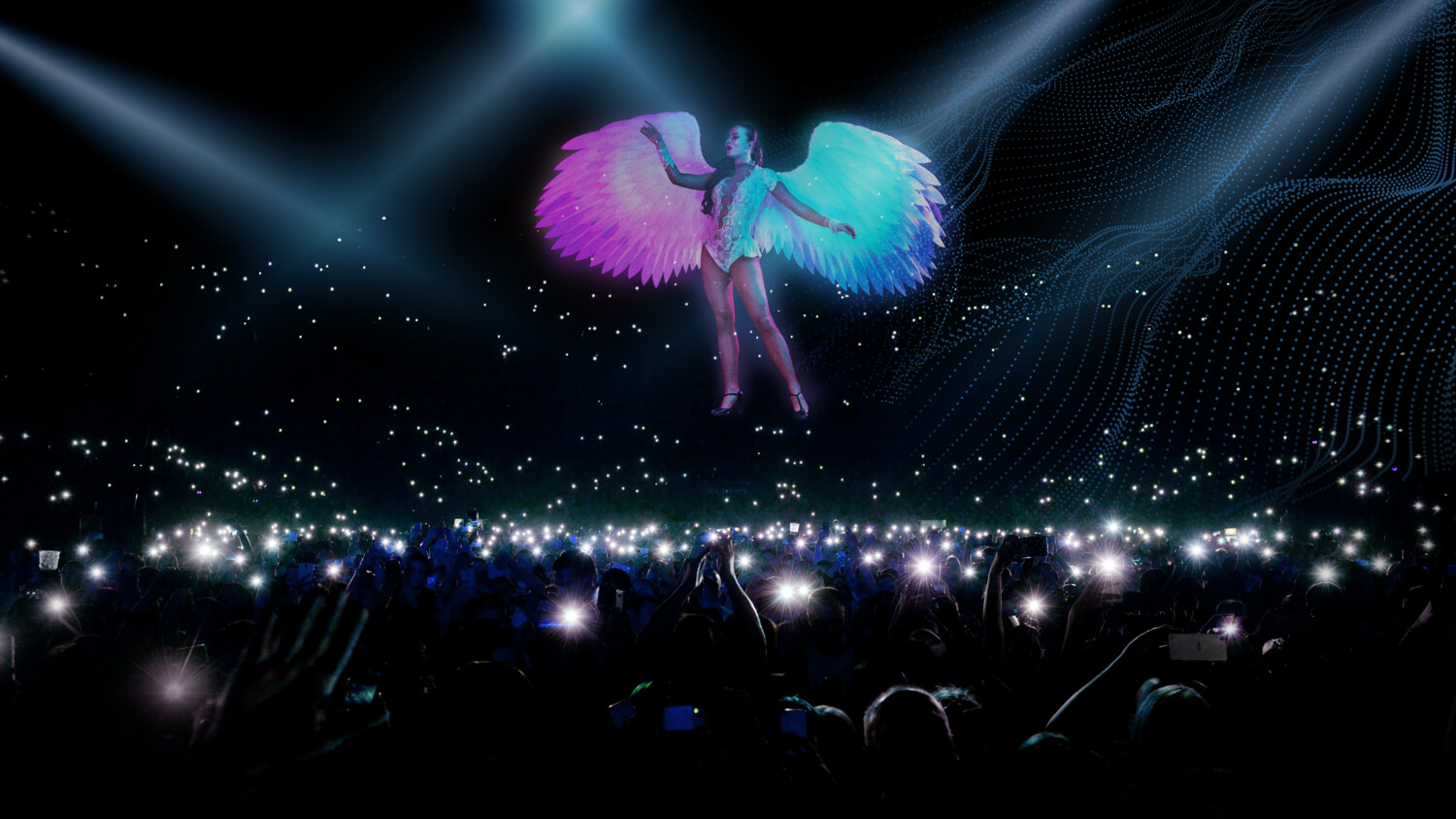
Starting in May this year, ABBA will perform as avatars (or ABBAtars in ABBA-speak) in front of a real band on their Voyage tour. Using avatars, artists could reach out while overcoming not only virus exposure but also other touring related challenges, such as CO2 waste, or simply being too old for touring. With artists performing as avatars, costs could also be reduced, making it economically feasible to performing in smaller venues – something that could reduce the risk of super-spreader events.
A natural continuation would be to flip the coin and let fans also choose if they want to physically go to the event, or if they would rather prefer to attend as avatars – and again, that wouldn’t have to be just for virus related reasons. Maybe they would like to reduce their carbon footprint, or might simply feel a bit too old to attend physically.
That’s why ABBAtars are not a gimmick – they are a first step towards making the show go on. I know for a fact that Björn Ulvaeus has been thinking about ABBA as a virtual band for years and years. As far back as the early 2000s, when he was planning for the Mamma Mia musical to be produced in Tokyo, I was invited into his home on his private island in Stockholm to advise him on what he already envisaged as the digital part of the show. I had recently been heading up Ericsson’s Mobile Internet Applications division in Tokyo, and Björn had the idea that you should be able to interact with ABBA in your phone as soon as you entered the venue, as well as during breaks. He wanted ABBA to continue existing as an actual group – they would just be digital instead of physical.
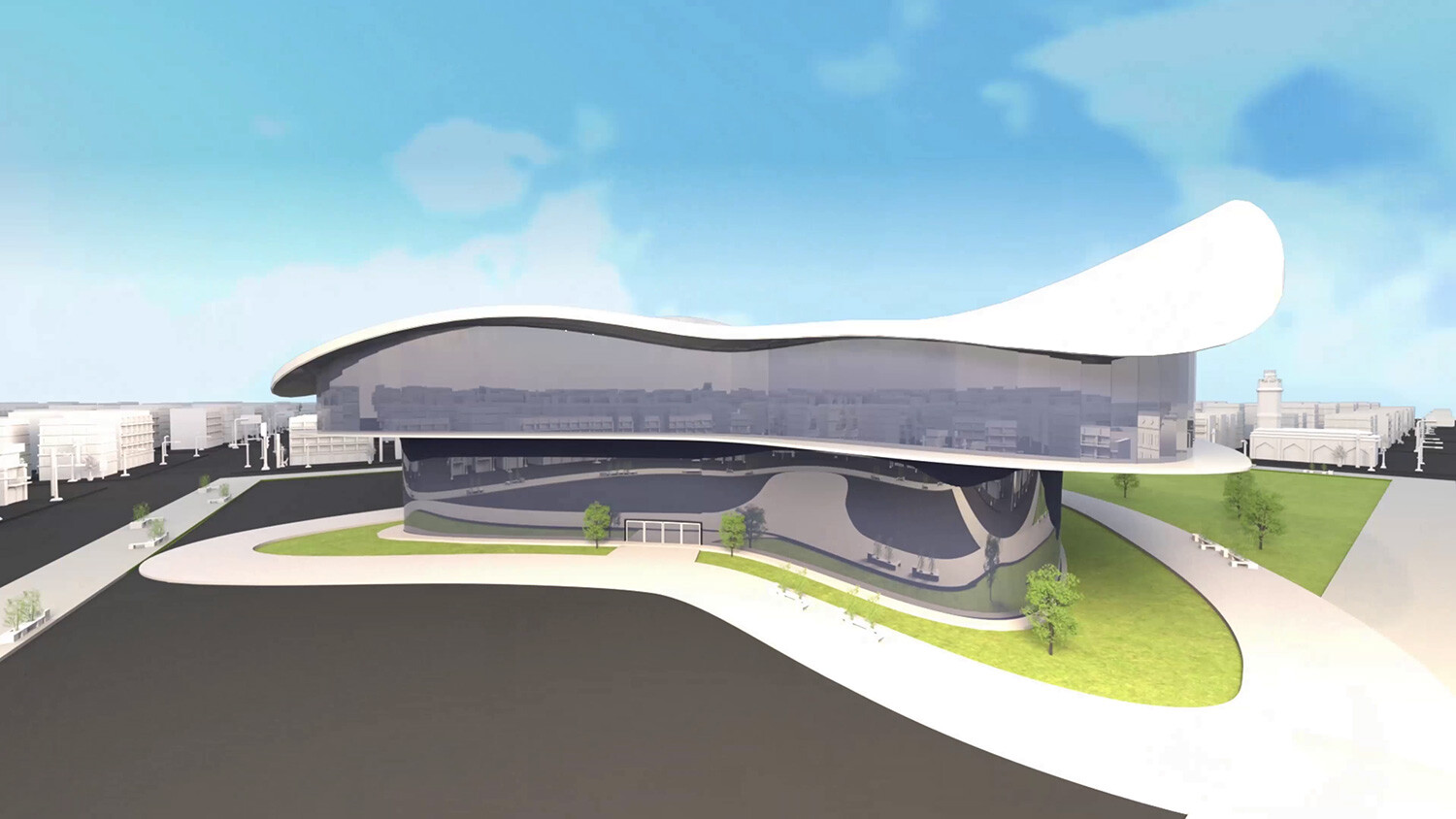
Learn more about digital hybrids and how they will evolve into a networked reality, where every space becomes the right place for next-generation experiences.
That was very prescient of him. Because here we are today, with a pandemic that forces us to rethink the future of concerts and way we attend events. And people are indeed becoming interested in digital hybrids. In our new 10 Hot Consumer Trends report, we introduce the idea of an All-now Arena where digital and physical entertainment can be combined freely. Not only do 44 percent say they will attend events where the performers are digitally telepresent by 2030; nearly eight out of 10 respondents also believe it will be possible attend events together with fans throughout the world telepresently by then.
We are finally catching up with the vision that Björn Ulvaeus has had for ABBA all this time!
Want to know more?
Read more from ConsumerLab.