










It’s time to start preparing for the networked reality


The term networked reality, which is introduced in this technology trends article, refers to a reality in which the line between the virtual and physical worlds has disappeared. Although it might be hard for many of us to imagine how that could ever be possible, experts predict that it is likely to occur within the next decade or so. The networked reality will be built using a combination of advanced extended reality (XR) technologies and limitless connectivity that is delivered through highly advanced and ultra-reliable wireless networks.
Rather than being something we experience using only our eyes and ears via screens and earphones, cyberspace will become an all-encompassing overlay on top of our physical reality that we will be able to experience with all of our senses. In the networked reality, we will be able to travel across space and time, seeing, hearing, tasting, smelling and feeling everything around us as if we were physically there. It will have a revolutionary effect on everything – from travel and entertainment to education, employment and healthcare.
Ericsson’s vision
In the new vision we unveiled earlier this year, Ericsson imagines a world in which limitless connectivity improves lives, redefines business and pioneers a sustainable future. To make the vision more concrete, we have also developed and released a set of vision stories that highlight the profound impact that limitless connectivity will have in four key areas: education, business, entertainment and climate action.
A reliable, secure and high-quality mobile network infrastructure is critical to making each of these vision stories a reality. While the 5G platform is a core building block of the future digital society that our vision stories represent, the impressive capabilities of existing 5G networks are just the beginning. Mobile has become the fastest growing technology in the world and the innovation in 5G is continuous, with increments every six months or so, and entirely new features and functions released every year. New and improved user equipment – phones, IoT devices, AR glasses, VR head-mounted displays and so on – are also appearing on the market at an unprecedented pace.
Transitioning from 5G to 6G with the help of our technology journeys
Here at Ericsson Research, a vital part of our job is predicting the needs of both our customers and our customers’ customers at least 10 years into the future. When we set out to invent a new generation of mobile technology, we do it to address new and emerging needs that the current technology cannot meet. To do so, we have to find the best technologies that can fully cover the new requirements. We need to take the whole application and developer ecosystem into account and consider the maturity of everything from chipset development to investment cycles. This is why it typically takes about 10 years to develop and release a completely new generation.
2030 is the timeframe when we expect 6G to emerge as the intelligent network platform designed to support the networked reality. To guide our research agenda on the path ahead, we have defined a set of eight technology journeys that summarize our view of technology evolution up until 2030.
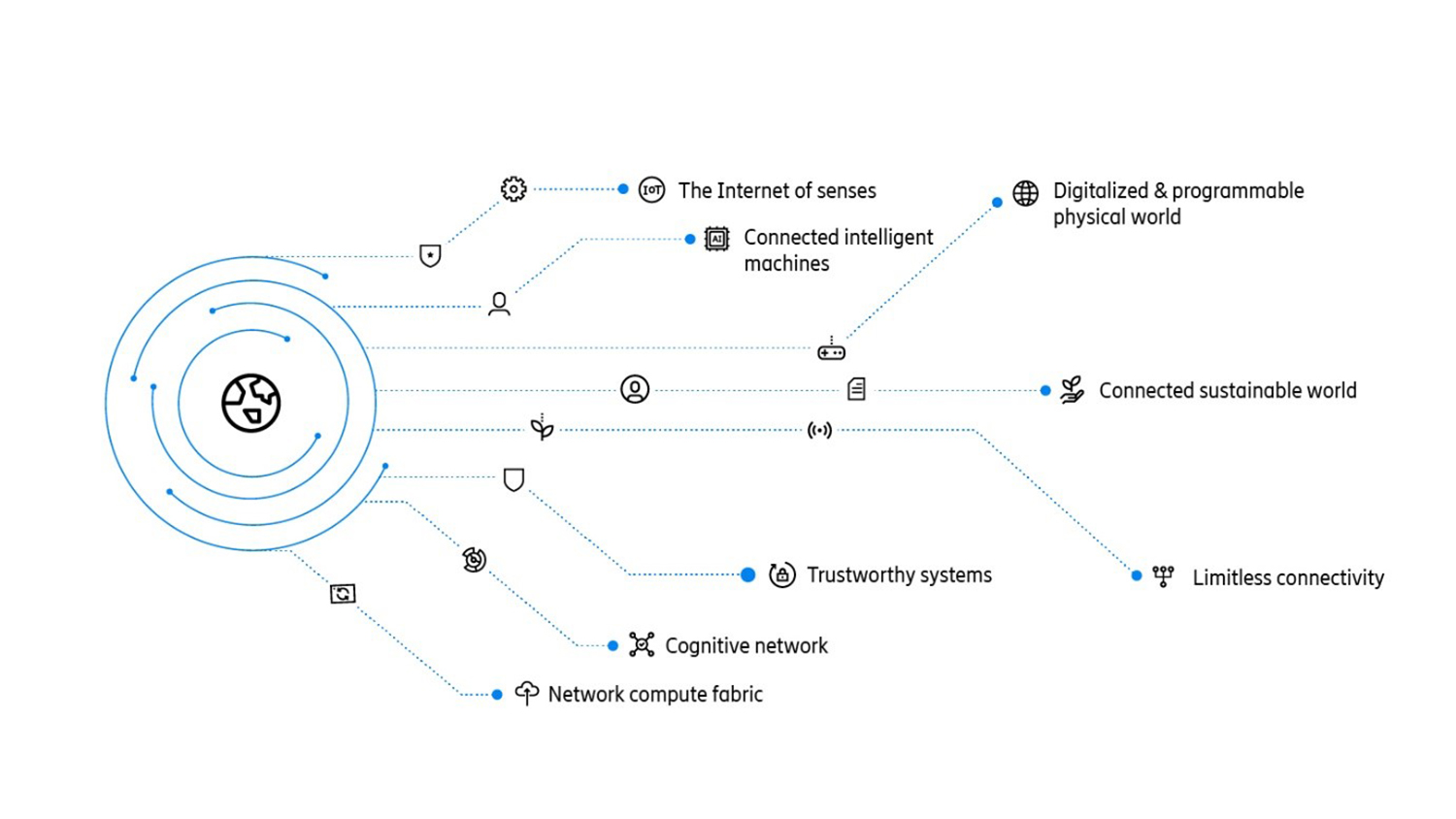
Eight technology journeys guiding our research agenda. Along the way to each of the end scenarios is an exciting journey made up of multiple tracks.
Four of these journeys focus on future use cases, detailing the demanding requirements that they will place on the network platform and proposing new capabilities to meet them. The other four – limitless connectivity, trustworthy systems, cognitive network and network compute fabric – focus on the evolution of the intelligent network platform itself.
6G is fundamental to the networked reality
Ericsson’s primary role in creating the networked reality is to build and orchestrate the intelligent networks that can support the kinds of advanced XR technologies required by the Internet of Senses, connected intelligent machines and other digital solutions of the future. This will be a big part of 6G. Future networks must be capable of connecting multiple experiences over a broad range of devices and locations, where service assurance is guaranteed no matter what is being demanded to make the experience optimal.
Future networks will also need to be able to handle extreme performance requirements – data rates, end-to-end latency, reliability and energy efficiency – as well as having the ability to transfer and understand vast arrays of data. They must always be open to ever smarter solutions, including flexible spectrum usage and multiple frequencies. Finally, the network itself must become smarter, capable of acting as a sensor and using AI-enabled decision-making to adapt to its environment and to ensure optimal performance.
2021 technology trends – the path toward 6G
The five trends that Erik highlights in this year’s trends article – digital representation, adaptable limitless connectivity, integrity of trustworthy systems, federated cognitive networks and a unified network compute fabric – are all central to the development of 6G and the creation of the networked reality. Technological advances in all of these areas will be necessary for the future network to support the convergence of the physical and digital worlds.
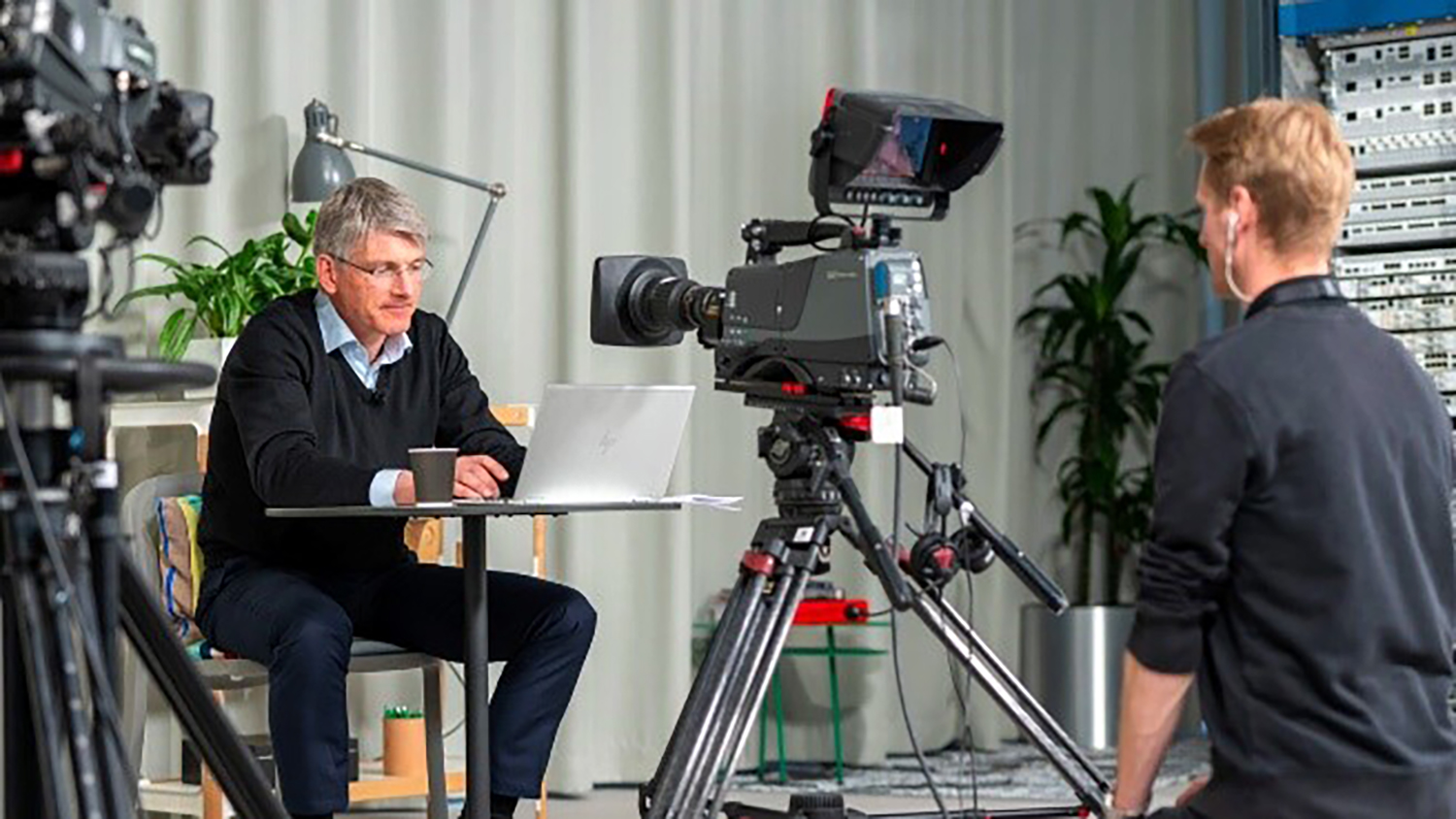
Listen to the podcast
Hear from Ericsson CTO Erik Ekudden on the network trends that are shaping the future and heralding the start of the 6G era.
Click hereConclusion
Looking back at our earliest technology trends articles, it’s gratifying to see how much of what we predicted 6-7 years ago has become a reality today with 5G. As the pace of technological change continues to accelerate, we think it’s more important than ever for companies that want to establish or maintain positions of market leadership to stay on top of the emerging technologies that may have an impact on their businesses in the coming decade. I believe that our technology journeys, vision stories and trends articles can help you do just that.
At Ericsson, we understand that the transition toward the networked reality is going to be a long-term journey for everyone involved – consumers, enterprises, those that build applications, governments and more. That’s why it’s so important that we’re all aware of what’s coming, so that we can plan ahead, share our insights and ideally even work together in joint research projects. To make the unimaginable possible and truly be prepared to capitalize on the commercial realities of tomorrow, we must dare to collaborate on all kinds of potential future use cases – perhaps especially the ones that seem fantastically futuristic today.
Read more
Read our 6G white paper.
Read more about 6G and the journey there.
Welcome to a world of immersive experiences with XR.
Networking trends: A platform for next-level digitalization - Ericsson